Debt Consolidation Strategies: Reduce Interest by 15% in 2026
Debt Consolidation Strategies: Your Path to Lower Interest Payments in 2026
Are you feeling overwhelmed by multiple monthly payments, high interest rates, and the constant pressure of growing debt? You’re not alone. Millions of individuals face similar challenges, but there’s good news: effective debt consolidation strategies can provide a clear path to financial freedom. In fact, by implementing the right approach, many consumers are projected to reduce their interest payments by an average of 15% in 2026, making now an opportune time to explore your options.
This comprehensive guide will delve into the world of debt consolidation, explaining what it is, how it works, and the various methods available to you. We’ll explore the benefits, potential drawbacks, and crucial factors to consider before making a decision. Our goal is to equip you with the knowledge and tools needed to choose the best debt consolidation strategies for your unique financial situation, ultimately leading to significant savings and a more manageable financial future.
Understanding Debt Consolidation: A Core Strategy for Financial Relief
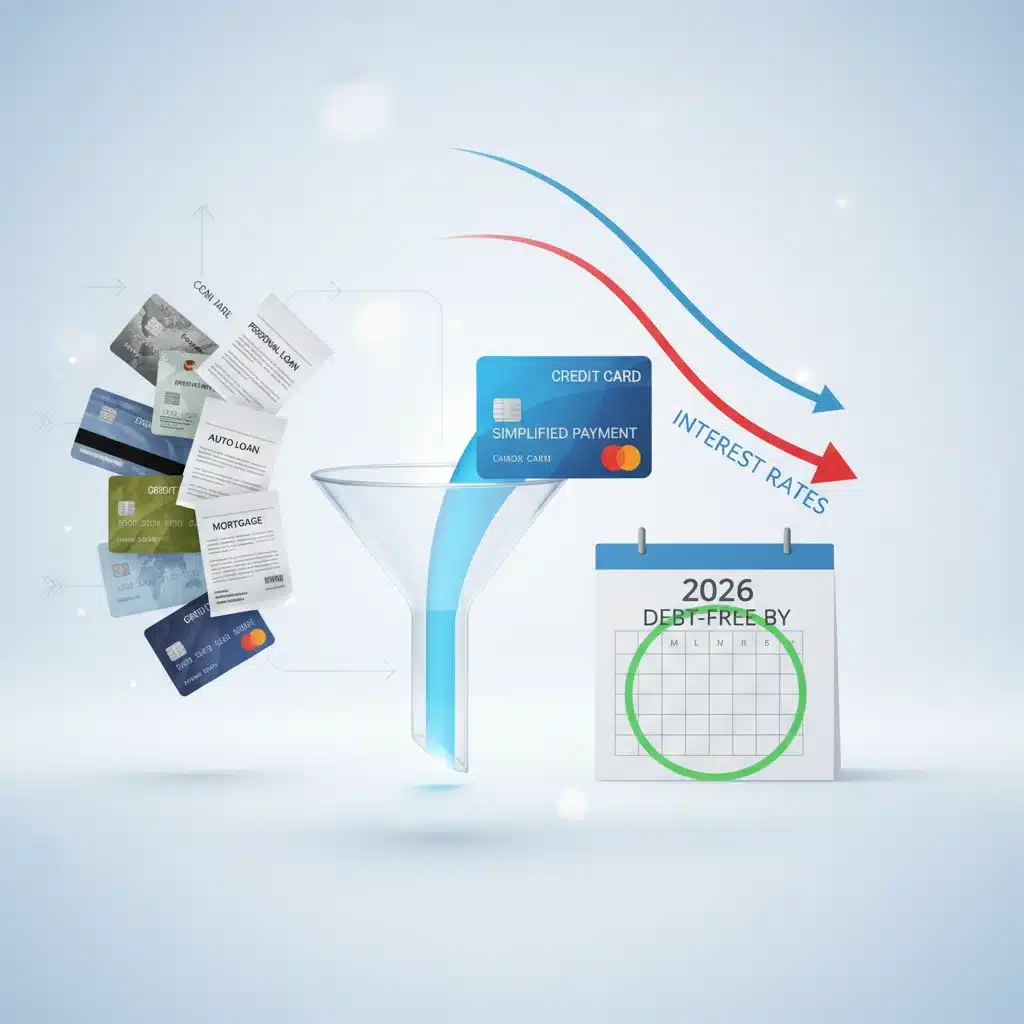
At its heart, debt consolidation is the process of combining multiple debts into a single, more manageable payment. Imagine having several credit card bills, a personal loan, and a medical bill, each with different interest rates, due dates, and terms. It can be a juggling act that often leads to missed payments, late fees, and increased stress. Debt consolidation simplifies this by rolling all these separate obligations into one new loan or payment plan.
The primary appeal of debt consolidation strategies lies in their potential to secure a lower overall interest rate. When you consolidate, you’re essentially replacing several high-interest debts with a single, lower-interest one. This not only reduces the total amount of interest you pay over time but also makes your monthly payments more predictable and often more affordable. For example, if you have credit card debts averaging 18-25% interest, consolidating them into a personal loan at 8-12% can lead to substantial savings.
Beyond the financial benefits, debt consolidation offers significant psychological advantages. The act of streamlining your finances can reduce stress, improve your credit score (by making on-time payments easier), and give you a clearer picture of your financial standing. It’s a proactive step towards regaining control and building a stronger financial foundation for the future.
Key Debt Consolidation Strategies to Consider in 2026
There isn’t a one-size-fits-all solution when it comes to debt consolidation. The best approach for you will depend on your credit score, the amount of debt you have, your income, and your financial goals. Let’s explore the most common and effective debt consolidation strategies:
1. Personal Loans for Debt Consolidation
One of the most popular debt consolidation strategies is taking out a personal loan. This involves borrowing a lump sum from a bank, credit union, or online lender and using that money to pay off all your existing high-interest debts. You then repay the personal loan with a single, fixed monthly payment over a set term, typically 2 to 7 years.
Benefits:
- Lower Interest Rates: Personal loans often come with significantly lower interest rates than credit cards, especially if you have good credit.
- Fixed Payments: Predictable monthly payments make budgeting easier.
- Fixed Repayment Term: You know exactly when your debt will be paid off.
- No Collateral Required: Most personal loans are unsecured, meaning you don’t need to put up assets as collateral.
Considerations:
- Credit Score Impact: Lenders will review your credit score. A higher score typically qualifies you for better rates.
- Origination Fees: Some lenders charge an origination fee, which is deducted from the loan amount.
- Discipline Required: It’s crucial to avoid accumulating new debt once your old debts are paid off.
To maximize the benefits of this strategy, shop around for the best rates and terms. Compare offers from multiple lenders, including traditional banks, credit unions, and online platforms, to ensure you secure the most favorable conditions for your personal consolidation loan.
2. Balance Transfer Credit Cards
Another powerful tool among debt consolidation strategies is the balance transfer credit card. This involves moving balances from one or more high-interest credit cards to a new credit card that offers a 0% introductory APR for a specific period, often 12 to 21 months.
Benefits:
- 0% Interest Period: This is the biggest advantage, allowing you to pay down your principal without accruing any interest during the introductory period.
- Potential for Quick Debt Elimination: If you can pay off the entire transferred balance before the promotional period ends, you save a significant amount on interest.
Considerations:
- Balance Transfer Fees: Most balance transfer cards charge a fee, typically 3-5% of the transferred amount.
- Introductory Period Expiration: If you don’t pay off the balance before the 0% APR period ends, the remaining balance will be subject to a much higher standard APR.
- Credit Limit: The new card’s credit limit might not be high enough to consolidate all your debt.
- Credit Score Requirement: You generally need a good to excellent credit score to qualify for the best balance transfer offers.
This strategy is ideal for those with a clear plan to pay off their debt within the introductory period. It requires strong financial discipline and a realistic assessment of your ability to make substantial payments. Failing to do so can leave you with even more high-interest debt.

3. Home Equity Loans or Lines of Credit (HELOCs)
If you’re a homeowner with significant equity, a home equity loan or a home equity line of credit (HELOC) can be effective debt consolidation strategies. These are secured loans, meaning your home serves as collateral. Because they are secured, they typically offer lower interest rates than unsecured personal loans or credit cards.
Home Equity Loan: A lump sum of money borrowed against your home’s equity, repaid with fixed monthly payments over a set term.
Home Equity Line of Credit (HELOC): A revolving line of credit that allows you to borrow money as needed, up to a certain limit, during a draw period. Payments are typically interest-only during the draw period, then transition to principal and interest during the repayment period.
Benefits:
- Lower Interest Rates: Often the lowest interest rates available for debt consolidation due to being secured by your home.
- Tax Deductible Interest: Interest paid on home equity loans or HELOCs may be tax-deductible in some cases (consult a tax professional).
- Larger Loan Amounts: You can typically borrow more money compared to personal loans.
Considerations:
- Risk of Foreclosure: Since your home is collateral, failing to make payments could result in losing your home.
- Closing Costs: These loans come with closing costs, similar to a mortgage.
- Variable Interest Rates (HELOCs): HELOC rates can fluctuate, potentially increasing your payments.
These options are powerful but come with significant risk. They are best suited for homeowners who are confident in their ability to make consistent payments and understand the implications of using their home as collateral. Always weigh the potential savings against the risk involved.
4. Debt Management Plans (DMPs)
For those struggling with overwhelming unsecured debt (like credit cards, medical bills, and personal loans) and who may not qualify for other consolidation options, a Debt Management Plan (DMP) through a credit counseling agency can be an excellent strategy. This is not a loan, but rather a structured plan to repay your debts.
How it Works: A non-profit credit counseling agency negotiates with your creditors on your behalf to potentially lower interest rates, waive fees, and set up a single, affordable monthly payment. You make one payment to the counseling agency, and they distribute the funds to your creditors.
Benefits:
- Lower Interest Rates: Creditors often agree to reduce interest rates for consumers on a DMP.
- Simplified Payments: One monthly payment to the counseling agency.
- Avoid Bankruptcy: A DMP can be an alternative to bankruptcy.
- Guidance and Support: You receive financial education and support from certified credit counselors.
Considerations:
- Impact on Credit: While not as severe as bankruptcy, enrolling in a DMP can be noted on your credit report.
- Fees: Credit counseling agencies may charge a setup fee and a monthly administrative fee.
- Restrictions: You may be required to close credit accounts or refrain from opening new ones.
- Longer Repayment Period: DMPs typically last 3-5 years.
DMPs are a viable option for those who need a structured approach and professional assistance to manage their debt. Ensure you choose a reputable, non-profit credit counseling agency.
Choosing the Right Debt Consolidation Strategy for You
With several effective debt consolidation strategies available, how do you decide which one is best? It boils down to a few critical factors:
1. Assess Your Credit Score
Your credit score is perhaps the most significant factor influencing your options and the interest rates you’ll qualify for. Generally:
- Excellent (740-850): You’ll likely qualify for the best personal loan rates and 0% balance transfer offers.
- Good (670-739): Still good chances for favorable personal loan rates and balance transfer cards, though offers might be slightly less competitive.
- Fair (580-669): Personal loan options might have higher interest rates. Balance transfer cards might be harder to get. A DMP might be a better fit.
- Poor (300-579): Personal loans and balance transfers are difficult. A DMP or other debt relief options are more likely.
Before applying for any new credit, obtain your credit report and score from all three major bureaus (Equifax, Experian, TransUnion). This will help you understand your starting point and what options are realistically available.
2. Calculate Your Total Debt and Current Interest Rates
Make a comprehensive list of all your debts, including:
- Creditor name
- Outstanding balance
- Interest rate (APR)
- Minimum monthly payment
- Due date
This detailed overview will give you a clear picture of your financial burden and allow you to calculate how much you could save by consolidating at a lower interest rate. Focus on consolidating the debts with the highest interest rates first, as these are costing you the most money.
3. Understand Your Monthly Budget and Repayment Capacity
Before committing to any consolidation plan, meticulously review your monthly income and expenses. Can you comfortably afford the new consolidated payment? While consolidation aims to reduce your overall cost, it’s vital that the new payment fits within your budget without causing further financial strain. A lower interest rate is only beneficial if you can consistently make the payments.
4. Consider Fees and Hidden Costs
Be aware of any fees associated with debt consolidation strategies:
- Origination fees for personal loans.
- Balance transfer fees for credit cards.
- Closing costs for home equity loans/HELOCs.
- Setup and monthly fees for Debt Management Plans.
Factor these costs into your calculations to get an accurate understanding of the total cost and potential savings.
Maximizing Your Savings with Debt Consolidation in 2026
Once you’ve chosen a strategy, there are additional steps you can take to ensure you get the most out of your debt consolidation efforts and achieve that average 15% interest reduction by 2026:
1. Stick to Your Budget
This is paramount. After consolidating, create and strictly adhere to a budget that prioritizes your new consolidated payment. Avoid the temptation to take on new debt. The goal is to eliminate debt, not rearrange it.
2. Make Extra Payments When Possible
If your budget allows, making extra payments on your consolidated debt can significantly reduce the total interest paid and shorten your repayment term. Even small additional contributions can make a big difference over time.
3. Monitor Your Credit Report
Regularly check your credit report for errors and to track your progress. As you consistently make on-time payments, your credit score should improve, opening up more financial opportunities in the future.
4. Build an Emergency Fund
To prevent falling back into debt, start building an emergency fund. This financial cushion can cover unexpected expenses, preventing you from relying on credit cards for emergencies.

Potential Pitfalls and How to Avoid Them
While debt consolidation strategies offer numerous benefits, they are not without potential downsides. Being aware of these can help you navigate the process successfully:
- Accumulating New Debt: The biggest risk is using the newly freed-up credit or taking on new loans after consolidating. This can lead to even more debt than you started with. Financial discipline is key.
- Higher Overall Cost: If you consolidate into a loan with a longer term or a higher interest rate than some of your existing debts, you could end up paying more in the long run. Always do the math.
- Damage to Credit Score: While consolidating can eventually help your score, the initial inquiries for new credit, closing old accounts, or a new loan appearing on your report can temporarily lower it.
- Hidden Fees: As mentioned, watch out for origination fees, balance transfer fees, and other charges that can eat into your savings.
- Scams: Be wary of companies promising unrealistic results or pressuring you into quick decisions. Always research a company’s reputation and check for accreditation with organizations like the Better Business Bureau.
Beyond Consolidation: Complementary Financial Habits for Long-Term Success
Debt consolidation is a powerful tool, but it’s most effective when combined with healthy financial habits. To ensure long-term success and maintain your reduced interest payments, consider integrating these practices into your life:
1. Develop a Realistic Budget
A budget is your financial roadmap. It helps you understand where your money is going and identify areas where you can cut back. After consolidating, your budget should reflect your new, simplified payment structure. Tools like budgeting apps, spreadsheets, or even a pen and paper can help you track your income and expenses effectively. The key is consistency and honesty with yourself about your spending habits.
2. Prioritize Savings
Once you’ve freed up cash flow from lower interest payments, redirect some of that money into savings. An emergency fund (3-6 months of living expenses) is crucial to prevent future debt accumulation. Beyond that, consider saving for retirement, a down payment on a home, or other significant life goals. Automating your savings by setting up regular transfers from the checking to your savings account can make this process seamless.
3. Live Within Your Means
This fundamental principle means spending less than you earn. It sounds simple, but it’s often the hardest to implement. Review your spending habits and distinguish between needs and wants. Cut unnecessary expenses and resist the urge to keep up with others. A minimalist approach to spending can significantly improve your financial health and prevent the recurrence of debt.
4. Continuously Educate Yourself
The financial landscape is always evolving. Stay informed about personal finance best practices, investment opportunities, and economic trends. Reading reputable financial blogs, books, and attending webinars can provide valuable insights and help you make informed decisions. The more you know, the better equipped you’ll be to manage your money effectively.
5. Set Financial Goals
Having clear, measurable financial goals provides motivation and direction. Whether it’s paying off your consolidated debt by a specific date, saving for a major purchase, or investing for retirement, setting goals helps you stay focused and make deliberate choices. Break down large goals into smaller, achievable steps to maintain momentum.
6. Review Your Progress Regularly
Financial planning isn’t a one-time event; it’s an ongoing process. Schedule regular financial reviews – monthly, quarterly, or annually – to assess your progress, adjust your budget, and refine your strategies. This allows you to identify any deviations from your plan early and make necessary corrections, ensuring you stay on track towards your financial objectives.
The Future of Debt Consolidation: What to Expect in 2026
As we look towards 2026, the landscape for debt consolidation strategies is expected to continue evolving. Here are some trends and predictions:
- Increased Digitalization: More lenders will offer fully online application processes, streamlined approvals, and digital tools for managing consolidated loans, making the process more accessible and efficient.
- AI-Powered Personalization: Artificial intelligence will play a larger role in matching consumers with the best consolidation products based on their specific financial profiles, credit scores, and debt types.
- Focus on Financial Wellness: Lenders and financial institutions will likely integrate more financial education and wellness resources into their consolidation offerings, aiming to help consumers not just consolidate, but also prevent future debt.
- Potential for Varied Interest Rate Environments: Economic factors, including inflation and central bank policies, will continue to influence interest rates. Staying informed about these trends will be crucial for securing the best consolidation rates.
- Growth of Niche Lenders: Specialized lenders catering to specific credit profiles or debt types may emerge, offering more tailored debt consolidation strategies.
Staying abreast of these changes will help you adapt your approach and leverage new opportunities to further reduce your interest payments and achieve financial stability.
Conclusion: Take Control with Smart Debt Consolidation Strategies
Debt can be a heavy burden, but it doesn’t have to be a permanent one. By understanding and implementing effective debt consolidation strategies, you can simplify your payments, significantly reduce the interest you pay, and accelerate your journey to becoming debt-free. Whether you opt for a personal loan, a balance transfer card, a home equity solution, or a debt management plan, the key is to choose the strategy that best aligns with your financial situation and goals.
Remember, the goal isn’t just to move debt around, but to eliminate it. With careful planning, disciplined execution, and a commitment to healthy financial habits, you can achieve that projected 15% interest reduction by 2026 and build a more secure and prosperous financial future. Don’t let debt control your life; take proactive steps today to regain your financial freedom.
Author