Mastering the 50/30/20 Budget Rule: Your 2026 Financial Blueprint
Are you looking to take control of your finances in 2026? Do you dream of a clear path to saving, spending wisely, and reducing debt? The 50/30/20 budget rule might just be the financial game-changer you’ve been searching for. This simple yet powerful budgeting framework, popularized by Senator Elizabeth Warren in her book ‘All Your Worth: The Ultimate Lifetime Money Plan’, offers a straightforward way to allocate your after-tax income effectively. It’s not about deprivation; it’s about mindful spending and strategic saving to achieve your financial aspirations.
In this comprehensive guide, we’ll delve deep into the 50/30/20 budget rule, breaking down each component, providing practical examples, and offering actionable tips to implement it successfully in your life. Whether you’re a budgeting novice or looking to refine your existing financial strategy, this article will equip you with the knowledge and tools to make 2026 your most financially secure year yet.
What is the 50/30/20 Budget Rule?
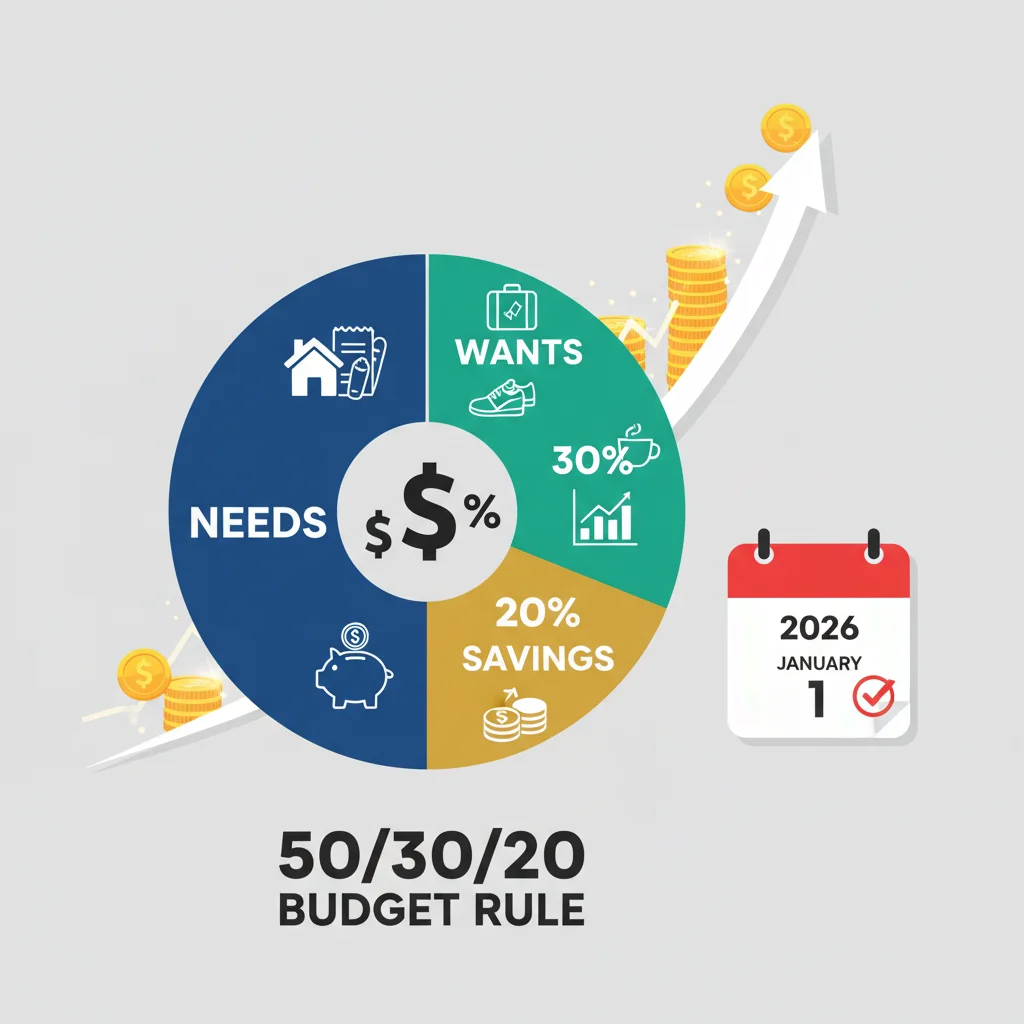
At its core, the 50/30/20 budget rule is a guideline for managing your money. It suggests dividing your after-tax income into three main categories:
- 50% for Needs: These are the essential expenses that you cannot live without.
- 30% for Wants: These are the discretionary expenses that improve your quality of life but are not strictly necessary.
- 20% for Savings & Debt Repayment: This portion is dedicated to building your financial future and reducing liabilities.
This rule provides a balanced approach, ensuring that your fundamental needs are met, you still enjoy life through your ‘wants’, and you’re actively working towards financial security. The beauty of the 50/30/20 budget rule lies in its simplicity and adaptability. It’s a framework, not a rigid set of instructions, allowing for personal customization while maintaining its core principles.
Deconstructing the 50%: Your Essential Needs
The largest chunk of your income, 50%, should be allocated to your needs. But what exactly constitutes a ‘need’? These are the non-negotiable expenses that are crucial for your survival and basic well-being. Without them, your life would be significantly impacted.
Common Needs Include:
- Housing: Rent or mortgage payments, property taxes, homeowner’s insurance.
- Utilities: Electricity, gas, water, internet (often considered essential in today’s world).
- Food: Groceries for home-cooked meals. Dining out falls under ‘wants’.
- Transportation: Car payments, fuel, public transport fares, car insurance, essential maintenance.
- Healthcare: Health insurance premiums, prescription medications, essential medical appointments.
- Minimum Loan Payments: The absolute minimum payments on debts like student loans, personal loans, or credit cards to avoid penalties and maintain good credit. Any payments above the minimum go into the ‘savings & debt repayment’ category.
- Childcare: If applicable and necessary for you to work.
It’s crucial to be honest with yourself when categorizing needs. Sometimes, what we perceive as a need might actually be a want. For instance, while having a car is a need for many, driving a luxury car with high payments might push that expense into the ‘want’ category if a more affordable option would suffice for transportation needs. The goal here is to cover your basic living expenses without overspending.
Embracing the 30%: Your Discretionary Wants
Ah, the ‘wants’ category – this is where life gets a little more fun! The 30% allocation for wants allows you to enjoy life’s pleasures without guilt, knowing that your needs are covered and your savings goals are on track. Wants are expenses that aren’t strictly necessary for survival but significantly enhance your quality of life.
Typical Wants Include:
- Dining Out: Restaurants, cafes, takeout.
- Entertainment: Movies, concerts, streaming subscriptions (Netflix, Hulu, etc.), video games.
- Hobbies: Sports equipment, art supplies, craft materials.
- Travel & Vacations: Flights, hotels, excursions.
- Shopping: New clothes (beyond basic necessities), electronics, gadgets.
- Gym Memberships: While health is a need, a premium gym membership might be a want if more affordable options exist.
- Premium Services: High-end coffee, expensive hair salon visits, subscription boxes.
- Non-essential Transportation: Ubers for convenience, joyrides.
The 30% for wants is your opportunity to indulge, but it’s also where you have the most flexibility. If you find yourself struggling to meet your 50% for needs or 20% for savings, your ‘wants’ category is the first place to look for cuts. This flexibility is what makes the 50/30/20 budget rule so practical – it’s not about cutting out all fun, but about prioritizing.
Securing Your Future with the 20%: Savings & Debt Repayment
This 20% is arguably the most critical component of the 50/30/20 budget rule, as it directly impacts your long-term financial health. This portion of your income is dedicated to building wealth and eliminating debt, paving the way for financial freedom.
This Category Includes:
- Emergency Fund: Building a safety net of 3-6 months’ worth of living expenses. This is paramount.
- Retirement Savings: Contributions to a 401(k), IRA, Roth IRA, or other retirement accounts.
- Investment Accounts: Funding brokerage accounts for long-term growth.
- Debt Repayment Beyond Minimums: Aggressively paying down high-interest debts like credit card balances or personal loans.
- Down Payments: Saving for a house, car, or other significant purchases.
- Future Goals: Saving for education, a business venture, or any other significant life event.
Prioritizing this 20% ensures that you’re not just living paycheck to paycheck but actively building a more secure future. Many financial experts recommend focusing on an emergency fund first, then contributing enough to your retirement accounts to get any employer match, and then tackling high-interest debt.
How to Implement the 50/30/20 Budget Rule in 2026: A Step-by-Step Guide
Ready to put the 50/30/20 budget rule into action? Here’s a step-by-step guide to get you started in 2026:
Step 1: Calculate Your After-Tax Income
The first step is to determine your net income, which is the money you take home after taxes, deductions for health insurance, retirement contributions (if pre-tax), and any other payroll deductions. This is the figure you’ll use for your 50/30/20 calculations. If your income varies, consider using an average of the last few months or budgeting based on your lowest expected income.
Step 2: Determine Your 50/30/20 Allocations
Once you have your after-tax income, calculate the dollar amounts for each category:
- Needs (50%): After-tax income x 0.50
- Wants (30%): After-tax income x 0.30
- Savings & Debt Repayment (20%): After-tax income x 0.20
Write these numbers down. These are your target spending and saving limits for each category.
Step 3: Track Your Spending
This is where the rubber meets the road. For at least one month, meticulously track every single dollar you spend. You can use budgeting apps (like Mint, YNAB, Personal Capital), spreadsheets, or even a simple notebook. The goal is to get an accurate picture of where your money is currently going. Be honest and thorough.

Step 4: Categorize Your Expenses
Once you’ve tracked your spending, go through each expense and categorize it as a ‘need’, ‘want’, or ‘savings/debt repayment’. This step is crucial for identifying areas where you might be overspending or where your current allocations don’t align with the 50/30/20 budget rule.
Example:
- Rent: Need
- Groceries: Need
- Netflix Subscription: Want
- Dinner out: Want
- Minimum credit card payment: Need
- Extra credit card payment: Savings & Debt Repayment
- Contribution to 401(k): Savings & Debt Repayment
Step 5: Adjust and Optimize
Compare your actual spending in each category with your 50/30/20 targets. Are you overspending on wants? Are your needs taking up more than 50%? This is your opportunity to make adjustments.
- If Needs > 50%: Look for ways to reduce your essential expenses. Can you find cheaper housing, reduce your utility consumption, or cut down on transportation costs? This might involve bigger lifestyle changes, but it’s essential for long-term financial health.
- If Wants > 30%: This is often the easiest place to make cuts. Identify discretionary spending that you can reduce or eliminate without significantly impacting your happiness. Maybe fewer restaurant meals, canceling unused subscriptions, or opting for free entertainment.
- If Savings & Debt Repayment < 20%: If you’re not hitting your 20% target, you’ll need to reallocate funds from your ‘needs’ or ‘wants’ categories. Remember, this 20% is your investment in your future.
Step 6: Automate Your Savings and Debt Payments
One of the most effective strategies for adhering to the 50/30/20 budget rule is to automate your savings and debt repayments. Set up automatic transfers from your checking account to your savings, investment, and debt repayment accounts immediately after you get paid. This ensures that you ‘pay yourself first’ and reduces the temptation to spend that money elsewhere.
Step 7: Regular Review and Adjustment
Budgeting is not a one-time event; it’s an ongoing process. Life changes, and so do your financial circumstances. Review your budget regularly – monthly or quarterly – to ensure it’s still aligned with your income, expenses, and goals. Adjust as needed. The 50/30/20 budget rule is a flexible tool, and its effectiveness comes from consistent application and adaptation.
Benefits of Adopting the 50/30/20 Budget Rule
Implementing the 50/30/20 budget rule offers a multitude of benefits that can transform your financial life:
- Simplicity: It’s easy to understand and apply, making it accessible even for budgeting beginners.
- Balance: It promotes a healthy balance between living for today and planning for tomorrow, avoiding extreme frugality or reckless spending.
- Clarity: It provides a clear framework for allocating your income, helping you understand where your money is going.
- Financial Control: You gain a greater sense of control over your money, reducing financial stress and anxiety.
- Goal Achievement: By consistently allocating 20% to savings and debt repayment, you’ll accelerate your progress towards financial goals like an emergency fund, retirement, or homeownership.
- Reduced Debt: The dedicated 20% for debt repayment helps you systematically pay down liabilities, freeing up more of your income in the long run.
- Adaptability: It’s a flexible guideline that can be adjusted to fit various income levels and life stages.
Challenges and How to Overcome Them
While the 50/30/20 budget rule is a fantastic tool, you might encounter some challenges. Here’s how to address them:
Challenge 1: Needs Exceed 50%
This is a common issue, especially in high cost-of-living areas or for those with lower incomes. If your essential expenses consistently exceed 50% of your take-home pay, you have a few options:
- Reduce Needs: This might involve significant changes like finding more affordable housing, reducing transportation costs (e.g., carpooling, public transport), or aggressively cutting utility usage.
- Increase Income: Explore opportunities for a side hustle, negotiating a raise, or finding a higher-paying job.
- Temporarily Adjust Ratios: If reducing needs or increasing income isn’t immediately feasible, you might temporarily adjust the ratios, perhaps to 60/25/15 or 55/30/15. However, aim to return to the 50/30/20 as soon as possible, as the 20% for savings is critical.
Challenge 2: Difficulty Distinguishing Needs from Wants
The line between needs and wants can sometimes be blurry. A good rule of thumb is to ask yourself: “Could I survive and function without this expense?” If the answer is yes, it’s likely a want. For example, basic internet access for work/school might be a need, but the premium fastest package might be a want.
Challenge 3: Inconsistent Income
For freelancers, commission-based workers, or those with variable income, applying the 50/30/20 budget rule can be tricky. Consider these strategies:
- Budget on Your Lowest Income: Plan your budget based on your lowest expected monthly income. Any extra income can then be directed entirely towards savings or debt repayment.
- Buffer Account: Build a buffer in your checking account to smooth out income fluctuations.
- Annualize Income: If your income varies widely by month but is predictable annually, you might budget on an annual basis and then divide by 12 for monthly targets.
Challenge 4: Lack of Discipline
Sticking to any budget requires discipline. Automation is your best friend here. By setting up automatic transfers, you remove the temptation to spend money that should be saved or used for debt repayment. Additionally, find an accountability partner, use budgeting apps with reminders, or reward yourself for reaching small financial milestones.
Beyond the Basics: Advanced Tips for 50/30/20 Success
Once you’ve mastered the fundamentals of the 50/30/20 budget rule, consider these advanced strategies to optimize your financial journey in 2026:
Tip 1: Optimize Each Category
- Needs: Regularly review and compare providers for insurance, utilities, and internet. Look for opportunities to refinance loans if interest rates are lower.
- Wants: Implement a ‘cooling-off period’ for impulse purchases. For larger wants, create a mini-savings goal within your ‘wants’ budget to save up for them.
- Savings & Debt Repayment: Prioritize high-interest debt using methods like the debt snowball or debt avalanche. Maximize contributions to tax-advantaged retirement accounts.
Tip 2: Utilize Budgeting Tools and Apps
Modern technology makes budgeting easier than ever. Apps like YNAB (You Need A Budget), Mint, Personal Capital, or even simple spreadsheet templates can help you track spending, categorize transactions, and visualize your progress against the 50/30/20 budget rule.
Tip 3: Involve Your Household
If you share finances with a partner or family, make budgeting a joint effort. Open communication and shared goals are essential for collective financial success. Discussing the 50/30/20 budget rule together can lead to better understanding and commitment from everyone.
Tip 4: Celebrate Milestones
Financial journeys can be long, so it’s important to celebrate your progress. Whether it’s paying off a credit card, reaching an emergency fund goal, or consistently sticking to your 50/30/20 budget rule allocations for a few months, acknowledge your achievements. This positive reinforcement can help maintain motivation.
Tip 5: Educate Yourself Continuously
The world of personal finance is constantly evolving. Stay informed about investment strategies, tax law changes, and new financial products. The more you know, the better equipped you’ll be to make informed decisions and optimize your 50/30/20 budget rule application.

Conclusion: Your Path to Financial Empowerment in 2026
The 50/30/20 budget rule is more than just a budgeting method; it’s a philosophy for managing your money that promotes balance, clarity, and long-term financial health. By dedicating 50% of your after-tax income to needs, 30% to wants, and 20% to savings and debt repayment, you create a robust framework for financial stability and growth.
Implementing this rule in 2026 will require commitment, honest self-assessment, and regular review. However, the rewards – reduced financial stress, accelerated debt repayment, and a clear path to achieving your financial dreams – are well worth the effort. Start today by calculating your income, tracking your expenses, and making those crucial adjustments. Your financially empowered future, guided by the principles of the 50/30/20 budget rule, awaits!
Remember, consistency is key. Even small, consistent steps towards adhering to the 50/30/20 budget rule can lead to significant financial transformation over time. Take control of your money, and watch your financial future flourish.