Good Debt vs. Bad Debt: Making Informed Financial Choices in 2026
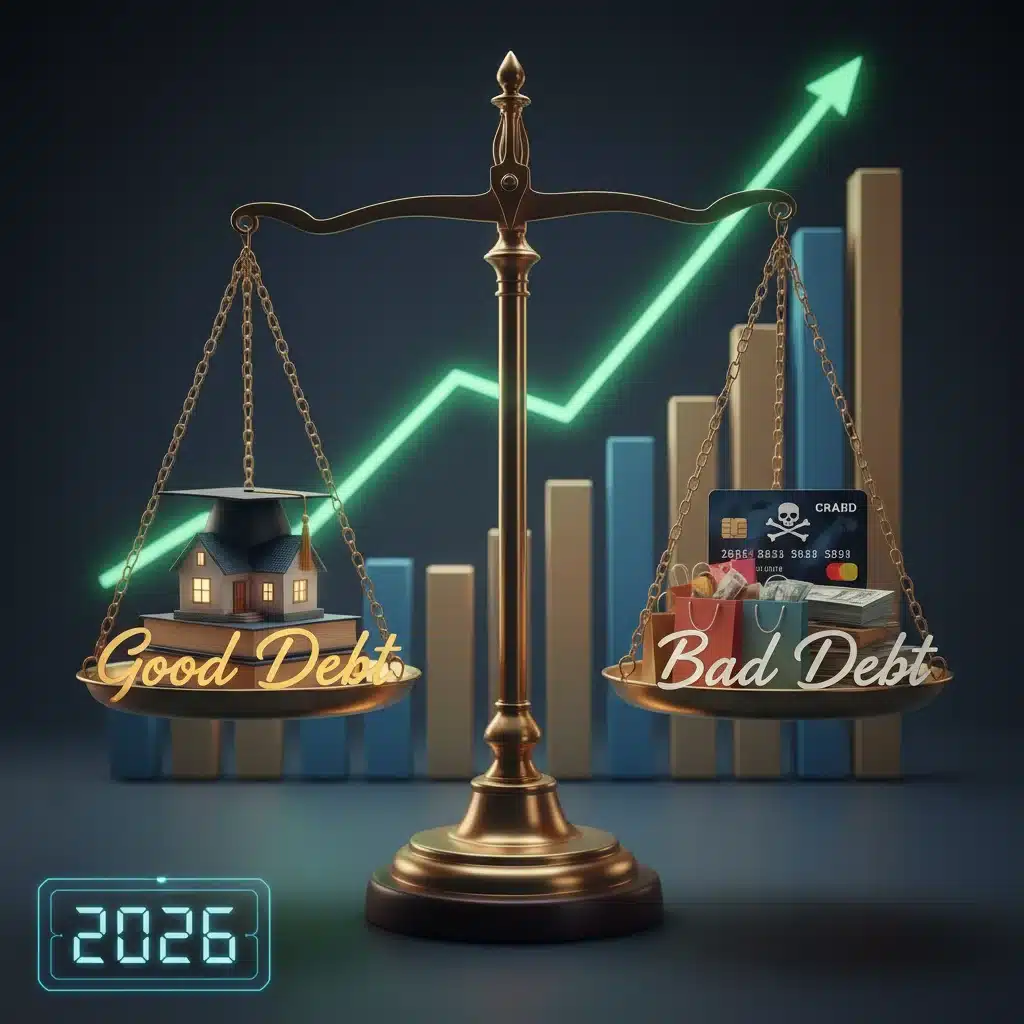
Understanding the nuances of debt is paramount in today’s dynamic financial landscape. While the word ‘debt’ often carries a negative connotation, it’s a simplification that can lead to missed opportunities or severe financial missteps. Not all debt is created equal. In fact, a clear distinction exists between what financial experts term good debt and bad debt. Making informed financial choices in 2026 hinges on your ability to discern between these two categories and leverage them strategically for your financial well-being. This comprehensive guide will delve deep into the basic concepts of good debt vs. bad debt, providing you with the knowledge to navigate your financial journey with confidence.
The global economic climate is constantly evolving, and 2026 is projected to bring its own set of challenges and opportunities. Interest rates, inflation, and market volatility all play a role in how debt impacts your finances. Therefore, a solid understanding of good debt vs. bad debt is not just theoretical; it’s a practical skill essential for financial resilience and growth. Whether you’re a recent graduate, a seasoned investor, or someone simply looking to improve their financial literacy, mastering this distinction will empower you to make smarter borrowing decisions.
What is Good Debt? Leveraging Debt for Growth
Good debt, at its core, is a strategic financial tool. It’s money borrowed with the reasonable expectation that it will generate future income, increase your net worth, or provide a significant return on investment. The key characteristic of good debt is that the asset or opportunity it finances appreciates in value or produces income that outweighs the cost of borrowing. It’s an investment in your future, a calculated risk designed to yield positive financial outcomes. Let’s explore the common types of good debt and why they are considered beneficial.
1. Mortgage Debt: Investing in Real Estate
One of the most common examples of good debt is a mortgage to purchase a primary residence. Real estate, historically, has been a reliable long-term investment that tends to appreciate in value over time. While there are market fluctuations, owning a home builds equity, which is a direct increase in your net worth. Furthermore, mortgage interest can be tax-deductible in many regions, offering an additional financial benefit. Instead of paying rent, which offers no return, mortgage payments contribute to an asset you own. Of course, the caveat here is responsible homeownership – buying within your means and understanding the associated costs.
2. Student Loan Debt: Investing in Human Capital
Education is often considered an investment in yourself, and student loans fall under the umbrella of good debt when they lead to increased earning potential. A degree or specialized training can open doors to higher-paying jobs, better career opportunities, and enhanced skills that command a premium in the job market. The return on investment (ROI) for education can be substantial over a lifetime. However, it’s crucial to be mindful of the amount borrowed and the potential income from your chosen field. Excessive student loan debt for a degree with limited job prospects can quickly turn into bad debt.
3. Business Loans: Fueling Entrepreneurial Ventures
For entrepreneurs, a business loan is often essential to start or expand a venture. This type of debt is considered good when the business plan is sound, and the loan is used to generate revenue that far exceeds the cost of borrowing. Examples include financing equipment, inventory, marketing campaigns, or hiring skilled personnel that directly contribute to the company’s growth and profitability. A successful business, fueled by strategic debt, can create significant wealth for the owner and provide employment opportunities for others.
4. Investment Loans: Strategic Asset Acquisition
In some cases, borrowing money to invest in assets like stocks, bonds, or other income-generating investments can be considered good debt. This strategy, often referred to as leveraging, involves using borrowed capital to amplify returns. However, this is a more advanced strategy and carries higher risks. It requires a deep understanding of market dynamics, risk tolerance, and a clear investment strategy. The expectation is that the returns from the investment will comfortably exceed the interest paid on the loan.
The common thread among these examples of good debt is the potential for future financial gain. They are investments, not consumption. They empower you to acquire assets that appreciate, generate income, or enhance your ability to earn more. When managed responsibly, good debt can be a powerful accelerator for wealth creation.

What is Bad Debt? The Pitfalls to Avoid
In stark contrast to good debt, bad debt is money borrowed to finance depreciating assets or immediate consumption that offers no future financial return. It often involves high interest rates, leading to a cycle of repayments that drain your finances without building any equity or generating income. Bad debt can quickly become a significant burden, hindering your financial progress and causing considerable stress. Recognizing and avoiding bad debt is a cornerstone of sound financial management in 2026.
1. High-Interest Credit Card Debt: The Silent Killer
Perhaps the most prevalent form of bad debt is high-interest credit card debt, especially when balances are carried over month to month. Credit cards are designed for convenience, but their high Annual Percentage Rates (APRs), often ranging from 15% to 30% or more, can make it incredibly difficult to pay off balances. Using credit cards for non-essential purchases like clothing, dining out, or entertainment, and then failing to pay the statement in full, means you’re paying a premium for items that rapidly lose value or provide no lasting benefit. The interest compounds, and a small purchase can balloon into a significant financial obligation.
2. Payday Loans and Title Loans: Predatory Lending
These are arguably the worst forms of bad debt. Payday loans and title loans are short-term, high-cost loans designed to bridge a gap until your next paycheck. They come with exorbitant interest rates, often in the triple digits (e.g., 300% to 700% APR). While they offer quick access to cash, they trap borrowers in a vicious cycle of debt, as the fees and interest make it nearly impossible to repay the principal. They should be avoided at all costs, as they rarely solve a financial problem and almost always exacerbate it.
3. Loans for Depreciating Assets: Cars and Consumer Goods
While a car might be a necessity for many, financing a new car, especially with a long loan term and high interest, can be a form of bad debt. New cars depreciate significantly the moment they’re driven off the lot. Unless the car is directly generating income (e.g., for a delivery service), it’s a depreciating asset. Similarly, taking out loans for consumer goods like electronics, furniture, or vacations, especially if you can’t pay them off quickly, falls into this category. These items lose value rapidly and do not contribute to your financial growth.
4. Unsecured Personal Loans for Consumption: A Slippery Slope
Unsecured personal loans can be a mixed bag. While they can sometimes be used for debt consolidation at a lower interest rate (which could be considered a form of good debt management), they often become bad debt when used to finance discretionary spending or lifestyle upgrades that don’t generate any return. Without collateral, these loans often carry higher interest rates than secured loans, and using them for consumption can quickly lead to financial strain.
The common denominator for bad debt is that it finances consumption or rapidly depreciating assets, offers no financial return, and often comes with high interest rates. It detracts from your net worth and can create a significant drag on your financial health. Understanding these distinctions is the first step towards making more prudent financial decisions.
Distinguishing Good Debt vs. Bad Debt: Key Factors
When faced with a borrowing decision, how can you definitively tell if it’s good debt or bad debt? Here are several key factors to consider:
1. Purpose of the Debt
What are you using the money for? If the debt is funding an investment that has the potential to grow in value, generate income, or increase your earning capacity, it leans towards good debt. If it’s for immediate consumption, luxury items, or rapidly depreciating assets, it’s likely bad debt.
2. Potential for Return on Investment (ROI)
Does the debt have the potential to pay for itself and then some? For instance, a student loan can lead to a higher salary, a mortgage can build home equity, and a business loan can generate profits. Bad debt, conversely, offers no financial ROI; it’s a pure expense.
3. Interest Rate
The cost of borrowing is a critical factor. Good debt typically comes with lower, more manageable interest rates (e.g., mortgages, student loans). Bad debt, like credit card debt or payday loans, often carries extremely high interest rates that can quickly spiral out of control, making repayment a monumental challenge.
4. Impact on Net Worth
Does the debt help increase your net worth (assets minus liabilities)? Good debt, by financing appreciating assets or income-generating ventures, contributes positively to your net worth over time. Bad debt, by financing consumption or depreciating assets, diminishes your net worth.
5. Your Ability to Repay
Regardless of whether it’s considered ‘good’ or ‘bad,’ any debt becomes problematic if you cannot comfortably afford the repayments. Always assess your income, expenses, and overall financial stability before taking on new debt. A good debt with unmanageable payments can quickly turn into a source of financial stress.

Making Informed Financial Choices in 2026
Equipped with a clear understanding of good debt vs. bad debt, you can now approach your financial decisions with greater clarity. Here’s how to apply this knowledge effectively in 2026:
1. Prioritize Eliminating Bad Debt
Your first financial priority should be to aggressively pay down and eliminate bad debt, especially high-interest credit card balances and payday loans. Consider strategies like the debt snowball or debt avalanche method. The money you save on interest can then be redirected towards savings, investments, or managing good debt more effectively.
2. Evaluate Good Debt Carefully
Even good debt requires careful consideration. Before taking on a mortgage, student loan, or business loan, conduct thorough research. Understand the terms, interest rates, and potential risks. Ensure the investment is sound and aligns with your long-term financial goals. Don’t borrow more than you need or can realistically afford to repay.
3. Build an Emergency Fund
A robust emergency fund (3-6 months of living expenses) is crucial. It acts as a buffer, preventing you from resorting to high-interest bad debt when unexpected expenses arise. This financial cushion is a key component of responsible financial planning.
4. Live Within Your Means
Avoid the temptation to use debt to fund a lifestyle you cannot genuinely afford. Distinguish between needs and wants. Practicing mindful spending and budgeting can prevent the accumulation of bad debt.
5. Continuously Monitor Your Debt
Regularly review your debt obligations. Are you making progress on repayments? Are interest rates changing? Staying on top of your debt allows you to make timely adjustments and avoid surprises. Utilize budgeting tools and financial apps to keep track of your financial health.
6. Seek Professional Advice
If you’re overwhelmed by debt or unsure about making major financial decisions, consult with a financial advisor. They can provide personalized guidance, help you create a debt management plan, or advise on strategic borrowing for investments.
Effective Debt Management Strategies for 2026
Beyond simply identifying good debt vs. bad debt, effective management is key to financial success. Here are some strategies to implement in 2026:
Debt Consolidation
If you have multiple high-interest debts, consolidating them into a single loan with a lower interest rate can be a smart move. This can simplify payments and reduce the overall cost of your debt. Options include personal loans, balance transfer credit cards (with a 0% introductory APR), or home equity loans (if you have equity). However, be cautious with balance transfer cards; if you don’t pay off the balance before the promotional period ends, you could face higher rates.
Budgeting and Spending Control
A detailed budget is your roadmap to financial control. Track all your income and expenses to identify areas where you can cut back. This frees up more money to pay down debt, especially bad debt. Tools like budgeting apps, spreadsheets, or even pen and paper can help you stay on track.
Increasing Income
Sometimes, the best way to manage debt is to increase your income. This could involve taking on a side hustle, negotiating a raise, or investing in skills that lead to a higher-paying job. The more disposable income you have, the faster you can tackle existing debts and build savings.
Negotiating with Creditors
If you’re struggling to make payments, don’t hesitate to contact your creditors. They may be willing to work with you to establish a more manageable payment plan, reduce interest rates, or even settle for a lower amount than you owe. It’s always better to be proactive than to default on your payments.
Understanding Your Credit Score
Your credit score plays a vital role in the types of debt you can access and the interest rates you’ll receive. A good credit score can open doors to lower-interest good debt (like mortgages) and more favorable terms. Regularly check your credit report for errors and work on improving your score by paying bills on time and keeping credit utilization low.
The Future of Debt in 2026 and Beyond
As we look towards 2026 and beyond, the financial landscape will continue to evolve. Technological advancements, changes in economic policy, and global events will all influence how debt is perceived and utilized. Understanding the fundamental distinction between good debt vs. bad debt will remain a timeless principle. The rise of FinTech and AI-driven financial tools may offer new avenues for managing debt more efficiently, but the core wisdom of borrowing responsibly will always hold true.
Interest rate fluctuations will be a significant factor. If rates rise, the cost of both good and bad debt increases, making prudent borrowing even more critical. Conversely, lower rates might make certain investments more attractive through leverage. Staying informed about economic forecasts and adapting your financial strategy accordingly will be essential for success.
The importance of financial literacy cannot be overstated. Educating yourself about financial products, understanding terms and conditions, and developing a disciplined approach to money management will empower you to make the best decisions for your financial future. This includes recognizing when debt can serve as a catalyst for growth and when it poses a threat.
Conclusion: Mastering Your Financial Destiny
The journey to financial freedom is paved with informed decisions, and distinguishing between good debt vs. bad debt is a cornerstone of that journey. Good debt, when used wisely, can be a powerful engine for wealth creation, enabling you to invest in assets that appreciate and generate income. Bad debt, on the other hand, is a drain on your resources, leading to financial stress and stagnation.
In 2026, and in the years to come, your ability to leverage good debt strategically while aggressively avoiding and eliminating bad debt will define your financial trajectory. By prioritizing responsible borrowing, maintaining a robust emergency fund, and continuously educating yourself on financial matters, you can transform debt from a potential burden into a tool for prosperity. Embrace these principles, and you will be well on your way to mastering your financial destiny.
Author