Creating a Simple Budget Plan: Your 7-Step Guide for Financial Control in 2026
In an ever-evolving economic landscape, gaining control over your finances is more crucial than ever. The thought of budgeting can often feel overwhelming, conjuring images of complex spreadsheets and strict deprivation. However, it doesn’t have to be that way. Creating a simple budget plan is an empowering step towards financial freedom, offering clarity, reducing stress, and paving the way for achieving your monetary goals. For 2026, let’s simplify the process and equip you with a practical, actionable guide to take charge of your money.
A well-executed simple budget plan isn’t about restricting every pleasure; it’s about making conscious choices with your money. It’s about understanding where your income goes, identifying areas for improvement, and aligning your spending with your values. Whether you’re looking to save for a down payment, pay off debt, or simply build a more secure financial future, a clear budget is your most powerful tool. This guide will break down the process into seven manageable steps, ensuring that by the end, you’ll have a robust yet simple budget plan tailored to your life.
The benefits of a simple budget plan extend beyond just numbers. It fosters discipline, promotes mindful spending, and ultimately provides a sense of peace knowing you’re in control. Let’s embark on this journey to financial mastery for 2026, one simple step at a time.
Step 1: Understand Your Income – The Foundation of Your Simple Budget Plan
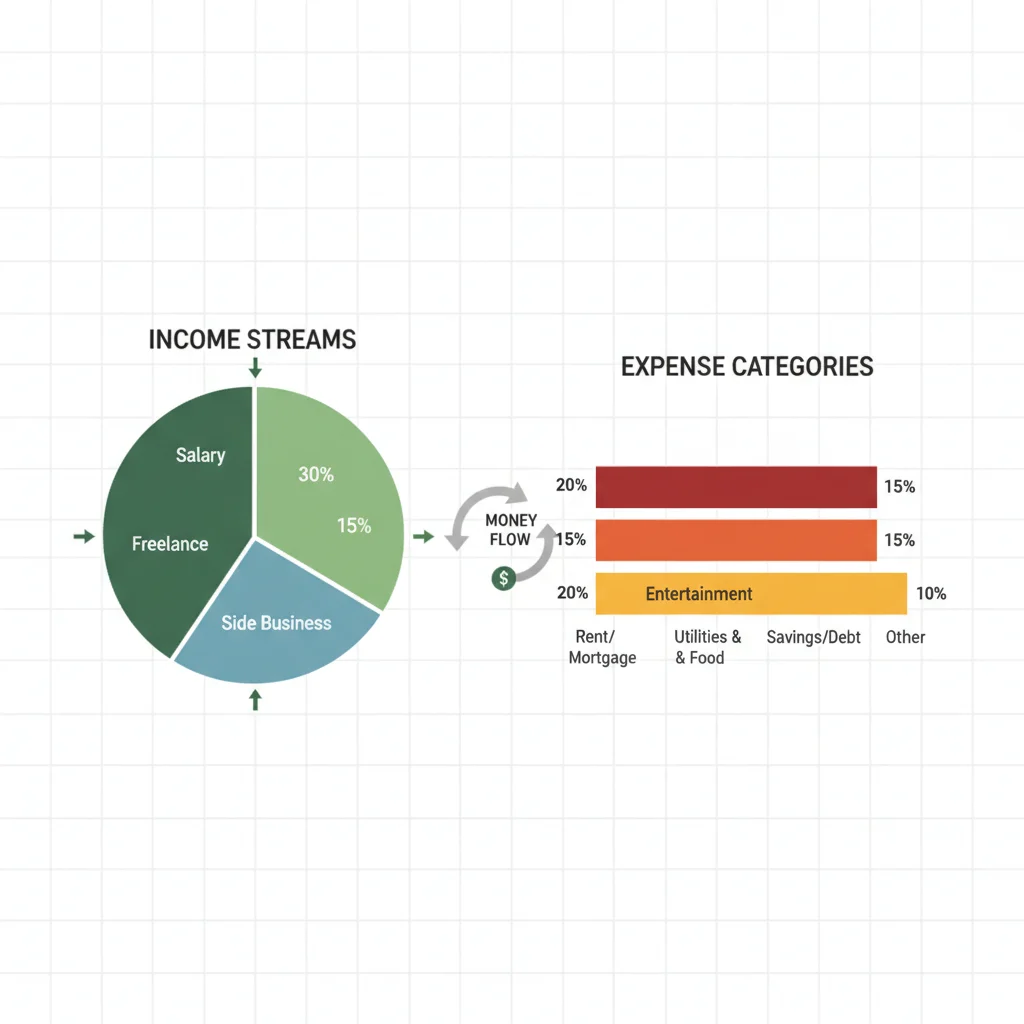
The very first step in building any effective simple budget plan is to get a clear picture of your total income. This might seem straightforward, but it’s crucial to account for all sources of money coming into your household. For most people, this will primarily be their salary from employment. However, don’t forget to include any other regular income streams such as:
- Side hustle earnings
- Freelance work
- Rental income
- Alimony or child support
- Social security benefits
- Pension payments
- Investment dividends
When calculating your income, it’s generally best to use your net income (what you actually receive after taxes, deductions, and contributions) rather than your gross income. This gives you the most realistic figure for what you have available to spend and save. If your income fluctuates, as it might for freelancers or those with commission-based roles, it’s wise to take an average of your income over the past few months (e.g., three to six months) to get a more conservative and reliable figure for your simple budget plan. Always err on the side of underestimating income rather than overestimating it, as this builds a buffer into your budget.
Knowing your exact take-home pay is fundamental because it sets the ceiling for your spending. Without this foundational number, any subsequent budgeting efforts will be built on shaky ground. This initial assessment is the bedrock upon which your entire simple budget plan for 2026 will rest.
Step 2: Track Your Expenses – Where Does Your Money Go?
Once you know how much money is coming in, the next critical step for your simple budget plan is to understand where it’s going. This is often the most revealing and sometimes surprising part of the budgeting process. Many people underestimate how much they spend in certain categories until they meticulously track it. Start by gathering all your financial statements: bank statements, credit card statements, receipts, and any other records of your spending over the last month or two.
Categorize your expenses into two main types:
Fixed Expenses:
These are expenses that generally stay the same each month and are often contractual. They are usually easier to predict and plan for. Examples include:
- Rent or mortgage payments
- Loan payments (car, student, personal)
- Insurance premiums (health, car, home)
- Subscription services (streaming, gym memberships)
- Utilities (though some might have a variable component, many are relatively stable)
Variable Expenses:
These expenses fluctuate from month to month and are often where you have the most control and opportunity for savings. Examples include:
- Groceries
- Dining out
- Entertainment
- Transportation (gas, public transit)
- Clothing
- Personal care
- Miscellaneous spending
There are several methods for tracking expenses. Choose one that you find easy to stick with:
- Budgeting Apps: Many apps (e.g., Mint, YNAB, Personal Capital) can link to your bank accounts and automatically categorize transactions.
- Spreadsheets: A simple Excel or Google Sheets document can be highly effective.
- Notebook and Pen: For those who prefer a more tactile approach, manually writing down every expense works too.
- Bank/Credit Card Statements: Reviewing these at the end of the month can give you a good overview, but real-time tracking is usually more effective for making adjustments.
The goal here is not to judge your spending, but to gain awareness. Track every dollar for at least a month, preferably two or three, to get an accurate average. This step is indispensable for building a realistic and effective simple budget plan.
Step 3: Set Realistic Financial Goals – What Do You Want Your Money to Do?
With a clear understanding of your income and expenses, the next step in creating a simple budget plan is to define your financial goals. Without goals, budgeting can feel like a chore without a purpose. Goals provide motivation, direction, and a benchmark for success. Your goals should be SMART: Specific, Measurable, Achievable, Relevant, and Time-bound.
Consider both short-term and long-term goals:
Short-Term Goals (within 1 year):
- Building an emergency fund (3-6 months of living expenses)
- Paying off a credit card debt
- Saving for a vacation
- Buying a new gadget
Long-Term Goals (1 year+):
- Saving for a down payment on a house
- Saving for retirement
- Funding a child’s education
- Paying off student loans
- Starting a business
Be specific about each goal. Instead of “save money,” aim for “save $5,000 for an emergency fund by December 2026.” Quantifying your goals makes them real and provides a target to work towards within your simple budget plan. Prioritize your goals. You might have several things you want to achieve, but it’s often more effective to focus on one or two major goals at a time to avoid spreading your resources too thin. This focus will make your simple budget plan more powerful and achievable.
Regularly review and adjust your goals as your life circumstances change. What might be a priority today could shift next year, and your budget should be flexible enough to adapt.
Step 4: Create Your Budget – Allocating Your Dollars
Now comes the exciting part: putting your simple budget plan into action by allocating your income to your expenses and savings goals. The basic formula is simple: Income – Expenses – Savings = Zero. This is often referred to as a ‘zero-based budget’, where every dollar has a job.
Start by listing your net income at the top. Then, subtract your fixed expenses. What’s left is what you have for variable expenses and savings. Here’s where you’ll make conscious decisions based on your tracked spending (from Step 2) and your financial goals (from Step 3).
Popular budgeting methods you can adapt for your simple budget plan include:
-
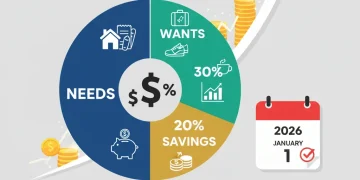
The 50/30/20 Rule:
- 50% Needs: Housing, utilities, groceries, transportation, insurance.
- 30% Wants: Dining out, entertainment, hobbies, shopping.
- 20% Savings & Debt Repayment: Emergency fund, retirement, extra debt payments.
This is an excellent starting point for a simple budget plan, offering a balanced approach without getting bogged down in too many categories.
-
Zero-Based Budgeting:
Every dollar of your income is assigned a purpose (spending, saving, debt repayment) until your income minus all allocations equals zero. This method ensures you’re intentional with every penny.
-
Envelope System:
For cash spenders, this involves putting cash into physical envelopes for different spending categories (e.g., ‘Groceries’, ‘Entertainment’). Once an envelope is empty, you stop spending in that category until the next budgeting period. This is a very tangible way to manage a simple budget plan.
Be realistic with your allocations. If you consistently spend $500 on groceries, don’t suddenly budget $200 unless you have a concrete plan to reduce that spending. Start with what’s realistic, then look for areas to optimize. The first iteration of your simple budget plan might not be perfect, and that’s okay. The key is to get started.
Step 5: Identify Areas for Optimization – Where Can You Save More?
With your initial simple budget plan in place, it’s time to play detective and find opportunities to free up more money for your goals. Go back to your tracked expenses from Step 2 and scrutinize your variable spending categories first. These are typically the easiest places to make adjustments without significantly impacting your quality of life.
Ask yourself tough questions about each category:
- Groceries: Can I meal plan more effectively? Buy store brands? Reduce food waste?
- Dining Out/Takeaway: How often do I eat out? Can I pack lunches more frequently? Cook at home more?
- Entertainment: Are there cheaper or free alternatives for leisure activities? Do I really need all those streaming services?
- Subscriptions: Review all recurring subscriptions. Are you using them all? Can you cancel any?
- Shopping (Clothing/Personal Care): Can I buy fewer items, or shop second-hand? Are there cheaper alternatives for personal care products?
- Transportation: Can I carpool, walk, bike, or use public transport more often?
Don’t overlook your fixed expenses either. While harder to change, sometimes there are opportunities:
- Insurance: Shop around for better rates on car, home, or health insurance.
- Utilities: Look for ways to reduce energy consumption (e.g., smart thermostats, LED bulbs).
- Loans: Can you refinance high-interest debt to lower monthly payments?
Even small, consistent savings can add up significantly over time. Finding an extra $50 or $100 per month can make a huge difference in achieving your financial goals. This optimization process is an ongoing part of maintaining a robust simple budget plan.
Step 6: Automate Your Savings and Bill Payments – Make It Easy to Stick To
One of the most powerful strategies for sticking to any simple budget plan is automation. By setting up automatic transfers for savings and automatic payments for bills, you remove the need for willpower and make sure your money goes where it needs to go before you even have a chance to spend it.
Automate Savings:
Set up an automatic transfer from your checking account to your savings account (and investment accounts, if applicable) on payday. Treat savings as a non-negotiable expense, just like your rent or mortgage. Even if it’s a small amount to start, consistency is key. As your income increases or expenses decrease, gradually increase your automated savings contributions. Consider creating separate savings accounts for different goals (e.g., ‘Emergency Fund’, ‘House Down Payment’, ‘Vacation Fund’) to keep your goals clear and motivating.
Automate Bill Payments:
Most banks and service providers offer automatic bill payment options. Set these up for your fixed expenses (rent, utilities, loan payments, insurance, subscriptions). This ensures you never miss a payment, avoiding late fees and protecting your credit score. Just be sure to check your accounts regularly to confirm payments have gone through correctly and to catch any discrepancies.
Automation takes the mental load out of managing your money and reinforces the structure of your simple budget plan. It builds positive financial habits effortlessly, making it much easier to achieve your goals without constant vigilance.

Step 7: Review and Adjust Your Simple Budget Plan Regularly
A simple budget plan is not a set-it-and-forget-it document. It’s a living, breathing tool that needs regular attention and adjustment. Life happens, and your financial situation will undoubtedly change over time. What worked perfectly last month might not be suitable next month.
Schedule regular budget reviews. For many, a monthly review is ideal, perhaps around the time you get paid. During your review, ask yourself:
- Did I stick to my budget categories?
- Were there any unexpected expenses?
- Did I overspend in any area? If so, why?
- Did I meet my savings goals?
- Are my financial goals still relevant?
- Has my income changed?
- Are there new fixed expenses or discontinued ones?
Use these reviews to make necessary adjustments to your simple budget plan. If you consistently overspend in one category, perhaps your initial allocation was unrealistic, and you need to increase it while cutting back elsewhere. If you find you have extra money, allocate it towards your goals. Don’t be afraid to tweak your budget; it’s a tool for you, not a rigid prison.
Quarterly or annual reviews can be more comprehensive, allowing you to reassess your long-term goals and make bigger strategic shifts. The flexibility and adaptability of your simple budget plan are what will ensure its long-term success. Embrace the process of continuous improvement, and you’ll find your budget becomes an increasingly powerful ally in your financial journey.
Common Budgeting Mistakes to Avoid
Even with a focus on a simple budget plan, certain pitfalls can derail your efforts. Being aware of these common mistakes can help you navigate your financial journey more smoothly in 2026:
-
Being Unrealistic:
Trying to cut too much too fast often leads to burnout and giving up. Start small, make gradual changes, and build momentum. If your budget is too restrictive, you’re less likely to stick to it.
-
Ignoring Small Expenses:
The ‘latte factor’ is real. Those daily coffees, impulse buys, and small subscriptions add up. Don’t overlook them; they can significantly impact your overall spending.
-
Not Tracking Everything:
Every dollar needs a job. If you leave money unaccounted for, it’s easy for it to disappear without you realizing where it went. Thorough tracking is essential for a truly effective simple budget plan.
-
Not Budgeting for Irregular Expenses:
Things like annual car registration, holiday gifts, or semi-annual insurance premiums can throw off a monthly budget if not planned for. Create a sinking fund for these by setting aside a small amount each month.
-
Giving Up After a Slip-Up:
No one is perfect. You will likely overspend in a category or miss a savings goal occasionally. Don’t let one mistake derail your entire effort. Learn from it, adjust your budget, and get back on track.
-
Not Involving Your Partner (If Applicable):
If you share finances, budgeting needs to be a team effort. Open communication and shared goals are vital for a successful joint simple budget plan.
-
Not Reviewing and Adjusting:
As discussed in Step 7, a static budget is a failing budget. Life changes, and your budget must evolve with it.
By avoiding these common errors, you significantly increase your chances of success with your simple budget plan and achieve your financial aspirations for 2026 and beyond.
Tools and Resources to Support Your Simple Budget Plan
While the principles of a simple budget plan remain constant, the tools you use can greatly enhance your experience and effectiveness. In 2026, there’s a wealth of options available to suit different preferences and tech-savviness levels:
-
Budgeting Apps:
- Mint: Free, links to all your accounts, categorizes transactions, tracks investments, and sends bill reminders. Great for an overview.
- You Need A Budget (YNAB): A paid app based on the zero-based budgeting philosophy. It’s powerful for intentional spending and often cited as life-changing by users.
- Personal Capital: Offers robust investment tracking in addition to budgeting features, ideal for those with more complex financial portfolios.
- Simplifi by Quicken: A newer option focusing on simplicity, real-time spending tracking, and personalized insights.
-
Spreadsheets:
For those who love customization and control, a simple spreadsheet (Excel, Google Sheets) can be incredibly effective. You can find numerous free templates online or create your own from scratch. This allows for a truly personalized simple budget plan.
-
Notebook and Pen:
Sometimes, the simplest tools are the best. Manually tracking expenses and writing down your budget can create a stronger connection to your money and spending habits.
-
Bank Tools:
Many banks now offer integrated budgeting tools within their online banking platforms. Check if your bank provides features like spending categorization, budget alerts, or savings goals.
-
Financial Blogs and Podcasts:
Stay motivated and informed by following personal finance experts. They often share tips, strategies, and success stories that can inspire and guide your simple budget plan.
Experiment with different tools to find what resonates most with you. The best tool is the one you’ll actually use consistently. Integrating technology can make your simple budget plan more efficient and less time-consuming, allowing you to focus on achieving your financial aspirations.
The Long-Term Impact of a Simple Budget Plan
Embarking on the journey of creating and maintaining a simple budget plan might seem daunting at first, but its long-term impact on your financial well-being is immeasurable. It’s not just about saving money; it’s about transforming your relationship with money, fostering financial literacy, and ultimately achieving a sense of security and freedom.
Over time, a consistent simple budget plan will help you:
- Reduce Financial Stress: Knowing where your money is going eliminates much of the anxiety associated with finances.
- Achieve Financial Goals Faster: Whether it’s debt repayment, a down payment, or retirement savings, a budget provides the roadmap.
- Build an Emergency Fund: A robust emergency fund is your safety net, protecting you from unexpected life events.
- Avoid Debt: By living within your means and planning for large purchases, you can minimize reliance on credit.
- Increase Net Worth: Consistent saving and smart spending directly contribute to growing your assets over time.
- Make Informed Decisions: A clear picture of your finances empowers you to make better spending and investment choices.
- Gain Financial Freedom: Ultimately, budgeting is a tool for freedom – the freedom to pursue your passions, support your family, and live the life you envision.
The year 2026 is an excellent time to commit to this process. Start today, be patient with yourself, and celebrate small victories along the way. Your future self will thank you for the discipline and foresight you applied in creating and sticking to your simple budget plan.
Conclusion: Empower Your Financial Future with a Simple Budget Plan
Taking control of your finances doesn’t have to be complicated. By following this 7-step guide to creating a simple budget plan, you are well on your way to achieving financial clarity and reaching your monetary goals in 2026. From understanding your income and tracking expenses to setting realistic goals and automating your savings, each step is designed to build a strong foundation for your financial success.
Remember, a budget is a dynamic tool, not a restrictive one. It requires regular review and adjustment to adapt to life’s changes. Embrace the process, stay consistent, and don’t be discouraged by occasional setbacks. With dedication, your simple budget plan will transform from a mere document into a powerful ally, guiding you towards a more secure, prosperous, and financially free future.
Start today. Your journey to financial control begins with that first, simple step.