Mastering Debt Management: Strategies for a 15% Reduction by Q3 2026

Mastering Debt Management: Strategies for a 15% Reduction by Q3 2026
Debt can feel like a heavy burden, a constant weight on your shoulders, impacting everything from your daily stress levels to your long-term financial goals. For many, the idea of significant debt reduction seems daunting, an insurmountable challenge. However, with the right approach and a clear, actionable plan, achieving substantial progress is not only possible but entirely within reach. Our ambitious yet achievable goal for you is a 15% debt reduction by the third quarter of 2026 (Q3 2026). This isn’t just a number; it’s a stepping stone towards financial freedom, a tangible milestone that will empower you to take control of your financial future.
This comprehensive guide will delve deep into effective debt reduction strategies, offering practical advice, actionable steps, and the motivation you need to transform your financial landscape. We’ll explore various techniques, from budgeting fundamentals to advanced debt repayment methods, ensuring you have a robust toolkit to tackle your debt head-on. By understanding the core principles of debt management and consistently applying these strategies, you can systematically chip away at your obligations, paving the way for a more secure and prosperous tomorrow. Let’s embark on this journey together, equipped with knowledge and determination, to make that 15% debt reduction a reality.
Understanding Your Debt Landscape: The First Step to Effective Debt Reduction Strategies
Before you can effectively implement any debt reduction strategies, you must first have a crystal-clear understanding of your current debt situation. This involves more than just knowing how much you owe; it requires a detailed inventory of all your liabilities. Think of it as mapping out your financial battlefield before you deploy your strategic forces.
1. Identify All Your Debts
Start by listing every single debt you have. This includes:
- Credit card balances
- Personal loans
- Student loans
- Car loans
- Mortgages (if you choose to include them in your reduction goal)
- Medical bills
- Any other outstanding financial obligations
Don’t overlook smaller debts; even seemingly insignificant amounts can add up and contribute to your overall financial stress. Use a spreadsheet or a dedicated financial app to keep track of this information. The more organized you are, the easier it will be to manage.
2. Gather Key Information for Each Debt
For each debt, you need to collect crucial details:
- Creditor Name: Who do you owe money to?
- Current Balance: The exact amount outstanding.
- Interest Rate (APR): This is arguably the most critical piece of information. High-interest debts are often the most damaging to your financial health.
- Minimum Payment: The smallest amount you must pay each month to avoid late fees and penalties.
- Due Date: When is each payment due? Missing due dates can incur additional charges and negatively impact your credit score.
Having this information readily available will allow you to prioritize and strategize your payments effectively. It’s a foundational step in any successful debt reduction strategies plan.
3. Calculate Your Total Debt Burden
Once you have all the individual debt details, sum them up to get your total debt burden. This number can be sobering, but it’s essential to face it head-on. Knowing the full scope of your challenge is empowering because it gives you a clear target. Remember, our goal is a 15% reduction of this total by Q3 2026. This tangible objective makes the process feel less abstract and more achievable.
4. Analyze Your Debt-to-Income Ratio
Your debt-to-income (DTI) ratio is another vital metric. It’s calculated by dividing your total monthly debt payments by your gross monthly income. Lenders use this ratio to assess your ability to manage monthly payments and repay debts. A high DTI can indicate financial strain and limit your access to new credit. While there’s no universally ‘good’ DTI, generally, a ratio below 36% is considered healthy. Understanding your DTI will help you gauge the severity of your debt situation and the urgency of implementing robust debt reduction strategies.
Crafting Your Budget: The Cornerstone of Debt Reduction Strategies
A well-structured budget is not just about tracking expenses; it’s a powerful tool that transforms your financial intentions into concrete actions. It’s the blueprint for how you will allocate your income to meet your financial obligations, including debt repayment, and achieve your goal of a 15% debt reduction by Q3 2026. Without a clear budget, even the best debt reduction strategies will struggle to gain traction.
1. Track Your Income and Expenses
The first step in budgeting is to understand where your money is coming from and, more importantly, where it’s going. For one month, meticulously track every dollar you earn and every dollar you spend. This can be done through:
- Budgeting Apps: Many apps like Mint, YNAB (You Need A Budget), or Personal Capital can automate this process by linking to your bank accounts and credit cards.
- Spreadsheets: A simple Excel or Google Sheet can be highly effective if you prefer a manual approach.
- Notebook and Pen: For those who enjoy a more tactile experience, a notebook can work wonders.
Be honest with yourself. Don’t omit any expenses, no matter how small. Those daily coffees or impulse purchases can surprisingly add up over time.
2. Categorize Your Expenses
Once you have a month’s worth of data, categorize your expenses. Common categories include:
- Housing (rent/mortgage, utilities)
- Transportation (car payments, gas, public transport)
- Food (groceries, dining out)
- Personal Care (toiletries, haircuts)
- Entertainment (movies, subscriptions, hobbies)
- Debt Payments (minimum payments for all debts)
- Savings
- Miscellaneous
Categorization helps you identify areas where you might be overspending and where you can cut back to free up more money for debt repayment. This is a critical insight for implementing effective debt reduction strategies.
3. Distinguish Between Fixed and Variable Expenses
- Fixed Expenses: These are expenses that typically remain the same each month, such as rent/mortgage, car payments, insurance premiums, and minimum debt payments.
- Variable Expenses: These fluctuate month-to-month, like groceries, dining out, entertainment, and utilities (which can vary seasonally).
While fixed expenses are harder to change in the short term, variable expenses offer the most immediate opportunities for savings and reallocating funds towards debt.
4. Create a Realistic Budget
Based on your tracking and categorization, create a budget that allocates every dollar of your income. Popular budgeting methods include:
- 50/30/20 Rule: 50% of your income for needs, 30% for wants, and 20% for savings and debt repayment. This is a great starting point for many.
- Zero-Based Budgeting: Every dollar is assigned a job (spending, saving, debt repayment) so that your income minus your expenses equals zero. This method provides maximum control.
- Envelope System: For cash-based spending, allocate physical cash into envelopes for different categories.
The key is to create a budget that is realistic and sustainable. An overly restrictive budget is likely to fail. The goal is to find extra money that can be consistently applied to your debt, accelerating your progress towards that 15% reduction.
5. Identify Areas for Cutting Expenses
Once your budget is in place, look for areas where you can trim spending. Even small cuts can make a big difference when consistently applied to debt. Consider:
- Reducing dining out and cooking more at home.
- Canceling unused subscriptions.
- Finding cheaper alternatives for services (e.g., streaming services, phone plans).
- Cutting back on impulse purchases.
- Negotiating bills (e.g., internet, insurance).
Every dollar saved is a dollar that can be put towards your debt, making your debt reduction strategies more potent.
Strategic Debt Repayment Methods: Accelerating Your 15% Reduction
Once you have a clear understanding of your debt and a solid budget in place, it’s time to implement strategic repayment methods. These methods are designed to accelerate your debt reduction, helping you reach that 15% target by Q3 2026 more efficiently. Choosing the right strategy depends on your financial personality and the specifics of your debts.
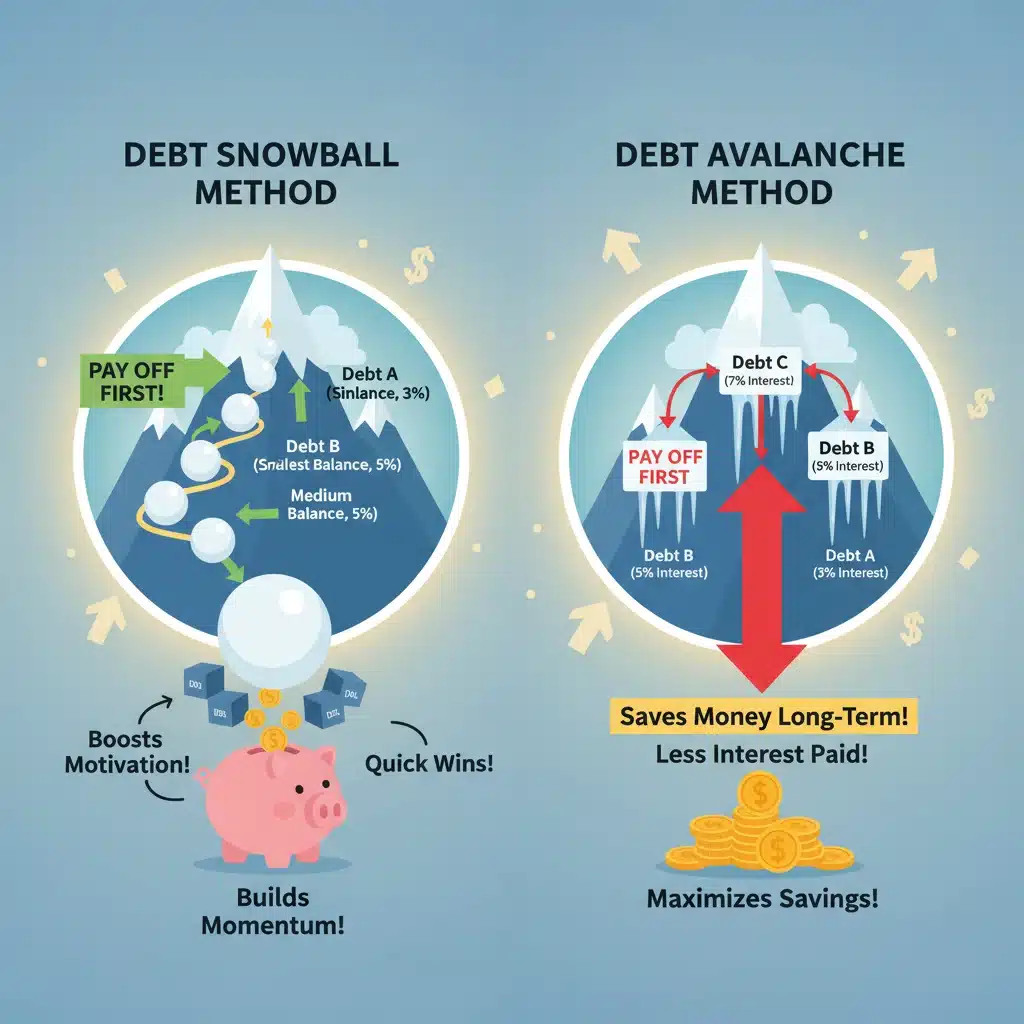
1. The Debt Snowball Method
The debt snowball method focuses on psychological wins to keep you motivated. Here’s how it works:
- List all your debts from the smallest balance to the largest, regardless of interest rate.
- Make minimum payments on all debts except the smallest one.
- Throw all extra money you can find (from your budget cuts, extra income, etc.) at the smallest debt until it’s paid off.
- Once the smallest debt is gone, take the money you were paying on it (minimum payment + extra money) and add it to the minimum payment of the next smallest debt.
- Continue this process, “snowballing” your payments until all debts are paid off.
Pros: Provides quick wins and boosts motivation, making it easier to stick with your plan. It’s particularly effective for individuals who need to see tangible progress to stay engaged.
Cons: You might pay more interest over time compared to the debt avalanche method, as it doesn’t prioritize high-interest debts first.
2. The Debt Avalanche Method
The debt avalanche method is mathematically the most efficient way to pay off debt, as it minimizes the total interest paid. Here’s how it works:
- List all your debts from the highest interest rate to the lowest, regardless of balance.
- Make minimum payments on all debts except the one with the highest interest rate.
- Direct all extra money you can muster towards the debt with the highest interest rate until it’s paid off.
- Once the highest-interest debt is gone, take the money you were paying on it (minimum payment + extra money) and add it to the minimum payment of the next highest-interest debt.
- Repeat until all debts are eradicated.
Pros: Saves you the most money in interest charges over the long run. It’s ideal for individuals who are disciplined and focused on financial optimization.
Cons: Can take longer to see the first debt paid off, which might be demotivating for some, especially if their highest-interest debt is also a large balance.
3. Balance Transfers and Debt Consolidation
These strategies can be powerful tools within your overall debt reduction strategies, especially for high-interest credit card debt.
- Balance Transfer: This involves moving high-interest credit card debt to a new credit card with a 0% introductory APR for a set period (e.g., 12-18 months). This gives you a window to pay down the principal without accruing additional interest. Be aware of balance transfer fees (typically 3-5% of the transferred amount) and ensure you can pay off the balance before the promotional period ends, or you’ll face high deferred interest rates.
- Debt Consolidation Loan: This involves taking out a new loan (often a personal loan) to pay off multiple smaller debts. The goal is to get a lower overall interest rate and consolidate multiple monthly payments into one, simplifying your finances. Ensure the new loan’s interest rate is significantly lower than your existing debts, and be cautious of loans with extended repayment periods that could lead to paying more interest over time, even with a lower APR.
Both options require a good credit score to qualify for the best rates. Evaluate carefully if these options align with your 15% debt reduction goal and if the terms are truly beneficial.
4. Negotiating with Creditors
Don’t underestimate the power of direct communication. If you’re struggling to make payments or have a good payment history, you might be able to negotiate with your creditors. You could ask for:
- A lower interest rate.
- A temporary deferment or forbearance.
- A reduced monthly payment.
Creditors often prefer to work with you rather than have you default on your payments. Be polite, explain your situation clearly, and be prepared with your financial information.
Maximizing Your Income: Boosting Your Debt Reduction Efforts
While cutting expenses is crucial, increasing your income can significantly accelerate your debt reduction strategies and help you achieve that 15% target by Q3 2026 even faster. More money coming in means more money to throw at your debts, creating a powerful one-two punch with your budgeting efforts.
1. Explore Side Hustles and Freelancing
The gig economy offers numerous opportunities to earn extra income outside of your primary job. Consider:
- Freelance Work: If you have marketable skills (writing, graphic design, web development, marketing, virtual assistance), platforms like Upwork, Fiverr, or local classifieds can connect you with clients.
- Delivery Services: Driving for DoorDash, Uber Eats, or Instacart can provide flexible income on your own schedule.
- Ridesharing: If you have a reliable car and enjoy driving, Uber or Lyft can be good options.
- Selling Goods: Turn unused items into cash by selling them on platforms like eBay, Facebook Marketplace, or local consignment shops.
- Pet Sitting/Dog Walking: If you love animals, this can be a rewarding way to earn extra cash.
- Tutoring or Teaching: Share your knowledge in a subject you excel at, either online or in person.
Even a few hundred extra dollars a month can make a substantial difference when consistently applied to your debt.
2. Ask for a Raise or Promotion
If you’ve been a dedicated employee and have taken on additional responsibilities, now might be the time to discuss a raise or promotion with your employer. Do your research on industry salary benchmarks for your role and come prepared to articulate your value and contributions to the company. A higher salary provides a permanent boost to your income, significantly enhancing your long-term debt reduction strategies.
3. Monetize a Hobby
Do you have a hobby that you’re passionate about and skilled in? Consider turning it into a source of income. This could involve:
- Selling handmade crafts on Etsy.
- Offering photography services.
- Baking custom cakes.
- Teaching music lessons.
Turning a passion into profit can make earning extra money enjoyable and sustainable.
4. Optimize Your Investments (Carefully)
If you have existing investments, you might consider optimizing them, but this should be approached with caution and ideally with professional advice. This is generally not recommended if your high-interest debt is significant, as the guaranteed return of paying off high-interest debt often outweighs potential investment gains. However, for some, a strategic reallocation or even a small, calculated withdrawal (if absolutely necessary and after careful consideration of tax implications and future goals) could provide a one-time boost to your debt repayment efforts. Always prioritize paying off high-interest debt over potentially higher-yielding but riskier investments.
5. Tax Refunds and Windfalls
When you receive a tax refund, bonus at work, or any other unexpected windfall, resist the urge to spend it on discretionary items. Instead, dedicate a significant portion, or even the entirety, of these funds directly to your debt. These lump sums can provide a powerful boost to your debt reduction strategies, allowing you to make a larger dent in your principal balances and potentially save a lot in interest.
Building Financial Resilience: Beyond the 15% Debt Reduction Goal
Achieving your 15% debt reduction by Q3 2026 is a monumental step, but true financial freedom extends beyond simply paying off debt. It involves building a robust financial foundation that protects you from future financial shocks and supports your long-term goals. These complementary debt reduction strategies are about creating lasting financial resilience.
1. Establish an Emergency Fund
One of the primary reasons people fall into debt is unexpected expenses. A robust emergency fund acts as a financial safety net, preventing you from relying on credit cards or loans when unforeseen events occur. Aim to save at least 3-6 months’ worth of essential living expenses in a separate, easily accessible savings account. While working on debt reduction, you might start with a smaller ‘starter’ emergency fund ($1,000-$2,000) to cover minor emergencies, then build it up further once significant debt is paid off.
2. Improve Your Credit Score
As you consistently implement your debt reduction strategies and make timely payments, your credit score will naturally improve. A good credit score offers numerous benefits:
- Lower interest rates on future loans (mortgages, car loans).
- Better terms on credit cards.
- Lower insurance premiums.
- Easier approval for housing and even some jobs.
Monitor your credit report regularly for errors and understand the factors that influence your score (payment history, credit utilization, length of credit history, types of credit, new credit).
3. Automate Your Finances
Automation is a powerful tool for consistency. Set up automatic transfers from your checking account to your savings account (for your emergency fund and other savings goals) and automatic payments for your debts. This ensures you never miss a payment, helps you stick to your budget, and removes the temptation to spend money before it’s allocated to debt or savings. Automating your debt payments is a core component of effective debt reduction strategies.
4. Continue Learning and Adapting
The financial world is constantly evolving, and so should your financial knowledge. Continuously educate yourself on personal finance topics, investment strategies, and economic trends. Your financial situation will also change over time – income fluctuations, new goals, life events – so be prepared to review and adapt your budget and debt reduction strategies as needed. Flexibility and continuous learning are key to long-term financial success.
5. Set New Financial Goals
Once you achieve your 15% debt reduction by Q3 2026, don’t stop there. Set new, even more ambitious financial goals. This could include:
- Becoming completely debt-free.
- Saving for a down payment on a home.
- Funding your children’s education.
- Saving aggressively for retirement.
- Starting a business.
Having clear, motivating goals will keep you focused and disciplined in your financial journey.

Overcoming Challenges and Staying Motivated on Your Debt Reduction Journey
The path to debt reduction is rarely a straight line. There will be unexpected expenses, moments of frustration, and temptations to revert to old spending habits. Staying motivated and resilient through these challenges is just as important as the strategies themselves. Our goal of a 15% debt reduction by Q3 2026 is achievable, but it requires consistent effort and a positive mindset.
1. Celebrate Small Wins
Don’t wait until you’ve hit your 15% target to acknowledge your progress. Celebrate every milestone, no matter how small. Paid off your smallest credit card? Treat yourself to a modest, budget-friendly reward. Made an extra payment on a loan? Acknowledge your discipline. These small celebrations provide positive reinforcement and help maintain momentum, making your debt reduction strategies feel less like a chore and more like a series of accomplishments.
2. Find an Accountability Partner or Community
Sharing your financial goals with a trusted friend, family member, or joining an online financial community can provide invaluable support and accountability. Knowing someone else is aware of your goals can motivate you to stay on track. They can offer encouragement, share their own experiences, and even hold you accountable when you feel like straying from your plan. This communal aspect can significantly strengthen your resolve in implementing effective debt reduction strategies.
3. Visualize Your Future
Regularly take time to visualize what your life will look like once you achieve your debt reduction goals. Imagine the relief of having less financial stress, the freedom to pursue new opportunities, or the ability to save for significant life events. This mental imagery can be a powerful motivator, reminding you why you started this journey in the first place.
4. Don’t Be Afraid to Adjust Your Plan
Life happens, and your financial situation is not static. If an unexpected expense arises, or your income changes, don’t view it as a failure. Instead, see it as an opportunity to reassess and adjust your budget and debt reduction strategies. A rigid plan that doesn’t account for life’s unpredictability is destined to fail. Be flexible, make necessary tweaks, and then get back on track. The key is to keep moving forward, even if it’s at a slightly slower pace for a short period.
5. Seek Professional Help if Needed
If you find yourself overwhelmed, or if your debt situation feels too complex to manage on your own, don’t hesitate to seek professional guidance. A certified financial planner or a reputable non-profit credit counseling agency can provide personalized advice, help you create a debt management plan, or explore options like debt consolidation or debt settlement. They can offer an objective perspective and expert strategies that might not be apparent to you.
Conclusion: Your Path to a 15% Debt Reduction by Q3 2026
Achieving a 15% debt reduction by Q3 2026 is an ambitious yet entirely attainable goal that will fundamentally transform your financial well-being. This journey, powered by robust debt reduction strategies, begins with a clear understanding of your current debt landscape, followed by the diligent creation and adherence to a realistic budget. By strategically applying repayment methods like the debt snowball or avalanche, and actively seeking opportunities to increase your income, you can accelerate your progress significantly.
Remember, debt management is not a one-time event but an ongoing process of learning, adapting, and staying disciplined. Building an emergency fund, improving your credit score, automating your finances, and continuously setting new financial goals are all crucial steps in fostering long-term financial resilience. While challenges may arise, celebrating small victories, seeking support, visualizing your future, and being flexible with your plan will keep you motivated and on track.
Take the first step today. Inventory your debts, craft your budget, and choose the repayment strategies that best suit your situation. With consistent effort, unwavering commitment, and the powerful debt reduction strategies outlined in this guide, you are well on your way to not just reaching, but exceeding, your 15% debt reduction target by Q3 2026, paving the way for a future of financial freedom and peace of mind.
Author