
Maximize Your 2026 Social Security Benefits: Key Updates for Early Claimers
Navigating the complexities of Social Security can be daunting, especially as you approach retirement. For those considering claiming their benefits early, understanding the upcoming changes and opportunities for 2026 Social Security Benefits is paramount. This comprehensive guide is designed to equip early claimers with the knowledge and strategies needed to maximize their Social Security payments, ensuring a more secure financial future. We’ll delve into critical updates, explore the nuances of early claiming, and provide actionable advice to help you make informed decisions.
Understanding the Landscape of 2026 Social Security Benefits
The Social Security Administration (SSA) continuously adjusts its parameters to reflect economic changes, inflation, and demographic shifts. These adjustments directly impact how much beneficiaries receive. For those planning to claim 2026 Social Security Benefits, it’s crucial to be aware of potential cost-of-living adjustments (COLAs), changes in the earnings test, and modifications to the full retirement age (FRA) schedule. While specific figures for 2026 are still projections, understanding the mechanisms behind these changes allows for better planning.
Cost-of-Living Adjustments (COLAs)
COLAs are designed to help Social Security benefits keep pace with inflation. Each year, the SSA announces a COLA based on the Consumer Price Index for Urban Wage Earners and Clerical Workers (CPI-W). While the 2026 COLA won’t be announced until late 2025, historical trends and economic forecasts can offer some insight. A higher COLA means a larger monthly benefit payment, which is particularly beneficial for early claimers whose initial benefits are already reduced. Staying informed about economic indicators that influence CPI-W can give you an edge in forecasting your potential 2026 Social Security Benefits.
Changes to the Earnings Test
If you claim Social Security benefits before your full retirement age and continue to work, your benefits may be subject to an earnings test. This test reduces your benefits if your earnings exceed a certain annual limit. The earnings limit is adjusted annually. For 2026, we can anticipate an increase in this limit, allowing early claimers to earn more without impacting their benefits. Understanding these thresholds is vital for those who plan to work part-time or full-time while receiving early Social Security. The rules differ slightly for those who reach their FRA during the year, so familiarity with these distinctions is key to optimizing your 2026 Social Security Benefits.
Full Retirement Age (FRA) Schedule
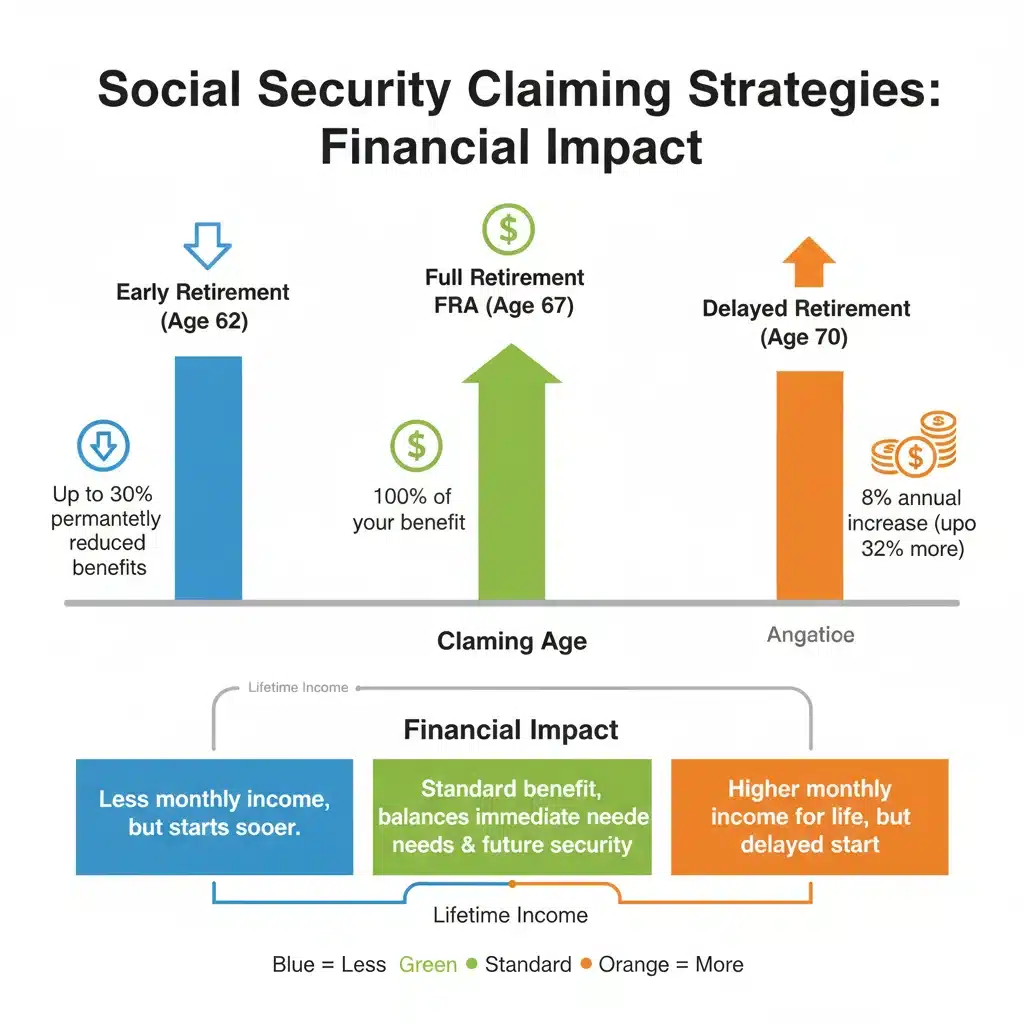
Your full retirement age is the age at which you’re entitled to 100% of your Social Security benefits. Claiming benefits before your FRA results in a permanent reduction. For individuals born in 1960 or later, the FRA is 67. If you were born between 1943 and 1959, your FRA is somewhere between 66 and 67, depending on your birth year. It’s imperative for early claimers to know their specific FRA, as this directly impacts the percentage reduction applied to their 2026 Social Security Benefits. The earlier you claim, the greater the reduction, making strategic timing a critical component of benefit maximization.
The Pros and Cons of Early Claiming for 2026 Social Security Benefits
Deciding when to claim Social Security is one of the most significant financial decisions you’ll make in retirement. While waiting until your FRA or even delaying until age 70 can result in higher monthly payments, there are valid reasons why claiming early might be the right choice for some individuals. Understanding these factors is essential for anyone considering their 2026 Social Security Benefits.
Advantages of Claiming Early
- Immediate Income Stream: For many, the most compelling reason to claim early is the immediate access to an income stream. This can be crucial if you’ve lost your job, are facing health issues that prevent you from working, or simply want to retire sooner.
- Opportunity for Other Investments: Receiving benefits earlier means you can invest those funds. While Social Security is a guaranteed income, a well-managed investment portfolio could potentially grow those early payments over time, offering a different path to maximizing your overall financial health.
- Shorter Life Expectancy: If you have health concerns or a family history of shorter lifespans, claiming early might mean you receive more in total benefits over your lifetime, even with the reduced monthly payment.
- Flexibility in Retirement: Early benefits can provide the financial cushion needed to transition into retirement gradually, perhaps by working part-time or pursuing hobbies without immediate financial pressure.
Disadvantages of Claiming Early
- Permanently Reduced Benefits: The most significant drawback is the permanent reduction in your monthly benefit amount. For example, claiming at age 62 (the earliest possible age) can result in a 25% to 30% reduction compared to your FRA benefit, depending on your birth year. This reduction lasts for the rest of your life.
- Impact on Spouse/Survivors: Your claiming decision can also affect the benefits your spouse or survivors may receive. A lower primary benefit means lower survivor benefits for your dependents.
- Earnings Test Limitations: As mentioned, if you work while claiming early, your benefits may be reduced if your earnings exceed the annual limit. This can complicate financial planning if you intend to continue working.
- Inflation Erosion: While COLAs help, an initially reduced benefit combined with inflation over many years can lead to less purchasing power in the long run.
Weighing these pros and cons carefully, in the context of your personal health, financial situation, and retirement goals, is crucial for making the best decision regarding your 2026 Social Security Benefits.
Strategies to Maximize Your 2026 Social Security Benefits as an Early Claimer
Even if you decide to claim your 2026 Social Security Benefits early, there are still strategies you can employ to make the most of your payments. It’s not just about when you claim, but also how you integrate Social Security into your broader retirement plan.
1. Understand Your Benefit Statement
Regularly review your Social Security statement, which you can access online through your My Social Security account. This statement provides an estimate of your benefits at various claiming ages, based on your earnings record. It’s critical to ensure your earnings record is accurate, as errors can lead to lower benefits. Correcting any discrepancies now can significantly impact your 2026 Social Security Benefits.
2. Consider Spousal Benefits
If you are married, understanding spousal benefits can be a game-changer. A spouse may be eligible to receive up to 50% of the higher earner’s full retirement age benefit. While early claiming reduces your own benefit, it might not always prevent your spouse from receiving their full spousal benefit, depending on their age and when they claim. Strategic coordination between spouses can lead to a higher combined household income, even if one spouse claims early. For instance, one spouse might claim early to provide immediate income, while the other delays to maximize their own benefit, thus boosting the overall 2026 Social Security Benefits for the household.

3. Work Longer, Even Part-Time
If feasible, working a few extra years, even part-time, can have a substantial positive impact. Not only does it allow you to delay claiming and reduce the permanent reduction, but it also increases your lifetime earnings record. Social Security benefits are calculated based on your 35 highest-earning years. If you have years with low or no earnings, replacing them with higher earning years from working longer can boost your average indexed monthly earnings (AIME), leading to higher 2026 Social Security Benefits.
4. Pay Off High-Interest Debt
Before relying heavily on your 2026 Social Security Benefits, consider paying off high-interest debt like credit card balances. The money saved on interest payments can effectively increase your disposable income, making your Social Security payments stretch further. This is a foundational financial strategy that enhances the value of any income stream, including early Social Security benefits.
5. Build Other Income Streams
Social Security was never intended to be your sole source of retirement income. If you plan to claim early, it becomes even more critical to have other income streams. This could include:
- Pensions: If you’re fortunate enough to have one.
- 401(k)s or IRAs: Tax-advantaged retirement accounts.
- Savings and Investments: Non-retirement accounts that can provide liquidity.
- Part-time Work or Consulting: Continuing to work in a reduced capacity.
- Rental Income: From properties you own.
Diversifying your income sources reduces your reliance on Social Security and mitigates the impact of claiming early, allowing your 2026 Social Security Benefits to supplement rather than solely support your lifestyle.
6. Understand Taxation of Benefits
Depending on your “provisional income” (which includes half of your Social Security benefits, tax-exempt interest, and other adjusted gross income), a portion of your Social Security benefits may be taxable. If you claim early and continue to work, your provisional income might be higher, potentially leading to a larger portion of your 2026 Social Security Benefits being taxed. Planning for this can help you avoid unwelcome surprises during tax season.
Navigating the Application Process for 2026 Social Security Benefits
The application process for Social Security benefits is relatively straightforward, but it requires careful attention to detail. You can apply for benefits online, by phone, or in person at a Social Security office. Most financial advisors recommend applying approximately three months before you want your benefits to start.
Required Documents
When applying for your 2026 Social Security Benefits, you’ll typically need:
- Your Social Security card.
- Your birth certificate.
- Proof of U.S. citizenship or lawful alien status (if you were not born in the U.S.).
- W-2 forms or self-employment tax returns for the previous year.
- Your bank account information for direct deposit.
- A copy of your U.S. military discharge paper(s) if you had military service before 1968.
- Your spouse’s birth certificate and Social Security number (if applying for spousal benefits).
Having all these documents ready will streamline your application and help ensure your 2026 Social Security Benefits begin promptly.
Future Outlook and Planning for 2026 Social Security Benefits
While this guide focuses on 2026 Social Security Benefits, it’s important to remember that Social Security is a dynamic system. Future legislative changes, economic conditions, and demographic shifts could all influence the program. Therefore, ongoing education and periodic review of your retirement plan are essential.
Potential Legislative Changes
Discussions about Social Security reform are ongoing in Congress. Potential changes could include adjustments to the COLA formula, modifications to the FRA, or changes in how benefits are calculated. While it’s impossible to predict the future, staying informed about these discussions can help you anticipate potential impacts on your long-term retirement planning, including your 2026 Social Security Benefits and beyond.
Seeking Professional Advice
Given the complexity and the significant financial implications, consulting with a qualified financial advisor specializing in retirement planning is highly recommended. An advisor can help you:
- Analyze your specific financial situation and goals.
- Project your Social Security benefits under various claiming scenarios.
- Develop a comprehensive retirement income strategy that integrates your 2026 Social Security Benefits with other assets.
- Understand the tax implications of your claiming decision.
- Navigate the application process.
Their expertise can provide invaluable guidance, ensuring you make the most informed decisions for your financial well-being.
Common Misconceptions About Early Claiming and 2026 Social Security Benefits
There are several myths surrounding Social Security that can lead to suboptimal claiming decisions. Dispelling these can help early claimers make more informed choices about their 2026 Social Security Benefits.
Myth 1: Social Security Is Running Out of Money
While the Social Security trust funds face long-term financial challenges, the system is not “running out of money.” It can pay 100% of promised benefits until around the mid-2030s. Even after that, it’s projected to be able to pay a significant portion of benefits based on ongoing tax revenues. This means that while some adjustments might be needed in the future, your 2026 Social Security Benefits are not at risk of disappearing entirely.
Myth 2: My Benefits Will Increase If I Stop Working
This is generally not true if you’ve already worked 35 years or more. Your Social Security benefits are based on your highest 35 years of earnings. If you stop working and have fewer than 35 years of earnings, then future zeros will be averaged in, potentially lowering your benefit. If you have 35 years of earnings, stopping work won’t increase your benefit unless your current earnings are replacing a lower-earning year from your past. However, if you are subject to the earnings test, stopping work might temporarily increase your current payout by eliminating the reduction, but not the underlying benefit calculation.
Myth 3: I Can’t Change My Mind After Claiming Early
You actually have a limited window to change your mind. Within 12 months of claiming, you can withdraw your application, repay all the benefits you’ve received, and reapply for higher benefits at a later date. This option, known as “withdrawal of application,” can be useful if your financial situation changes shortly after you start receiving benefits. However, it’s a one-time opportunity.
Myth 4: My Social Security Benefits Are Tax-Free
As mentioned earlier, this is a common misconception. For many retirees, a portion of their Social Security benefits is indeed subject to federal income tax, depending on their provisional income. Some states also tax Social Security benefits. It’s important to factor potential taxes into your calculations when planning for your 2026 Social Security Benefits.
Case Studies: Real-World Scenarios for Early Claimers
To illustrate the impact of different claiming strategies, let’s consider a couple of hypothetical scenarios for individuals planning their 2026 Social Security Benefits.
Scenario A: The Health-Challenged Early Claimer
Sarah, born in 1964 (FRA of 67), has a family history of serious health issues and was recently diagnosed with a chronic illness. She anticipates a shorter life expectancy than average. She decides to claim her 2026 Social Security Benefits at age 62. While her monthly benefit is reduced by approximately 30%, she gains immediate access to income, which helps cover medical expenses and allows her to enjoy her remaining years without financial stress. For Sarah, the immediate liquidity and the higher total benefits received over a potentially shorter lifespan outweigh the benefits of waiting for a higher monthly payment.
Scenario B: The Working Early Claimer
David, born in 1962 (FRA of 67), was laid off from his full-time job at age 64. He finds a part-time consulting role that pays well but below his previous income. He decides to claim his 2026 Social Security Benefits at age 64 to supplement his part-time earnings. He carefully monitors his income to stay below the earnings test limit for those under FRA. This strategy allows him to bridge the income gap, continue contributing to his retirement savings, and maintain a comfortable lifestyle without fully depleting his other assets. He plans to re-evaluate his situation at his FRA, considering whether to suspend benefits and restart them later if his earnings increase significantly.
These scenarios highlight that there is no one-size-fits-all answer for claiming Social Security. The best strategy for your 2026 Social Security Benefits depends entirely on your unique circumstances.
Conclusion: Strategic Decisions for Your 2026 Social Security Benefits
Planning for your 2026 Social Security Benefits as an early claimer requires a thorough understanding of the rules, careful consideration of your personal circumstances, and proactive financial planning. While claiming early comes with a permanent reduction in monthly payments, it can be a viable and even optimal strategy for many, providing immediate income, flexibility, and peace of mind.
By staying informed about COLAs and earnings test limits, understanding your specific full retirement age, exploring spousal benefit options, and integrating Social Security into a broader financial strategy that includes other income streams and debt management, you can maximize the value of your early claimed benefits. Don’t hesitate to seek professional advice to navigate these complex decisions and ensure your retirement years are as financially secure as possible. The choices you make today regarding your 2026 Social Security Benefits will have a lasting impact on your financial future.