Maximize 2026 Social Security Benefits: Your Guide to a 10% Increase

Retirement planning is a journey that requires foresight, strategic decision-making, and a deep understanding of the resources available to you. For millions of Americans, Social Security benefits form a cornerstone of their financial security in their golden years. As we approach 2026, understanding how to maximize social security payouts becomes even more critical, especially with potential federal benefit changes on the horizon. This comprehensive guide is designed to empower you with the knowledge and strategies to potentially increase your Social Security benefits by an extra 10% or more, ensuring a more comfortable and secure retirement.
Many individuals leave significant money on the table simply because they are unaware of the various factors that influence their Social Security checks. From the crucial decision of when to claim your benefits to understanding spousal benefits, taxation, and the impact of continued earnings, every choice can have a profound effect on your overall retirement income. Our goal is to demystify these complex topics and provide actionable insights that you can apply to your own situation.
The landscape of federal benefits is ever-evolving. While major legislative overhauls are not always predictable, adjustments to cost-of-living allowances (COLAs), earnings limits, and the taxation of benefits are regular occurrences. Preparing for these potential shifts is key to maintaining and even enhancing your financial standing. By focusing on strategies to maximize social security, you’re not just planning for 2026; you’re building a resilient financial future.
Throughout this article, we will delve into the intricacies of Social Security, offering practical advice and expert tips. Whether you are years away from retirement, or already contemplating your claiming decision, the information presented here will be invaluable. Let’s embark on this journey to unlock the full potential of your Social Security benefits.
Understanding Your Social Security Statement: The Foundation of Maximizing Benefits
Before you can effectively maximize social security benefits, you must first understand what you are currently entitled to. Your annual Social Security Statement is a vital document that provides a personalized estimate of your future benefits based on your earnings record. It’s not just a piece of paper; it’s a roadmap to your retirement income.
What Your Statement Tells You
- Estimated Benefits at Different Ages: Your statement will typically show your estimated monthly benefit if you claim at age 62 (the earliest eligibility age), at your Full Retirement Age (FRA), and at age 70 (the latest you can delay for maximum benefits). These figures are crucial for understanding the financial implications of your claiming decision.
- Earnings Record: It lists your yearly earnings that have been reported to the Social Security Administration (SSA). This record is incredibly important because your benefits are calculated based on your 35 highest-earning years. Any errors here could significantly impact your future payments, so it’s essential to review it carefully.
- Estimates for Disability and Survivor Benefits: Beyond retirement, your statement also provides estimates for disability benefits, should you become unable to work, and survivor benefits for your family in the event of your death.
Why Reviewing Your Statement is Critical
Errors in your earnings record can occur, leading to lower benefit payments. These errors could be due to employer reporting mistakes, name changes, or even identity theft. The sooner you identify and correct any discrepancies, the better. You can access your Social Security Statement online by creating a ‘my Social Security’ account on the SSA website. This digital platform offers immediate access to your information and various planning tools.
Understanding these foundational elements is the first step towards formulating a strategy to maximize social security. Without a clear picture of your current standing, it’s impossible to make informed decisions about your future.
The Power of Delay: Claiming Age and Its Impact on Your Payouts
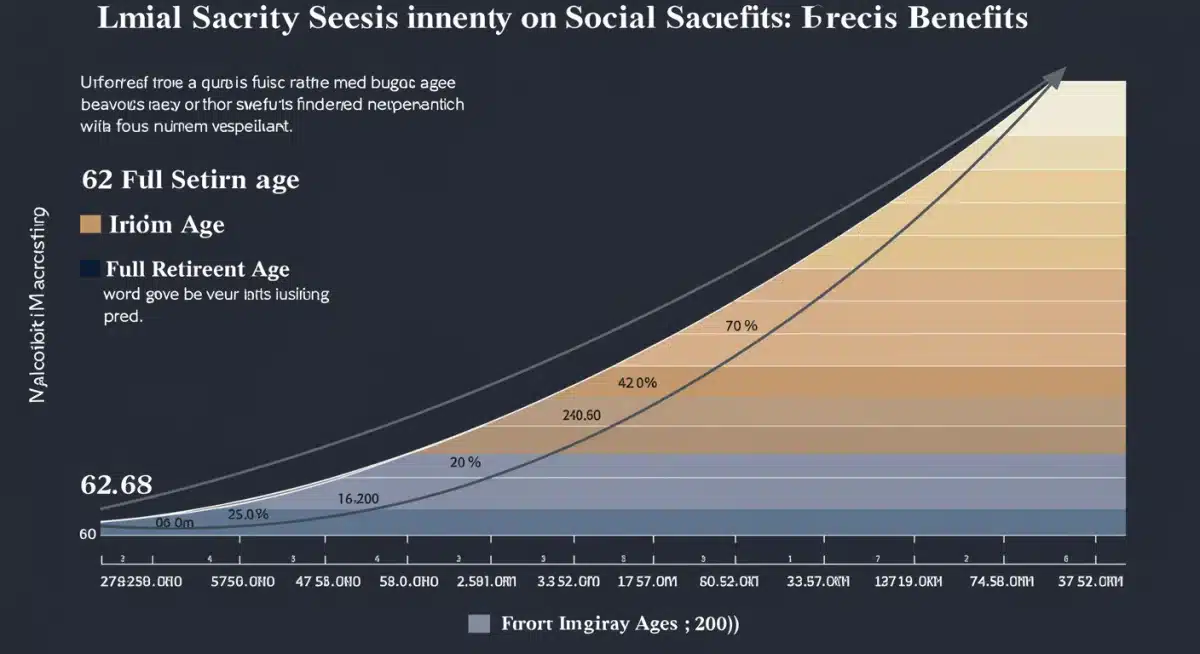
One of the most significant levers you have to maximize social security benefits is your claiming age. The difference between claiming at the earliest age (62) and delaying until age 70 can result in a substantial increase in your monthly benefit amount – potentially up to 76% more over your lifetime. For 2026, these principles remain steadfast.
Full Retirement Age (FRA) Explained
Your Full Retirement Age (FRA) is the age at which you are entitled to receive 100% of your Social Security benefits. This age varies depending on your birth year. For those born in 1960 or later, FRA is 67. Claiming before your FRA results in a permanent reduction of your benefits, while delaying past your FRA leads to an increase.
The Benefits of Delaying
- Delayed Retirement Credits: For each year you delay claiming benefits past your FRA, up to age 70, you earn delayed retirement credits. These credits increase your annual benefit by a certain percentage, typically 8% per year. For example, if your FRA is 67 and you delay claiming until 70, you could increase your monthly benefit by 24% (3 years x 8% per year). This is a guaranteed, inflation-adjusted return that is hard to beat elsewhere.
- Higher Lifetime Earnings: While it might seem counterintuitive to delay receiving money, a higher monthly payout over a potentially longer lifespan can lead to a significantly greater total amount received from Social Security. This strategy is particularly powerful for individuals with good health and a family history of longevity.
When Early Claiming Might Make Sense
While delaying is often the optimal strategy to maximize social security, there are scenarios where claiming early at age 62 might be appropriate:
- Health Issues: If you have significant health problems and a shorter life expectancy, claiming early might be the best option to receive benefits for as long as possible.
- Immediate Financial Need: If you are genuinely unable to work and need the income to cover essential living expenses, claiming early can provide crucial financial support.
- Spousal Benefit Strategy: In some cases, one spouse might claim early to allow the other spouse’s benefits to grow, as part of a coordinated claiming strategy.
The decision of when to claim is highly personal and depends on a multitude of factors, including your health, financial needs, and family situation. Consulting with a financial advisor specializing in retirement planning can help you navigate this complex decision and determine the best approach to maximize social security for your unique circumstances.
Coordinating Spousal and Survivor Benefits to Maximize Social Security
Social Security isn’t just for individuals; it’s a family benefit. Understanding how spousal and survivor benefits work can unlock additional income streams and significantly help you maximize social security for your household, especially for married couples and those who have lost a spouse.
Spousal Benefits: A Strategic Advantage for Married Couples
If you are married, you may be eligible to receive benefits based on your spouse’s work record. This is particularly beneficial if one spouse has a significantly higher earnings history than the other. A spousal benefit can be up to 50% of the higher-earning spouse’s Full Retirement Age (FRA) benefit.
Key Considerations for Spousal Benefits:
- Your Own Work Record: If you are eligible for benefits based on your own work record, the SSA will pay you that amount first. If your spousal benefit is higher, you will receive a combination that equals the higher spousal amount.
- Claiming Age: Similar to individual benefits, claiming spousal benefits before your own FRA will result in a reduced amount. However, spousal benefits do not earn delayed retirement credits past your FRA; they max out at 50% of your spouse’s FRA benefit.
- File and Suspend (No Longer Available for Most): It’s important to note that the ‘file and suspend’ strategy, which allowed a higher earner to file for benefits at FRA and immediately suspend them to allow their own benefits to grow while their spouse claimed spousal benefits, was largely eliminated by the Bipartisan Budget Act of 2015 for those born after January 1, 1954. If you were born before this date, you might still have options, so it’s worth investigating.
- Restricted Application (No Longer Available for Most): Similarly, the ‘restricted application’ strategy, which allowed individuals at FRA to claim only spousal benefits while their own benefits continued to grow, is also generally unavailable for those born after January 1, 1954.
Despite these changes, strategic claiming for couples remains vital. Often, the higher-earning spouse delays claiming until age 70 to maximize social security, while the lower-earning spouse claims their own benefits or spousal benefits (if higher) at their FRA. This coordinated approach can significantly increase the total lifetime benefits for the couple.
Survivor Benefits: Protecting Your Loved Ones
If your spouse passes away, you may be eligible for survivor benefits based on their work record. These benefits can provide crucial financial support during a difficult time.
Key Aspects of Survivor Benefits:
- Benefit Amount: A surviving spouse can receive 100% of the deceased worker’s basic benefit amount if they claim at their own FRA. If claimed earlier, the benefit will be reduced.
- Minimum Age: A surviving spouse can claim benefits as early as age 60 (or age 50 if disabled).
- Remarriage: If you remarry before age 60 (or age 50 if disabled), you generally cannot receive survivor benefits. However, if you remarry after age 60 (or age 50 if disabled), you can still claim survivor benefits.
- Switching Benefits: A surviving spouse can claim survivor benefits first and then switch to their own higher retirement benefit at a later age (e.g., age 70), or vice versa. This flexibility is a powerful tool to maximize social security over time.
Understanding these provisions is essential for comprehensive retirement planning, ensuring that you and your loved ones are financially protected. These benefits are complex, and seeking personalized advice from a financial professional is highly recommended to develop the most effective claiming strategy for your unique situation.
The Impact of Earnings and Taxation on Your Benefits
While the goal is to maximize social security, it’s equally important to understand how continued earnings and taxation can affect your net benefit amount. These factors can sometimes reduce your take-home pay, so strategic planning is essential.
Earnings Limits While Receiving Benefits
If you claim Social Security benefits before your Full Retirement Age (FRA) and continue to work, your benefits may be reduced if your earnings exceed certain annual limits. These limits are adjusted annually. In the year you reach FRA, the earnings limit is much higher, and benefits are only withheld for earnings above that higher limit up to the month you reach FRA. Once you reach your FRA, your benefits are no longer subject to earnings limits, and you can earn as much as you want without any reduction in your Social Security payments.
- Before FRA: For every $2 you earn above the annual limit, $1 is withheld from your benefits.
- In the Year You Reach FRA: For every $3 you earn above a different, higher annual limit, $1 is withheld until the month you reach FRA.
- At or After FRA: No earnings limits apply.
It’s crucial to be aware of these limits if you plan to work while receiving benefits before your FRA. While withheld benefits are not lost forever (they are factored back into your benefit calculation at FRA, potentially increasing future payments), it can impact your immediate cash flow. This is another reason why delaying your claim can be a powerful strategy to maximize social security, as it removes the earnings limit concern entirely.
Taxation of Social Security Benefits
Unfortunately, a portion of your Social Security benefits may be subject to federal income tax, depending on your ‘combined income.’ Your combined income is defined as your adjusted gross income (AGI) plus non-taxable interest plus one-half of your Social Security benefits.
- Up to 50% Taxable: If your combined income is between $25,000 and $34,000 for an individual, or between $32,000 and $44,000 for a married couple filing jointly, up to 50% of your benefits may be taxable.
- Up to 85% Taxable: If your combined income is above $34,000 for an individual, or above $44,000 for a married couple filing jointly, up to 85% of your benefits may be taxable.
These thresholds are not indexed for inflation, meaning that as other sources of retirement income (pensions, 401(k) withdrawals, investment income) increase over time, more and more retirees find their Social Security benefits becoming taxable. This is a critical factor to consider when planning your retirement income streams to maximize social security net payouts.
Strategies to Mitigate Taxation:
- Roth Conversions: Converting traditional IRA/401(k) funds to a Roth IRA before retirement can reduce your taxable income in retirement, potentially lowering the amount of your Social Security benefits subject to tax.
- Tax-Efficient Withdrawals: Strategically drawing down funds from different accounts (taxable, tax-deferred, tax-free) can help manage your combined income below the taxation thresholds.
- Location: Some states also tax Social Security benefits, while others do not. Your state of residence in retirement can impact your overall tax burden.

Understanding the interplay between earnings, taxation, and your Social Security benefits is crucial for effective retirement income planning. A holistic approach that considers all sources of income and their tax implications will help you maximize social security and your overall financial well-being.
Future Changes to Federal Benefits and How to Prepare for 2026 and Beyond
The Social Security system is dynamic, with ongoing discussions and potential adjustments to ensure its long-term solvency. While predicting exact changes for 2026 and beyond can be challenging, understanding the nature of these discussions allows you to better prepare and adapt your strategies to maximize social security.
Potential Areas of Change
- Cost-of-Living Adjustments (COLAs): COLAs are annual adjustments to benefits to account for inflation. While not a direct increase in ‘real’ benefits, they are crucial for maintaining purchasing power. The formula for calculating COLAs could be a subject of future reform discussions.
- Full Retirement Age (FRA) Adjustments: There have been ongoing debates about gradually raising the Full Retirement Age further, given increased life expectancies. While no immediate changes are mandated, it remains a long-term possibility that could impact future generations.
- Taxable Earnings Cap: The amount of income subject to Social Security taxes (the ‘taxable maximum’) is adjusted annually. Raising this cap is often discussed as a way to increase revenue for the system. While this primarily affects high earners, it’s a key element of solvency discussions.
- Benefit Formula Changes: Less frequently, but still a possibility, are adjustments to the benefit calculation formula itself. Any changes here would have broad implications.
- Means-Testing: Some proposals suggest ‘means-testing’ benefits, where higher-income retirees would receive reduced benefits. This is a highly contentious topic but one that surfaces in reform debates.
Preparing for Uncertainty
Given the potential for future changes, a proactive and flexible approach to retirement planning is essential. Here’s how you can prepare to continue to maximize social security, regardless of what 2026 and beyond may bring:
- Stay Informed: Regularly check official sources like the Social Security Administration (SSA) website and reputable financial news outlets for updates on proposed legislation and enacted changes.
- Diversify Retirement Savings: Do not rely solely on Social Security for your retirement income. A diversified portfolio that includes 401(k)s, IRAs, personal savings, and investments provides a buffer against potential changes to federal benefits.
- Build a Strong Emergency Fund: A robust emergency fund can help you weather unexpected financial challenges, including any unforeseen adjustments to your Social Security benefits.
- Consider Longevity Planning: With increasing life expectancies, planning for a longer retirement is crucial. This includes considering long-term care insurance and other strategies to mitigate healthcare costs.
- Consult a Financial Advisor: A qualified financial advisor can help you understand the potential impact of future changes on your specific situation and adjust your retirement plan accordingly. They can provide personalized strategies to maximize social security and your overall financial health.
While the future of Social Security may hold some uncertainties, a well-informed and adaptable approach to your retirement planning can ensure you are prepared for whatever comes your way. By taking these steps, you can continue to maximize social security and secure your financial future.
Advanced Strategies to Maximize Social Security Payouts
Beyond the fundamental decisions of when to claim, there are several advanced strategies that can further help you maximize social security benefits, particularly for couples and those with unique circumstances.
The "Claim Now, Claim More Later" Strategy (for specific birth years)
While the Bipartisan Budget Act of 2015 significantly curtailed some advanced claiming strategies, specific birth year cohorts may still benefit. For example, individuals born before January 2, 1954, who have reached their Full Retirement Age (FRA), might still be able to file a "restricted application" for spousal benefits while allowing their own retirement benefits to continue growing until age 70. This allows them to receive some income while their primary benefit accrues delayed retirement credits. It’s crucial to verify eligibility for such specific strategies with the SSA or a financial advisor, as the rules are precise and time-sensitive.
Divorced Spouse Benefits
If you were married for at least 10 years, are currently unmarried, and are at least 62 years old, you may be able to claim benefits based on your ex-spouse’s work record. This can be a powerful way to maximize social security, especially if your ex-spouse has a higher earnings history than you do. Importantly, claiming these benefits does not affect your ex-spouse’s benefits or their current spouse’s benefits.
Key Criteria for Divorced Spouse Benefits:
- Marriage Duration: The marriage must have lasted 10 years or longer.
- Marital Status: You must currently be unmarried.
- Age: You must be at least 62 years old.
- Ex-Spouse’s Eligibility: Your ex-spouse must be entitled to Social Security retirement or disability benefits. If your ex-spouse is eligible but has not yet filed, you can still claim if you have been divorced for at least two years.
The benefit amount is up to 50% of your ex-spouse’s Full Retirement Age (FRA) benefit. This can be a significant boost to your retirement income and is a often-overlooked strategy to maximize social security.
"Do-Over" or Withdrawal of Application
If you claimed Social Security benefits early and later regret your decision (perhaps your financial situation improved, or you realized the benefit of delaying), you have a one-time opportunity to withdraw your application. This is often referred to as a "do-over."
Conditions for Withdrawing Your Application:
- Time Limit: You must make the request within 12 months of first receiving benefits.
- Repayment: You must repay all benefits you and anyone else received on your work record. This includes any spousal or child benefits.
This strategy allows you to effectively "undo" an early claiming decision, letting your benefits grow by earning delayed retirement credits until a later age, potentially up to age 70. It’s a complex decision with significant financial implications, so careful consideration and professional advice are paramount if you consider this option to maximize social security.
Maximizing for High Earners
For high earners, ensuring your earnings record is accurate throughout your career is critical. Since Social Security benefits are based on your 35 highest-earning years, consistent high earnings contribute to a higher Average Indexed Monthly Earnings (AIME) and thus a higher primary insurance amount (PIA). Regularly checking your Social Security Statement for accuracy is vital to ensure all your contributions are correctly recorded, setting the stage to maximize social security when you eventually claim.
These advanced strategies highlight the complexity and opportunities within the Social Security system. Each individual’s situation is unique, and what works for one may not work for another. Therefore, seeking personalized guidance from a financial planner who specializes in Social Security claiming strategies is highly recommended to uncover all possible avenues to maximize social security for your retirement.
Putting It All Together: Your Action Plan to Maximize Social Security for 2026
Navigating the intricacies of Social Security can feel overwhelming, but by breaking down the process into actionable steps, you can confidently work towards increasing your retirement income. The goal is clear: to maximize social security benefits by an extra 10% or more, securing your financial future for 2026 and beyond.
Step 1: Review Your Social Security Statement Annually
Make it a habit to check your Social Security Statement every year. Create a ‘my Social Security’ account online if you haven’t already. Verify your earnings record for accuracy and understand your estimated benefits at various claiming ages. This is your baseline and the most fundamental step in any strategy to maximize social security.
Step 2: Understand Your Full Retirement Age (FRA)
Know your specific Full Retirement Age. This is the pivotal age around which all claiming decisions revolve. Understanding your FRA is crucial for calculating the impact of early or delayed claiming on your benefits and is a core component of any plan to maximize social security.
Step 3: Analyze Claiming Scenarios
Consider the financial implications of claiming at age 62, your FRA, and age 70. Factor in your health, life expectancy, current financial needs, and other retirement income sources. For married couples, analyze joint claiming strategies to determine the optimal timing for both spouses to maximize social security household benefits.
Step 4: Account for Earnings Limits if Working Before FRA
If you plan to work while receiving benefits before your FRA, be aware of the earnings limits. Strategize your work income to avoid or minimize benefit reductions, or consider delaying your claim until FRA if continued work is important to you. This careful consideration of earnings is vital to effectively maximize social security payouts.
Step 5: Plan for Taxation of Benefits
Integrate the potential taxation of your Social Security benefits into your overall retirement income plan. Explore strategies like Roth conversions or tax-efficient withdrawal sequences from different retirement accounts to manage your combined income and reduce your tax liability. A holistic tax strategy is key to truly maximize social security net benefits.
Step 6: Explore Spousal, Survivor, and Divorced Spouse Benefits
If applicable, delve into the rules surrounding spousal, survivor, and divorced spouse benefits. These can provide significant additional income streams that are often overlooked. For couples, coordinate your claiming strategies to ensure you are collectively getting the most out of the system.
Step 7: Stay Informed About Policy Changes
Keep abreast of any proposed or enacted changes to Social Security policy. While major overhauls are infrequent, smaller adjustments to COLAs, earnings limits, or tax thresholds can impact your planning. Reliable sources of information include the SSA website and financial news from reputable organizations.
Step 8: Seek Professional Financial Advice
The most crucial step in this action plan is to consult with a qualified financial advisor who specializes in retirement planning and Social Security. They can provide personalized guidance, help you run various scenarios, and develop a tailored strategy to maximize social security benefits for your unique situation. Their expertise can uncover opportunities you might miss and help you navigate the complexities with confidence.
By diligently following these steps, you are not just preparing for 2026; you are building a robust and secure financial foundation for your entire retirement. Taking control of your Social Security strategy is one of the smartest moves you can make to ensure a comfortable and worry-free future. Start planning today to maximize social security and enjoy the retirement you’ve earned.