Urgent Alert: New Tax Code Changes for 2026 Could Affect 80% of U.S. Households – What You Need to Know Now

The financial landscape for millions of Americans is on the cusp of a significant transformation. As we look ahead to 2026, a series of impending tax code changes are set to take effect, potentially reshaping the economic outlook for an estimated 80% of U.S. households. This isn’t just another routine adjustment; these are fundamental shifts that could impact everything from your take-home pay and investment strategies to retirement planning and estate considerations. Understanding these 2026 tax code changes now is not merely prudent; it’s essential for proactive financial health.
For many, the current tax framework, largely influenced by the Tax Cuts and Jobs Act (TCJA) of 2017, has become the norm. However, key provisions of the TCJA are slated to expire at the end of 2025, paving the way for a new era of taxation. This article serves as your comprehensive guide to what’s coming, how it might affect you, and, most importantly, what steps you can take today to prepare for the future.
We will delve into the specific areas most likely to see significant alterations, including individual income tax rates, standard deductions, itemized deductions, and various credits. Beyond just outlining the changes, we’ll explore the potential ripple effects on different income brackets and family structures, offering practical advice and strategies to help you navigate this complex terrain. The goal is to empower you with the knowledge to make informed decisions, mitigate potential negative impacts, and even uncover opportunities amidst the evolving tax environment.
The clock is ticking, and while 2026 may seem distant, effective financial planning requires foresight. By understanding the potential 2026 tax code changes now, you can position yourself and your family for greater financial security and stability in the years to come.
The Sunset of TCJA Provisions: What’s Expiring and Why It Matters
At the heart of the upcoming 2026 tax code changes is the expiration of several key provisions from the Tax Cuts and Jobs Act (TCJA) of 2017. When the TCJA was enacted, many of its individual tax provisions were designed with a sunset clause, meaning they were set to expire after December 31, 2025, unless Congress acts to extend them. Without legislative intervention, the tax code will revert to many of its pre-TCJA characteristics, leading to significant implications for a vast majority of taxpayers.
Individual Income Tax Rates
One of the most impactful changes will be to individual income tax rates. The TCJA significantly lowered tax rates across most brackets. For example, the top individual income tax rate was reduced from 39.6% to 37%, and other brackets saw similar reductions. Upon expiration, these rates are scheduled to revert to their pre-TCJA levels. This means that many taxpayers could find themselves in higher tax brackets, leading to a larger portion of their income being subject to taxation.
- Current vs. Future Brackets: We will likely see a return to seven tax brackets, but with higher rates at each level. For instance, the 10%, 12%, 22%, 24%, 32%, 35%, and 37% rates could revert to 10%, 15%, 25%, 28%, 33%, 35%, and 39.6% respectively. This is a crucial point for anyone planning their income and deductions for future years.
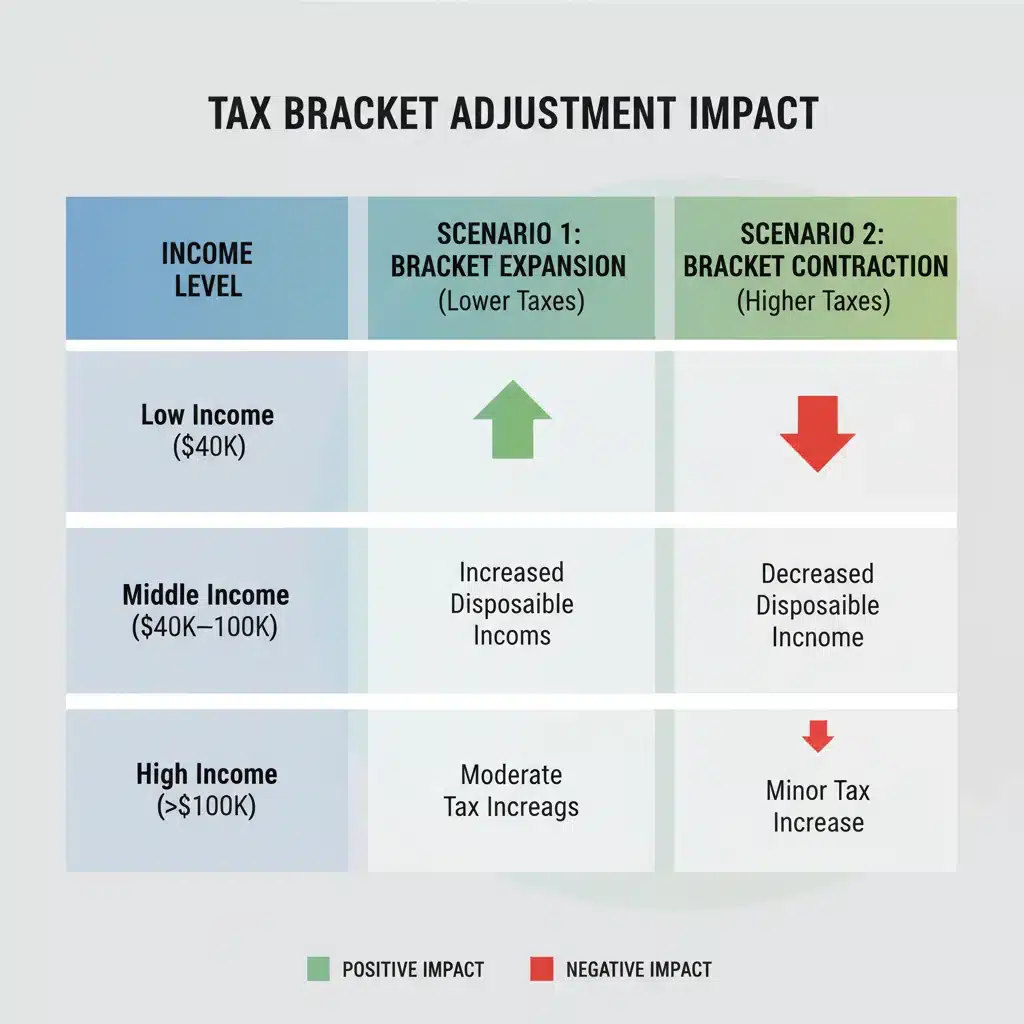
- Impact on Different Income Levels: While higher earners might face the most substantial percentage increases, even middle-income households could see a noticeable reduction in their take-home pay due to these rate adjustments.
Standard Deduction Amounts
The TCJA also dramatically increased the standard deduction, simplifying tax filing for many and reducing the number of taxpayers who itemize. For 2023, the standard deduction for single filers is $13,850, for married couples filing jointly it’s $27,700, and for heads of household it’s $20,800. These amounts are significantly higher than pre-TCJA levels.
When the TCJA provisions expire, the standard deduction amounts are projected to revert to approximately half of their current levels (adjusted for inflation). This change will have a dual effect:
- Reduced Standard Deduction: Fewer taxpayers will benefit from the higher standard deduction, potentially increasing their taxable income.
- Increased Itemization: More taxpayers may find it advantageous to itemize deductions, which could add complexity to tax preparation.
Itemized Deductions
Concurrently with the changes to the standard deduction, several limitations on itemized deductions imposed by the TCJA are also set to expire. For instance, the TCJA capped the state and local tax (SALT) deduction at $10,000 per household. This cap has been a contentious issue, particularly in high-tax states.
Upon expiration, the SALT cap could be removed, allowing taxpayers to deduct an unlimited amount of state and local taxes. While this would benefit some, the overall impact must be considered in conjunction with the reduced standard deduction. For many, the benefit of an uncapped SALT deduction might not fully offset the loss of the higher standard deduction.
Child Tax Credit
The TCJA made significant changes to the Child Tax Credit (CTC), increasing it to $2,000 per qualifying child, with up to $1,400 being refundable. It also introduced a new $500 credit for other dependents. While the American Rescue Plan Act of 2021 temporarily expanded the CTC even further, those provisions have already expired. The TCJA’s enhanced CTC provisions are also set to sunset.
Without legislative action, the Child Tax Credit is expected to revert to its pre-TCJA amount of $1,000 per child, with stricter refundability rules. This change could significantly impact families with children, potentially reducing their tax refunds or increasing their tax liability.
Estate and Gift Tax Exemption
The TCJA dramatically increased the estate and gift tax exemption amounts. For 2023, the exemption is $12.92 million per individual ($25.84 million per married couple). This high exemption has allowed many wealthy individuals to pass down significant assets without incurring federal estate or gift taxes.
Upon expiration, the estate and gift tax exemption is slated to revert to its pre-TCJA level of approximately $5 million per individual (adjusted for inflation). This change will primarily affect high-net-worth individuals and families, requiring a re-evaluation of estate planning strategies to minimize potential tax liabilities.
Other Expiring Provisions
Beyond these major areas, other TCJA provisions set to expire include:
- Qualified Business Income (QBI) Deduction (Section 199A): This deduction allows eligible self-employed individuals and small business owners to deduct up to 20% of their qualified business income. Its expiration would significantly impact pass-through entities.
- Alternative Minimum Tax (AMT) Adjustments: The TCJA significantly increased the AMT exemption amounts and phase-out thresholds, reducing the number of taxpayers subject to the AMT. These adjustments are also set to expire.
- Miscellaneous Itemized Deductions: The TCJA eliminated miscellaneous itemized deductions subject to the 2% adjusted gross income (AGI) floor (e.g., unreimbursed employee expenses, tax preparation fees). While these won’t revert, their absence remains a factor.
The collective impact of these expirations creates a complex web of changes that will require careful consideration and planning. It’s not simply a matter of reverting to old rules; the overall economic context and individual financial situations have also evolved.
Who Will Be Most Affected by the 2026 Tax Code Changes?
While the phrase "80% of U.S. households" sounds broad, the impact of the 2026 tax code changes will not be uniformly distributed. Certain demographics and income levels are likely to feel the shifts more acutely than others. Understanding these differential impacts is key to personalized financial planning.
Middle-Income Households
Paradoxically, middle-income households, particularly those with children, may experience some of the most noticeable impacts. While the TCJA was often touted as a benefit for all, its structure, particularly the increased standard deduction and enhanced Child Tax Credit, provided significant relief for many middle-class families.
- Higher Taxable Income: The reversion to lower standard deductions means more of their income will be subject to taxation, pushing them into higher effective tax rates.
- Reduced Child Tax Credit: The decrease in the Child Tax Credit from $2,000 to $1,000 per child will directly reduce tax refunds or increase tax liabilities for millions of families.
- Inflationary Pressures: These changes will occur against a backdrop of ongoing inflationary pressures, potentially eroding purchasing power even further.
High-Income Earners
High-income earners will also face substantial changes, primarily due to the reversion of individual income tax rates and the potential reintroduction of the 39.6% top marginal rate. Additionally, the expiration of the Qualified Business Income (QBI) deduction will affect many business owners and investors.
- Increased Tax Burden: A return to higher marginal tax rates means a larger percentage of their income will go to taxes.
- Complex Business Income: Business owners operating as pass-through entities (S-corps, partnerships, sole proprietorships) will lose the 20% QBI deduction, significantly increasing their taxable business income.
- Estate Planning Revisions: Wealthy individuals will need to revisit their estate plans as the estate and gift tax exemption amounts are set to be cut roughly in half.
Families with Children
As highlighted, families with children are particularly vulnerable to the changes in the Child Tax Credit. This credit is a vital financial support for many, and its reduction could necessitate significant adjustments to family budgets.
Small Business Owners and Self-Employed Individuals
Beyond the QBI deduction, small business owners and self-employed individuals may also be affected by changes in individual tax rates and potential shifts in other business-related deductions or credits that might be part of future legislative discussions.
Individuals in High-Tax States
The potential removal of the SALT cap could be a silver lining for individuals in states with high property and income taxes. However, whether this benefit fully offsets other tax increases will depend on individual financial circumstances and the overall tax structure that emerges.
It’s crucial for every household to assess their unique financial situation in light of these impending 2026 tax code changes. What might be a minor adjustment for one family could be a substantial financial hurdle for another.
Proactive Strategies: How to Prepare for the 2026 Tax Code Changes Now
Given the magnitude of the impending 2026 tax code changes, procrastination is not an option. Proactive planning is paramount to mitigate potential negative impacts and to capitalize on any emerging opportunities. Here are key strategies you should consider implementing now:
1. Review Your Current Tax Situation
The first step is to understand your current tax liability under the existing laws. Gather your past few years’ tax returns. Pay close attention to:
- Your marginal tax bracket: Where do you currently fall?
- Standard vs. Itemized Deductions: Do you take the standard deduction or itemize? What are your typical itemized deductions (mortgage interest, state and local taxes, charitable contributions)?
- Credits utilized: Are you claiming the Child Tax Credit, education credits, or other significant credits?
- Sources of Income: How much of your income comes from wages, investments, or business profits?
This baseline understanding will help you project how the changes might specifically affect your household.
2. Project Your Future Tax Liability
While precise predictions are difficult without final legislation, you can make informed estimates. Use online tax calculators or consult with a tax professional to model your tax situation under the pre-TCJA rules (or modified versions if new legislation is proposed). Consider scenarios where:
- Your individual tax rates increase.
- Your standard deduction decreases, or the SALT cap is removed.
- Your Child Tax Credit is reduced.
- Your QBI deduction is eliminated.
This projection will highlight areas of greatest vulnerability and opportunity.
3. Optimize Your Income and Deductions in Current Years
With potentially higher tax rates on the horizon, consider accelerating income or deferring deductions where strategically beneficial in 2024 and 2025. For example:
- Accelerate Income: If you anticipate being in a higher tax bracket in 2026, consider realizing capital gains or taking bonuses in 2024 or 2025.
- Defer Deductions: If you expect to be in a higher tax bracket in 2026, deferring certain deductible expenses (e.g., large medical expenses, charitable contributions) until then might yield greater tax savings.
- "Bunching" Deductions: For those who are borderline between the standard deduction and itemizing, consider "bunching" itemized deductions into one year (e.g., making two years’ worth of charitable contributions in one year) to exceed the standard deduction threshold, and then taking the standard deduction in the alternate year.
4. Revisit Your Retirement Planning
Retirement accounts are significantly impacted by tax rate changes. If you anticipate higher tax rates in the future, strategies like Roth conversions become more appealing.
- Roth Conversions: Converting a traditional IRA or 401(k) to a Roth account means paying taxes on the converted amount now, but future qualified withdrawals will be tax-free. If you believe your tax rate will be higher in retirement or after 2025, a Roth conversion could be advantageous.
- Maximize Contributions: Continue to maximize contributions to tax-advantaged accounts like 401(k)s, IRAs, and HSAs. These reduce your current taxable income and allow for tax-deferred growth.
5. Evaluate Investment Strategies
Your investment portfolio should also be reviewed through a tax lens.
- Capital Gains: Be mindful of when you realize capital gains. If you expect higher capital gains tax rates in 2026, consider realizing some gains in 2024 or 2025.
- Tax-Efficient Investing: Utilize tax-loss harvesting where appropriate and consider tax-efficient investment vehicles.
- Dividend Income: Understand how qualified dividends might be taxed under future rules.
6. Update Your Estate Plan (Especially for High-Net-Worth Individuals)
For those impacted by the reduction in the estate and gift tax exemption, a thorough review of your estate plan is critical.
- Utilize Current Exemption: If you have significant wealth, consider making gifts up to the current, higher exemption amount before the end of 2025 to remove assets from your taxable estate.
- Review Trusts: Ensure your trusts and other estate planning vehicles are structured to adapt to the changing tax landscape.
7. Consult with a Qualified Tax Professional
This is perhaps the most crucial step. A knowledgeable Certified Public Accountant (CPA) or financial advisor specializing in tax planning can provide personalized advice tailored to your specific financial situation. They can help you:
- Interpret proposed legislation and its potential impact.
- Model different tax scenarios.
- Identify specific strategies to optimize your tax position.
- Ensure compliance with all current and future tax laws.
Waiting until 2026 to address these changes will likely mean missed opportunities and potentially higher tax burdens. The time to act and plan is now.

Potential Economic and Social Ripple Effects
The 2026 tax code changes are not just about individual tax returns; they have broader implications for the U.S. economy and society. Understanding these potential ripple effects can provide a more holistic view of the future financial environment.
Consumer Spending and Savings
If a significant portion of households faces higher tax liabilities or reduced credits, it could lead to a decrease in discretionary income. This, in turn, could impact consumer spending, which is a major driver of economic growth. Conversely, some households might choose to increase their savings to offset future tax burdens, which could have long-term benefits for capital formation but potentially short-term dampening effects on consumption.
- Retail Sector Impact: Industries reliant on consumer spending, from retail to hospitality, could see shifts in demand.
- Household Budgets: Families may need to re-evaluate their budgets, potentially cutting back on non-essential expenditures.
Investment and Business Growth
Changes to corporate tax rates (though not explicitly part of the individual TCJA sunset, they are often debated concurrently) and the Qualified Business Income (QBI) deduction could influence business investment and expansion decisions. Higher taxes on business income might deter new investments or lead companies to re-evaluate their operational structures.
- Small Business Landscape: Small businesses, particularly pass-through entities, might face increased tax burdens, potentially affecting their ability to grow, hire, or offer competitive wages.
- Capital Markets: Changes to capital gains taxes could influence investment behavior in the stock market and other asset classes.
Housing Market Implications
The interaction between the standard deduction and itemized deductions, particularly the SALT cap, can have implications for the housing market.
- Mortgage Interest Deduction: If more people revert to taking the standard deduction due to its reduced size, the incentive of the mortgage interest deduction might diminish for some, especially in conjunction with property tax considerations.
- High-Tax States: The removal of the SALT cap could provide some relief to homeowners in high-property-tax states, potentially stabilizing or boosting demand in those areas. However, this effect needs to be weighed against overall tax increases.
Wealth Distribution and Inequality
The changes in estate and gift tax exemptions, combined with shifts in individual income tax rates, could influence wealth distribution. A lower estate tax exemption means more estates will be subject to federal estate tax, potentially leading to a greater redistribution of wealth over time. However, the overall impact on wealth inequality is a complex issue with many contributing factors.
Political and Legislative Landscape
The upcoming 2026 tax code changes will undoubtedly be a central theme in future political debates. Congress will face immense pressure to either extend some of the expiring provisions, enact new legislation, or allow the sunset to occur as planned. The outcome will depend heavily on the political climate, economic conditions, and the priorities of the administration and legislative bodies at the time.
- Bipartisan Negotiations: Reaching a consensus on tax policy is often challenging, and the path forward is likely to involve intense negotiations and potential compromises.
- Uncertainty: The ongoing debate can create uncertainty for businesses and individuals, making long-term financial planning more complex until definitive decisions are made.
These broader impacts underscore the importance of staying informed and adaptable. The tax code is not an isolated set of rules; it’s a powerful tool that shapes economic behavior and societal outcomes.
Beyond 2026: The Future of Tax Reform
While the immediate focus is on the 2026 tax code changes stemming from the TCJA’s sunset, it’s also important to recognize that tax reform is an ongoing process. The discussions leading up to 2026 are likely to be just one chapter in a continuous evolution of U.S. tax policy.
Potential for New Legislation
It’s highly probable that Congress will not simply allow all TCJA provisions to expire without any new legislation. There will be considerable pressure from various stakeholders to address the impending changes. The exact nature of any new tax bill is uncertain, but potential areas of focus could include:
- Targeted Extensions: Congress might choose to extend certain popular provisions, such as some aspects of the Child Tax Credit or the QBI deduction, while allowing others to expire.
- New Tax Credits or Deductions: Policymakers might introduce new credits or deductions aimed at specific economic goals, such as promoting green energy, affordable housing, or workforce development.
- Corporate Tax Adjustments: Discussions around individual taxes often coincide with debates on corporate tax rates, potentially leading to further adjustments to the corporate tax structure.
- "Tax the Rich" Proposals: Depending on the political climate, there could be renewed calls for higher taxes on high-income earners and corporations to address wealth inequality or fund social programs.
The Role of Economic Conditions
The state of the U.S. economy in late 2025 and 2026 will play a significant role in shaping tax policy. A robust economy might provide more flexibility for tax cuts, while an economic downturn could lead to calls for stimulus measures or increased revenue generation through higher taxes.
- Inflation: Persistent inflation could influence how tax brackets are adjusted and how various credits are structured.
- National Debt: The growing national debt will always be a factor in tax policy decisions, with lawmakers balancing revenue needs against economic growth incentives.
Impact of Presidential and Congressional Elections
The 2024 presidential election and subsequent congressional elections will heavily influence the direction of tax policy. Different political parties typically have distinct philosophies regarding taxation, ranging from lower taxes and reduced government spending to increased taxes on corporations and the wealthy to fund social programs.
- Unified vs. Divided Government: Whether the presidency and Congress are controlled by the same party or are divided will significantly impact the ability to pass comprehensive tax reform.
- Party Platforms: Pay close attention to the tax proposals put forth by presidential candidates and political parties, as these will offer clues about potential future legislation.
The Importance of Adaptability
Given the inherent uncertainties, the most effective long-term strategy is to cultivate financial adaptability. This means:
- Building a Financial Buffer: Maintain an emergency fund and sufficient savings to weather unexpected financial shifts.
- Diversifying Income Streams: Reduce reliance on a single source of income where possible.
- Staying Informed: Continuously monitor tax news and legislative developments.
- Regular Financial Reviews: Periodically review your financial plan with a professional to ensure it remains aligned with current tax laws and your personal goals.
The 2026 tax code changes represent a significant juncture, but they are also part of a larger, ongoing dialogue about how the nation’s finances are managed. By understanding the immediate impacts and looking ahead to the broader trends, you can position yourself for greater financial resilience.
Conclusion: Navigating the New Tax Horizon
The impending 2026 tax code changes are far more than mere adjustments; they signify a fundamental shift that will touch the financial lives of an overwhelming majority of U.S. households. From individual income tax rates and standard deductions to the Child Tax Credit and estate tax exemptions, the landscape of taxation is set for a significant overhaul as key provisions of the Tax Cuts and Jobs Act of 2017 are slated to expire.
This article has aimed to illuminate the critical areas of change, outlining how different income groups and family structures might be affected. We’ve emphasized that while the impact will be widespread, its intensity will vary, necessitating a personalized approach to financial planning.
The call to action is clear: proactive preparation is not just advisable, it’s essential. Waiting until the eleventh hour to understand and react to these changes could lead to missed opportunities and avoidable financial strains. By reviewing your current tax situation, projecting future liabilities, optimizing income and deductions in the preceding years, and revisiting your retirement and investment strategies, you can lay a solid foundation for navigating this new tax horizon.
Furthermore, recognizing the broader economic and social ripple effects of these tax shifts provides a more complete picture of the evolving financial environment. The political discourse leading up to 2026 will be intense, and the ultimate outcome will shape not only individual finances but also national economic trajectories.
In this dynamic environment, the guidance of a qualified tax professional or financial advisor becomes an invaluable asset. Their expertise can help you decipher complex regulations, model various scenarios, and craft a bespoke financial strategy that aligns with your goals and minimizes your tax burden.
As 2026 draws nearer, staying informed, adaptable, and proactive will be your greatest allies. The future of taxation is approaching rapidly, and by taking deliberate steps now, you can ensure that you and your household are well-prepared to thrive amidst the upcoming 2026 tax code changes.