
As the academic year 2025-2026 approaches, many parents are beginning to grapple with the significant financial undertaking of sending their children to college. Among the myriad of funding options, Parent PLUS Loans often emerge as a primary consideration. These federal loans, designed specifically for parents of dependent undergraduate students, can bridge the gap between financial aid and the actual cost of attendance. However, understanding the intricacies of Parent PLUS Loans 2026, including their costs, benefits, and potential drawbacks, is crucial before committing.
This comprehensive guide aims to shed light on everything you need to know about Parent PLUS Loans 2026, from eligibility requirements and interest rates to application procedures and repayment strategies. More importantly, we will explore viable alternatives that might offer a more financially sound path for your family, ensuring you make informed decisions about funding your child’s higher education.
Understanding Parent PLUS Loans 2026: The Basics
The William D. Ford Federal Direct Loan Program offers Parent PLUS Loans, which are federal loans that parents can take out to help pay for their dependent undergraduate child’s education. Unlike some other federal student loans, PLUS Loans can cover up to the full cost of attendance, minus any other financial aid the student receives. While this flexibility can be a lifesaver for many families, it also means that parents could potentially take on a substantial amount of debt.
Eligibility Requirements for Parent PLUS Loans 2026
Before you even consider the application, it’s essential to understand who qualifies for these loans. The primary eligibility criteria for Parent PLUS Loans 2026 include:
- Parental Relationship: You must be the biological or adoptive parent of a dependent undergraduate student. In some cases, a stepparent whose income is reported on the FAFSA (Free Application for Federal Student Aid) may also be eligible.
- Dependent Student Status: Your child must be a dependent undergraduate student enrolled at least half-time at an eligible school.
- Satisfactory Academic Progress: Your child must maintain satisfactory academic progress as defined by their institution.
- U.S. Citizen or Eligible Non-Citizen: Both the parent and the student must be U.S. citizens or eligible non-citizens.
- No Adverse Credit History: This is a critical distinction for PLUS Loans. Unlike Stafford Loans, PLUS Loans require a credit check. If you have an adverse credit history, you might still qualify by obtaining an endorser (a co-signer) who doesn’t have an adverse credit history, or by documenting extenuating circumstances related to your adverse credit history.
- FAFSA Completion: The student must complete the FAFSA.
Interest Rates and Fees for Parent PLUS Loans 2026
One of the most significant factors in assessing the cost of Parent PLUS Loans 2026 is the interest rate. Federal student loan interest rates are set annually and are fixed for the life of the loan. While the exact rates for 2026 won’t be announced until closer to the academic year, they are typically based on the 10-year Treasury note auction, plus a statutory add-on. It’s important to note that PLUS Loan interest rates are generally higher than those for Direct Subsidized and Unsubsidized Loans.
In addition to interest, Parent PLUS Loans also carry an origination fee. This fee is a percentage of the loan amount and is deducted proportionally from each loan disbursement. This means the amount you receive will be slightly less than the amount you borrowed, but you will still be responsible for repaying the full amount. This fee can add a considerable amount to the overall cost, so it’s essential to factor it into your calculations.
How Much Can You Borrow?
The maximum amount you can borrow with a Parent PLUS Loan is the student’s cost of attendance (COA) minus any other financial aid received. The COA is determined by the school and includes tuition and fees, room and board, books and supplies, transportation, and personal expenses. While borrowing up to the COA sounds appealing, it’s crucial to only borrow what you truly need and can comfortably repay. Over-borrowing can lead to significant financial strain down the line.
The Application Process for Parent PLUS Loans 2026
Applying for Parent PLUS Loans 2026 is a multi-step process that typically begins after your child has completed the FAFSA and received their financial aid offer.
Step-by-Step Guide:
- Complete the FAFSA: Your child must complete the FAFSA. This is the foundational step for all federal financial aid, including PLUS Loans.
- Receive Financial Aid Offer: The college will send your child a financial aid offer package, which will detail all the aid they are eligible for, including federal grants, scholarships, and federal student loans.
- Apply for the PLUS Loan: As the parent, you will apply for the Parent PLUS Loan directly through StudentAid.gov. You’ll need your FSA ID to log in.
- Credit Check: During the application, a credit check will be performed. If approved, you’ll proceed to the next step. If denied due to adverse credit, you’ll have options to appeal, provide an endorser, or document extenuating circumstances.
- Complete the Master Promissory Note (MPN): If approved, you’ll need to complete a Master Promissory Note (MPN). This is a legal document in which you promise to repay your loan(s) and any accrued interest and fees to the U.S. Department of Education.
- Entrance Counseling: While not always required for Parent PLUS Loans, some schools may recommend or require entrance counseling to ensure you understand your rights and responsibilities.
- Disbursement: The loan funds are typically disbursed directly to your child’s school, usually in two installments (one for each semester). The school will then apply the funds to your child’s tuition, fees, room and board, and other charges. Any remaining funds will be disbursed to you or your child, as authorized.
Repayment Options for Parent PLUS Loans 2026
Understanding repayment is just as important as understanding the borrowing process. Parent PLUS Loans 2026 come with several repayment options, though they differ slightly from those offered for student borrowers.
Standard Repayment Plan
This is the default plan, where you pay a fixed amount each month for up to 10 years. It’s designed to pay off your loan in the shortest amount of time, resulting in less interest paid over the life of the loan.
Graduated Repayment Plan
Under this plan, payments start low and gradually increase over time, typically every two years. This can be helpful if your income is expected to rise, but you’ll pay more interest overall than with the Standard Repayment Plan.
Extended Repayment Plan
If you have more than $30,000 in Direct Loans, you can extend your repayment period for up to 25 years. This lowers your monthly payments but significantly increases the total interest paid.
Income-Contingent Repayment (ICR) Plan
This is the only income-driven repayment (IDR) plan directly available for Parent PLUS Loans. However, to access ICR, Parent PLUS Loans must first be consolidated into a Direct Consolidation Loan. Once consolidated, your monthly payment will be based on your income, family size, and the amount of your consolidated loan. This plan can lead to loan forgiveness after 25 years of qualifying payments, but the forgiven amount may be taxable.
Deferment and Forbearance
In certain situations, such as unemployment, economic hardship, or military service, you may be able to temporarily postpone your loan payments through deferment or forbearance. Interest may still accrue during these periods, depending on the type of loan and the specific situation.
The Hidden Costs and Potential Pitfalls of Parent PLUS Loans 2026
While Parent PLUS Loans 2026 can be a valuable resource, it’s crucial to be aware of their potential downsides and hidden costs that might not be immediately apparent.
Higher Interest Rates
As mentioned, PLUS Loans typically have higher interest rates compared to other federal student loans like Direct Subsidized or Unsubsidized Loans. This means you’ll pay more in interest over the life of the loan, increasing the overall cost of education.
Origination Fees
The origination fee, deducted from each disbursement, means you’re paying for money you don’t actually receive. This effectively increases the annual percentage rate (APR) of the loan, making it more expensive than the stated interest rate suggests.
Parent, Not Student, Responsibility
A key difference is that the Parent PLUS Loan is in the parent’s name, not the student’s. This means the legal and financial responsibility for repayment rests solely with the parent, regardless of the child’s future income or employment status. This can impact a parent’s credit score, ability to secure other loans (like mortgages or car loans), and retirement planning.
Limited Repayment Options Compared to Student Loans
Parent PLUS Loans have fewer income-driven repayment options directly available. As noted, to access the ICR plan, consolidation is required, which can add another layer of complexity. This lack of flexibility can be challenging if a parent’s financial situation changes unexpectedly.
No Subsidized Interest
Unlike Direct Subsidized Loans for students, PLUS Loans accrue interest from the moment they are disbursed, even while the student is in school. This means the loan balance grows significantly before repayment even begins, leading to a larger amount to pay back.
Impact on Retirement
Taking on substantial Parent PLUS Loan debt can significantly impact a parent’s ability to save for retirement. Financial advisors often prioritize retirement savings over college funding, as there are no loans for retirement. Sacrificing your golden years for your child’s education can have long-term negative consequences for the entire family.
Exploring Alternatives to Parent PLUS Loans 2026
Given the potential drawbacks, it’s wise to exhaust all other options before turning to Parent PLUS Loans 2026. A multi-pronged approach to funding college often yields the best results.
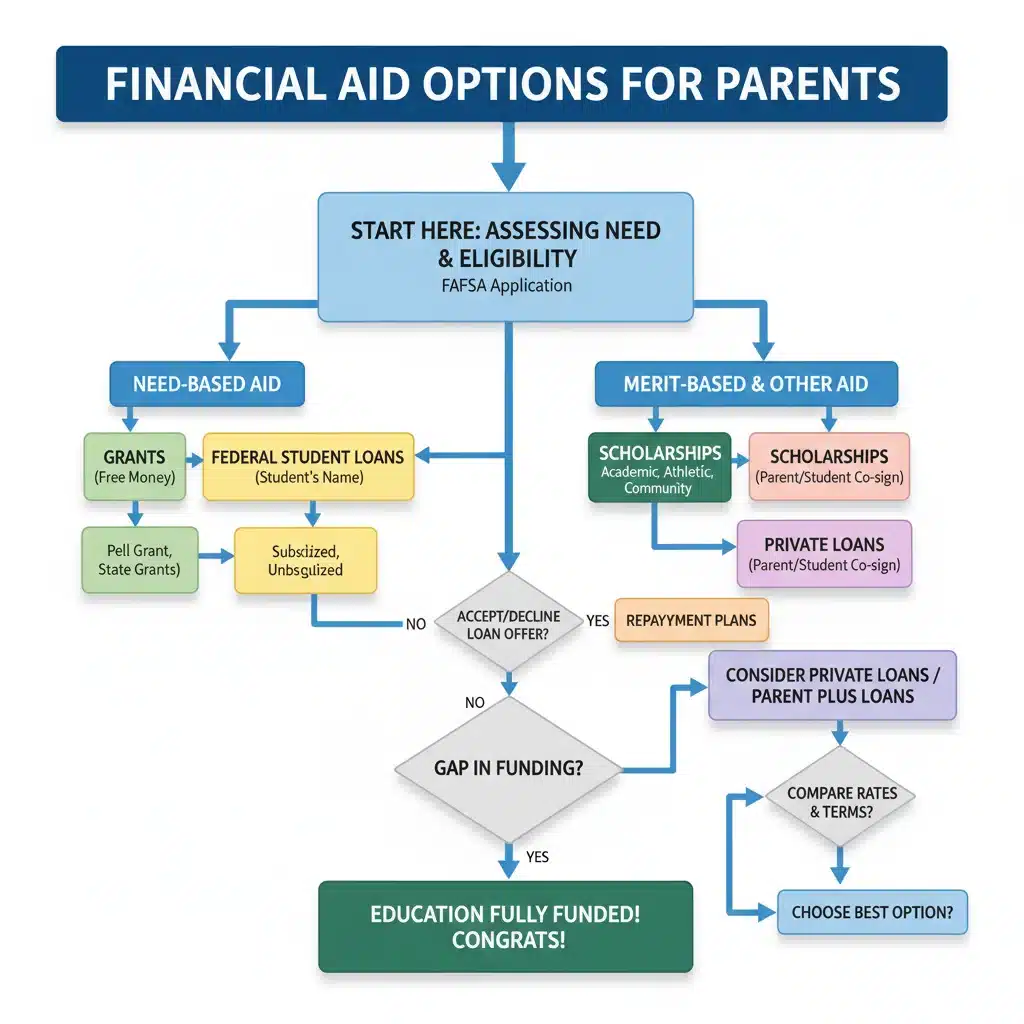
1. Federal Student Loans (in the Student’s Name)
These should always be the first choice for students. Direct Subsidized and Unsubsidized Loans offer lower fixed interest rates, often have more flexible repayment options, and are in the student’s name, fostering financial responsibility. Subsidized loans don’t accrue interest while the student is in school or during deferment, which is a significant benefit.
2. Scholarships and Grants
This is free money that doesn’t need to be repaid. Encourage your child to apply for as many scholarships and grants as possible. These can come from colleges, private organizations, community groups, and the federal government. Websites like Fastweb, College Board, and Scholarship.com are excellent resources. Even small scholarships can add up and reduce the need for loans.
3. 529 College Savings Plans
If you’ve been planning ahead, funds saved in a 529 plan can be used for qualified education expenses tax-free. These plans offer state tax benefits and grow tax-deferred, making them a powerful tool for college savings. It’s never too late to start a 529, even if your child is already in high school.
4. Student Employment (Work-Study and Part-Time Jobs)
Federal Work-Study programs allow students to earn money to help pay for educational expenses through part-time jobs on or off campus. Even if not eligible for Work-Study, a part-time job can help cover personal expenses, books, or even a portion of tuition, reducing the amount needed from loans.
5. Institutional Payment Plans
Many colleges offer interest-free payment plans that allow you to spread tuition payments over several months within a semester or academic year. This can make large lump sums more manageable and eliminate the need for short-term borrowing.
6. Community College First
Starting at a community college for the first year or two can drastically reduce costs. Students can earn transferable credits at a fraction of the cost of a four-year university, then transfer to their desired institution. This strategy can save tens of thousands of dollars.
7. Private Student Loans
If federal loans and other aid aren’t enough, private student loans are an option, but they should be approached with caution. They are offered by banks, credit unions, and other private lenders. Private loans typically require a good credit score and often a co-signer (which could be the parent). Their interest rates can be variable or fixed, and repayment terms vary widely. It’s crucial to compare lenders and understand all terms and conditions before committing to a private loan. Generally, they offer fewer borrower protections and less flexible repayment options than federal loans.
8. Home Equity Loans or Lines of Credit (HELOCs)
For homeowners, using home equity can sometimes be a lower-interest alternative to PLUS Loans or private loans. However, this option comes with significant risk: your home serves as collateral. If you default, you could lose your home. This should only be considered if you have a stable financial situation and a clear repayment plan.
9. Personal Savings and Investments
If you have personal savings or investments outside of a 529 plan, consider using them to cover educational costs. While it can be difficult to tap into savings, avoiding debt can be a greater long-term financial benefit.
Making the Best Financial Decision for Your Family
Navigating the landscape of college financing, especially concerning Parent PLUS Loans 2026, requires careful planning and a thorough understanding of all available options. The goal is to fund your child’s education without jeopardizing your own financial well-being or retirement security.
Key Considerations:
- Total Cost of Attendance vs. Actual Need: Don’t automatically borrow the maximum allowed. Calculate your true funding gap after grants, scholarships, and federal student loans.
- Your Current Financial Health: Honestly assess your income, expenses, and existing debt. Can you comfortably afford the monthly payments for a Parent PLUS Loan without undue strain?
- Future Financial Outlook: Consider your job security, potential for income growth, and retirement timeline. How would Parent PLUS Loan payments impact these?
- Your Child’s Contribution: Encourage your child to take ownership of their education costs through scholarships, part-time jobs, or even their own federal student loans.
- Communication is Key: Have open and honest conversations with your child about college costs, financial aid, and shared responsibilities.
Remember, a college education is an investment, but like any investment, it comes with risks and rewards. The right financial strategy can help maximize the rewards while minimizing the risks for both you and your child.
Strategies for Minimizing Parent PLUS Loan Debt
If, after exploring all alternatives, you determine that Parent PLUS Loans 2026 are necessary, there are strategies you can employ to minimize the debt burden.
1. Borrow Only What’s Absolutely Necessary
This cannot be stressed enough. Resist the temptation to borrow the full amount offered. Create a detailed budget for your child’s college expenses, including tuition, fees, room, board, books, and essential personal expenses. Only borrow to cover the remaining gap.
2. Pay Interest While in School
If your budget allows, consider paying the interest on your Parent PLUS Loan while your child is still in school. Since interest accrues from disbursement, making these payments can significantly reduce the total amount of interest you’ll pay over the life of the loan. This prevents interest from capitalizing (being added to the principal balance), which means you won’t be paying interest on interest.
3. Accelerate Repayment
Once repayment begins, if your financial situation improves, consider making extra payments or increasing your monthly payment amount. There are no prepayment penalties for federal loans, so any additional payments will directly reduce your principal balance, saving you money on interest and allowing you to pay off the loan faster.
4. Refinance Parent PLUS Loans (with Caution)
After your child graduates or if interest rates drop significantly, you might consider refinancing your Parent PLUS Loans with a private lender. Refinancing can potentially secure a lower interest rate, which could save you a substantial amount of money. However, refinancing federal loans into private loans means losing federal loan benefits, such as access to income-driven repayment plans, deferment, and forbearance options, and potential loan forgiveness programs. This step should only be taken after careful consideration and if you are confident in your ability to repay the loan under the new terms.
5. Understand Tax Benefits
Explore potential tax benefits related to education. While Parent PLUS Loan interest itself isn’t directly deductible by the parent, other education credits or deductions might be available, depending on your income and filing status. Consult a tax professional for personalized advice.
The Role of Financial Aid Offices
Don’t underestimate the value of your college’s financial aid office. These professionals are a wealth of information and can help you understand the nuances of Parent PLUS Loans 2026, as well as other aid options specific to their institution. They can assist with:
- Understanding Your Award Letter: Deciphering the various components of your child’s financial aid package.
- Cost of Attendance Breakdown: Providing a detailed breakdown of all direct and indirect costs.
- Application Assistance: Guiding you through the FAFSA and PLUS Loan application processes.
- Appeals: Helping you appeal for more financial aid if your family’s financial circumstances have changed.
- Payment Plans: Explaining institutional payment plans and other university-specific aid.
Engaging with the financial aid office early and often can significantly streamline the process and help you uncover opportunities you might have otherwise missed.

The Long-Term Perspective: Beyond 2026
When considering Parent PLUS Loans 2026, it’s vital to think beyond the immediate academic year. College funding is a multi-year commitment, and the decisions you make now will have long-lasting implications for your family’s financial health.
Future Borrowing Needs
If you have other children who will attend college, consider how current borrowing will impact your ability to help them in the future. Over-borrowing for one child could limit your options for another.
Impact on Retirement
Reiterate the importance of protecting your retirement savings. While helping your child is a noble goal, sacrificing your retirement can lead to a greater burden on your children in the future. A balanced approach is often best.
Student Financial Literacy
Encourage your child to develop strong financial literacy skills. Understanding budgeting, saving, and the implications of debt will serve them well throughout their lives and can help them make informed decisions about their own student loans.
Reviewing Financial Aid Annually
Remember that financial aid packages can change each year. You’ll need to reapply for federal aid by completing the FAFSA annually. Your family’s financial situation, the student’s academic performance, and the school’s aid policies can all influence future aid offers.
Conclusion
Parent PLUS Loans 2026 represent a significant tool for many families seeking to finance their child’s higher education. They offer the ability to cover the full cost of attendance, providing crucial support when other aid falls short. However, their higher interest rates, origination fees, and the ultimate responsibility resting on the parent’s shoulders necessitate a thorough understanding and careful consideration.
Before committing to a Parent PLUS Loan, explore every alternative: maximize federal student loans in your child’s name, diligently search for scholarships and grants, leverage 529 plans, encourage student employment, and consider institutional payment plans. If Parent PLUS Loans remain the best option, borrow judiciously, understand the repayment terms, and implement strategies to minimize the overall cost.
By taking a proactive and informed approach, you can navigate the complexities of college financing effectively, ensuring your child receives the education they deserve without compromising your family’s long-term financial stability. The key is to plan early, ask questions, and make decisions that align with your family’s broader financial goals.