2026 Pell Grant: Eligibility, Increases, and Future Changes Explained

The landscape of higher education funding is constantly evolving, and for many students, the Pell Grant remains a cornerstone of their ability to pursue a degree. As we look towards the future, specifically the 2026 Pell Grant cycle, there’s growing anticipation and discussion around potential changes to eligibility, award amounts, and the overall impact on financial aid. Understanding these prospective shifts is crucial for current and prospective students, as well as their families, to plan effectively for the costs of college.
The Pell Grant program, a federal initiative designed to help low-income undergraduate students pay for college, has been a lifeline for millions since its inception. Its significance cannot be overstated, as it directly addresses financial barriers that often prevent deserving individuals from accessing higher education. However, like all federal programs, the Pell Grant is subject to legislative review, economic factors, and policy adjustments that can significantly alter its reach and effectiveness. The 2026 Pell Grant is expected to reflect some of these ongoing discussions and potential reforms.
This comprehensive guide will delve into what we know, what we anticipate, and what you need to prepare for regarding the 2026 Pell Grant. We’ll explore the current eligibility criteria, discuss the factors influencing potential increases in award amounts, and examine the broader implications of these changes for students across the nation. Our goal is to provide you with a clear, in-depth understanding of how the Pell Grant program might evolve and how you can best position yourself to benefit from this vital financial aid.
Understanding the Current Pell Grant Landscape
Before we project into the future of the 2026 Pell Grant, it’s essential to understand the current state of the program. The Pell Grant is a need-based grant, meaning it’s awarded to undergraduate students who demonstrate exceptional financial need, as determined by the Free Application for Federal Student Aid (FAFSA). Unlike loans, grants do not need to be repaid, making them an incredibly attractive and impactful form of financial assistance.
Who is Currently Eligible?
Currently, eligibility for a Pell Grant is primarily determined by your Expected Family Contribution (EFC) – a number derived from the information you provide on your FAFSA. This EFC is an index number used by financial aid administrators to determine how much financial aid you are eligible to receive. Other factors include:
- Financial Need: Demonstrated through the FAFSA.
- Enrollment Status: You must be an undergraduate student enrolled in an eligible program at a participating institution.
- Academic Progress: You must be maintaining satisfactory academic progress as defined by your school.
- Citizenship: You must be a U.S. citizen or an eligible non-citizen.
- No Prior Bachelor’s Degree: Generally, you cannot have already earned a bachelor’s degree or professional degree.
- Lifetime Eligibility: There is a limit to the total amount of Pell Grant funds you can receive, currently equivalent to 12 full-time semesters or about six years.
Current Maximum Award Amounts
The maximum Pell Grant award changes annually based on congressional appropriations. For the 2023-2024 award year, the maximum Pell Grant was $7,395. This amount is a crucial benchmark, as any discussions about the 2026 Pell Grant will likely revolve around adjustments to this figure. The actual amount a student receives depends on their financial need, the cost of attendance at their chosen institution, and their enrollment status (full-time or part-time).
Recent FAFSA Simplification and Its Impact
A significant development impacting the future of federal student aid, including the 2026 Pell Grant, is the FAFSA Simplification Act. This legislation, enacted in 2020, aims to make the financial aid application process easier and more accessible for students and families. Key changes include:
- Simplified FAFSA Form: Reducing the number of questions and streamlining the application process.
- New Terminology: The Expected Family Contribution (EFC) has been replaced by the Student Aid Index (SAI). While similar in concept, the SAI uses a different methodology that is expected to increase Pell Grant eligibility for more students.
- Increased Access: Broader eligibility for Pell Grants for incarcerated students and students whose parent or guardian died in the line of duty while serving in the U.S. armed forces or as a public safety officer.
- Expanded Eligibility: Changes to how income and assets are considered, potentially making more students eligible for federal aid.
These changes are being phased in, with the full impact expected to be realized in the coming award years, directly influencing the 2026 Pell Grant. The shift from EFC to SAI is particularly noteworthy, as it could significantly alter who qualifies for the grant and the amount they receive. Students and families should familiarize themselves with these new methodologies to accurately assess their potential aid.
Anticipating the 2026 Pell Grant: Eligibility Reforms
The FAFSA Simplification Act is not merely a procedural update; it’s a foundational overhaul that will profoundly reshape Pell Grant eligibility by 2026. The transition from EFC to SAI is at the heart of these changes, promising to expand access to federal student aid for a broader spectrum of students. Understanding these reforms is paramount for anyone planning their higher education finances for the 2026 Pell Grant cycle.
The Shift from EFC to Student Aid Index (SAI)
The Student Aid Index (SAI) is designed to be a more equitable measure of a student’s financial need. Unlike the EFC, which could sometimes be a negative number but was always reported as zero, the SAI can go as low as -1,500. This negative SAI is significant because it indicates a higher level of financial need, potentially unlocking maximum Pell Grant eligibility for more students. The calculation of the SAI also:
- Removes the Number of Children in College as a Factor: Previously, having multiple children in college significantly lowered the EFC. The SAI eliminates this factor, which might affect some middle-income families.
- Changes How Small Businesses and Farms are Assessed: For families who own a small business or farm, the net worth of these assets was previously excluded from the EFC calculation. Under the SAI, these assets will now be included, which could potentially increase the SAI for some families.
- Streamlines Income Protection Allowances: These allowances, which protect a portion of income from being counted in the aid calculation, have been revised, potentially increasing aid eligibility for certain income brackets.
These adjustments mean that a student who might not have qualified for a Pell Grant under the EFC system could become eligible with the SAI, and vice versa. It’s crucial for families to re-evaluate their financial situation in light of these new calculations when preparing for the 2026 Pell Grant.
Expanded Eligibility for Specific Student Groups
The FAFSA Simplification Act also specifically addresses and expands Pell Grant eligibility for certain historically underserved student populations. These provisions are designed to remove barriers and provide greater opportunities for these groups:
- Incarcerated Individuals: For the first time in decades, incarcerated individuals enrolled in approved prison education programs will be eligible for Pell Grants. This represents a significant policy shift aimed at promoting rehabilitation and reducing recidivism through education.
- Students Whose Parent or Guardian Died in the Line of Duty: Eligibility has been expanded for students whose parent or guardian died while serving in the U.S. armed forces in Iraq or Afghanistan after September 11, 2001, or as a public safety officer. These students may now receive the maximum Pell Grant award, regardless of their SAI.
- Foster Youth and Homeless Students: The act streamlines the process for independent student status for unaccompanied homeless youth and foster youth, making it easier for them to access financial aid without parental information. This is expected to directly benefit their eligibility for the 2026 Pell Grant.
These targeted expansions demonstrate a commitment to using the Pell Grant as a tool for social mobility and equity, ensuring that more individuals have the chance to achieve their educational aspirations, particularly as we look towards the 2026 Pell Grant cycle.

Potential Increases in 2026 Pell Grant Award Amounts
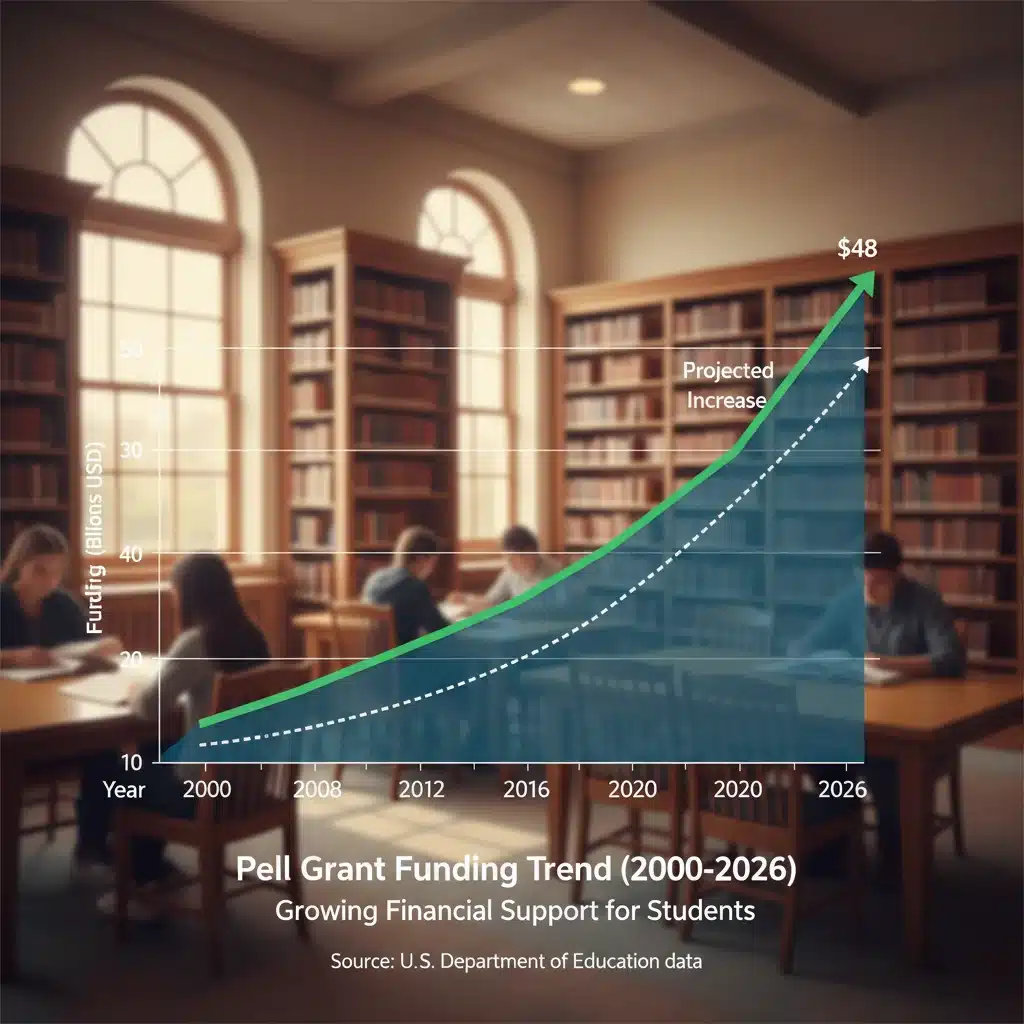
Beyond eligibility, a major focus for the 2026 Pell Grant is the potential for increased award amounts. The purchasing power of the Pell Grant has eroded over time, covering a smaller percentage of college costs than it did decades ago. There is a strong bipartisan push to increase the maximum Pell Grant to better reflect the rising costs of tuition, fees, and living expenses.
Congressional Initiatives and Proposals
Several legislative proposals have been put forth to significantly increase the maximum Pell Grant. These initiatives often cite the need to restore the grant’s original purchasing power, which at one point covered nearly 80% of the cost of attending a public four-year college. While the exact figures for the 2026 Pell Grant are still subject to congressional appropriation, discussions include:
- Doubling the Pell Grant: A long-term goal for many advocates is to double the maximum Pell Grant award. While unlikely to happen all at once, incremental increases are a strong possibility.
- Inflation Adjustments: Proposals often include mechanisms to tie Pell Grant increases to inflation, ensuring its value doesn’t diminish over time.
- Increased Funding: Efforts to secure higher appropriations for the Pell Grant program are ongoing, reflecting a recognition of its importance in promoting educational access.
The political climate, economic conditions, and federal budget priorities will all play a role in determining the final award amounts for the 2026 Pell Grant. However, the consistent advocacy for increased funding suggests a positive outlook for future award levels.
Impact of Rising College Costs
The relentless rise in college tuition and associated costs underscores the urgency for increased Pell Grant funding. For many students, even a maximum Pell Grant award falls short of covering the full cost of attendance, necessitating a combination of loans, scholarships, and out-of-pocket expenses. Any increase in the 2026 Pell Grant would directly alleviate this burden, making higher education more attainable and reducing the need for students to take on significant debt.
An increased Pell Grant would have several positive ripple effects:
- Reduced Student Debt: Students relying less on loans means less debt post-graduation.
- Increased Enrollment: Higher grant amounts can encourage more students, particularly from low-income backgrounds, to enroll in college.
- Improved Retention and Completion: Financial stability often correlates with better academic performance and higher graduation rates.
These benefits highlight why increases to the 2026 Pell Grant are not just about individual students but about strengthening the nation’s workforce and fostering economic growth.
How to Prepare for the 2026 Pell Grant
Given the anticipated changes, proactive preparation is key to maximizing your chances of receiving the 2026 Pell Grant and other federal financial aid. The application process, while simplified, still requires careful attention to detail and timely submission.
Completing the FAFSA Accurately and On Time
The FAFSA remains the gateway to federal student aid, including the 2026 Pell Grant. Even with simplification, accuracy is crucial. Here are essential tips:
- Gather Necessary Documents: Have your Social Security number, federal income tax returns (and your parents’ if you’re a dependent student), W-2 forms, and records of other money earned, bank statements, and records of investments and untaxed income ready.
- Understand the SAI Calculation: Familiarize yourself with how the Student Aid Index (SAI) will be calculated. The Department of Education provides resources and calculators that can help you estimate your SAI.
- Meet Deadlines: Pay close attention to federal, state, and institutional FAFSA deadlines. Missing a deadline can mean missing out on aid. The FAFSA for the 2026-2027 award year will likely open in October 2025.
- Use the IRS Direct Data Exchange: This tool allows you to securely transfer your federal tax information directly from the IRS to your FAFSA, simplifying the process and reducing errors.
- Seek Assistance if Needed: Don’t hesitate to contact your school’s financial aid office or a FAFSA expert if you have questions or encounter difficulties.
Exploring Other Aid Opportunities
While the 2026 Pell Grant is a significant source of aid, it’s rarely enough to cover all college expenses. Diversifying your financial aid strategy is critical:
- State Grants: Many states offer their own grant programs based on financial need or academic merit. Check with your state’s higher education agency.
- Institutional Scholarships and Grants: Colleges and universities often have their own scholarship funds. These can be need-based, merit-based, or based on specific criteria like major or extracurricular activities.
- Private Scholarships: Numerous organizations, foundations, and businesses offer scholarships. Utilize scholarship search engines and local community resources.
- Work-Study Programs: Federal Work-Study allows students to earn money to help pay for educational expenses through part-time employment.
- Student Loans (Federal vs. Private): If loans are necessary, prioritize federal student loans over private loans, as they typically offer better interest rates, more flexible repayment options, and borrower protections.
A comprehensive approach to financial aid ensures that you’re leveraging all available resources to fund your education, complementing any assistance you receive from the 2026 Pell Grant.
The Broader Impact of the 2026 Pell Grant Changes
The anticipated changes to the 2026 Pell Grant program are not just about individual students; they have far-reaching implications for higher education institutions, the economy, and society as a whole. These reforms reflect a national commitment to making college more accessible and affordable, which in turn can lead to a more educated workforce and greater economic equity.
Impact on Higher Education Institutions
Colleges and universities will feel the effects of the 2026 Pell Grant changes in several ways:
- Increased Enrollment: Expanded eligibility and higher award amounts could lead to an increase in applications and enrollment, particularly from low-income and underrepresented student populations.
- Shifts in Financial Aid Strategies: Institutions may need to adjust their own institutional aid strategies to complement the federal changes, ensuring a balanced financial aid package for students.
- Program Development: The reintroduction of Pell Grants for incarcerated individuals may spur the development of new or expanded prison education programs, requiring institutions to adapt their offerings and support services.
- Data Reporting: Changes in FAFSA and aid calculations will require financial aid offices to update their systems and processes for reporting and administering federal aid.
These adjustments will require institutions to be agile and responsive to the evolving financial aid landscape, ensuring they can effectively serve the needs of a changing student body.
Economic and Societal Benefits
Investing in the Pell Grant program, especially with potential increases for the 2026 Pell Grant, yields significant economic and societal returns:
- Economic Growth: A more educated workforce is directly linked to higher productivity, innovation, and economic growth. By making college more accessible, the Pell Grant contributes to a stronger national economy.
- Reduced Inequality: The program helps bridge the gap between low-income students and their wealthier peers, promoting social mobility and reducing income inequality.
- civic Engagement: Education often correlates with increased civic participation, contributing to a more informed and engaged citizenry.
- Health and Well-being: Studies consistently show a correlation between higher education levels and improved health outcomes, as well as greater overall well-being.
Therefore, the discussions and potential enhancements to the 2026 Pell Grant are not merely bureaucratic details; they are critical investments in the future of individuals and the nation.
Advocacy and Future Outlook for the 2026 Pell Grant
The future of the 2026 Pell Grant and beyond will continue to be shaped by ongoing advocacy efforts from various stakeholders. Education advocates, student groups, higher education institutions, and policymakers are all working towards ensuring the Pell Grant remains a robust and effective program.
Ongoing Debates and Policy Considerations
Key policy debates influencing the 2026 Pell Grant include:
- Funding Levels: The perennial challenge of securing sufficient federal appropriations to meet the growing demand and rising costs of education.
- Indexing to Inflation: The discussion around automatically adjusting Pell Grant awards for inflation to maintain their purchasing power.
- Lifetime Eligibility: Whether the current 12-semester limit is appropriate or if it should be adjusted to accommodate non-traditional students or those who need more time to complete their degrees.
- Eligibility for Graduate Students: While primarily an undergraduate program, there are occasional discussions about expanding Pell Grant eligibility to certain graduate programs.
These discussions highlight the dynamic nature of federal financial aid policy and the continuous effort to refine programs like the Pell Grant to best serve student needs.
Staying Informed
For students and families, staying informed about these ongoing discussions and any official announcements is vital. Reliable sources include:
- U.S. Department of Education Website: The official source for all federal student aid information.
- Federal Student Aid (StudentAid.gov): A comprehensive resource for FAFSA, Pell Grant, and other federal aid programs.
- Your College’s Financial Aid Office: They are equipped to provide personalized guidance and updates.
- Reputable News Outlets and Education Organizations: Follow trusted sources for news and analysis on higher education policy.
By actively seeking out information, you can ensure you are prepared for any changes that come with the 2026 Pell Grant and beyond.
Conclusion
The 2026 Pell Grant stands at a pivotal moment, poised for significant changes that could reshape the landscape of financial aid for millions of students. The FAFSA Simplification Act, with its transition to the Student Aid Index (SAI), promises to expand eligibility and streamline the application process. Concurrently, there is strong momentum for increasing the maximum Pell Grant award to better align with the escalating costs of higher education.
These anticipated reforms, while complex, are ultimately aimed at making college more accessible, affordable, and equitable. For students, this means a potentially greater opportunity to pursue their academic dreams without being unduly burdened by financial constraints. For institutions, it presents an opportunity to serve a broader and more diverse student population. And for society, it represents an investment in human capital, economic growth, and social mobility.
As we approach 2026, it is imperative for all stakeholders – students, parents, educators, and policymakers – to remain informed and engaged. Understanding the new eligibility criteria, anticipating potential increases, and diligently completing the FAFSA will be crucial steps in leveraging the benefits of the evolving Pell Grant program. The future of higher education funding is brighter with a stronger, more accessible Pell Grant, and the changes anticipated for the 2026 Pell Grant are a significant step in that direction.
Plan ahead, stay informed, and prepare to take advantage of the opportunities that the 2026 Pell Grant will offer.
Author