Federal Reserve’s January 2026 Rate Decision: 1.5% Mortgage Impact Explained
The financial world held its breath, and the gavel has finally fallen. The Federal Reserve’s January 2026 interest rate decision has been announced, and its reverberations are already being felt across markets, most notably in the housing sector. With a significant shift that translates to an approximate 1.5% impact on mortgage rates, understanding the nuances of this decision is paramount for anyone involved in real estate, from prospective homebuyers to seasoned investors. This comprehensive analysis will delve into the Federal Reserve’s rationale, the immediate and long-term consequences for mortgage rates, and strategic advice for navigating this new economic landscape.
The Federal Reserve’s Stance: Behind the January 2026 Decision
The Federal Reserve, often referred to as ‘the Fed,’ is the central banking system of the United States. Its primary mandates include maximizing employment, stabilizing prices, and moderating long-term interest rates. These goals are achieved through various monetary policy tools, with the federal funds rate being one of the most prominent. The federal funds rate is the target rate for overnight lending between banks, and changes to it ripple through the entire financial system, influencing everything from credit card APRs to, crucially, mortgage rates.
The January 2026 meeting of the Federal Open Market Committee (FOMC) was highly anticipated. Economic indicators leading up to this decision painted a complex picture. Inflation, while showing signs of moderation from its peaks, remained stubbornly above the Fed’s long-term target of 2%. Labor markets, though cooling slightly, continued to demonstrate resilience, with unemployment rates remaining historically low. Geopolitical tensions and supply chain dynamics also played a role, adding layers of uncertainty to the economic outlook. The Fed’s decision was a delicate balancing act: curb persistent inflationary pressures without tipping the economy into a severe recession.
Sources close to the FOMC indicated that a consensus formed around the need for continued vigilance against inflation. Despite calls from some sectors for a more dovish approach, the majority argued that the risks of entrenched inflation outweighed the risks of a more aggressive tightening. This led to the specific action taken, which has now directly influenced the cost of borrowing for homes. The detailed minutes of the meeting, when released, are expected to provide further insight into the specific economic models and forecasts that underpinned this pivotal decision. Understanding the ‘why’ behind the Fed Rate Decision 2026 is the first step in comprehending its far-reaching effects.
The Immediate Impact: A 1.5% Shift in Mortgage Rates
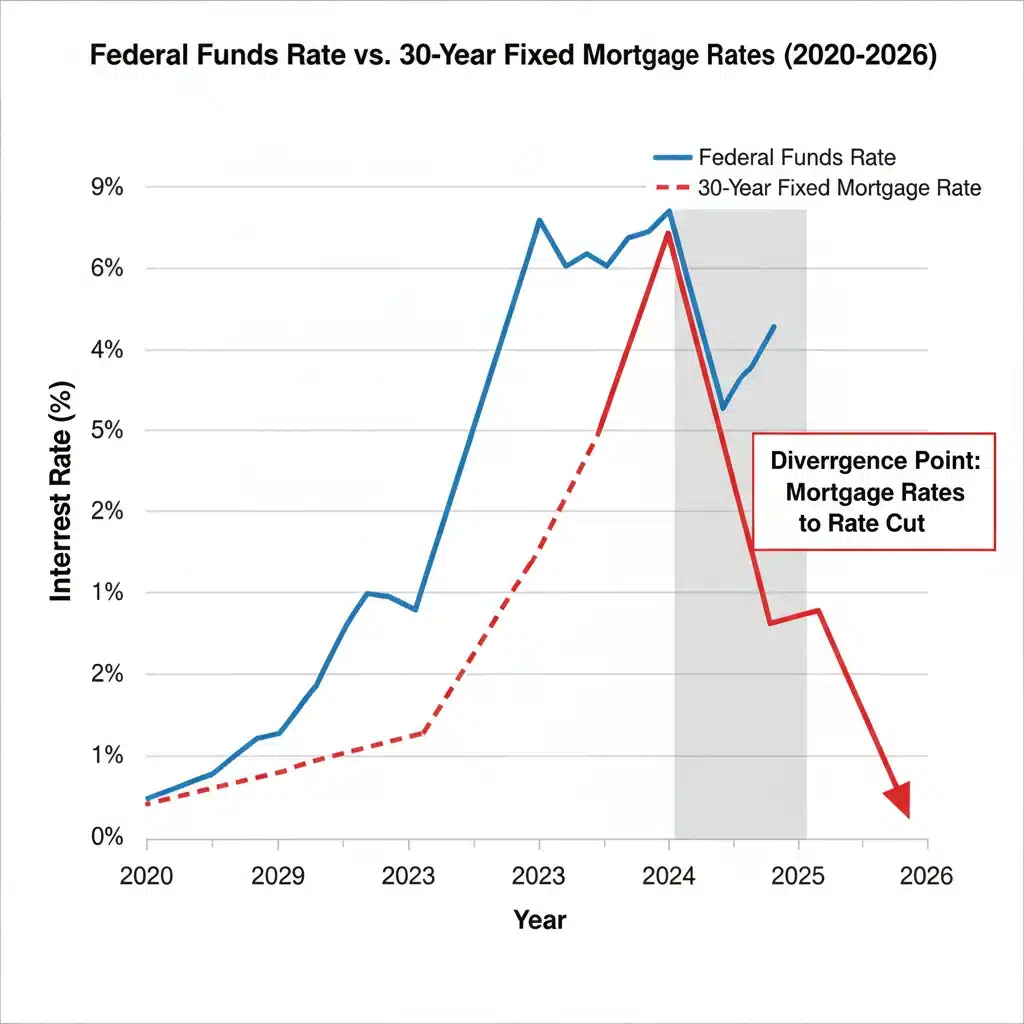
The most tangible and immediate consequence of the Federal Reserve’s January 2026 announcement is the significant uptick in mortgage rates. While the Fed directly controls the federal funds rate, not mortgage rates, there’s a strong, albeit indirect, correlation. Mortgage rates are typically tied to the yield on U.S. Treasury bonds, particularly the 10-year Treasury note. When the Fed raises its benchmark rate, it generally signals a broader increase in borrowing costs across the economy, pushing Treasury yields higher, which in turn elevates mortgage rates.
The 1.5% increase in mortgage rates is not a direct one-to-one translation of the Fed’s specific rate hike, but rather the market’s reaction to the Fed’s stance and future projections. This percentage point jump represents a substantial change for both new homebuyers and existing homeowners looking to refinance. To put this into perspective, consider a $400,000 30-year fixed-rate mortgage. A 1.5% increase in the interest rate can add hundreds of dollars to a monthly payment and tens of thousands of dollars over the life of the loan. For instance, if rates moved from 6.0% to 7.5%, the monthly principal and interest payment would jump from approximately $2,398 to $2,797 – a difference of nearly $400 per month. This dramatic shift underscores the importance of the Fed Rate Decision 2026.
This rapid adjustment in rates also affects mortgage lenders’ operations. They must quickly recalibrate their offerings, which can lead to temporary market volatility as they adjust to new pricing models and demand levels. For consumers, this means that pre-approval letters obtained before the announcement might need to be re-evaluated, and those in the process of locking in a rate might find their window of opportunity has narrowed considerably or expired altogether. The market’s reaction to the Fed Rate Decision 2026 is swift and requires immediate attention from all stakeholders.
Who is Affected Most by the Fed Rate Decision 2026?
The ripple effects of the Fed’s decision and the subsequent 1.5% mortgage rate increase are far-reaching, but certain groups will feel the impact more acutely than others.
First-Time Homebuyers
This demographic often operates on tighter budgets and is highly sensitive to changes in affordability. A 1.5% increase can price many first-time buyers out of the market entirely, as their debt-to-income ratios may no longer qualify them for the loan amounts they need, or the higher monthly payments become untenable. Their purchasing power diminishes significantly, making it harder to save for a down payment while also contending with higher borrowing costs. The dream of homeownership becomes more distant for many.
Existing Homeowners Considering Refinancing
For those who secured historically low rates in previous years, the current rate environment makes refinancing largely unattractive. Homeowners who might have been considering a cash-out refinance for home improvements or debt consolidation will find the cost of borrowing significantly higher, potentially negating any financial benefits. Only those with adjustable-rate mortgages (ARMs) whose fixed-rate period is expiring might still find refinancing necessary, albeit at a higher rate than they initially enjoyed.
Real Estate Investors
Investors rely on favorable financing to maximize their returns. Higher mortgage rates increase carrying costs for rental properties and reduce potential cash flow, making investment properties less attractive. This could lead to a slowdown in investor activity, particularly in markets that have seen significant investor-driven demand. The calculus for flipping houses also changes, as holding costs increase and potential buyers face higher mortgage payments, potentially dampening sales prices.
The Broader Housing Market
The collective impact on these groups will inevitably cool the housing market. Higher borrowing costs typically lead to decreased demand, which can result in longer days on market for properties, fewer bidding wars, and potentially a moderation or even a decline in home prices in some regions. While this might offer a glimmer of hope for some buyers, it also signifies a less liquid market for sellers. The equilibrium between supply and demand is fundamentally altered by the Fed Rate Decision 2026.
Navigating the New Mortgage Landscape: Strategies for Buyers and Homeowners
In light of the Fed Rate Decision 2026 and the subsequent rise in mortgage rates, it’s crucial for individuals to adapt their financial strategies. Here are some actionable steps:
For Prospective Homebuyers:
- Re-evaluate Your Budget: With higher rates, your purchasing power has likely decreased. Work with a lender to understand what you can realistically afford now. Focus on the monthly payment rather than just the total loan amount.
- Increase Your Down Payment: A larger down payment reduces the loan amount, thereby mitigating the impact of higher interest rates on your monthly payments. It also reduces the loan-to-value (LTV) ratio, potentially leading to better loan terms.
- Consider Adjustable-Rate Mortgages (ARMs) with Caution: While ARMs often offer lower initial interest rates, they come with the risk of future rate increases. If you plan to sell or refinance before the adjustable period begins, an ARM might be an option, but understand the risks thoroughly.
- Explore Government-Backed Loans: FHA, VA, and USDA loans often have more flexible qualification criteria and can sometimes offer slightly better rates or lower down payment requirements, which can be beneficial in a high-rate environment.
- Improve Your Credit Score: A higher credit score can qualify you for the best available rates, even in a rising rate environment. Pay down debt, make payments on time, and monitor your credit report for errors.
- Be Patient and Strategic: The market may cool, potentially leading to less competition and more room for negotiation on home prices. Don’t rush into a purchase; wait for the right opportunity that aligns with your revised budget.
For Existing Homeowners:
- Review Your Current Mortgage: Understand your current interest rate, loan term, and any prepayment penalties. If you have an ARM, know when your fixed-rate period ends.
- Avoid Unnecessary Refinancing: Unless absolutely necessary (e.g., to avoid a much higher ARM adjustment), refinancing might not be financially advantageous at current rates.
- Focus on Debt Reduction: With higher interest rates across the board, prioritizing high-interest debt (like credit cards) becomes even more critical.
- Explore Home Equity Options Carefully: If you need to access home equity, home equity lines of credit (HELOCs) or home equity loans will also be more expensive. Evaluate the necessity and affordability before committing.
- Consider Prepaying Your Mortgage: If you have extra funds, making additional principal payments can save you a significant amount in interest over the life of the loan, especially with higher rates.
The Broader Economic Implications Beyond Mortgages
While the focus is often on the immediate impact on housing, the Fed Rate Decision 2026 has broader implications for the economy as a whole. Higher interest rates are a tool to slow down economic activity and curb inflation. This means:
- Slower Economic Growth: Businesses face higher borrowing costs for expansion, investment, and hiring, which can lead to a slowdown in overall economic growth.
- Impact on Consumer Spending: Higher rates on credit cards, auto loans, and personal loans mean consumers have less disposable income, potentially leading to reduced spending on non-essential goods and services.
- Strengthening of the U.S. Dollar: Higher interest rates can attract foreign investment seeking better returns, which strengthens the dollar. A stronger dollar makes U.S. exports more expensive and imports cheaper, affecting trade balances.
- Stock Market Volatility: Higher interest rates can make bonds more attractive relative to stocks, and increased borrowing costs can eat into corporate profits, leading to stock market fluctuations.
- Government Debt Servicing: The U.S. government also faces higher costs to service its national debt, as new debt issuances will carry higher interest rates.
These interconnected effects highlight the complexity of monetary policy and why the Fed’s decisions are so closely scrutinized. The Fed Rate Decision 2026 is not just about housing; it’s a recalibration of the entire economic engine.

Looking Ahead: Future Federal Reserve Actions and Market Projections
The January 2026 decision is unlikely to be the final word from the Federal Reserve. Central banks operate in a dynamic environment, constantly assessing incoming economic data. While the Fed has signaled a commitment to bringing inflation down, the path forward is rarely linear. Future decisions will depend heavily on:
- Inflation Trends: Is inflation consistently moving towards the 2% target, or are there signs of reacceleration?
- Labor Market Data: How does unemployment evolve? Are wage pressures easing or intensifying?
- Global Economic Conditions: International economic stability and geopolitical events can influence domestic policy.
- Financial Stability Risks: The Fed must also monitor for any signs of instability in the financial system that could arise from aggressive tightening.
Market analysts and economists are already revising their forecasts based on the Fed Rate Decision 2026. Some predict a period of sustained higher rates, often referred to as ‘higher for longer,’ while others anticipate a pivot towards rate cuts later in the year if economic growth slows more significantly than expected. The consensus, however, is that the era of ultra-low interest rates is firmly in the rearview mirror for the foreseeable future.
For consumers and businesses, this means staying informed and maintaining financial flexibility. Housing market participants should pay close attention to future Fed announcements, economic data releases, and expert analyses to make timely and informed decisions. The housing market, in particular, will continue to adjust to these new realities, with price discovery and sales volumes potentially undergoing further shifts. The long-term implications of the Fed Rate Decision 2026 will unfold over months and even years, shaping the economic landscape for the latter half of the decade.
Conclusion: Adapting to the New Financial Reality
The Federal Reserve’s January 2026 interest rate decision marks a significant moment in economic policy, with its 1.5% impact on mortgage rates sending clear signals across the housing market and beyond. This move underscores the Fed’s continued commitment to price stability, even at the cost of higher borrowing expenses for consumers and businesses. For prospective homebuyers, existing homeowners, and real estate investors, understanding these shifts is not just academic; it’s essential for sound financial planning.
The era of historically low interest rates has given way to a new reality, one where the cost of capital is higher, and financial decisions require more careful consideration. While the immediate effects may present challenges, particularly for those on the cusp of homeownership, adapting with informed strategies can help mitigate the impact. By re-evaluating budgets, exploring all financing options, and staying abreast of economic developments, individuals can navigate this evolving landscape. The Fed Rate Decision 2026 is a call to action for financial prudence and strategic foresight, shaping the economic narrative for the years to come.