Federal Reserve 2026 Projections: 0.75% Impact on Consumer Lending
Anúncios
Understanding the Federal Reserve’s Latest Interest Rate Projections for 2026: A 0.75% Impact on Consumer Lending (INSIDER KNOWLEDGE)
The financial landscape is ever-evolving, and at its heart lies the Federal Reserve, a powerful institution whose decisions ripple through every facet of the economy. For individuals and businesses alike, understanding the Federal Reserve’s future intentions is paramount for strategic planning. As we look towards 2026, the latest insights into the Fed’s interest rate projections suggest a notable shift, potentially impacting consumer lending by a significant 0.75%. This article delves into these Fed Rate Projections, offering an insider’s perspective on what this means for your mortgages, auto loans, credit cards, and overall financial well-being.
Anúncios
The Federal Reserve, often referred to simply as ‘the Fed,’ serves as the central bank of the United States. Its primary mandates include maximizing employment, stabilizing prices, and moderating long-term interest rates. To achieve these goals, the Fed employs various monetary policy tools, with adjustments to the federal funds rate being among the most impactful. This target rate influences other interest rates throughout the economy, directly affecting the cost of borrowing for consumers and businesses.
Forecasting the Fed’s moves requires a deep understanding of economic indicators, geopolitical events, and the Fed’s own communication. While no one has a crystal ball, by analyzing the dot plot, FOMC meeting minutes, and statements from Fed officials, we can piece together a highly probable scenario. The focus for 2026 is particularly intriguing, as the economy is expected to have moved beyond immediate inflationary pressures, settling into a more normalized, albeit potentially tighter, monetary environment.
The 0.75% projected impact is not merely a number; it represents a tangible change in the financial obligations of millions. Whether you’re considering buying a home, financing a new car, or managing existing credit card debt, these projections demand your attention. This comprehensive guide will equip you with the knowledge to anticipate and adapt to these changes, turning potential challenges into opportunities for informed financial decisions.
Anúncios
Deciphering the Federal Reserve’s Monetary Policy Framework
To truly grasp the implications of the 2026 Fed Rate Projections, it’s essential to first understand the mechanisms and philosophy behind the Federal Reserve’s monetary policy. The Federal Open Market Committee (FOMC), the Fed’s principal monetary policymaking body, meets eight times a year to assess economic conditions and make decisions regarding the federal funds rate. These decisions are not made in a vacuum; they are the result of extensive analysis of a multitude of economic data points.
Key Economic Indicators Influencing Fed Decisions
The Fed monitors a broad spectrum of economic indicators to inform its policy decisions. These include:
- Inflation: The Personal Consumption Expenditures (PCE) price index is the Fed’s preferred measure of inflation. The Fed aims for an average inflation rate of 2% over the long run. Persistent deviations from this target strongly influence interest rate policy.
- Employment: The unemployment rate, non-farm payrolls, and wage growth are critical metrics for assessing the health of the labor market. A strong labor market typically gives the Fed more leeway to raise rates without fear of stifling job creation.
- GDP Growth: Gross Domestic Product (GDP) provides an overall measure of economic activity. Robust economic growth might prompt the Fed to consider higher rates to prevent overheating, while sluggish growth could lead to rate cuts or a more accommodative stance.
- Consumer Spending and Business Investment: These indicators reflect confidence in the economy. Healthy consumer spending and business investment suggest economic resilience, which can support higher interest rates.
- Global Economic Conditions: The U.S. economy does not operate in isolation. Global economic trends, trade policies, and international financial stability also play a role in the Fed’s deliberations.
The ‘Dot Plot’ and Forward Guidance
One of the most valuable tools for understanding future Fed policy is the ‘dot plot,’ released quarterly as part of the Summary of Economic Projections (SEP). This chart illustrates each FOMC member’s projection for the appropriate level of the federal funds rate at the end of the current year, the next few years, and over the longer run. While not a commitment, the median of these dots provides a strong indication of the committee’s collective thinking regarding future Fed Rate Projections.
Forward guidance, another crucial communication tool, involves the Fed providing explicit statements about the future path of monetary policy. This helps to manage market expectations and enhance the effectiveness of policy decisions. When the Fed signals a particular direction, markets tend to adjust accordingly, often before the actual policy change occurs.
The Fed’s Dual Mandate in Action
The delicate balancing act between maximum employment and price stability often means the Fed must make difficult choices. For 2026, with the economy potentially settling into a new normal post-inflationary surges, the Fed’s focus might shift towards maintaining economic stability while ensuring that inflation remains anchored around its 2% target. This could involve a more gradual approach to rate adjustments, or holding rates steady, allowing previous hikes to fully transmit through the economy.
Understanding these foundational elements of the Fed’s operations is crucial for interpreting the 2026 Fed Rate Projections and their subsequent impact on consumer lending. It’s not just about what the Fed does, but why it does it, and how it communicates its intentions to the public and financial markets.
The 0.75% Impact: A Deep Dive into Consumer Lending Categories
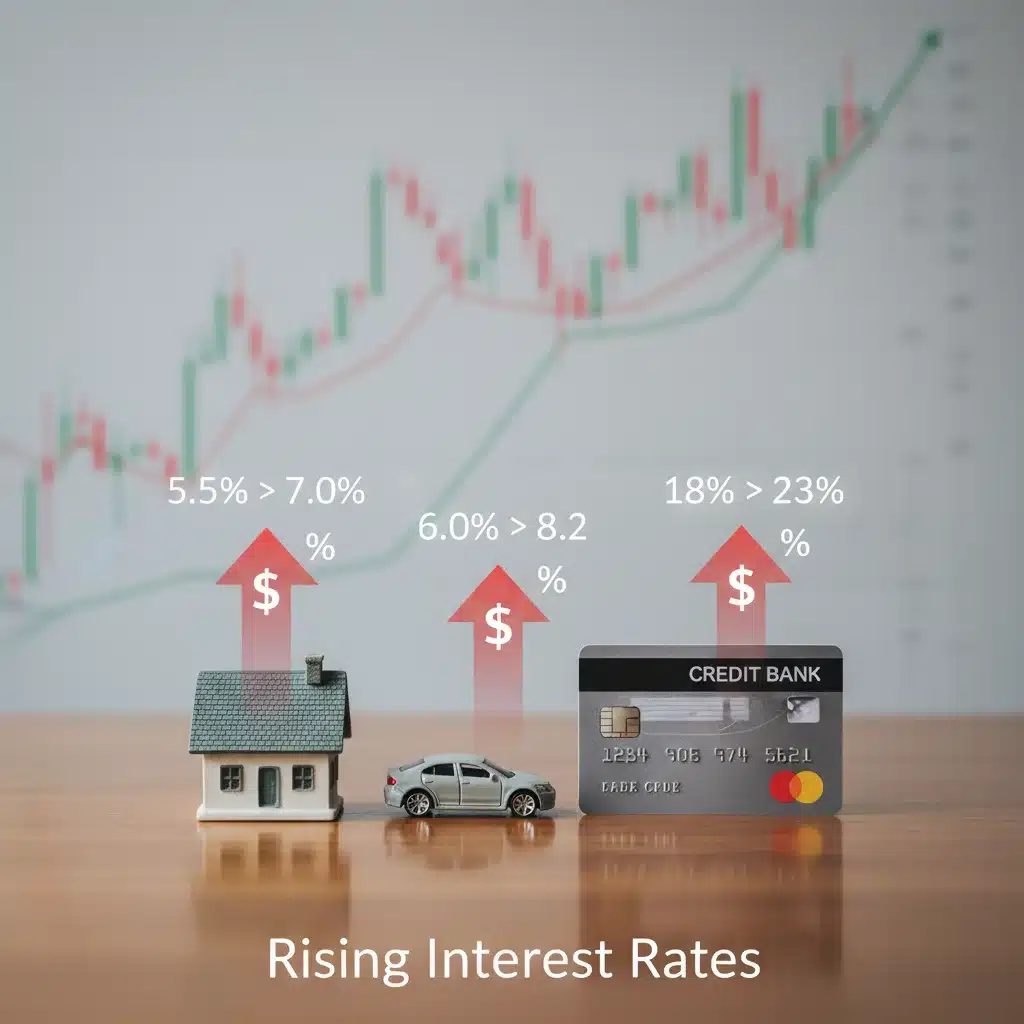
The projected 0.75% increase in interest rates by 2026, or the cumulative effect of previous hikes stabilizing at a higher level, will have distinct implications across various consumer lending products. This isn’t a uniform impact; each category responds differently to changes in the federal funds rate. Let’s break down how this could affect your personal finances.
Mortgages: Navigating Higher Homeownership Costs
For most consumers, mortgages represent the largest form of debt. The 0.75% shift in interest rates could translate into significantly higher monthly payments for new homebuyers or those looking to refinance. While fixed-rate mortgages are less directly affected by immediate Fed rate changes once locked in, the underlying rates for new fixed-rate mortgages are influenced by long-term Treasury yields, which typically move in tandem with Fed policy expectations.
- New Homebuyers: A higher interest rate means a more expensive mortgage over the life of the loan. For example, on a $300,000 30-year fixed-rate mortgage, a 0.75% increase in interest could add tens of thousands of dollars to the total cost of the loan and significantly increase monthly payments. This could reduce purchasing power and make homeownership less accessible for some.
- Adjustable-Rate Mortgages (ARMs): Homeowners with ARMs are particularly vulnerable. As their adjustment periods come due, their interest rates will likely reset higher, leading to increased monthly payments.
- Refinancing: The window for advantageous refinancing rates might narrow. Homeowners considering refinancing should evaluate their options carefully in anticipation of rising rates.
Prospective homebuyers should factor these Fed Rate Projections into their budgeting and consider locking in rates sooner rather than later if they find a favorable deal. Existing homeowners with ARMs should assess their ability to manage potentially higher payments or explore refinancing into a fixed-rate mortgage if current rates are still favorable.
Auto Loans: Increased Cost of Vehicle Ownership
Auto loans, whether for new or used vehicles, are also highly sensitive to interest rate changes. A 0.75% increase can make a substantial difference in the total cost of financing a car.
- Monthly Payments: For a typical car loan, a 0.75% rate hike will result in higher monthly payments. For instance, on a $35,000 car loan over five years, this increase could add hundreds of dollars to the total interest paid over the loan term.
- Affordability: Higher rates can push certain vehicles out of budget for some consumers, potentially leading them to opt for less expensive models or used cars.
- Leasing vs. Buying: The attractiveness of leasing versus buying might shift. While lease payments are also influenced by financing costs, the dynamics can be different, warranting a fresh evaluation.
Consumers planning to purchase a vehicle in 2026 should be mindful of these Fed Rate Projections and consider pre-approvals or securing financing when rates are more favorable. Shopping around for the best rates from different lenders will become even more crucial.
Credit Cards and Personal Loans: Higher Revolving Debt Costs
Credit card interest rates and personal loan rates are often directly tied to the prime rate, which closely tracks the federal funds rate. A 0.75% increase here will have an almost immediate and direct impact.
- Credit Card Debt: For those carrying a balance on their credit cards, the interest charges will increase, making it more expensive to service that debt. This can lead to a vicious cycle for consumers struggling with high-interest debt.
- Personal Loans: New personal loans will come with higher interest rates, increasing the cost of borrowing for purposes like debt consolidation, home improvements, or unexpected expenses.
Managing credit card debt becomes even more critical in a rising rate environment. Consumers should prioritize paying down high-interest balances and consider strategies like balance transfers to lower-APR cards (if available and beneficial) or debt consolidation before the full impact of the 2026 Fed Rate Projections takes hold.
Student Loans: Mixed Impact
The impact on student loans is more nuanced. Federal student loan interest rates are set annually by Congress and are not directly tied to the federal funds rate in the same way as other consumer loans. However, private student loan rates often track market rates, meaning new private loans could become more expensive.
- Federal Loans: Existing federal loans, especially fixed-rate ones, will largely be unaffected. New federal loans might see adjustments, but these are legislated.
- Private Loans: New private student loans, or existing variable-rate private loans, could see their interest rates rise, increasing monthly payments and overall costs.
Students and parents considering private student loans should be aware of these potential increases and explore all federal loan options first, as they often come with more favorable terms and borrower protections.
The Broader Economic Landscape and the Fed’s Rationale
Understanding the 0.75% impact on consumer lending requires looking beyond just the numbers and delving into the underlying economic rationale driving the Fed’s decisions. The 2026 Fed Rate Projections are shaped by a complex interplay of factors, including persistent inflation concerns, a resilient labor market, and the Fed’s long-term strategy for economic stability.
Inflationary Pressures and Price Stability
While inflation may have peaked, the Fed’s commitment to bringing it back down to its 2% target remains unwavering. Even if headline inflation cools, underlying core inflation (excluding volatile food and energy prices) can be sticky, influenced by factors like wage growth and service sector prices. The 2026 projections likely reflect the Fed’s belief that a somewhat restrictive monetary policy stance will still be necessary to ensure price stability over the medium term. A 0.75% impact on consumer lending, through higher rates, is a mechanism to cool demand and prevent a resurgence of inflationary pressures.
Labor Market Dynamics
The U.S. labor market has demonstrated remarkable resilience, often defying expectations of significant slowdowns even in the face of aggressive rate hikes. Strong employment figures and robust wage growth, while beneficial for workers, can also contribute to inflationary pressures by increasing consumer purchasing power. The Fed’s projections for 2026 will consider whether the labor market remains tight, and if so, how that might necessitate maintaining higher interest rates to balance employment with inflation control.
The Neutral Rate and Long-Term Outlook
Central to the Fed’s long-term thinking is the concept of the ‘neutral rate’ of interest – the theoretical rate that neither stimulates nor slows economic growth. The 2026 Fed Rate Projections might suggest that the Fed sees the neutral rate as being higher than previously thought, or that it believes rates need to remain above neutral for a period to fully achieve its objectives. This implies that even if rate hikes cease, rates may not return to the ultra-low levels seen in the past decade, signaling a new era of monetary policy.
Global Economic Factors
Global economic stability, geopolitical events, and the performance of major trading partners also factor into the Fed’s calculus. A strong dollar, influenced by higher U.S. interest rates, can affect international trade and capital flows. The Fed must consider these external dynamics to avoid unintended consequences for the U.S. economy. The 2026 outlook will likely incorporate assumptions about global growth and inflation trends.
In essence, the 0.75% impact is a reflection of the Fed’s ongoing efforts to fine-tune the economy. It’s a signal that the central bank remains vigilant in its fight against inflation while attempting to engineer a ‘soft landing’ – bringing inflation down without triggering a severe recession. This delicate balancing act is what makes understanding the Fed Rate Projections so critical for all economic participants.
Strategies for Consumers and Businesses to Adapt
With the Federal Reserve’s 2026 Fed Rate Projections signaling a potential 0.75% impact on consumer lending, proactive financial planning becomes indispensable. Both individuals and businesses can implement strategies to mitigate risks and even capitalize on the changing interest rate environment.
For Individuals: Proactive Financial Management
- Review and Refinance (If Applicable): If you have an adjustable-rate mortgage (ARM) or other variable-rate loans, assess your current terms. If fixed rates are still relatively favorable, consider refinancing to lock in a stable payment before rates potentially climb further.
- Aggressively Pay Down High-Interest Debt: Prioritize paying off credit card balances and high-interest personal loans. The higher the interest rate, the more critical it is to reduce the principal balance to minimize the impact of rising rates.
- Boost Emergency Savings: A higher cost of borrowing means that relying on credit in an emergency becomes more expensive. Building a robust emergency fund can provide a buffer against unexpected expenses without incurring high-interest debt.
- Re-evaluate Investment Strategies: Rising interest rates can impact various asset classes differently. Consult with a financial advisor to ensure your investment portfolio is aligned with your goals and risk tolerance in a potentially higher-rate environment. Bonds, for instance, may offer more attractive yields, while certain growth stocks might face headwinds.
- Budget for Higher Loan Payments: If you anticipate taking out a new mortgage, auto loan, or personal loan in 2026, budget for higher potential interest rates. Use online calculators to estimate how a 0.75% increase could affect your monthly payments and overall affordability.
- Improve Credit Score: A higher credit score can help you qualify for the best available interest rates, even in a rising rate environment. Focus on making timely payments, reducing credit utilization, and correcting any errors on your credit report.
For Businesses: Strategic Capital Management
- Assess Debt Portfolio: Businesses should review their existing debt. If a significant portion is variable-rate, explore options for fixing rates or hedging against future increases.
- Optimize Cash Flow: With borrowing becoming more expensive, efficient cash flow management is paramount. Focus on optimizing accounts receivable and payable, and maintaining healthy liquidity.
- Re-evaluate Investment Plans: Higher interest rates increase the cost of capital, potentially impacting the profitability of new investments and expansion projects. Businesses should re-evaluate their capital expenditure plans, prioritizing projects with strong returns on investment.
- Pass-Through Costs (Carefully): Depending on market conditions and competitive landscapes, businesses might need to consider adjusting pricing to absorb higher financing costs. This must be done carefully to avoid alienating customers.
- Explore Alternative Financing: For smaller businesses, higher traditional loan rates might make alternative financing options, such as lines of credit or specific government-backed loan programs, more attractive.
- Engage with Financial Advisors: Businesses, especially those with complex financial structures, should work closely with financial advisors to develop strategies tailored to the evolving interest rate environment.
The key takeaway for both individuals and businesses is to be proactive. Waiting until the 2026 Fed Rate Projections fully materialize could lead to missed opportunities or increased financial strain. Informed decision-making, based on a clear understanding of the Fed’s intentions and the broader economic context, will be your most valuable asset.

Insider Knowledge: Reading Between the Lines of Fed Communication
Beyond the official statements and dot plots, there’s an art to interpreting the Federal Reserve’s true intentions. Gaining ‘insider knowledge’ isn’t about having privileged access, but rather about keenly observing patterns, nuances, and shifts in communication that can hint at future Fed Rate Projections. This involves more than just reading the headlines; it requires a deeper engagement with the Fed’s public discourse.
Analyzing Speeches and Interviews
Individual FOMC members often give speeches and interviews, offering their perspectives on the economy and monetary policy. While these don’t represent the official stance of the entire committee, they can provide valuable clues about the range of opinions within the Fed and potential future policy directions. Pay attention to:
- Divergent Views: Are some members consistently more hawkish (favoring higher rates) or dovish (favoring lower rates) than the median? Understanding these leanings can help predict potential shifts in the consensus.
- Key Phrases: Look for recurring phrases or new terminology. For example, a shift from ‘transitory inflation’ to ‘persistent inflation’ was a significant signal of a policy pivot.
- Economic Outlook: How do individual members describe the current economic situation and their outlook for inflation, employment, and growth? Discrepancies or strong convictions can be telling.
The FOMC Minutes: A Deeper Dive
The minutes of FOMC meetings, released three weeks after each meeting, offer a more detailed account of the committee’s discussions. These minutes provide context to the decisions made and reveal the arguments for and against various policy options. Key areas to focus on include:
- Discussion of Risks: What are the primary risks to the economic outlook identified by the committee? Are they leaning towards inflation risks or recession risks?
- Path of Future Policy: While the dot plot gives a numerical projection, the minutes often elaborate on the conditions that would warrant further rate hikes or cuts, providing a qualitative understanding of the Fed Rate Projections.
- Uncertainty and Contingencies: How do members discuss uncertainty, and what contingencies are they considering for different economic scenarios?
Market Reactions as a Barometer
While the Fed aims to guide markets, market reactions themselves can offer insights. How do bond yields, equity markets, and the dollar react to Fed announcements or speeches? Sometimes, a muted market reaction to a seemingly strong statement can indicate that the market has already priced in the information, or that it interprets the statement differently than anticipated. Conversely, a strong reaction might signal new information or a significant shift in expectations.
The Role of Economic Data
Finally, always connect Fed communication back to the underlying economic data. The Fed is data-dependent, and its policy will ultimately respond to how the economy evolves. Keep an eye on the latest inflation reports, employment figures, and GDP growth numbers. If the data starts to deviate significantly from the Fed’s projections, it could signal a change in future policy actions, irrespective of previous guidance.
By combining an understanding of the Fed’s framework, a detailed analysis of the 0.75% impact on lending, and the ability to interpret the nuances of Fed communication, you can gain a powerful ‘insider knowledge’ perspective. This holistic approach allows for more informed and strategic financial decisions in anticipation of the 2026 Fed Rate Projections and beyond.
Conclusion: Navigating the Future of Consumer Lending with Confidence
The Federal Reserve’s 2026 interest rate projections, particularly the anticipated 0.75% impact on consumer lending, represent a critical junction for individuals and businesses alike. As we have explored, these Fed Rate Projections are not arbitrary numbers but are deeply rooted in the Fed’s dual mandate of maximizing employment and maintaining price stability, influenced by a dynamic array of economic indicators.
The ripple effects of these potential rate adjustments will be felt across mortgages, auto loans, credit cards, and even certain student loan categories. For the average consumer, this translates to potentially higher borrowing costs, emphasizing the need for meticulous financial planning. New homebuyers may face larger monthly payments, existing homeowners with ARMs could see their payments increase, and those carrying credit card debt will find it more expensive to service. Businesses, too, will need to re-evaluate their capital management and investment strategies in a higher-cost borrowing environment.
However, armed with the insider knowledge presented in this article, you are not merely a passive observer. By understanding the Fed’s monetary policy framework, deciphering its communications, and proactively implementing smart financial strategies, you can navigate this evolving landscape with confidence. This means:
- Being Proactive: Reviewing your current debt, especially variable-rate loans, and taking action such as refinancing or aggressively paying down high-interest balances.
- Budgeting Wisely: Factoring in potentially higher borrowing costs for future purchases like homes or cars.
- Building Resilience: Strengthening your emergency savings and optimizing your credit score to secure the best possible terms.
- Staying Informed: Continuously monitoring Fed announcements, economic data, and expert analysis to adapt your financial plans as new information emerges.
The economic journey to 2026 will undoubtedly present its share of twists and turns. However, by embracing a forward-looking and informed approach to your finances, you can transform potential challenges into opportunities for growth and stability. The Federal Reserve’s actions are a powerful force, but your preparedness and strategic responses are equally significant in shaping your financial future. Stay vigilant, stay informed, and make your money work smarter for you in the face of these important Fed Rate Projections.
Author