Federal Funds Rate 2026: Impact of 5.25%-5.50% Target Range on Borrowing Costs
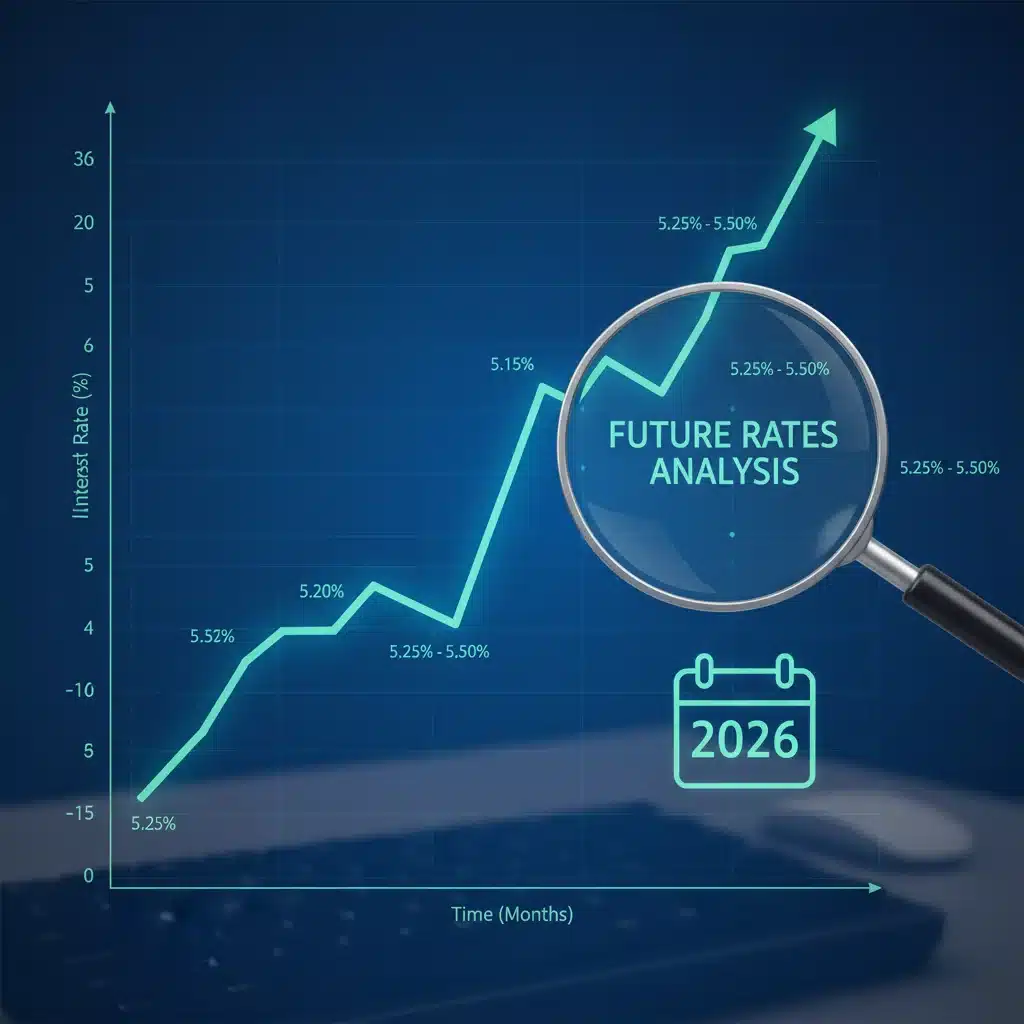
Understanding the trajectory of the federal funds rate 2026 is paramount for anyone navigating the financial landscape. As we look ahead, a projected target range of 5.25%-5.50% for the federal funds rate carries significant implications for borrowing costs, investment strategies, and the overall economic climate. This comprehensive article aims to dissect what this specific range could mean for individuals, businesses, and the broader economy, offering insights into how to prepare and adapt.
The federal funds rate, set by the Federal Open Market Committee (FOMC) of the Federal Reserve, is the interest rate at which depository institutions lend reserve balances to other depository institutions overnight. While it’s an overnight rate, its ripple effects are felt throughout the entire financial system, influencing everything from mortgage rates to credit card APRs and business loan terms. A target range of 5.25%-5.50% in 2026 would signal a continued commitment by the Fed to certain economic conditions, primarily inflation control, and would have profound consequences for borrowing costs.
The Federal Funds Rate: A Primer
Before diving into the specifics of the federal funds rate 2026, it’s essential to understand its fundamental role. The Federal Reserve uses this rate as its primary tool for implementing monetary policy. By adjusting this target range, the Fed influences the cost of borrowing for banks, which then translates into the interest rates they offer to consumers and businesses. When the federal funds rate goes up, borrowing becomes more expensive across the board; when it goes down, borrowing becomes cheaper.
The Fed’s decisions are driven by its dual mandate: to achieve maximum employment and stable prices (i.e., control inflation). Other factors like economic growth, global financial conditions, and financial stability also play a role. Predicting the federal funds rate for 2026 involves analyzing current economic indicators, the Fed’s past actions, and its forward guidance, which often changes as new data emerges.
Why 5.25%-5.50% is a Significant Range
A target range of 5.25%-5.50% is considered relatively high by historical standards, especially compared to the near-zero rates observed for extended periods following the 2008 financial crisis and during the COVID-19 pandemic. This elevated range suggests that the Federal Reserve anticipates a need to maintain restrictive monetary policy to combat persistent inflationary pressures or to ensure inflation returns to its 2% target sustainably. Such a rate would mean that the cost of capital remains high, impacting various sectors of the economy differently.
Impact on Borrowing Costs for Individuals
For the average consumer, a federal funds rate 2026 within the 5.25%-5.50% range will directly translate to higher borrowing costs across several key areas.
Mortgages
Mortgage rates are highly sensitive to the federal funds rate, though not directly. Long-term rates, like those for 30-year fixed mortgages, are more influenced by the yield on Treasury bonds, which in turn are affected by the Fed’s policy and market expectations. If the federal funds rate remains high, it signals a restrictive monetary policy environment, which typically keeps long-term rates elevated. For prospective homebuyers, this means:
- Higher Monthly Payments: Even a slight increase in interest rates can significantly raise monthly mortgage payments, reducing affordability.
- Reduced Buying Power: Higher rates mean borrowers qualify for smaller loan amounts for the same monthly payment, effectively shrinking their buying power.
- Impact on Refinancing: Homeowners looking to refinance might find it less attractive, as current rates could be higher than their existing mortgage rates.
Credit Cards and Personal Loans
These types of borrowing are perhaps the most directly affected by changes in the federal funds rate. Most credit cards have variable interest rates tied to the prime rate, which moves in lockstep with the federal funds rate. A 5.25%-5.50% federal funds rate in 2026 would likely mean:
- Increased APRs: Credit card annual percentage rates (APRs) would remain high, making carrying a balance more expensive.
- Higher Personal Loan Rates: Unsecured personal loans would also command higher interest rates, impacting those seeking funds for debt consolidation, home improvements, or other personal needs.
Auto Loans
While auto loan rates are also influenced by the federal funds rate, the impact can vary based on the lender, borrower’s credit score, and loan term. However, the general trend would be towards higher rates, making new and used car purchases more expensive through increased monthly payments.
Impact on Businesses
Businesses, from small startups to large corporations, also face significant repercussions from an elevated federal funds rate 2026.
Cost of Capital
For businesses, the cost of borrowing money to fund operations, expansion, or investments directly impacts their profitability and growth strategies. A higher federal funds rate means:
- More Expensive Loans: Lines of credit, term loans, and other forms of debt financing become more costly. This can deter businesses from taking on new projects or expanding, potentially slowing economic growth.
- Reduced Investment: Higher borrowing costs can make certain investment projects less viable, as the expected return on investment might not exceed the cost of capital.
- Impact on Mergers & Acquisitions: Financing M&A activities becomes more expensive, potentially cooling down deal-making in various industries.
Impact on Specific Sectors
Certain sectors are more sensitive to interest rate changes than others:
- Real Estate & Construction: These sectors are heavily reliant on financing. Higher rates can slow down new construction, reduce property sales, and impact real estate development projects.
- Technology & Startups: Often reliant on venture capital and debt financing for growth, these companies might find it harder to secure funding or face higher costs, potentially slowing innovation.
- Manufacturing: Businesses requiring significant capital expenditure for machinery and equipment will face higher financing costs.

Economic Implications of a 5.25%-5.50% Federal Funds Rate in 2026
Beyond individual and business borrowing costs, a sustained federal funds rate 2026 at 5.25%-5.50% has broader macroeconomic implications.
Inflation Control
The primary goal of maintaining a high federal funds rate is typically to combat inflation. By making borrowing more expensive, the Fed aims to cool down demand in the economy, which in turn should lead to a moderation of prices. If inflation remains stubbornly high despite these rates, it could indicate deeper structural issues or external supply shocks.
Economic Growth vs. Recession Risk
While necessary for inflation control, high interest rates can also slow down economic growth. The risk of tipping the economy into a recession is a constant concern for policymakers. A 5.25%-5.50% rate in 2026 would suggest the Fed is prioritizing inflation control, even if it means accepting slower growth or a mild recession. This balancing act is delicate, and the Fed’s decisions will be closely watched for any signs of an impending downturn.
Dollar Strength
Higher interest rates in the U.S. can make dollar-denominated assets more attractive to foreign investors, leading to a stronger dollar. A strong dollar has mixed effects:
- Cheaper Imports: It makes imported goods and services cheaper for U.S. consumers and businesses.
- More Expensive Exports: U.S. exports become more expensive for foreign buyers, potentially hurting export-oriented industries.
- Impact on Emerging Markets: A strong dollar can put pressure on countries with dollar-denominated debt, making it harder for them to repay their loans.
Labor Market Dynamics
A restrictive monetary policy, characterized by higher interest rates, can lead to a cooling of the labor market. Businesses facing higher borrowing costs might slow hiring, reduce expansion plans, or even resort to layoffs. This can lead to an increase in unemployment rates, which the Fed monitors closely as part of its dual mandate.
Expert Forecasts and Outlook for 2026
Forecasting the federal funds rate 2026 is an exercise fraught with uncertainty, as economic conditions are constantly evolving. However, economists and financial institutions use various models and indicators to provide projections. A consensus around 5.25%-5.50% would likely stem from:
- Persistent Inflationary Pressures: Expectations that inflation, while potentially moderating, will not return to the Fed’s 2% target without sustained restrictive policy.
- Resilient Economy: The economy showing a degree of resilience despite higher rates, allowing the Fed to maintain its stance.
- Geopolitical Factors: Ongoing global events (e.g., supply chain disruptions, energy crises) that could contribute to inflationary pressures.
It’s crucial to remember that these forecasts are subject to change. Any significant shifts in inflation data, employment figures, or global economic stability could lead the Fed to adjust its policy course.
Strategies for Navigating a High-Interest Rate Environment
Given the potential for a federal funds rate 2026 within the 5.25%-5.50% range, both individuals and businesses should consider implementing strategic financial planning.
For Individuals:
- Prioritize Debt Reduction: Focus on paying down high-interest debt, especially credit card balances, to minimize interest accrual.
- Shop for Loan Rates: If you need to borrow, compare offers from multiple lenders. Even small differences in interest rates can lead to significant savings over time.
- Consider Fixed-Rate Options: For major purchases like homes, a fixed-rate mortgage can provide stability against future rate hikes.
- Build Savings: A robust emergency fund becomes even more critical in an environment where borrowing is expensive.
- Review Investment Portfolios: Higher interest rates can impact different asset classes. Consider consulting a financial advisor to adjust your portfolio if necessary.
For Businesses:
- Optimize Capital Structure: Evaluate your debt-to-equity ratio and consider strategies to reduce reliance on high-cost debt.
- Cash Flow Management: Enhance cash flow forecasting and management to reduce the need for short-term borrowing.
- Hedging Strategies: Explore interest rate hedging options to mitigate the impact of fluctuating rates on variable-rate loans.
- Focus on Efficiency: In a higher cost environment, operational efficiency becomes even more critical to maintain profitability.
- Strategic Planning: Incorporate higher borrowing costs into future business plans and investment appraisals.

The Role of Forward Guidance and Market Expectations
The Federal Reserve communicates its intentions through various channels, including FOMC statements, press conferences, and the ‘dot plot’ which illustrates individual Fed members’ projections for the federal funds rate. This ‘forward guidance’ is crucial because market expectations about future rates can influence current borrowing costs even before the Fed makes an official move.
If markets largely anticipate a federal funds rate 2026 of 5.25%-5.50%, then current long-term interest rates will already reflect much of that expectation. Conversely, any divergence from market expectations can lead to significant volatility in financial markets. Investors and borrowers constantly analyze these signals to make informed decisions.
Challenges in Forecasting
Forecasting the federal funds rate two years out is inherently challenging. The economy is a dynamic system influenced by countless variables, many of which are unpredictable. Factors such as geopolitical events, technological advancements, shifts in consumer behavior, and unforeseen crises can all alter the economic landscape and, consequently, the Fed’s policy decisions. Therefore, while a 5.25%-5.50% target range for 2026 provides a benchmark for planning, flexibility and adaptability in financial strategies will be key.
Conclusion
The prospect of a federal funds rate 2026 within the 5.25%-5.50% target range signals a continued period of elevated borrowing costs. This environment, while intended to bring inflation under control, will undoubtedly reshape financial decisions for individuals and businesses alike. From more expensive mortgages and personal loans to higher costs of capital for corporate expansion, the ripple effects will be widespread.
Understanding these implications and proactively adjusting financial strategies are crucial steps. For consumers, this means prioritizing debt reduction and carefully evaluating new borrowing. For businesses, it involves optimizing capital structure and focusing on efficiency. While forecasts can change, being prepared for a sustained period of higher interest rates will enable greater financial resilience and better positioning for future economic shifts. Staying informed about the Federal Reserve’s communications and broader economic trends will be essential for navigating the financial landscape in 2026 and beyond.
Author