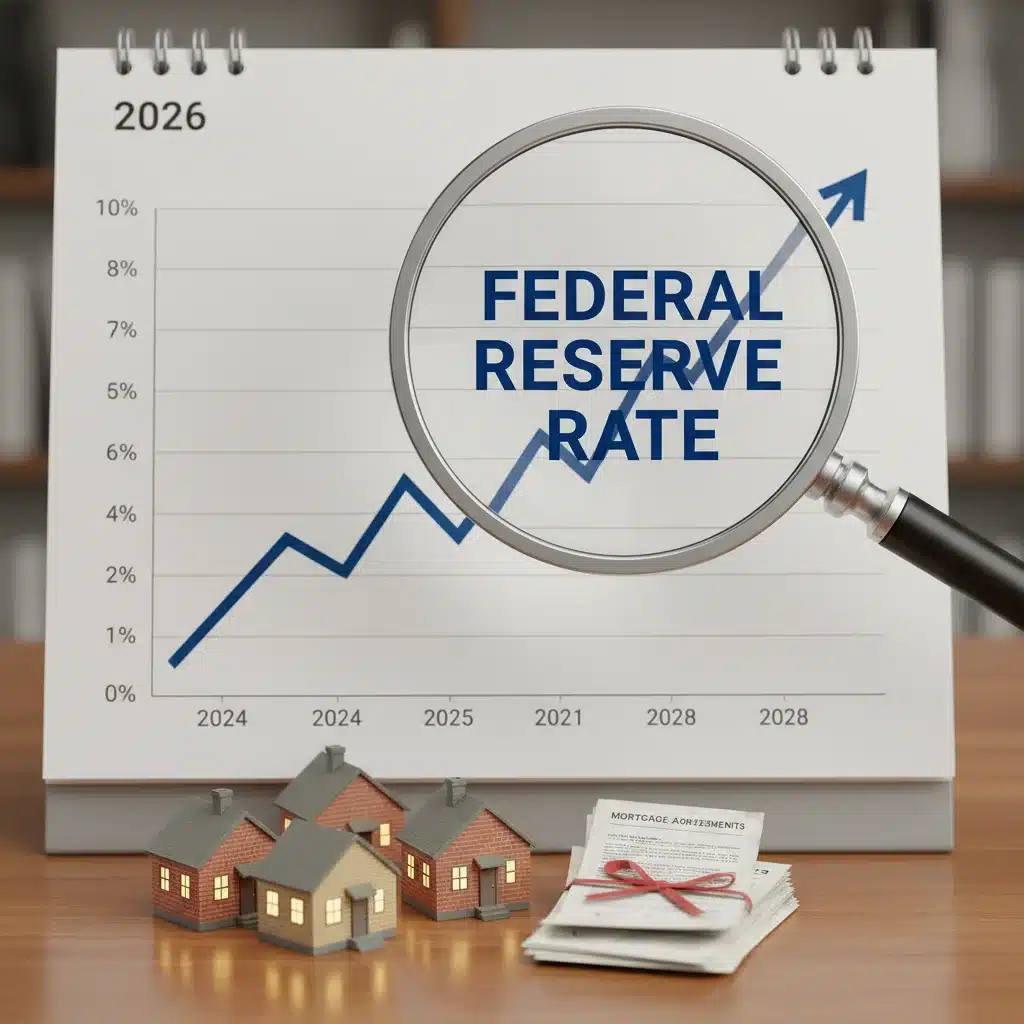
The financial landscape is in a perpetual state of flux, constantly influenced by a myriad of global and domestic factors. As we cast our gaze towards 2026, one of the most significant anticipated shifts is the potential stabilization of the Federal Reserve Rate 2026 at around 4%. This seemingly modest figure holds profound implications for virtually every facet of the economy, but none more so than for mortgage markets and the broader realm of loan restructuring. Understanding this outlook is not merely an academic exercise; it’s a critical necessity for homeowners, prospective buyers, businesses, and financial institutions alike to strategize and thrive in the evolving economic climate.
The Federal Reserve, often referred to as ‘the Fed,’ plays a pivotal role in shaping the nation’s monetary policy. Its decisions on interest rates ripple through the economy, affecting everything from the cost of borrowing for a car to the yield on savings accounts. A 4% Federal Reserve rate, while still above the ultra-low rates seen in the immediate post-2008 and pandemic eras, represents a return to a more historically normalized, albeit tighter, monetary environment. This article will delve deep into the multifaceted impacts of this projected rate, offering a comprehensive guide to navigating the challenges and opportunities that lie ahead for mortgages and loan restructuring.
We will explore the historical context of Fed rate adjustments, dissect the direct and indirect effects on mortgage rates, analyze the implications for existing and new loan products, and provide actionable strategies for both individuals and businesses considering restructuring their financial obligations. The aim is to equip you with the knowledge needed to make informed decisions, ensuring financial resilience and strategic advantage in the face of a 4% Federal Reserve Rate 2026.
Understanding the Federal Reserve’s Role and the 4% Projection for 2026
To fully grasp the significance of a 4% Federal Reserve Rate 2026, it’s essential to first understand the mechanics of the Federal Reserve itself. The Fed’s primary mandate includes maximizing employment, stabilizing prices, and moderating long-term interest rates. It achieves these goals primarily through adjusting the federal funds rate – the target rate for overnight lending between banks. While the Fed doesn’t directly set mortgage rates, changes to the federal funds rate significantly influence other benchmark rates, including the prime rate, which in turn affects variable-rate loans and, indirectly, fixed mortgage rates.
The journey to a projected 4% rate in 2026 is a story of economic recovery, inflation management, and a gradual unwinding of accommodative monetary policies. Following periods of aggressive rate hikes to combat surging inflation, the Fed is expected to reach a point of equilibrium. A 4% rate suggests that inflation will likely be brought closer to the Fed’s target of 2%, and the economy will be operating at or near full employment, but with a more constrained monetary policy compared to the recent past. This ‘higher for longer’ rate environment contrasts sharply with the near-zero rates that characterized much of the 2010s and early 2020s, necessitating a re-evaluation of financial strategies.
Historical Context of Federal Reserve Rate Adjustments
Looking back, the Federal Reserve has a history of cyclical rate adjustments. Periods of low rates encourage borrowing and economic expansion, while higher rates are used to cool down an overheating economy and curb inflation. For instance, in the late 1990s and early 2000s, rates hovered in a similar range, impacting investment and consumer spending. The subprime mortgage crisis of 2008 led to an extended period of exceptionally low rates, designed to stimulate a struggling economy. The post-pandemic surge in inflation, however, forced the Fed to embark on one of the most aggressive tightening cycles in decades. The projected 4% Federal Reserve Rate 2026 signals a move towards what many economists consider a ‘neutral’ rate – one that neither stimulates nor constrains economic growth excessively.
This historical perspective is crucial because it informs our understanding of how markets and consumers might react. A 4% federal funds rate translates to higher borrowing costs across the board, affecting everything from credit card interest to business loans. For homeowners and those looking to enter the housing market, the impact on mortgage rates will be paramount.
The Direct Impact on Mortgage Rates and Affordability
The most immediate and tangible effect of a 4% Federal Reserve Rate 2026 will be on mortgage rates. While the federal funds rate doesn’t directly dictate fixed mortgage rates, which are more closely tied to the yield on 10-year Treasury bonds, there is a strong correlation. When the Fed raises its benchmark rate, it generally pushes up yields on Treasury bonds, leading to higher fixed mortgage rates. Variable-rate mortgages, such as adjustable-rate mortgages (ARMs) and home equity lines of credit (HELOCs), are even more directly influenced, as their rates are often pegged to the prime rate, which moves in lockstep with the federal funds rate.
For Prospective Homeowners: Navigating a Higher Rate Environment
For individuals dreaming of homeownership, a 4% Federal Reserve Rate 2026 could translate to mortgage rates in the 6-8% range, depending on market conditions and the specific loan product. This is significantly higher than the historically low rates below 3% seen during the pandemic. Higher rates mean higher monthly payments for the same loan amount, reducing overall affordability. For a $400,000 mortgage, the difference in monthly payments between a 3% and a 7% interest rate can be hundreds of dollars, substantially impacting a household’s budget.
Prospective buyers will need to adjust their expectations regarding home prices and borrowing capacity. Some may find themselves needing to save a larger down payment, purchase a less expensive home, or extend their loan terms to manage monthly costs. The market might see a slight cooling in demand as some buyers are priced out, potentially leading to more balanced market conditions compared to the frenzied activity of recent years. However, inventory levels will also play a crucial role in determining price movements.
For Existing Homeowners: Refinancing and Equity
Existing homeowners with fixed-rate mortgages secured during periods of lower interest rates may find themselves in a favorable position, as their monthly payments remain stable. However, those with variable-rate mortgages will likely see their payments increase. The prospect of refinancing for most will be less attractive unless their current rate is significantly higher than the prevailing rates in 2026. The ‘golden handcuff’ effect, where homeowners are reluctant to sell their homes because they would have to take on a new mortgage at a much higher rate, could become more pronounced.
Home equity lines of credit (HELOCs) and home equity loans (HELs), often used for home improvements or debt consolidation, will also become more expensive. Homeowners considering tapping into their equity will need to weigh the higher borrowing costs against the benefits. The overall impact on home equity itself will depend on local market dynamics, but a stable interest rate environment generally supports more predictable, albeit slower, appreciation.
Loan Restructuring Strategies in a 4% Federal Reserve Rate Environment
With a 4% Federal Reserve Rate 2026, loan restructuring becomes a critical tool for both individuals and businesses to optimize their financial health. Restructuring involves altering the terms of an existing loan, such as the interest rate, payment schedule, or loan duration, to make it more manageable or cost-effective.
For Individuals: Mortgage and Personal Loan Restructuring
Many homeowners may explore options for restructuring their mortgages. If you have an adjustable-rate mortgage (ARM) that is about to reset, or if your current fixed rate is higher than what is available in 2026, you might consider refinancing. Even if the rates are higher than historical lows, a 4% Federal Reserve rate might still offer opportunities for those with very high existing rates or those looking to consolidate debt into a single, more manageable payment. However, the decision to refinance must be carefully evaluated, considering closing costs and the long-term savings.
Another form of restructuring could involve loan modifications, particularly for those facing financial hardship. Lenders may be willing to adjust loan terms to prevent default, especially if the borrower demonstrates a genuine ability to repay under new, more flexible conditions. This could include extending the loan term to reduce monthly payments, temporarily lowering interest rates, or even principal forbearance.

Beyond mortgages, personal loans, auto loans, and student loans will also be affected. Consolidating high-interest debt, such as credit card balances, into a lower-interest personal loan could be a wise move, but the availability and attractiveness of such loans will depend on the prevailing rates. Homeowners with significant equity might consider a cash-out refinance or a home equity loan if the interest rate is favorable compared to other debt options, but again, the 4% Federal Reserve Rate 2026 will make these options more expensive than they were previously.
For Businesses: Optimizing Debt and Capital Structure
Businesses, from small enterprises to large corporations, will also need to re-evaluate their debt structures. A 4% Federal Reserve Rate 2026 means that the cost of capital will be higher, impacting investment decisions, expansion plans, and overall profitability. Businesses with significant variable-rate debt will see their interest expenses rise, potentially squeezing profit margins. This could necessitate discussions with lenders about restructuring existing loans.
Options for businesses include:
- Refinancing Existing Debt: If a business has high-interest debt or variable-rate loans, they might explore refinancing into new loans with more favorable fixed rates, if available, or longer terms to reduce monthly payments.
- Debt Consolidation: Combining multiple smaller loans into one larger loan can simplify repayment and potentially secure a lower blended interest rate.
- Loan Modifications: For businesses facing cash flow challenges, lenders might offer modifications such as payment deferrals, interest-only periods, or revised repayment schedules.
- Strategic Use of Credit Lines: While lines of credit will be more expensive, they remain a flexible tool for managing short-term working capital needs. Businesses will need to manage these lines more cautiously.
- Reviewing Capital Expenditures: Higher borrowing costs may lead businesses to postpone or re-evaluate capital-intensive projects, prioritizing those with the highest return on investment.
The key for businesses will be proactive engagement with their financial advisors and lenders. Understanding the terms of existing debt and anticipating the impact of the 4% Federal Reserve Rate 2026 will be crucial for maintaining financial stability and fostering growth.
Broader Economic Implications of a 4% Federal Reserve Rate in 2026
The impact of a 4% Federal Reserve Rate 2026 extends far beyond just mortgages and loan restructuring. It influences the broader economy in several ways:
Inflation and Consumer Spending
A 4% rate is designed to keep inflation in check. While beneficial for purchasing power, higher borrowing costs can dampen consumer spending on big-ticket items like cars, appliances, and luxury goods. This slowdown in demand can help stabilize prices but might also lead to slower economic growth. Consumers will likely become more discerning with their spending and borrowing habits.
Investment and Savings
Higher interest rates typically make saving more attractive. Individuals and businesses may find better returns on savings accounts, certificates of deposit (CDs), and bonds. This shift from spending to saving can also contribute to a moderation of economic activity. For investors, the landscape changes, with fixed-income investments potentially offering more competitive returns compared to riskier assets.
Labor Market
The Fed’s dual mandate includes maximizing employment. A 4% rate suggests a labor market that is strong but not overheating. While higher rates can sometimes lead to a slowdown in hiring as businesses face increased costs, the overall aim is to achieve a sustainable level of employment without triggering inflationary pressures. The Federal Reserve Rate 2026 will be a critical factor in maintaining this delicate balance.
Global Economic Context
The U.S. Federal Reserve’s actions have global ramifications. A 4% rate can strengthen the U.S. dollar, making American goods more expensive for foreign buyers and imports cheaper for American consumers. This can impact trade balances and influence monetary policy decisions in other countries, particularly those with strong economic ties to the U.S.
Preparing for the 2026 Outlook: Actionable Advice
Given the projected 4% Federal Reserve Rate 2026, proactive planning is essential. Here’s actionable advice for various stakeholders:
For Homeowners and Prospective Buyers:
- Assess Your Current Mortgage: If you have an ARM, understand when your rate is scheduled to adjust and by how much. For fixed-rate mortgages, review your interest rate to see if any refinancing opportunities might still be viable, although less likely at higher rates.
- Improve Your Credit Score: A higher credit score will always qualify you for the best available rates, even in a higher-rate environment. Focus on paying bills on time and reducing debt.
- Save for a Larger Down Payment: A larger down payment reduces the amount you need to borrow, thereby mitigating the impact of higher interest rates on your monthly payments.
- Explore Loan Options: Look into different mortgage products, including FHA, VA, and USDA loans, which may offer more favorable terms for eligible borrowers.
- Budget Realistically: Factor in higher potential mortgage payments and other homeownership costs. Use online calculators to understand how different interest rates affect your monthly budget.
For Businesses:
- Review Your Debt Portfolio: Understand the interest rates, maturity dates, and terms of all existing loans. Identify any variable-rate debt that could become problematic.
- Stress Test Your Cash Flow: Model different interest rate scenarios to see how a 4% Federal Reserve Rate 2026 impacts your business’s cash flow and profitability.
- Build Strong Relationships with Lenders: Open communication with your bank or financial institution is crucial for exploring restructuring options before issues arise.
- Diversify Funding Sources: Consider a mix of debt and equity financing to reduce reliance on interest-rate-sensitive loans.
- Optimize Operations: Focus on efficiency and cost reduction to offset higher borrowing costs and maintain healthy profit margins.

For Investors:
- Rebalance Portfolios: Consider adjusting your asset allocation to account for a higher interest rate environment. Fixed-income investments may become more attractive.
- Focus on Quality: In a tighter monetary environment, companies with strong balance sheets and consistent earnings are typically more resilient.
- Stay Informed: Keep a close eye on economic data, inflation reports, and Federal Reserve announcements to anticipate further policy shifts.
Conclusion: Navigating the 2026 Financial Landscape
The projected 4% Federal Reserve Rate 2026 marks a significant pivot in the economic landscape, moving us further away from the era of ultra-low interest rates. This shift will undoubtedly present challenges, particularly in the mortgage market and for businesses with substantial debt. However, it also brings opportunities for those who are prepared and proactive.
Understanding the implications of a 4% Federal Reserve rate on mortgage and loan restructuring is not just about reacting to market changes; it’s about anticipating them and strategically positioning yourself or your business for success. By meticulously assessing current financial obligations, exploring available restructuring options, and maintaining a vigilant eye on economic indicators, individuals and businesses can navigate the evolving financial environment with confidence.
The coming years will demand financial prudence, adaptability, and informed decision-making. Whether you are looking to buy a home, manage existing debt, or grow a business, the 2026 outlook with a 4% Federal Reserve rate will necessitate a thoughtful approach to your financial strategies. Embrace the challenge, leverage the insights, and secure your financial future in this new economic chapter.