
Healthcare Reform: New Affordable Care Act Subsidies Go Live January 1, 2026 – Up to 15% Savings for Eligible Families
The landscape of American healthcare is perpetually evolving, and a significant change is on the horizon that promises to bring substantial relief to millions of families. Effective January 1, 2026, new enhancements to the Affordable Care Act (ACA) subsidies will be implemented, offering eligible families the potential to save up to 15% on their healthcare premiums. This landmark update is designed to make health insurance more accessible and affordable, addressing long-standing concerns about rising healthcare costs. For anyone currently struggling with health insurance expenses or those considering their options, understanding these new ACA subsidies 2026 is paramount.
This comprehensive guide will delve into the intricacies of these upcoming changes, providing a detailed overview of what the new ACA subsidies 2026 entail, who stands to benefit, and how you can prepare to maximize your savings. We will explore the eligibility criteria, the mechanisms through which these subsidies will reduce costs, and practical steps you can take to navigate the updated marketplace. The goal is to empower you with the knowledge needed to make informed decisions about your family’s healthcare coverage, ensuring you can take full advantage of these new financial protections.
Understanding the Core Changes to ACA Subsidies 2026
The Affordable Care Act, often referred to as Obamacare, has been a cornerstone of healthcare policy in the United States since its inception. Its primary goal has always been to expand health insurance coverage and make it more affordable. The upcoming changes to the ACA subsidies 2026 represent a significant step forward in achieving this goal. These modifications are not merely minor tweaks; they are structural improvements aimed at increasing the generosity and reach of financial assistance available to individuals and families purchasing health insurance through the ACA marketplace.
At the heart of these changes is a recalibration of the premium tax credits, which are the subsidies designed to lower the cost of monthly health insurance premiums. Currently, individuals and families whose income falls between 100% and 400% of the federal poverty level (FPL) are generally eligible for these credits. The new legislation, however, aims to broaden this eligibility and increase the amount of assistance provided, particularly for middle-income families who previously found themselves just above the subsidy cliff, where they received no financial help despite facing high premiums.
The most impactful change is the elimination of the income cap for subsidy eligibility. While the previous 400% FPL cap meant that many families earning just above this threshold were ineligible for assistance, the new rules ensure that no one will have to pay more than a certain percentage of their household income for a benchmark silver plan. This effectively means that even higher-income families, who might have been excluded in the past, could now qualify for significant savings, making the ACA subsidies 2026 a game-changer for a broader demographic.
Furthermore, the percentage of income individuals and families are expected to contribute towards their premiums will be reduced across all income levels. This means that for the same income, you will likely pay a lower percentage of your income for healthcare coverage, resulting in direct savings. For example, a family that previously paid 8.5% of their income for health insurance might now pay closer to 7% or even less, depending on their income level and location. This reduction in the expected contribution is the primary driver behind the ‘up to 15% savings’ advertised.
These adjustments are not temporary measures; they are intended to be a long-term fixture of the ACA. This provides greater certainty and stability for individuals and families planning their healthcare budgets. The consistent availability of these enhanced ACA subsidies 2026 will allow for better financial planning and reduce the burden of healthcare costs, encouraging more people to obtain and maintain comprehensive health insurance coverage.
Who Benefits from the New ACA Subsidies 2026? Eligibility Explained
One of the most crucial aspects of the new ACA subsidies 2026 is understanding who qualifies for this enhanced financial assistance. The changes are designed to cast a wider net, providing relief to a broader spectrum of American households. While the core principle of eligibility based on income relative to the Federal Poverty Level (FPL) remains, the specifics have been significantly refined.
Income Brackets and New Eligibility Thresholds
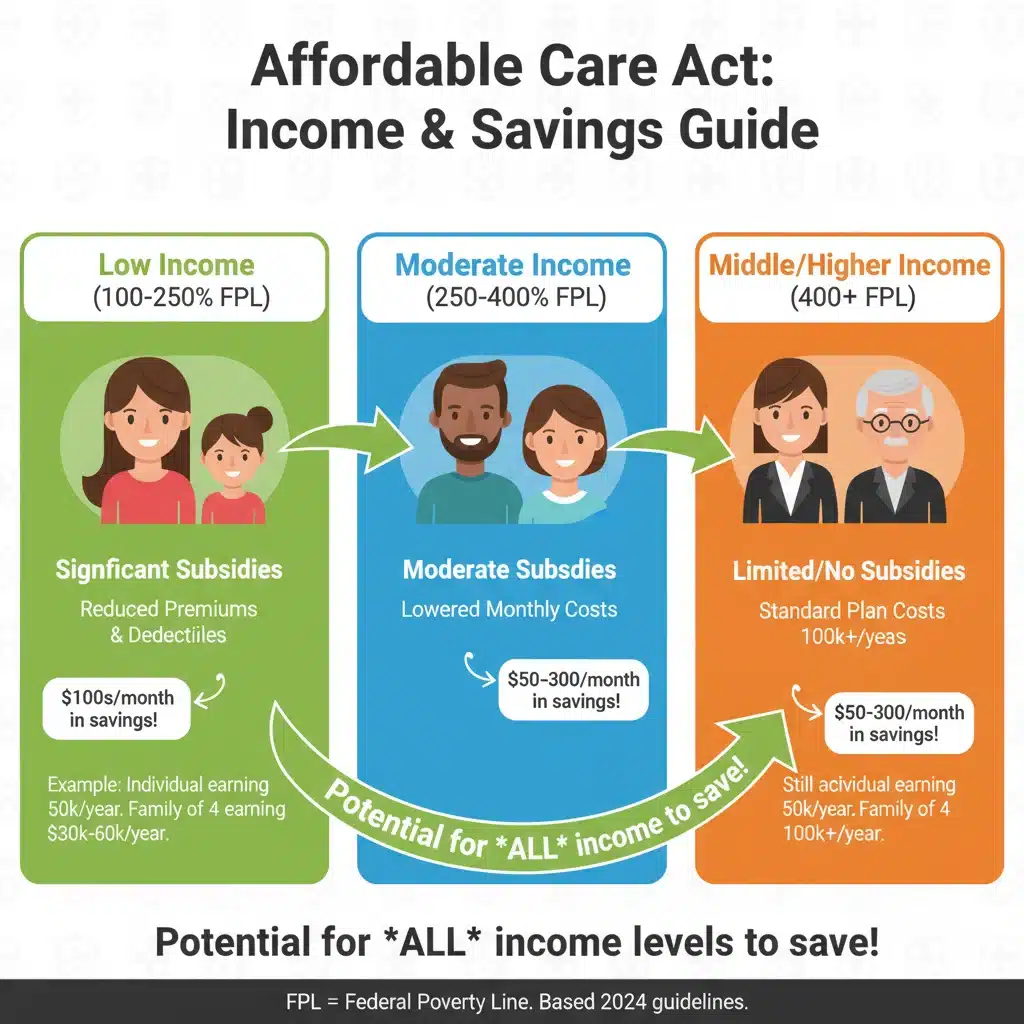
Historically, ACA subsidies were primarily targeted at lower and moderate-income individuals and families. With the new ACA subsidies 2026, the ‘subsidy cliff’ at 400% of the FPL is effectively removed. This means that even if your household income exceeds 400% of the FPL, you may still be eligible for subsidies if the cost of a benchmark silver plan would exceed a certain percentage of your income. This new cap on premium contributions ensures that healthcare remains affordable regardless of your income level.
For those below 400% FPL, the changes are even more direct. The percentage of income you are expected to pay for your premiums will decrease across the board. This means that individuals and families who were already receiving subsidies will likely see an increase in the amount of financial assistance they receive, leading to lower out-of-pocket premium costs. For instance, a family earning 200% of the FPL might see their premium contribution cap drop from, say, 4% to 2% of their income, resulting in substantial savings.
It’s important to note that the specific FPL figures are updated annually. As of the latest guidelines (which will be adjusted for 2026), the FPL varies based on household size. For example, in 2023, 100% FPL for an individual was approximately $14,580, and for a family of four, it was around $30,000. These numbers will be slightly higher for 2026, so it’s essential to check the most current FPL guidelines when considering your eligibility. The key takeaway is that more people, across a wider range of incomes, will find themselves eligible for meaningful financial support.
Impact on Middle-Income Families
Perhaps the most significant beneficiaries of the new ACA subsidies 2026 will be middle-income families. These are often households that earn too much to qualify for traditional Medicaid or significant ACA subsidies under the old rules but still find the cost of unsubsidized health insurance prohibitively expensive. With the removal of the income cap and the introduction of a maximum percentage of income spent on premiums, many middle-income families will now find quality healthcare coverage within their financial reach.
For example, a family of four with an income of $100,000 (which might be above 400% FPL in some years) previously might not have qualified for any subsidies. If a benchmark silver plan for this family cost $15,000 annually, they would have to pay the full amount. Under the new ACA subsidies 2026, if the maximum percentage of income they are expected to pay is set at, for instance, 8.5%, their maximum annual premium contribution would be $8,500. The remaining $6,500 would be covered by subsidies, representing a significant saving.
This expansion of eligibility to middle-income families is crucial for strengthening the overall health insurance market. It reduces the incentive for healthy individuals to forgo insurance due to cost, leading to a more balanced risk pool and potentially more stable premiums across the board. The enhanced ACA subsidies 2026 are truly designed to make health insurance a reality for a broader segment of the American population.
Calculating Your Potential Savings with ACA Subsidies 2026
Understanding the eligibility is the first step; the next is to estimate the actual savings you could realize. The ‘up to 15% savings’ is a compelling figure, and it’s important to grasp how these savings are calculated and what they mean for your household budget. The calculation of ACA subsidies 2026 primarily revolves around your household income, the cost of the benchmark silver plan in your area, and the new, lower percentage of income you are expected to contribute.
The amount of your premium tax credit is determined by comparing the cost of the second-lowest cost silver plan available in your specific rating area (known as the benchmark plan) to the maximum percentage of your income you are expected to contribute. With the new ACA subsidies 2026, this maximum percentage is reduced across all income levels. For instance, if your household income places you in a bracket where you are expected to pay 7% of your income for the benchmark plan, and the benchmark plan in your area costs $10,000 annually, your expected contribution would be $700. If your chosen plan costs more than $700, the subsidy would cover the difference up to the cost of the benchmark plan.
The ‘up to 15% savings’ is a general estimate and the actual percentage of savings will vary widely based on individual circumstances, including income, household size, age, geographic location, and the specific plans available in your area. For some, the savings might be even higher than 15%, especially for those who were previously just above the subsidy cliff. For others, who were already receiving significant subsidies, the savings might be a smaller percentage but still represent a tangible reduction in their monthly outlay.
It’s crucial to remember that the subsidy applies to the benchmark silver plan. You are not required to enroll in the benchmark plan. You can use your subsidy to purchase any plan on the marketplace – a bronze, silver, gold, or platinum plan. If you choose a bronze plan, which typically has lower premiums, your out-of-pocket costs after the subsidy could be very low, or even zero. If you opt for a gold or platinum plan, which offers more comprehensive coverage and lower deductibles, you will pay the difference between your subsidy amount and the higher premium of your chosen plan.
Tools and Resources for Estimation
As January 1, 2026, approaches, the official healthcare.gov website and state-based marketplaces will update their tools and calculators to reflect the new ACA subsidies 2026. These online resources are invaluable for estimating your potential savings. You will typically need to input your estimated household income for 2026, your household size, and your zip code. The system will then provide an estimate of the premium tax credit you are likely to receive and show you various plans with the subsidy applied.
It is highly recommended to use these official tools as they provide the most accurate estimates based on current plan offerings and your specific demographic information. Additionally, certified navigators and assisters are available through the marketplace to provide free, personalized help with understanding your options and calculating your subsidies. These professionals can help you navigate the complexities and ensure you enroll in a plan that best meets your needs and budget.
Beyond Premiums: Other Benefits of Enhanced ACA Subsidies
While the primary focus of the new ACA subsidies 2026 is on reducing monthly premium costs, the benefits extend beyond just lower bills. These enhancements have broader implications for individual and family financial health, access to care, and the overall stability of the healthcare system.
Improved Access to Care and Financial Security
By making premiums more affordable, the new ACA subsidies 2026 encourage more people to enroll in comprehensive health insurance. This, in turn, leads to improved access to preventative care, early detection of illnesses, and timely treatment for chronic conditions. When individuals and families have consistent access to healthcare, they are more likely to manage their health proactively, leading to better health outcomes and a higher quality of life.
Furthermore, having robust health insurance provides a crucial layer of financial security. Medical emergencies or unexpected illnesses can lead to devastating financial burdens for uninsured or underinsured individuals. The enhanced subsidies reduce this risk, protecting families from medical debt and the potential for bankruptcy due to healthcare costs. This financial peace of mind is an invaluable, albeit often overlooked, benefit of affordable health insurance.
Stronger Health Insurance Market
A broader base of insured individuals, particularly with the inclusion of more middle-income families, contributes to a healthier and more stable health insurance market. When more people are insured, the risk pool becomes larger and more diverse, which can help stabilize premiums for everyone. It reduces the concentration of sicker individuals in the marketplace, which can otherwise drive up costs for all enrollees.
The increased enrollment fueled by the ACA subsidies 2026 can also encourage more insurance carriers to participate in the marketplace, leading to greater competition and a wider variety of plans and networks. This competition can further benefit consumers by offering more choices and potentially better service. A robust and competitive marketplace is essential for ensuring that consumers have access to high-quality, affordable health insurance options.

Preparing for January 1, 2026: Your Action Plan
With the new ACA subsidies 2026 just around the corner, it’s never too early to start preparing. Being proactive will ensure you are well-positioned to take full advantage of these significant savings. Here’s an action plan to guide you:
1. Estimate Your 2026 Income
The most critical factor in determining your subsidy eligibility and amount is your household’s estimated modified adjusted gross income (MAGI) for the year you want coverage. Start thinking about your income for 2026 now. Consider any potential changes in employment, salary increases, or other income sources. While it’s an estimate, try to make it as accurate as possible. Remember, if your actual income differs significantly from your estimate, you may need to adjust your subsidies during the year or reconcile them at tax time.
2. Research Plans in Your Area
Even before the official open enrollment period for 2026 plans begins (typically in the fall of 2025), you can start researching the types of plans generally available in your area. Familiarize yourself with the different metal tiers (Bronze, Silver, Gold, Platinum), their typical deductibles, co-pays, and networks. While specific plan details and prices for 2026 won’t be available until open enrollment, understanding the general landscape will help you make quicker decisions once the new information is released.
3. Mark Your Calendar for Open Enrollment
Open enrollment for 2026 plans will likely begin in November 2025 and run through January 2026. This is the period when you can enroll in a new plan or change your existing one. It’s crucial to mark these dates and ensure you apply or re-enroll during this window to receive coverage starting January 1, 2026, and to benefit from the new ACA subsidies 2026.
4. Gather Necessary Documents
When applying for coverage and subsidies, you’ll need certain information and documents. This typically includes social security numbers for all household members, income information (pay stubs, W-2s, tax returns), and details about any current health insurance coverage. Having these prepared in advance will streamline the application process.
5. Seek Expert Assistance
The health insurance marketplace can be complex, and understanding all the nuances of the new ACA subsidies 2026 might require some help. Don’t hesitate to reach out to certified navigators, assisters, or licensed insurance agents. These professionals are trained to help you understand your options, estimate your subsidies accurately, and guide you through the enrollment process at no cost to you. They can also help you compare plans and choose one that best fits your family’s health needs and financial situation.
6. Stay Informed
Healthcare policy can change, and new information regarding the ACA subsidies 2026 may emerge closer to the implementation date. Regularly check official sources like healthcare.gov, reputable news outlets, and state health insurance websites for the latest updates and guidance. Staying informed will ensure you don’t miss out on any critical information that could impact your eligibility or savings.
Common Questions About ACA Subsidies 2026
As with any significant policy change, there are often many questions. Here are answers to some frequently asked questions about the new ACA subsidies 2026:
Q: Will these new subsidies affect my existing employer-sponsored health insurance?
A: Generally, if you have access to affordable health insurance through an employer, you are not eligible for ACA subsidies. However, the definition of ‘affordable’ under the ACA is crucial. The ‘family glitch’ was previously a significant issue where employer coverage might be affordable for the employee only, but not for the family. Recent rule changes have addressed this, potentially allowing more family members to qualify for subsidies if employer coverage for them is deemed unaffordable. With the new ACA subsidies 2026, it’s worth re-evaluating if your family might now qualify if they previously couldn’t due to the affordability rules.
Q: What if my income changes during 2026?
A: It is critical to report any changes in your household income or family size to the marketplace as soon as possible. Your subsidy amount is based on your estimated income, and if your income increases significantly, your subsidy might decrease, potentially leading to you owing money back at tax time. Conversely, if your income decreases, you might be eligible for more assistance. Reporting changes promptly helps ensure you receive the correct amount of subsidy throughout the year.
Q: Are these subsidies available for all types of health insurance plans?
A: The ACA subsidies 2026 are specifically for plans purchased through the official Health Insurance Marketplace (healthcare.gov or your state’s marketplace). They do not apply to off-marketplace plans, short-term health insurance plans, or other types of non-ACA-compliant insurance. To receive the subsidy, you must select a plan offered through the marketplace.
Q: Can undocumented immigrants receive ACA subsidies?
A: No, under current law, individuals must be lawfully present in the United States to be eligible for ACA subsidies and to enroll in marketplace plans. This includes U.S. citizens, green card holders, and certain other legal residents. Undocumented immigrants are not eligible.
Q: How do the new subsidies impact Cost-Sharing Reductions (CSRs)?
A: Cost-Sharing Reductions (CSRs) are separate from premium tax credits but are also a vital part of making healthcare affordable. CSRs reduce your out-of-pocket costs like deductibles, co-payments, and co-insurance. They are only available if you enroll in a silver plan and your income is below 250% of the FPL. The new ACA subsidies 2026 primarily focus on premium assistance, but if you qualify for both, the combination can significantly reduce your overall healthcare expenses. The enhanced premium subsidies might make it easier to afford a silver plan, thereby allowing more people to benefit from CSRs.
Conclusion: A New Era of Affordable Healthcare with ACA Subsidies 2026
The upcoming implementation of enhanced ACA subsidies 2026 marks a pivotal moment in American healthcare. These changes are poised to deliver substantial financial relief to millions of families, making quality health insurance more affordable and accessible than ever before. With the potential for up to 15% savings on premiums, a broader eligibility spectrum, and the effective removal of the income cap, the ACA is set to better serve the needs of a diverse population, from low-income households to middle-income families.
As we approach January 1, 2026, the message is clear: proactive engagement is key. By understanding the new rules, estimating your income, researching available plans, and utilizing the free resources and expert assistance provided by the marketplace, you can confidently navigate these changes. The goal is not just to save money but to secure the peace of mind and health stability that comes with comprehensive health insurance coverage. The new ACA subsidies 2026 are more than just a policy adjustment; they represent a renewed commitment to the vision of affordable healthcare for all Americans. Take the time now to prepare, and ensure your family benefits fully from this significant reform.