Stock Market Volatility: Expert Forecast Q3 2026 & Investment Strategies

Anúncios
Market Watch: Stock Market Volatility Expected to Decrease by 10% in Q3 2026 – Expert Analysis on Investment Strategies
Anúncios
In the intricate dance of global finance, understanding and anticipating market movements is paramount for investors. For years, the global economy has grappled with elevated levels of stock market volatility, driven by a confluence of geopolitical tensions, inflationary pressures, supply chain disruptions, and unprecedented monetary policy shifts. However, recent expert analyses are painting a more optimistic picture for the near future, specifically projecting a significant decrease in stock market volatility by 10% in the third quarter of 2026. This forecast offers a beacon of hope for investors seeking more stable returns and provides a critical window to reassess and refine investment strategies.
This comprehensive article delves deep into the factors underpinning this optimistic outlook, dissecting the economic indicators, policy shifts, and technological advancements expected to contribute to a calmer market environment. More importantly, we will explore actionable investment strategies tailored to help investors not only navigate this anticipated shift but also capitalize on the opportunities that reduced stock market volatility may present. From rebalancing portfolios to exploring new asset classes, preparing now can make all the difference in securing your financial future.
Understanding the Current Landscape of Stock Market Volatility
Before we project into the future, it’s essential to grasp the nature and causes of the stock market volatility that has characterized recent years. Volatility, often measured by the VIX index (CBOE Volatility Index), reflects the market’s expectation of future volatility. High VIX readings indicate investor anxiety and uncertainty, often correlating with significant market downturns or rapid, unpredictable swings. Conversely, lower VIX readings suggest a more stable and predictable market environment.
Anúncios
Key Drivers of Recent Volatility:
- Geopolitical Instability: Conflicts, trade wars, and political uncertainties in various regions have created ripples across global markets, leading to abrupt shifts in investor sentiment.
- Inflationary Pressures: Post-pandemic economic stimulus, coupled with supply chain bottlenecks, fueled inflation to multi-decade highs, forcing central banks worldwide to implement aggressive interest rate hikes.
- Monetary Policy Tightening: The rapid pace of interest rate increases by central banks, particularly the U.S. Federal Reserve, has significantly impacted borrowing costs, corporate earnings, and overall economic growth projections, contributing to market jitters.
- Supply Chain Disruptions: Lingering effects of the pandemic and geopolitical events continue to disrupt global supply chains, impacting production, increasing costs, and creating uncertainty for businesses.
- Energy Market Fluctuations: Volatile energy prices, driven by geopolitical events and supply-demand imbalances, have had a cascading effect on various sectors of the economy.
- Technological Disruption and Innovation Cycles: While generally positive, rapid technological advancements and the emergence of new industries can also create periods of uncertainty as traditional sectors adapt or decline, affecting market valuations.
These factors, often intertwined, have created a complex and challenging environment for investors, making effective risk management and strategic planning more crucial than ever. The constant threat of unforeseen events has kept many investors on edge, leading to reactive instead of proactive decision-making. However, the anticipated decrease in stock market volatility could signal a return to more predictable market dynamics, rewarding those who position themselves wisely.
The Forecast: A 10% Decrease in Stock Market Volatility by Q3 2026
The projection of a 10% decrease in stock market volatility by Q3 2026 is not merely wishful thinking but is underpinned by a rigorous analysis of emerging economic trends and policy trajectories. This forecast suggests a gradual stabilization of the global economy, driven by several key factors expected to mature and exert their influence over the next two years.
Factors Driving the Expected Decrease in Volatility:
-
Easing Inflationary Pressures: Many economists anticipate that global inflation will continue its downward trend, albeit gradually. This easing is expected as supply chains normalize, energy prices stabilize, and the cumulative effects of past monetary tightening work their way through the economy. Lower and more stable inflation typically reduces uncertainty for businesses and consumers, fostering a calmer market.
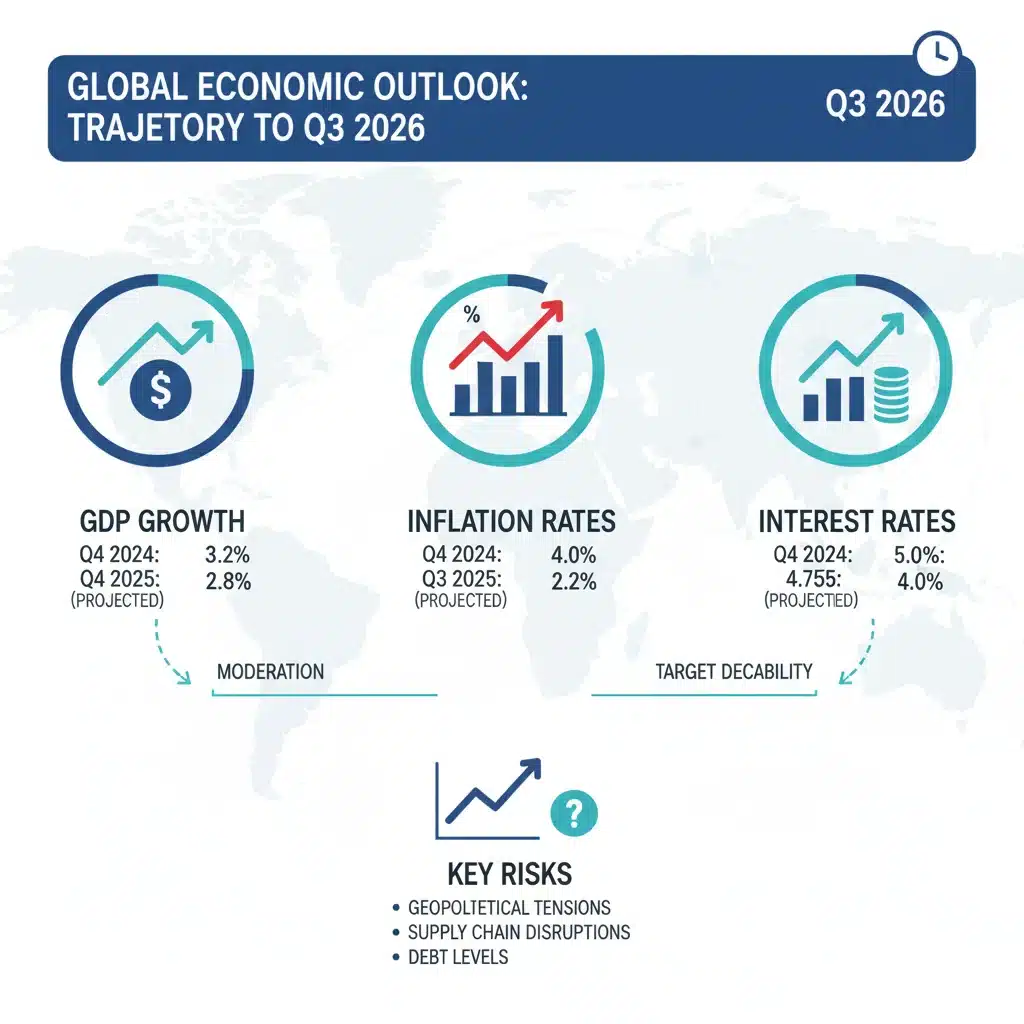
- Stabilization of Interest Rates: As inflation subsides, central banks are likely to either pause their rate hikes or even begin to implement modest rate cuts. A more predictable interest rate environment reduces the uncertainty surrounding corporate borrowing costs and future economic growth, which in turn helps to dampen stock market volatility.
- Improved Corporate Earnings Visibility: With reduced inflationary pressures and more stable monetary policies, companies will likely gain greater clarity on their cost structures and revenue projections. This improved visibility often translates into more predictable corporate earnings, which is a significant factor in reducing market uncertainty and volatility.
- Resolution or Containment of Geopolitical Tensions: While impossible to predict with certainty, there’s an expectation that some of the major geopolitical flashpoints contributing to current instability might either de-escalate or become more contained by 2026. A reduction in geopolitical surprises would significantly reduce one of the primary drivers of market shocks.
- Technological Integration and Productivity Gains: Continued advancements in artificial intelligence, automation, and other frontier technologies are expected to begin yielding significant productivity gains across various industries. These improvements can lead to stronger economic growth without necessarily stoking inflation, creating a more fundamentally sound basis for market stability.
- Robust Labor Markets: Despite concerns about recession, many developed economies continue to exhibit relatively strong labor markets. Sustained employment and wage growth can support consumer spending, providing a resilient foundation for economic activity and mitigating severe economic downturns that typically fuel volatility.
- Increased Capital Allocation to Productive Assets: As uncertainty recedes, a greater proportion of capital that was previously held in liquid, safe-haven assets may flow back into more productive investments, including equities. This increased demand can provide a more stable upward trajectory for markets, reducing sharp downward movements.
These interconnected factors suggest a powerful convergence towards greater economic equilibrium. The projected 10% decrease in stock market volatility is not an overnight phenomenon but rather the culmination of these trends gradually taking hold and fostering an environment conducive to more stable market performance.
Investment Strategies for a Less Volatile Market
A shift towards lower stock market volatility doesn’t mean the absence of risk, but it does imply a different set of opportunities and challenges. Investors who adapt their strategies proactively will be best positioned to capitalize on this evolving landscape. Here are key investment strategies to consider:
1. Rebalancing and Diversification
With anticipated lower volatility, it’s an opportune time to reassess your portfolio’s asset allocation. During periods of high volatility, many investors might have shifted towards more conservative assets. As stability returns, consider rebalancing back to your target strategic asset allocation. Diversification remains a cornerstone of sound investing, even in calmer markets. Ensure your portfolio is diversified across:
- Asset Classes: Equities, fixed income, real estate, commodities, and alternative investments.
- Geographies: Domestic and international markets, including emerging markets which might offer higher growth potential in a more stable global environment.
- Sectors: Avoid overconcentration in any single industry.
- Investment Styles: Blend growth, value, and income-generating assets.
A well-diversified portfolio helps mitigate idiosyncratic risks and ensures you’re positioned to capture growth across various market segments as stock market volatility recedes.
2. Focus on Quality and Fundamentals
In a less volatile environment, the market tends to differentiate more clearly between companies based on their underlying fundamentals. Focus on companies with:
- Strong Balance Sheets: Low debt, ample cash reserves.
- Consistent Earnings Growth: A track record of increasing profits.
- Sustainable Competitive Advantages (Moats): Unique products, strong brands, high barriers to entry.
- Robust Free Cash Flow Generation: Indicates financial health and ability to reinvest or return capital to shareholders.
- Effective Management Teams: Experienced leadership with a clear strategic vision.
Investing in high-quality businesses reduces the risk of significant drawdowns even if minor market fluctuations occur, providing a more reliable path to long-term growth.
3. Strategic Use of Fixed Income
As interest rates stabilize or potentially decline, the fixed income market could become more attractive. Bonds, particularly investment-grade corporate bonds and government securities, can provide a steady income stream and act as a ballast against equity market fluctuations. Consider:
- Laddering Bond Portfolios: Staggering bond maturities to manage interest rate risk.
- Exploring Shorter-Duration Bonds: If further rate hikes are still a concern, shorter-duration bonds offer less interest rate sensitivity.
- High-Quality Corporate Bonds: These can offer better yields than government bonds with manageable credit risk in a stable economic environment.
The role of fixed income as a stabilizer in a portfolio becomes even more pronounced when stock market volatility is lower, as it can offer predictable returns without the extreme swings.
4. Consider Growth-Oriented Investments
While value stocks have performed well in recent volatile periods, a decrease in stock market volatility often creates a more favorable environment for growth stocks. Companies that prioritize innovation, expand into new markets, and develop disruptive technologies tend to thrive when investor confidence is higher and discount rates are more stable. Look for:
- Technology Innovators: Companies at the forefront of AI, biotechnology, renewable energy, and other emerging sectors.
- Global Expansion Stories: Businesses with strong international growth prospects.
- Companies with Strong R&D: Indicating future product pipelines and competitive advantages.
However, always balance growth potential with fundamental strength and reasonable valuations.
5. Alternative Investments and Real Assets
Even with reduced stock market volatility, including alternative investments and real assets in your portfolio can enhance diversification and provide additional return streams. These might include:
- Real Estate: Both direct property and Real Estate Investment Trusts (REITs) can offer income and capital appreciation, often with a low correlation to public equities.
- Commodities: Gold, silver, and industrial metals can act as inflation hedges and provide diversification, though their volatility can be higher.
- Private Equity/Debt: For eligible investors, these can offer access to unique opportunities and potentially higher returns, albeit with lower liquidity.
These assets can provide a buffer against unexpected market shifts and complement traditional equity and fixed income holdings.
6. Dollar-Cost Averaging and Long-Term Perspective
Regardless of market conditions, maintaining a disciplined investment approach like dollar-cost averaging (investing a fixed amount regularly) can help mitigate the impact of market timing. Furthermore, always maintain a long-term perspective. While short-term fluctuations in stock market volatility can be unsettling, historical data consistently shows that long-term investors who stay the course tend to achieve their financial goals. Avoid making impulsive decisions based on short-term market noise.
7. Risk Management and Portfolio Review
Even in a less volatile market, robust risk management is crucial. Regularly review your portfolio’s risk profile to ensure it aligns with your comfort level and financial objectives. This includes:
- Monitoring Sector Concentrations: Ensure no single sector dominates your portfolio excessively.
- Assessing Credit Risk: For bond holdings, regularly check the credit ratings of issuers.
- Understanding Liquidity: Be aware of how easily you can convert your investments to cash if needed.
- Stress Testing: Periodically consider how your portfolio might perform under various adverse scenarios.
A proactive approach to risk management, even when stock market volatility is expected to decrease, is a hallmark of successful investing.
Potential Headwinds and Caveats
While the forecast for reduced stock market volatility is optimistic, it’s crucial to acknowledge that markets are inherently unpredictable. Several potential headwinds could alter this trajectory:
- Unexpected Geopolitical Shocks: New conflicts or significant escalations could quickly reintroduce uncertainty.
- Resurgent Inflation: A sudden spike in commodity prices or unexpected economic stimulus could reignite inflationary pressures, forcing central banks to tighten again.
- Policy Errors: Missteps by central banks or governments in managing economic transitions could destabilize markets.
- New Economic Crises: Unforeseen global economic events, such as a sovereign debt crisis or a major banking sector issue, could derail stability.
- Technological Bubbles: Overvaluation in emerging tech sectors could lead to corrections, impacting broader market sentiment.
Investors should remain vigilant, continuously monitor global economic and political developments, and be prepared to adjust their strategies if conditions change. The forecast is a probability, not a certainty, and adaptability remains a key investor trait.
The Role of Technology and Data in Navigating Future Markets
In an increasingly data-driven world, technology plays an indispensable role in helping investors analyze markets and manage portfolios, especially when anticipating shifts in stock market volatility. Advanced analytics, artificial intelligence, and machine learning are becoming powerful tools for identifying trends, forecasting market movements, and optimizing investment strategies.
How Technology Enhances Investment Decisions:
- Predictive Analytics: AI algorithms can process vast amounts of economic data, news sentiment, and historical market performance to generate more accurate volatility forecasts and identify potential market turning points.
- Automated Portfolio Management: Robo-advisors and automated platforms can help investors rebalance portfolios efficiently, adhere to strategic asset allocations, and even implement dollar-cost averaging strategies with minimal human intervention.
- Enhanced Risk Modeling: Sophisticated software can perform granular risk assessments, stress-testing portfolios against various economic scenarios, providing a clearer picture of potential downside risks even in a calmer market.
- Real-time Market Monitoring: Access to real-time data feeds, news aggregators, and social media sentiment analysis allows investors to react more quickly to emerging information that might impact stock market volatility.
- Personalized Investment Advice: AI-powered tools can offer tailored investment recommendations based on an individual’s risk tolerance, financial goals, and specific market outlook.
Embracing these technological advancements can provide a significant edge, enabling investors to make more informed, data-backed decisions as the market transitions towards lower stock market volatility.
Conclusion: Positioning for a More Stable Future
The expert forecast predicting a 10% decrease in stock market volatility by Q3 2026 offers a compelling outlook for investors. This anticipated shift, driven by easing inflation, stabilizing interest rates, and potentially resolving geopolitical tensions, presents an opportunity to move from a defensive stance to one that strategically seeks growth and optimizes returns in a more predictable environment. While the path to stability is never entirely smooth, the underlying economic forces appear to be aligning for a calmer market.
Investors should view this forecast not as a guarantee, but as a crucial guidepost. By proactively reviewing and rebalancing portfolios, focusing on quality fundamentals, strategically utilizing fixed income, and exploring growth-oriented and alternative investments, individuals can position themselves to thrive. Continuous risk management, maintaining a long-term perspective, and leveraging technological tools will be indispensable in navigating the evolving financial landscape. The future, while always uncertain, appears to hold the promise of reduced stock market volatility, rewarding those who prepare today for the opportunities of tomorrow.
Author