Unemployment Benefits Extensions 2026: Eligibility & Application Guide

Understanding the Latest Unemployment Benefits Extensions in 2026: What Qualifies and How to Apply
The economic landscape is constantly shifting, and with it, the support systems designed to assist individuals during periods of joblessness. As we look towards 2026, many are wondering about the status of unemployment benefits extensions 2026. Will there be new programs? How will existing ones evolve? And most importantly, what will it take to qualify and successfully apply for these crucial lifelines?
Navigating the complex world of unemployment benefits can be daunting, especially when policies are subject to change. This comprehensive guide aims to demystify the anticipated unemployment benefits extensions 2026, providing you with the knowledge needed to understand your rights, assess your eligibility, and prepare for the application process. We’ll delve into the potential types of extensions, the criteria you’ll need to meet, and practical steps to ensure a smooth application.
Whether you’re currently unemployed, anticipating a job transition, or simply want to stay informed about vital social safety nets, understanding the nuances of unemployment benefits 2026 is paramount. Let’s explore what the future holds for those seeking financial assistance during unemployment.
Understanding the Basics of Unemployment Benefits
Before diving into extensions, it’s essential to grasp the fundamental principles of standard unemployment insurance (UI). Unemployment benefits are typically a joint federal and state program designed to provide temporary financial assistance to eligible workers who are unemployed through no fault of their own. Each state administers its own program, setting specific eligibility requirements, benefit amounts, and duration.
Who is Generally Eligible for Standard UI?
While state laws vary, common eligibility requirements for initial UI claims usually include:
- Work History: You must have worked a certain amount of time or earned a specific amount of wages during a "base period" (usually the first four of the last five completed calendar quarters before you filed your claim).
- Reason for Unemployment: You must be unemployed through no fault of your own (e.g., laid off due to lack of work, not fired for misconduct or voluntarily quit without good cause).
- Availability and Search for Work: You must be able to work, available for work, and actively seeking new employment. This often involves registering with state workforce agencies and documenting job search efforts.
How Long Do Standard Benefits Last?
In most states, regular unemployment benefits are available for up to 26 weeks. However, this duration can be shorter in some states or extended during periods of high unemployment through federal programs. This brings us to the concept of "extensions."
The Role of Unemployment Benefits Extensions
Unemployment benefit extensions are programs that provide additional weeks of benefits once an individual has exhausted their regular state UI benefits. These extensions are typically enacted by the federal government in response to economic downturns or crises, aiming to provide a longer safety net when job markets are particularly challenging. Understanding the historical context of these extensions can offer insight into what might be expected for unemployment benefits 2026.
Historical Precedent for Extensions
Throughout history, especially during significant economic recessions, federal legislation has been passed to extend unemployment benefits. Notable examples include:
- Emergency Unemployment Compensation (EUC): Enacted during the Great Recession, this program provided multiple tiers of extended benefits, sometimes lasting for over 99 weeks in total.
- Pandemic Unemployment Assistance (PUA) and Pandemic Emergency Unemployment Compensation (PEUC): These programs were critical during the COVID-19 pandemic, expanding eligibility to previously ineligible workers (like gig workers and the self-employed) and providing significant extensions to regular UI.
These historical precedents demonstrate that extensions are not a permanent feature of the unemployment system but rather a reactive measure to specific economic conditions. Therefore, the existence of unemployment benefits extensions 2026 will largely depend on the economic climate leading up to and during that year.
Anticipated Economic Factors Influencing Unemployment Benefits 2026
The likelihood and nature of unemployment benefits extensions 2026 will be heavily influenced by macroeconomic indicators and legislative priorities. Economists and policymakers will be closely monitoring several key factors:
- Unemployment Rate: A sustained high national unemployment rate is the most significant trigger for federal intervention and benefit extensions.
- Job Growth: Slow or negative job growth indicates a struggling labor market, increasing the need for extended support.
- Inflation: While not directly tied to unemployment benefits, high inflation can erode the purchasing power of benefits, potentially leading to calls for increased benefit amounts or longer durations.
- Legislative Landscape: The political climate and composition of Congress will play a crucial role in whether new federal extension programs are proposed and passed.
- State Unemployment Trust Funds: The health of state UI trust funds, which pay for regular benefits, can also influence federal decisions, as depleted state funds might necessitate federal assistance.
As of now, projections for unemployment benefits 2026 suggest a return to pre-pandemic norms unless a significant economic downturn occurs. However, it’s vital to stay updated on economic forecasts and policy discussions.
Potential Types of Unemployment Benefits Extensions in 2026
If federal unemployment benefits extensions 2026 are enacted, they could take several forms, building upon past models:
1. Extended Benefits (EB) Program
The Extended Benefits (EB) program is a permanent, joint federal-state program that provides additional weeks of unemployment benefits during periods of high unemployment. Unlike ad-hoc federal extensions, EB is automatically triggered in states when their unemployment rates reach certain thresholds. It typically provides up to 13 or 20 additional weeks of benefits, depending on the state’s unemployment rate.
- Triggering Conditions: A state’s insured unemployment rate (IUR) must be at least 5% and 120% of its average rate for the previous two years, or at least 6% (even if it doesn’t meet the 120% threshold).
- Funding: The federal government typically funds 50% of EB costs, with states covering the remaining 50%.
While EB is a standing program, its activation for unemployment benefits 2026 would depend on specific state economic conditions reaching the statutory triggers.
2. Federally Funded Ad-Hoc Extensions
In severe economic crises, Congress may pass specific legislation for temporary, federally funded extensions, similar to the EUC or PEUC programs. These programs are entirely discretionary and would require new legislative action. They might:
- Provide a fixed number of additional weeks of benefits.
- Offer different tiers of extensions based on economic severity or duration of unemployment.
- Potentially expand eligibility to groups not covered by regular UI.
The likelihood of such ad-hoc extensions for unemployment benefits 2026 is directly tied to the national economic outlook. If the economy remains stable, these are less probable.
3. State-Specific Extensions
Some states may, on their own initiative, implement temporary extensions of unemployment benefits, though this is less common due to the significant financial burden on state trust funds. These would be independent of federal action and would vary widely by state.
Qualifying for Unemployment Benefits Extensions in 2026
Assuming unemployment benefits extensions 2026 are available, whether through EB or a new federal program, eligibility will generally hinge on several key factors:
Exhaustion of Regular UI Benefits
The primary qualification for any extension is that you must have exhausted all your regular state unemployment insurance benefits. This means you’ve received the maximum number of weeks allowed under your state’s standard program.
Continued Eligibility Requirements
Even when receiving extended benefits, you will likely need to continue meeting the core eligibility criteria for unemployment:
- Able and Available for Work: You must be physically and mentally capable of working and available to accept suitable employment.
- Actively Seeking Work: You will be required to demonstrate ongoing efforts to find a new job. This often involves documenting job applications, interviews, and participation in reemployment services. States may have specific requirements for the number of job contacts per week.
- No Refusal of Suitable Work: Refusing an offer of suitable employment can disqualify you from receiving benefits.
- Participation in Reemployment Activities: Some extension programs may mandate participation in job search workshops, training programs, or career counseling sessions.
Specific Program Criteria
If new federal programs are introduced for unemployment benefits 2026, they may come with their own specific eligibility rules. These could include:
- Work History Requirements: Some extensions might require a more extensive work history than regular UI.
- Duration of Unemployment: Eligibility might be tiered based on how long you’ve been unemployed.
- Impact of Previous Program Participation: If you previously received benefits from emergency programs, there might be specific rules about transitioning to new extensions.
It is crucial to consult your state’s unemployment agency website for the most accurate and up-to-date information regarding eligibility for any potential unemployment benefits extensions 2026.
How to Apply for Unemployment Benefits Extensions in 2026
The application process for unemployment benefits extensions 2026 will largely mirror that of regular UI benefits, with an additional step of applying for the extension once regular benefits are exhausted. Here’s a general guide:
Step 1: Exhaust Your Regular UI Benefits
You cannot apply for an extension until you have received all the weeks of benefits for which you were eligible under your state’s regular unemployment insurance program.
Step 2: Monitor Communications from Your State UI Agency
If an extension program becomes available, your state’s unemployment agency will typically notify you. This notification might come via mail, email, or through your online UI account. It’s vital to keep your contact information updated with the agency.
Step 3: Apply for the Extension (If Not Automatic)
In some cases, especially with the Extended Benefits (EB) program, the transition from regular UI to extended benefits might be automatic if your state triggers EB. However, for other types of extensions, you may need to file a separate application. This usually involves:
- Logging into your state’s unemployment portal.
- Looking for an option to apply for "extended benefits" or "additional weeks."
- Answering a series of questions to confirm your continued eligibility.
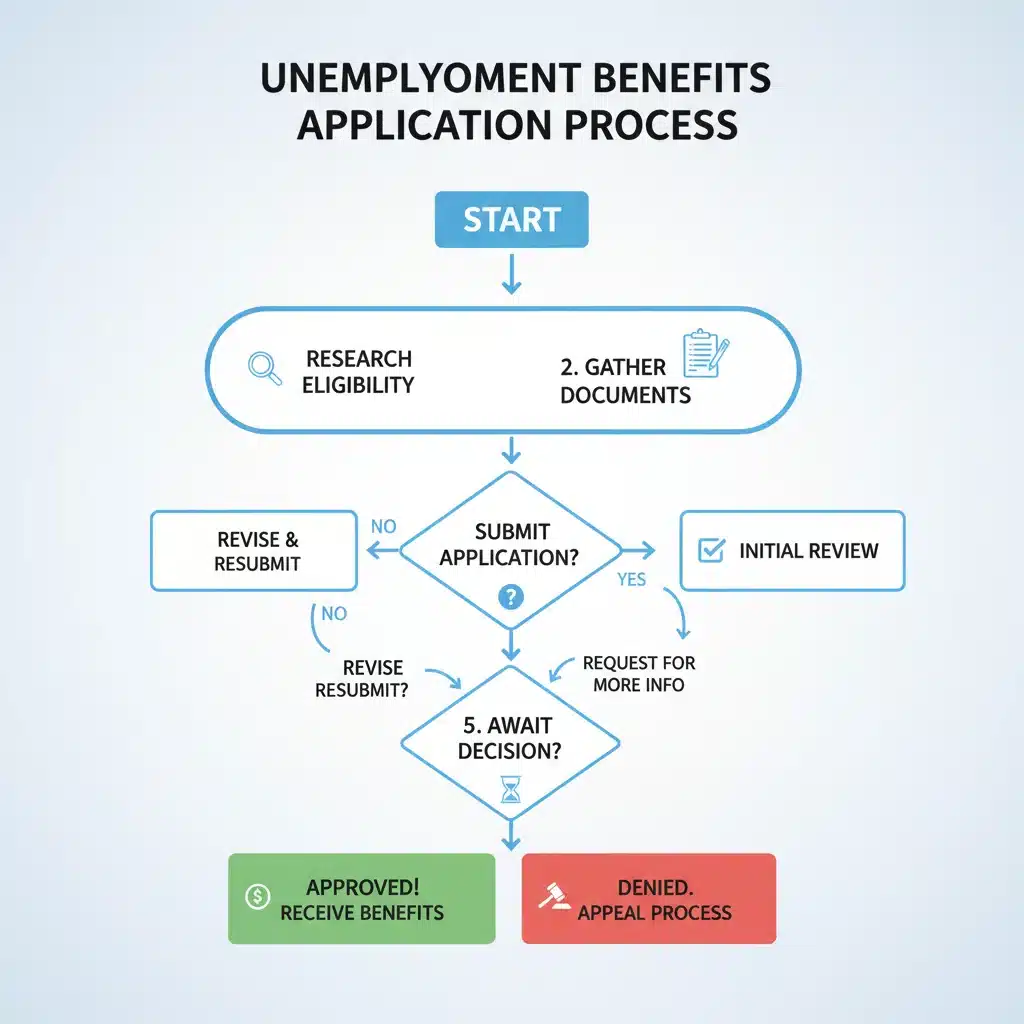
Step 4: Continue Certifying for Benefits
Just like with regular UI, you will need to continue certifying for benefits on a weekly or bi-weekly basis. This involves answering questions about your job search efforts, any earnings you may have had, and your availability for work.
Step 5: Document Your Job Search
Maintain detailed records of your job search activities. This includes:
- Dates of contact.
- Names of employers contacted.
- Methods of contact (e.g., online application, in-person).
- Positions applied for.
- Results of the contact.
This documentation is crucial in case your eligibility is questioned or you are audited.
Step 6: Seek Reemployment Services
Take advantage of resources offered by your state’s workforce agencies. These can include:
- Job search assistance.
- Resume and cover letter writing workshops.
- Interview coaching.
- Skills training and retraining programs.
Participation in these services can not only help you find a new job faster but may also be a requirement for receiving extended benefits.
Important Considerations for Unemployment Benefits 2026
Stay Informed and Proactive
The landscape of unemployment benefits is dynamic. Do not rely solely on past experiences or anecdotal information. Regularly check your state’s unemployment agency website and official government sources for the most current information regarding unemployment benefits 2026.
Understand Your State’s Specific Rules
Each state has its own rules. What applies in one state may not apply in another. Always refer to the regulations for the state in which you filed your claim.
Beware of Scams
Unfortunately, periods of economic uncertainty and government aid programs often attract scammers. Be vigilant. Government agencies will never ask for personal information via unsolicited emails or texts. Always go directly to official state websites or contact agencies through verified phone numbers.
Tax Implications
Unemployment benefits, including any extensions, are generally considered taxable income by both federal and state governments (though some states do not tax UI). Remember to account for this when managing your finances. You will typically receive a Form 1099-G from your state unemployment agency detailing the benefits you received, which you’ll need for tax filing.
Impact on Other Benefits
Receiving unemployment benefits may affect your eligibility for other government assistance programs. If you are receiving other benefits (e.g., SNAP, Medicaid), check with those program administrators to understand any potential impacts.
Financial Planning During Unemployment
Even with extensions, unemployment benefits are temporary. It’s crucial to:
- Create a Budget: Track your income and expenses carefully.
- Build an Emergency Fund: If possible, have some savings to fall back on.
- Reduce Non-Essential Spending: Cut back wherever you can.
- Explore Additional Resources: Look into community aid programs, food banks, and other support services if needed.
Preparing for the Future Beyond Unemployment Benefits 2026
While unemployment benefits extensions 2026 can provide a vital safety net, the ultimate goal is reemployment. Proactive steps during your period of unemployment can significantly improve your chances of securing a new position quickly.
Networking
Connect with former colleagues, industry contacts, and professional organizations. Many job opportunities are found through networking.
Skill Development
Consider using your time to acquire new skills or update existing ones. Online courses, certifications, and workshops can make you a more attractive candidate in the job market.
Resume and Interview Skills
Regularly update your resume and tailor it to each job application. Practice interview techniques to build confidence and refine your responses.
Mental Health and Well-being
Unemployment can be a stressful experience. Prioritize your mental and physical health. Seek support from friends, family, or professional counselors if needed.

Conclusion
The availability and specifics of unemployment benefits extensions 2026 will depend heavily on the economic conditions and legislative actions taken in the coming years. While standard unemployment insurance provides a foundational level of support, extensions are typically a response to broader economic challenges.
For those who may need to rely on these benefits, the key is to stay informed, understand your state’s specific requirements, and proactively engage in the application and job search processes. By doing so, you can maximize your chances of receiving the financial assistance you need while actively working towards your next career opportunity.
Remember to regularly consult official state unemployment agency websites and federal government resources for the most accurate and timely information regarding unemployment benefits 2026. Your financial well-being is important, and being prepared is the best defense against economic uncertainty.
Disclaimer:
This article provides general information and does not constitute legal or financial advice. Unemployment benefit laws are complex and vary by state and federal legislation. Always consult with official state unemployment agencies or qualified professionals for personalized advice regarding your specific situation.
Author