Navigating the 2026 Federal Reserve Interest Rate Hikes: A 3-Month Economic Impact Analysis for U.S. Households
The Federal Reserve plays a pivotal role in shaping the economic landscape of the United States. Its decisions on interest rates ripple through every corner of the economy, directly influencing everything from the cost of borrowing to the returns on savings. As we look ahead to 2026, the prospect of further Fed Rate Hikes 2026 looms large, prompting many U.S. households to wonder about the potential economic impact. This comprehensive article aims to dissect the anticipated effects of these hikes over a crucial 3-month period, providing a clear roadmap for understanding and preparing for the changes ahead.
Understanding the Federal Reserve’s motivations is the first step in deciphering the future. The Fed typically raises interest rates to combat inflation, cool down an overheating economy, or stabilize financial markets. Conversely, rates are cut to stimulate growth during economic downturns. For 2026, if inflation remains stubbornly high or economic growth is robust, the Fed might lean towards tightening monetary policy, leading to significant Fed Rate Hikes 2026. These adjustments are not mere numbers on a balance sheet; they translate into tangible changes in the daily financial lives of millions of Americans.
The immediate and short-term consequences of such hikes can be profound. Within the first three months of a significant rate increase, households can expect to see shifts in various financial areas. Mortgage rates, credit card APRs, auto loan costs, and even the yields on savings accounts are all sensitive to the Federal Funds Rate. Preparing for these changes requires a proactive approach, which is precisely what this analysis seeks to facilitate. We will explore how different financial instruments and household budgets will be affected, offering insights and strategies to navigate this evolving economic environment.
The Mechanism of Fed Rate Hikes: How They Work
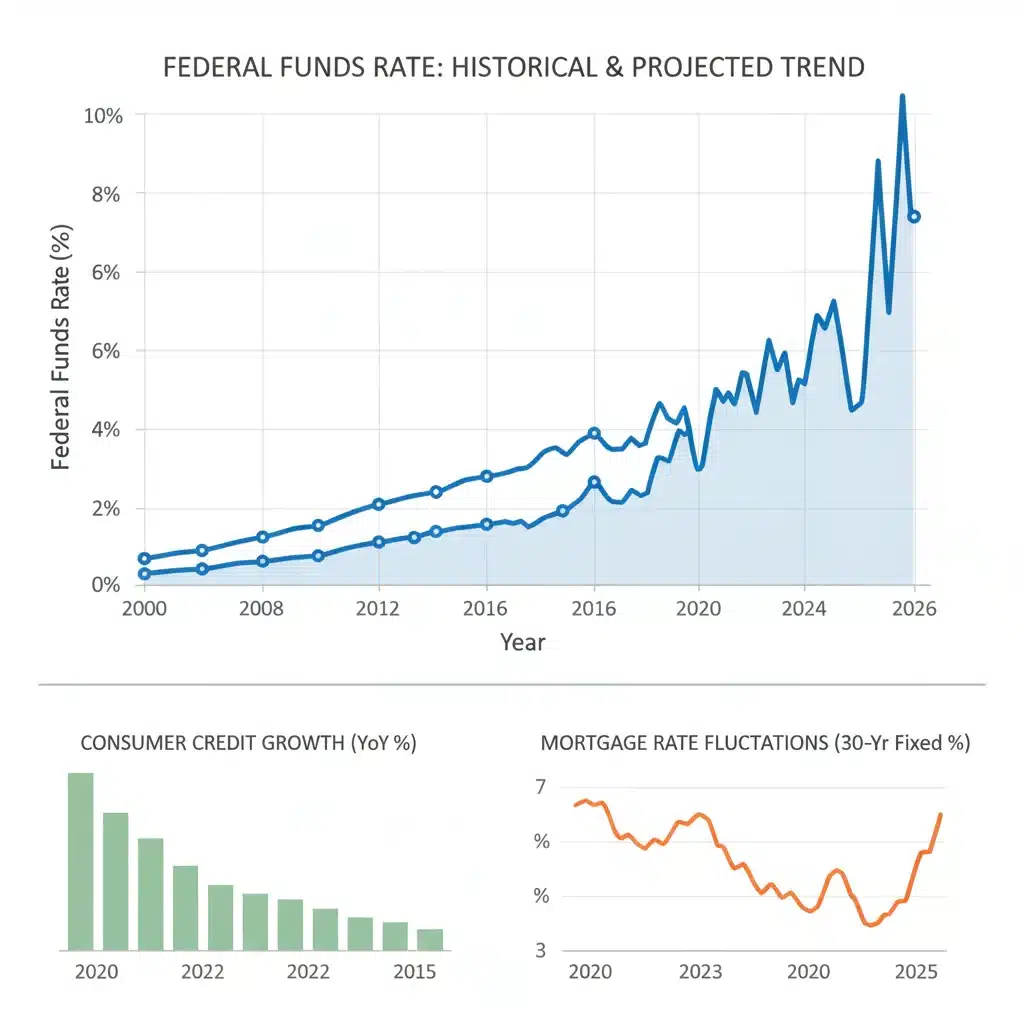
Before diving into the specific impacts, it’s essential to grasp how the Federal Reserve implements interest rate changes and why these changes are so influential. The primary tool the Fed uses is the Federal Funds Rate – the target rate for overnight borrowing between banks. When the Fed raises this target rate, it makes it more expensive for banks to borrow money from each other. This increased cost is then passed on to consumers and businesses in the form of higher interest rates on various loans and credit products.
The ripple effect is almost instantaneous. Commercial banks adjust their prime rate, which is the benchmark rate used for many consumer loans, including credit cards and home equity lines of credit. Other rates, such as those for mortgages, auto loans, and even student loans, also tend to follow suit, albeit with varying degrees of lag and sensitivity. The expectation of future Fed Rate Hikes 2026 can sometimes cause market rates to adjust even before the Fed officially announces a change, as financial institutions anticipate the shift.
The Fed’s decisions are not made in a vacuum. They are a response to a complex interplay of economic indicators, including inflation rates, unemployment figures, GDP growth, and global economic conditions. For 2026, the economic outlook will dictate the pace and magnitude of any potential rate increases. If the economy is performing strongly, with low unemployment and sustained growth, the Fed might feel more comfortable raising rates to prevent inflation from spiraling out of control. Conversely, signs of a slowdown could temper their approach.
Impact on Mortgages and Housing Market (Months 1-3)
One of the most immediate and significant impacts of Fed Rate Hikes 2026 will be felt in the housing market, particularly for new homebuyers and those with adjustable-rate mortgages (ARMs). Within the first three months, we can anticipate several key shifts:
For Prospective Homebuyers:
- Higher Mortgage Rates: Fixed-rate mortgages, while not directly tied to the Federal Funds Rate, are influenced by the bond market, which reacts to Fed policy. Higher bond yields typically translate to higher fixed mortgage rates. This means the cost of borrowing for a home will increase, potentially making homeownership less affordable for some.
- Reduced Purchasing Power: With higher interest rates, the monthly mortgage payment for the same loan amount increases. This effectively reduces a buyer’s purchasing power, as they may qualify for a smaller loan or have to stretch their budget further.
- Cooling Housing Demand: Increased borrowing costs can lead to a slowdown in housing demand. Fewer buyers in the market might temper the rapid home price appreciation seen in recent years, or even lead to price stabilization or modest declines in some areas.
For Existing Homeowners:
- Adjustable-Rate Mortgages (ARMs): Homeowners with ARMs will likely see their monthly payments increase as their rates adjust upwards. This can significantly impact household budgets, especially for those who are already stretched thin.
- Refinancing Becomes Less Attractive: For homeowners considering refinancing their existing mortgages, higher rates will make this option less appealing. The incentive to refinance to a lower rate diminishes, and for many, it might become more expensive than their current rate.
- Home Equity Lines of Credit (HELOCs): Similar to ARMs, interest rates on HELOCs are typically variable. An increase in the prime rate due to Fed Rate Hikes 2026 will directly translate to higher interest payments on outstanding HELOC balances.
The housing market is a cornerstone of the U.S. economy, and changes here have broad implications. Real estate agents, developers, and construction companies will all feel the effects, potentially leading to a slowdown in related sectors. Households planning to buy or sell in 2026 should closely monitor Fed announcements and market trends to make informed decisions.
Credit Cards and Consumer Loans: A Tighter Squeeze (Months 1-3)
Beyond mortgages, Fed Rate Hikes 2026 will exert considerable pressure on other forms of consumer credit. Within the initial three months, households can anticipate a noticeable tightening in the cost of carrying debt.
Credit Cards:
- Higher APRs: Most credit cards have variable interest rates directly tied to the prime rate. As the Federal Funds Rate rises, so too will the prime rate, leading to an immediate increase in the Annual Percentage Rate (APR) on credit card balances. This means carrying a balance will become more expensive.
- Increased Minimum Payments: While not always immediate, higher APRs can eventually lead to higher minimum payment requirements, placing additional strain on monthly budgets.
- Reduced Credit Availability: In an environment of rising rates, lenders may become more cautious, potentially tightening credit standards and making it harder for some consumers to obtain new credit cards or increase credit limits.
Auto Loans:
- Higher Financing Costs: The interest rates on new and used car loans will likely increase. This means a higher monthly payment for the same vehicle price, or a need to consider less expensive cars to keep payments manageable.
- Impact on Demand: Similar to housing, higher auto loan rates could dampen consumer demand for new vehicles, affecting the automotive industry.
Personal Loans and Other Consumer Debt:
- Increased Borrowing Costs: Unsecured personal loans, student loans (especially private ones with variable rates), and other forms of consumer debt will also see their interest rates climb. This makes all forms of borrowing more expensive.
For households with significant credit card debt or other variable-rate loans, the first three months after Fed Rate Hikes 2026 could present a financial challenge. Prioritizing debt repayment, especially high-interest debt, will become even more critical to mitigate the impact of rising interest costs. Consolidating debt into a fixed-rate loan before hikes occur, if feasible, could be a smart strategy.
Savings and Investments: Opportunities Amidst Challenges (Months 1-3)
While rising interest rates often cast a shadow over borrowing, they can present opportunities for savers and certain types of investors. The initial three months following Fed Rate Hikes 2026 will bring noticeable changes to these areas.
For Savers:
- Higher Savings Account Yields: Banks typically respond to Fed rate hikes by increasing the interest rates they offer on savings accounts, money market accounts, and Certificates of Deposit (CDs). This means that money held in these accounts will earn more interest, providing a welcome boost for savers.
- Better Returns on Short-Term Instruments: Government bonds and other short-term fixed-income securities will also offer higher yields, making them more attractive for those looking for conservative investment options.
For Investors:
- Fixed-Income Investments Become More Appealing: Bonds and other fixed-income securities become more attractive in a rising rate environment, especially newly issued ones. Investors can lock in higher yields, which can be beneficial for long-term financial planning.
- Stock Market Volatility: The stock market often reacts with volatility to interest rate hikes. Higher borrowing costs for companies can impact their profitability, and higher returns on risk-free assets (like savings accounts or bonds) can make stocks seem less appealing by comparison. Investors should be prepared for potential short-term fluctuations.
- Sector-Specific Impacts: Certain sectors may be more sensitive to rising rates. For instance, growth stocks and companies with high debt loads might face headwinds, while financial institutions (banks, insurers) could potentially benefit from wider net interest margins.
The key for savers and investors during this period is to review their portfolios and financial goals. Shifting some funds to higher-yielding savings options or rebalancing investment portfolios to account for potential market shifts can be prudent. Consulting with a financial advisor during periods of Fed Rate Hikes 2026 is highly recommended to tailor strategies to individual circumstances.
Broader Economic Implications for Households (Months 1-3)
Beyond direct impacts on loans and savings, Fed Rate Hikes 2026 have broader implications for the overall economy that will indirectly affect U.S. households within the first three months and beyond.
Inflation Control:
The primary goal of raising interest rates is often to curb inflation. If successful, households might eventually see a slowdown in the rate of price increases for goods and services. However, this effect is usually not immediate. In the short term (3 months), households might still contend with elevated prices while also facing higher borrowing costs.
Employment Market:
A tighter monetary policy can sometimes lead to a cooling of the labor market. Businesses facing higher borrowing costs for expansion may slow down hiring or even consider layoffs. While a severe impact on unemployment is unlikely within a mere three months, a slight softening of the job market could begin to emerge, making job security a more prominent concern for some.
Consumer Spending:
With higher costs for borrowing and potentially less disposable income due to increased debt payments, consumer spending might moderate. This slowdown in demand can impact various industries, from retail to entertainment. Households might become more discerning with their purchases, prioritizing necessities over discretionary spending.
Economic Growth:
While the Fed aims for a ‘soft landing,’ aggressive rate hikes can sometimes slow economic growth. A slight deceleration in GDP growth could be observed, which, while not a crisis, signifies a shift in the economic momentum. Households should be aware that the overall economic environment might become less buoyant.
These broader economic shifts underscore the interconnectedness of financial decisions. Households need to consider not just their personal balance sheets but also the wider economic currents influenced by Fed Rate Hikes 2026. Adaptability and careful financial planning will be crucial for navigating these changes effectively.
Strategies for U.S. Households to Prepare for 2026 Rate Hikes
Given the potential for Fed Rate Hikes 2026 and their multifaceted economic impact, proactive preparation is key for U.S. households. Here are several strategies to consider implementing within the next few months to cushion the blow and even capitalize on opportunities:
1. Prioritize High-Interest Debt Repayment:
Focus on paying down credit card balances, personal loans, and other variable-rate debts as quickly as possible. Every dollar paid down now saves you more in future interest costs once rates rise. Consider the ‘debt snowball’ or ‘debt avalanche’ methods to tackle these obligations strategically.
2. Review and Refinance Mortgages (If Applicable):
If you have an adjustable-rate mortgage (ARM) or a high fixed-rate mortgage, assess whether refinancing into a new, lower fixed-rate mortgage is still a viable option before rates climb further. Even a small increase in your ARM can significantly impact your budget.
3. Build or Bolster Your Emergency Fund:
An adequate emergency fund (typically 3-6 months of living expenses) becomes even more critical in an environment of rising costs and potential economic uncertainty. Having readily available cash can prevent you from relying on high-interest credit during unforeseen circumstances.
4. Reassess Your Budget and Cut Discretionary Spending:
Take a hard look at your monthly budget. Identify areas where you can reduce discretionary spending to free up funds for debt repayment or savings. Every little bit helps in preparing for potentially higher costs elsewhere.
5. Explore High-Yield Savings Options:
As interest rates rise, so do the returns on savings accounts and Certificates of Deposit (CDs). Shop around for high-yield savings accounts or consider locking in higher rates with short-term CDs to maximize your returns on cash reserves.
6. Diversify Investment Portfolios:
Review your investment portfolio with a financial advisor. Consider diversification strategies that account for potential stock market volatility and the increased attractiveness of fixed-income assets. Ensure your portfolio aligns with your risk tolerance and long-term goals in a rising rate environment.
7. Lock in Fixed Rates for New Loans:
If you anticipate needing a new car loan, personal loan, or even certain student loans in the near future, consider locking in a fixed rate now, if possible, before Fed Rate Hikes 2026 make borrowing more expensive.
8. Enhance Financial Literacy:
Stay informed about economic news and Federal Reserve announcements. Understanding the ‘why’ behind policy decisions can help you make more informed personal financial choices. Knowledge is power, especially during periods of economic transition.

Case Studies: Illustrating the 3-Month Impact
To further illustrate the tangible effects of Fed Rate Hikes 2026, let’s consider a few hypothetical scenarios for U.S. households over a 3-month period following a significant rate increase (e.g., a 0.50% hike in the Federal Funds Rate, leading to corresponding increases in consumer rates).
Case Study 1: The Young Couple with an ARM
Sarah and Mark purchased their first home two years ago with an adjustable-rate mortgage. Their initial rate was 4.0%, and it’s set to adjust three months after the anticipated 2026 Fed hike. If the prime rate increases by 0.50% and their ARM adjusts accordingly, their mortgage interest rate could jump to 4.5% or higher. For a $300,000 outstanding balance, this could mean an increase of approximately $80-$100 in their monthly mortgage payment. Over three months, this is an additional $240-$300 from their budget, which could impact their ability to save for their child’s education or cover other rising costs.
Case Study 2: The Family with Credit Card Debt
The Johnson family carries an average credit card balance of $10,000 across multiple cards, with an average APR of 18%. If Fed Rate Hikes 2026 lead to a 0.50% increase in their credit card APRs, their average rate could climb to 18.5%. While seemingly small, this translates to an additional $50 in interest paid annually, or about $12.50 over three months, assuming they don’t pay down the principal. If they continue to carry this balance, the cumulative effect over time can be substantial, making it harder to escape the debt cycle. If they had paid down a significant portion of this debt before the hike, their exposure would be much less.
Case Study 3: The Savvy Saver
Maria has $20,000 in a high-yield savings account earning 3.5% APY. After the Fed Rate Hikes 2026, her bank increases the APY to 4.0%. Over three months, instead of earning approximately $175 in interest, she now earns $200. While not a massive windfall, this demonstrates how savers can benefit. If she were to invest in a 6-month CD offering an even higher rate, her returns could be more significant, illustrating the opportunity for those with liquid assets.
Case Study 4: The Small Business Owner
David, a small business owner, relies on a line of credit to manage his inventory and operations. His line of credit has a variable interest rate tied to the prime rate. A 0.50% increase in the prime rate directly increases his borrowing costs. If he has an average outstanding balance of $50,000, this translates to an additional $250 in interest over three months. This added expense eats into his profit margins and could influence his decisions on hiring or expansion, ultimately affecting the local economy and potentially his employees’ financial stability.
These case studies underscore the varied and often immediate ways Fed Rate Hikes 2026 can impact different financial situations. While the numbers might seem small in isolation over a 3-month period, their cumulative effect and interaction with other rising costs (e.g., inflation) can significantly alter household budgets and financial planning.
Conclusion: Preparing for the Economic Shifts of 2026
The anticipation of Fed Rate Hikes 2026 necessitates a proactive and informed approach from U.S. households. The first three months following any such hikes will be crucial, as initial adjustments ripple through mortgages, credit cards, savings accounts, and investment portfolios. While the overall goal of the Federal Reserve is to maintain economic stability and control inflation, these policy decisions inevitably create both challenges and opportunities for individual financial well-being.
Households that take the time to understand these mechanisms and implement strategic financial planning will be better positioned to weather potential economic headwinds. Prioritizing debt reduction, bolstering emergency savings, reviewing investment strategies, and staying informed are not just recommendations but essential steps in a dynamic economic environment. The impact of Fed Rate Hikes 2026 is not a distant threat but a tangible factor that will shape financial decisions in the very near future.
By focusing on these key areas, individuals and families can transform potential vulnerabilities into strengths, ensuring greater financial resilience and stability amidst the evolving economic landscape. The future of the U.S. economy is intrinsically linked to the decisions made by the Federal Reserve, and by extension, to the preparedness of its households.