Unlocking the Power of Predictive Analytics for Business Growth

Unlocking the Power of Predictive Analytics for Business Growth
In an increasingly data-driven world, businesses are constantly seeking innovative ways to gain a competitive edge and ensure sustainable development. One of the most powerful tools emerging from the realm of data science is predictive analytics growth. Far from being a mere buzzword, predictive analytics offers profound insights into future trends and behaviors, enabling organizations to make proactive, informed decisions rather than reactive ones. This article will delve deep into the essence of predictive analytics, its multifaceted applications, the immense benefits it brings, and how businesses can effectively leverage it to drive unprecedented growth.
At its core, predictive analytics involves using historical data, statistical algorithms, and machine learning techniques to identify the likelihood of future outcomes based on past patterns. It’s about more than just understanding what happened; it’s about understanding what will happen. This forward-looking approach is what makes predictive analytics growth such a critical component for modern business strategy. From predicting customer churn to optimizing supply chains, the potential applications are vast and transformative.
What Exactly is Predictive Analytics?
Predictive analytics is a branch of advanced analytics that makes predictions about future events. It employs various techniques from data mining, statistics, modeling, machine learning, and artificial intelligence to analyze current and historical facts to make predictions about future or otherwise unknown events. The primary goal is to go beyond knowing what has happened to provide a best assessment of what will happen next. This capability is invaluable for businesses aiming for strategic foresight and robust predictive analytics growth.
Unlike descriptive analytics, which summarizes past data, or diagnostic analytics, which explains why something happened, predictive analytics focuses squarely on the future. It uses models built on past data to forecast probabilities and trends. For example, a retail company might use predictive analytics to forecast demand for a new product, or a financial institution might predict the likelihood of a loan applicant defaulting. These predictions, while not always 100% accurate, provide a significant advantage in planning and resource allocation.
The methodologies underpinning predictive analytics are diverse and sophisticated. They include regression analysis, classification algorithms, clustering, and neural networks, among others. The choice of method often depends on the type of data available and the specific business question being addressed. Regardless of the technique, the ultimate objective remains consistent: to empower businesses with the foresight needed to achieve sustained predictive analytics growth.
The Core Components Driving Predictive Analytics
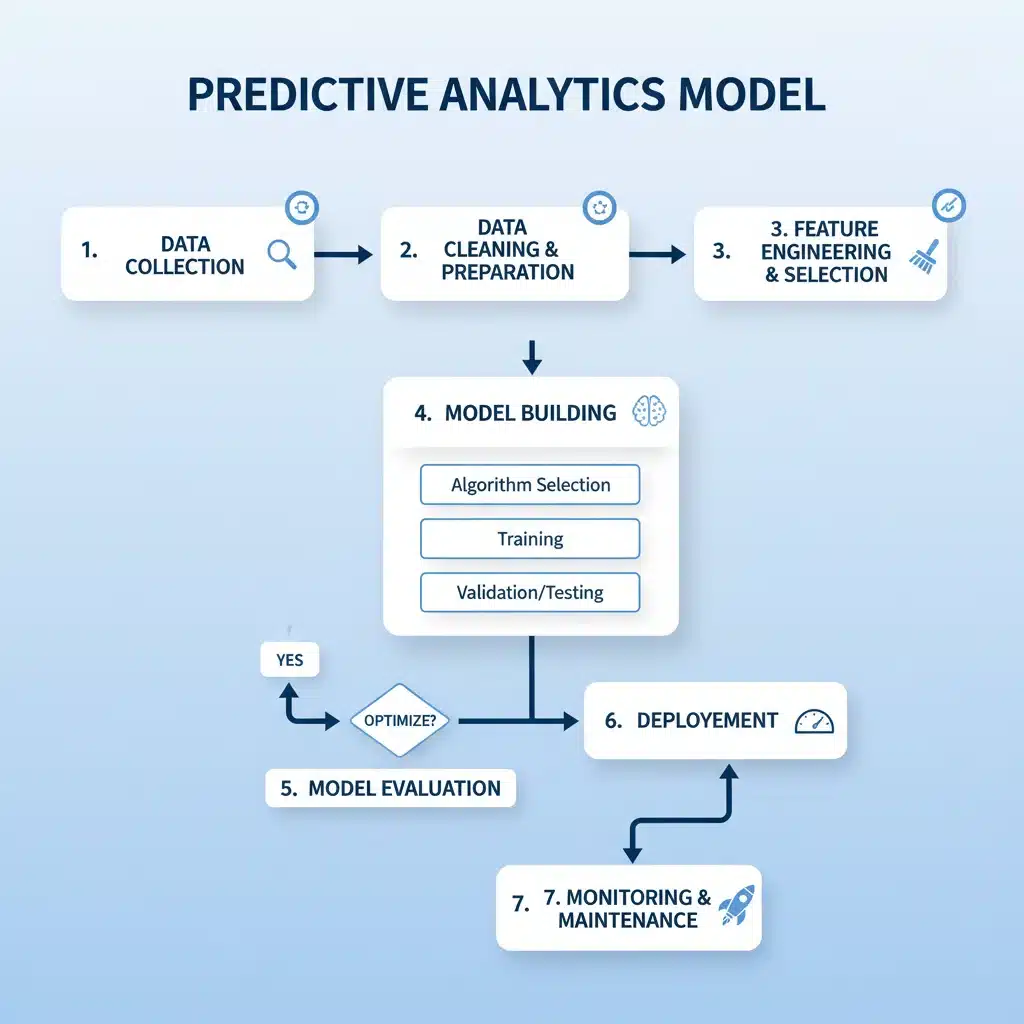
To fully grasp the power of predictive analytics growth, it’s essential to understand its foundational components:
- Data Collection and Preparation: This is the initial and arguably most crucial step. High-quality data from various sources (CRM, ERP, web analytics, social media, IoT sensors, etc.) must be collected, cleaned, and transformed into a usable format. “Garbage in, garbage out” holds particularly true here; the accuracy of predictions heavily relies on the quality and relevance of the input data.
- Statistical Modeling: This involves applying various statistical techniques to identify patterns and relationships within the data. Regression models, time series analysis, and correlation analysis are common statistical tools used to build predictive models.
- Machine Learning Algorithms: Machine learning is at the heart of modern predictive analytics. Algorithms such as decision trees, random forests, support vector machines, and neural networks are trained on historical data to learn complex patterns and make predictions on new, unseen data. These algorithms enable the models to adapt and improve over time.
- Deployment and Integration: Once a model is built and validated, it needs to be deployed into operational systems. This could involve integrating it with existing business intelligence tools, CRM platforms, or custom applications. Seamless integration ensures that the predictive insights are accessible to decision-makers in real-time.
- Monitoring and Refinement: Predictive models are not static. Market conditions, customer behaviors, and underlying data patterns can change. Continuous monitoring of model performance and periodic retraining with new data are essential to maintain accuracy and ensure continued predictive analytics growth.
Key Applications of Predictive Analytics Across Industries
The versatility of predictive analytics means it can be applied across virtually every industry, yielding significant benefits and fostering predictive analytics growth. Here are some prominent examples:
Customer Relationship Management (CRM) and Marketing
In marketing, predictive analytics is a game-changer. Businesses can predict which customers are most likely to respond to a particular offer, segment customers based on their future value (Customer Lifetime Value or CLTV), and identify those at risk of churn. This allows for highly targeted marketing campaigns, personalized customer experiences, and proactive retention strategies. Imagine knowing which customers are likely to leave before they do, enabling you to intervene with a tailored offer. This directly contributes to sustained predictive analytics growth by maximizing customer retention and acquisition efficiency.
Fraud Detection and Risk Management
Financial institutions, insurance companies, and e-commerce platforms heavily rely on predictive analytics to detect and prevent fraudulent activities. By analyzing transaction patterns, user behavior, and other data points, models can identify anomalies that suggest fraudulent behavior in real-time. This not only saves companies billions of dollars but also enhances security for customers. Similarly, in risk management, predictive models can assess credit risk, predict market volatility, and evaluate investment opportunities, safeguarding assets and promoting responsible predictive analytics growth.
Supply Chain Optimization
Managing a complex supply chain involves numerous variables. Predictive analytics can forecast demand fluctuations, optimize inventory levels, predict equipment failures, and identify potential disruptions in the supply chain. This leads to reduced operational costs, improved efficiency, and enhanced customer satisfaction through timely deliveries. For businesses dealing with perishable goods or just-in-time inventory, the ability to accurately predict demand and supply is invaluable for achieving predictive analytics growth.
Healthcare and Medicine
In healthcare, predictive analytics is revolutionizing patient care and operational efficiency. It can predict disease outbreaks, identify patients at high risk of developing certain conditions, optimize hospital resource allocation, and even forecast the effectiveness of different treatments. This leads to better patient outcomes, reduced healthcare costs, and more efficient healthcare systems, demonstrating significant potential for predictive analytics growth in public health.
Manufacturing and Operations
Manufacturers use predictive analytics for predictive maintenance, anticipating when machinery will require servicing before it breaks down. This minimizes downtime, reduces repair costs, and extends the lifespan of equipment. It also helps in optimizing production schedules and identifying quality control issues early, ensuring smoother operations and contributing to manufacturing predictive analytics growth.
The Tangible Benefits of Embracing Predictive Analytics
The adoption of predictive analytics is not just a technological upgrade; it’s a strategic imperative that delivers a multitude of tangible benefits, directly contributing to predictive analytics growth:
Enhanced Decision-Making
Perhaps the most significant benefit is the ability to make more informed and proactive decisions. Instead of relying on intuition or lagging indicators, businesses can base their strategies on data-driven forecasts. This leads to more effective resource allocation, better risk mitigation, and superior strategic planning.
Improved Efficiency and Cost Reduction
By predicting future events such as equipment failures, inventory shortages, or demand spikes, organizations can optimize their operations, reduce waste, and minimize unexpected costs. Predictive maintenance, optimized staffing levels, and efficient inventory management all contribute to significant cost savings and improved operational efficiency.
Superior Customer Experience
Understanding customer behavior and preferences in advance allows businesses to personalize interactions, offer relevant products or services, and address potential issues before they arise. This fosters stronger customer relationships, increases loyalty, and drives repeat business, which is crucial for long-term predictive analytics growth.
Competitive Advantage
Businesses that effectively leverage predictive analytics gain a significant edge over competitors. The ability to anticipate market shifts, consumer trends, and operational challenges allows them to innovate faster, respond more agilely, and capture new opportunities before others. This proactive stance is a hallmark of sustained predictive analytics growth.
New Revenue Streams
Beyond optimizing existing operations, predictive analytics can uncover new opportunities for revenue generation. This could involve identifying unmet customer needs, developing new products or services based on anticipated demand, or optimizing pricing strategies to maximize profitability. The insights gained can spark innovation and open up entirely new avenues for predictive analytics growth.
Challenges and Considerations in Implementing Predictive Analytics
While the benefits are compelling, implementing predictive analytics is not without its challenges. Businesses must be prepared to address several key considerations to ensure successful predictive analytics growth:
Data Quality and Availability
The foundation of any successful predictive model is high-quality, relevant data. Many organizations struggle with fragmented data sources, inconsistent data formats, and data silos. Investing in robust data governance, data integration tools, and data cleansing processes is paramount.
Talent and Expertise
Building and deploying predictive models requires specialized skills in data science, statistics, machine learning, and programming. There’s a significant demand for data scientists and analysts, making it challenging for some organizations to acquire and retain the necessary talent. Training existing staff or partnering with external experts can be viable solutions.
Ethical Considerations and Bias
Predictive models are only as unbiased as the data they are trained on. If historical data contains biases, the model will perpetuate and amplify those biases, leading to unfair or discriminatory outcomes. Ethical considerations, fairness, transparency, and explainability (XAI) are critical aspects that need careful attention during model development and deployment to ensure responsible predictive analytics growth.
Integration with Existing Systems
Integrating new predictive analytics solutions with legacy systems can be complex and time-consuming. Ensuring seamless data flow and operational integration is crucial for the insights to be actionable and for the solution to deliver its full potential.
Scalability and Performance
As data volumes grow and business needs evolve, predictive analytics solutions must be scalable and performant. Choosing the right infrastructure, whether cloud-based or on-premise, and designing models that can handle increasing workloads are important considerations for long-term predictive analytics growth.
Strategies for Successful Predictive Analytics Implementation
To fully harness the power of predictive analytics growth, businesses should adopt a strategic approach:
- Start Small, Think Big: Begin with a well-defined pilot project that addresses a specific business problem with clear, measurable objectives. This allows for learning and refinement before scaling up.
- Invest in Data Infrastructure: Prioritize building a robust data foundation, including data warehousing, data lakes, and ETL (Extract, Transform, Load) processes to ensure data quality and accessibility.
- Foster a Data-Driven Culture: Encourage data literacy across the organization. Train employees on how to interpret and act upon predictive insights. Leadership buy-in is crucial for successful adoption.
- Choose the Right Tools and Technologies: Select predictive analytics platforms and tools that align with your business needs, technical capabilities, and budget. This could range from open-source libraries to commercial enterprise solutions.
- Focus on Business Value: Always tie predictive analytics initiatives back to specific business objectives and key performance indicators (KPIs). The goal is to solve real business problems and drive measurable predictive analytics growth.
- Ensure Ethical AI Practices: Develop clear guidelines for data usage, model development, and deployment, ensuring fairness, transparency, and privacy compliance. Regularly audit models for bias.
- Iterate and Improve: Predictive analytics is an ongoing process. Continuously monitor model performance, gather feedback, and retrain models with new data to ensure they remain accurate and relevant.

The Future of Predictive Analytics and Business Growth
The field of predictive analytics is continuously evolving, driven by advancements in artificial intelligence, machine learning, and increasing computational power. We can expect several trends to further amplify its impact on predictive analytics growth:
Explainable AI (XAI)
As predictive models become more complex, the need for understanding how they arrive at their conclusions becomes critical, especially in regulated industries. XAI will make models more transparent and trustworthy, fostering greater adoption and confidence.
Real-time Predictive Analytics
The ability to make predictions on streaming data in real-time will become more prevalent, enabling immediate actions in scenarios like fraud detection, personalized recommendations, and dynamic pricing. This will significantly accelerate decision cycles and enhance responsiveness.
Edge AI and IoT Integration
Combining predictive analytics with Edge AI and the Internet of Things (IoT) will allow for predictions to be made closer to the data source, reducing latency and enabling autonomous decision-making in environments like smart factories and connected vehicles. This promises unprecedented levels of automation and efficiency, fueling further predictive analytics growth in operational technology.
Augmented Analytics
This trend involves using AI and machine learning to automate data preparation, insight generation, and explanation, making predictive analytics more accessible to a broader range of business users, not just data scientists. This democratization of analytics will empower more employees to leverage data for decision-making.
Ethical AI and Governance
As predictive analytics becomes more pervasive, the focus on ethical AI, data privacy, and robust governance frameworks will intensify. Regulations like GDPR and CCPA are just the beginning; businesses will need to prioritize responsible AI practices to maintain public trust and ensure sustainable predictive analytics growth.
Conclusion: Paving the Way for Future Success with Predictive Analytics
In conclusion, predictive analytics growth is not merely a technological advancement; it is a fundamental shift in how businesses operate and strategize. By transforming historical data into actionable foresight, organizations can optimize operations, enhance customer experiences, mitigate risks, and uncover new opportunities for revenue generation. While challenges exist, a strategic approach focused on data quality, talent development, ethical considerations, and continuous improvement can pave the way for successful implementation.
Embracing predictive analytics is no longer an option but a necessity for businesses aiming to thrive in the competitive landscape of tomorrow. Those who master the art and science of predicting the future will be the ones that achieve sustainable growth, innovation, and leadership in their respective industries. The journey towards leveraging predictive analytics for business growth is an ongoing one, demanding continuous learning and adaptation, but the rewards are undeniably transformative and enduring.
Author