2026 U.S. Trade Policy: Economic Impact Analysis

Understanding the Economic Ripples: The Impact of 2026 Trade Policy Changes on the U.S. Economy
The global economic landscape is a constantly evolving tapestry, woven with threads of international trade agreements, geopolitical shifts, and technological advancements. As we look towards 2026, the prospect of significant changes in U.S. trade policy looms large, promising to reshape how the United States interacts with the rest of the world economically. This comprehensive analysis delves into the potential ramifications of a hypothetical, yet plausible, 10% shift in import and export dynamics. Such a shift, whether driven by new tariffs, revised trade agreements, or altered geopolitical alliances, could send profound ripples through the U.S. economy, affecting everything from industrial output and employment to consumer prices and global competitiveness.
The discussion around 2026 trade policy is not merely academic; it has tangible implications for businesses, policymakers, and everyday citizens. A 10% alteration in trade flows is a substantial figure, capable of triggering a cascade of economic effects. This article aims to explore these potential impacts across various sectors, examining both the challenges and opportunities that might arise. We will dissect the mechanisms through which trade policy influences domestic markets, analyze the vulnerabilities and strengths of key U.S. industries, and consider the broader macroeconomic consequences. Furthermore, we will touch upon the potential for policy responses and strategic adaptations that could help mitigate adverse effects and capitalize on new advantages.
The Mechanics of Trade Policy: How a 10% Shift Unfolds
Before diving into specific impacts, it’s crucial to understand how changes in 2026 trade policy, specifically a 10% shift in imports or exports, would translate into economic realities. Trade policy typically involves a set of rules and regulations that govern the exchange of goods and services across national borders. These can include tariffs (taxes on imported goods), quotas (limits on the quantity of goods that can be imported), subsidies (government support for domestic industries), and non-tariff barriers (such as regulatory standards or customs procedures). A 10% shift could manifest in several ways:
- Increased Tariffs: If the U.S. imposes a 10% tariff increase on certain imported goods, it would make those goods more expensive for domestic consumers and businesses, potentially leading to a 10% reduction in their import volume as demand shifts to domestic alternatives or other international suppliers.
- New Trade Agreements: Conversely, a new trade agreement that reduces barriers with a particular country could lead to a 10% increase in trade volume with that partner, as goods become cheaper and more accessible.
- Supply Chain Realignments: Geopolitical events or strategic decisions might lead companies to reshore production or diversify their supply chains, resulting in a 10% shift away from previous import sources or towards new export markets.
- Domestic Policy Changes: Policies aimed at boosting domestic production or consumption could indirectly lead to a 10% decrease in imports or a 10% increase in exports by making U.S. goods more competitive.
The direct impact of such a shift is often felt first at the border, but its effects quickly propagate through the entire economic system. For instance, a 10% decrease in imports of a particular raw material could raise production costs for domestic manufacturers, potentially leading to higher prices for consumers or reduced profitability for businesses. Conversely, a 10% increase in exports could boost domestic production, create jobs, and inject foreign capital into the economy. The complexity lies in tracing these interconnected effects across different sectors and understanding the feedback loops that can amplify or dampen the initial shock.
Sector-Specific Impacts of the 2026 Trade Policy Shift
The U.S. economy is incredibly diverse, and a 10% shift in trade dynamics under 2026 trade policy would not affect all sectors equally. Some industries are far more exposed to international trade than others, and within those, some are more vulnerable to import competition, while others are heavily reliant on export markets. Let’s explore some key sectors:
Manufacturing: Resilience and Relocation
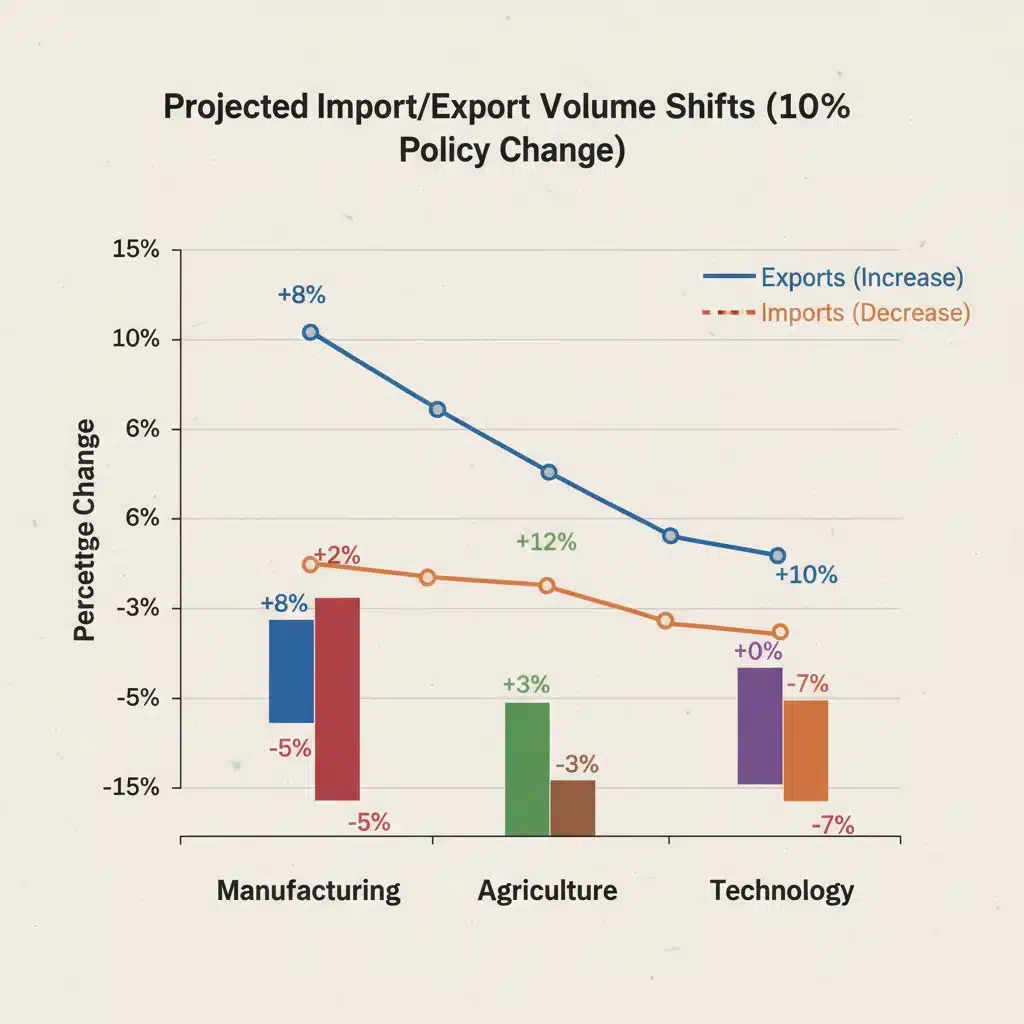
The manufacturing sector is often at the forefront of trade policy discussions. A 10% reduction in imports of manufactured goods, perhaps due to increased tariffs or domestic preference policies, could theoretically boost domestic production and employment. Industries such as steel, aluminum, textiles, and certain electronics could see a resurgence as demand shifts to domestically produced alternatives. However, this is not without challenges. Domestic producers might struggle to scale up quickly, face higher input costs if raw materials are also subject to tariffs, or lack the technological sophistication to compete on all fronts. Conversely, a 10% increase in manufactured exports could significantly benefit industries with strong global demand, such as aerospace, specialized machinery, and high-tech components, leading to job growth and investment in these areas.
The automotive industry, for example, is highly integrated globally. A 10% shift in trade could mean higher costs for imported parts, potentially increasing the price of vehicles for consumers, or it could incentivize more domestic parts production. The implications for the auto sector under a revised 2026 trade policy are particularly complex due to its intricate supply chains and significant foreign investment.
Agriculture: Navigating Global Markets
U.S. agriculture is a major exporter, with products like soybeans, corn, wheat, and meat finding markets worldwide. A 10% increase in agricultural exports, facilitated by new trade agreements or reduced barriers, would be a boon for farmers, potentially leading to higher commodity prices and increased farm income. This could stimulate investment in agricultural technology and expand rural economies. However, if the 2026 trade policy leads to retaliatory tariffs from other countries, resulting in a 10% decrease in agricultural exports, the impact could be devastating. Farmers could face lower prices, reduced demand, and significant financial hardship. This sector is particularly sensitive to trade disputes, as agricultural products are often used as leverage in broader negotiations.
Technology and Services: The Shifting Digital Frontier
The technology and services sectors, while perhaps less visible in traditional trade debates, are increasingly important. The U.S. is a net exporter of services, including financial services, intellectual property, and digital products. A 10% increase in service exports could further solidify the U.S.’s position as a global leader in innovation and knowledge-based industries, creating high-paying jobs and fostering economic growth. This could be driven by digital trade agreements that reduce barriers to cross-border data flows and intellectual property protection. Conversely, restrictions on technology imports or exports could hinder innovation, raise costs for businesses, and potentially isolate U.S. tech companies from global markets. The implications of 2026 trade policy for intellectual property rights and data localization are particularly critical for these sectors.
Energy Sector: Global Demand and Domestic Supply
The U.S. has become a significant energy producer and exporter, particularly of oil and natural gas. A 10% increase in energy exports could further enhance energy independence and provide substantial export revenues, bolstering the trade balance. This could also influence global energy prices and geopolitical dynamics. However, shifts in trade policy could also impact the import of refined petroleum products or specialized energy equipment, affecting domestic energy costs and infrastructure development. The balance between domestic energy needs and export opportunities will be a key consideration in any 2026 trade policy adjustments.
Macroeconomic Consequences of a 10% Trade Shift
Beyond individual sectors, a 10% shift in import/export dynamics under the 2026 trade policy would have broader macroeconomic implications for the U.S. economy.
Gross Domestic Product (GDP)
Changes in net exports (exports minus imports) directly impact GDP. A sustained 10% increase in exports, assuming imports remain constant, would provide a direct boost to GDP. Conversely, a 10% increase in imports without a corresponding increase in exports would subtract from GDP. The actual impact is more nuanced, as changes in trade can also influence domestic investment, consumption, and government spending. For instance, increased export-driven production could lead to higher business investment and job creation, further contributing to GDP growth. The precise magnitude would depend on the elasticity of demand for U.S. goods and services globally, and the responsiveness of domestic production to changes in import competition.
Employment and Wages
The employment effects of a 10% trade shift are complex. Industries benefiting from increased exports would likely see job growth, while those facing increased import competition or retaliatory tariffs could experience job losses. The type of jobs affected also matters: manufacturing jobs might be created or lost, while service sector employment could also fluctuate. Wages could also be impacted; increased demand for skilled labor in export-oriented industries might drive up wages, while increased competition could put downward pressure on wages in import-competing sectors. The overall effect on national employment and average wages would depend on the balance of these forces and the ability of the labor market to adapt to new demands.
Inflation and Consumer Prices
Trade policy has a direct bearing on inflation. If 2026 trade policy leads to higher tariffs on imported goods, consumers would likely face higher prices for those goods, contributing to inflation. Conversely, if new trade agreements make imports cheaper, consumer prices could fall. A 10% shift in import prices could significantly alter the consumer price index, affecting household purchasing power and potentially influencing monetary policy decisions by the Federal Reserve. The cost of intermediate goods and raw materials also plays a role; if these become more expensive due to trade changes, domestic production costs will rise, which can then be passed on to consumers.
Exchange Rates and Trade Balance
A significant shift in trade flows can influence the value of the U.S. dollar. A substantial increase in exports, for example, would increase demand for the dollar, potentially leading to its appreciation. A stronger dollar makes U.S. exports more expensive for foreign buyers and imports cheaper for U.S. consumers, which could then counteract the initial trade shift. Conversely, a significant increase in imports could weaken the dollar. The trade balance (the difference between exports and imports) would also be directly affected by a 10% shift. A move towards a more positive trade balance (exports exceeding imports) is generally seen as beneficial, indicating a nation is earning more from selling goods and services abroad than it spends on foreign goods and services.
Global Competitiveness and Supply Chains
The 2026 trade policy will also redefine the U.S.’s position in global supply chains. A 10% shift could lead to a significant reallocation of production and sourcing. Companies might seek to diversify their supply chains away from countries facing new tariffs or towards those with preferential trade agreements. This could lead to both opportunities for new partnerships and challenges in re-establishing efficient and cost-effective supply networks. The long-term impact on U.S. global competitiveness will depend on whether these shifts enhance or detract from the efficiency and innovation of U.S. industries.

Strategic Responses and Policy Considerations
Given the potential for significant economic shifts, policymakers and businesses will need to formulate strategic responses to navigate the evolving trade landscape under the 2026 trade policy.
For Policymakers: Balancing Protectionism and Openness
Policymakers face the delicate task of balancing the desire to protect domestic industries and jobs with the benefits of open trade. Any changes in 2026 trade policy would require careful consideration of their ripple effects. This includes:
- Targeted Support: Providing targeted support for industries negatively impacted by trade shifts, such as retraining programs for displaced workers or adjustment assistance for businesses.
- Negotiating New Agreements: Actively pursuing new bilateral and multilateral trade agreements that open up markets for U.S. goods and services while ensuring fair competition.
- Infrastructure Investment: Investing in domestic infrastructure to improve the efficiency of supply chains and reduce logistical costs, making U.S. goods more competitive.
- Innovation and R&D: Fostering innovation and research and development to ensure U.S. industries remain at the cutting edge and can compete on quality and technology, not just price.
- International Cooperation: Engaging in robust international dialogue to address global trade imbalances and establish common standards, reducing the likelihood of trade wars.
For Businesses: Adaptation and Diversification
Businesses, too, must be proactive in adapting to potential changes in 2026 trade policy. Key strategies include:
- Supply Chain Resilience: Diversifying supply chains to reduce reliance on single sources or regions that might be vulnerable to trade disruptions. This could involve exploring nearshoring or reshoring options.
- Market Diversification: Seeking out new export markets to reduce dependence on existing ones, especially if those markets become subject to trade barriers.
- Technological Adoption: Investing in automation and advanced manufacturing technologies to improve efficiency, reduce labor costs, and enhance competitiveness.
- Product Innovation: Focusing on high-value, differentiated products and services that are less sensitive to price fluctuations caused by trade policy.
- Advocacy and Engagement: Engaging with policymakers to articulate the needs and concerns of their industries and advocate for trade policies that support their long-term growth.
Case Studies: Historical Precedents and Future Projections
While a 10% shift in trade dynamics is a hypothetical scenario for 2026, history offers numerous examples of how trade policy changes have impacted economies. The imposition of tariffs on steel and aluminum in recent years, for instance, led to increased domestic production but also higher costs for downstream industries and retaliatory tariffs from trading partners. The renegotiation of NAFTA into the USMCA also demonstrated how complex and far-reaching the effects of trade agreement modifications can be, impacting everything from automotive manufacturing to agricultural trade.
Looking ahead to 2026, economic models and forecasting tools will be crucial for projecting the precise impacts of any proposed trade policy changes. These models can simulate various scenarios, taking into account factors like price elasticities, supply chain dependencies, and macroeconomic linkages. However, it’s important to remember that such models are based on assumptions and cannot fully capture the unpredictable nature of geopolitical events or rapid technological shifts. Therefore, flexibility and adaptability will be paramount.
The Global Context: Interconnectedness and Reciprocity
It is impossible to discuss U.S. trade policy in isolation. The global economy is deeply interconnected, and actions taken by the U.S. in 2026 will undoubtedly elicit responses from its trading partners. A 10% shift in U.S. trade, whether through increased protectionism or enhanced openness, will have repercussions for global supply chains, international relations, and the stability of the multilateral trading system. Retaliatory measures, trade disputes, and shifts in global alliances are all potential outcomes that must be factored into any comprehensive analysis of 2026 trade policy.
The role of international organizations like the World Trade Organization (WTO) will also be critical. While the WTO’s dispute settlement mechanism has faced challenges, it remains an important forum for resolving trade disputes and establishing global trade rules. The U.S.’s engagement with such bodies will influence the global response to its 2026 trade policy and its ability to shape the future of international trade.
Conclusion: Navigating the Future of U.S. Trade
The prospect of significant changes in 2026 trade policy, leading to a potential 10% shift in import and export dynamics, presents both considerable challenges and unique opportunities for the U.S. economy. From manufacturing and agriculture to technology and services, every sector will feel the ripples of these policy adjustments. The macroeconomic consequences, affecting GDP, employment, inflation, and the trade balance, underscore the need for a thoughtful and strategic approach.
For businesses, resilience, diversification, and innovation will be key to thriving in an evolving trade environment. For policymakers, the challenge lies in crafting policies that protect national interests while fostering economic growth and maintaining strong international relationships. As we approach 2026, continuous monitoring, rigorous analysis, and adaptive strategies will be essential to ensure the U.S. economy can effectively navigate the complexities of a changing global trade landscape and emerge stronger and more competitive.
The discussions and decisions made regarding 2026 trade policy will not only shape the economic trajectory of the United States but also influence the broader contours of global commerce for years to come. Understanding these potential impacts is the first step towards informed decision-making and strategic planning.
Author