The Future of Work: How 5 Emerging Technologies are Reshaping US Careers by 2030
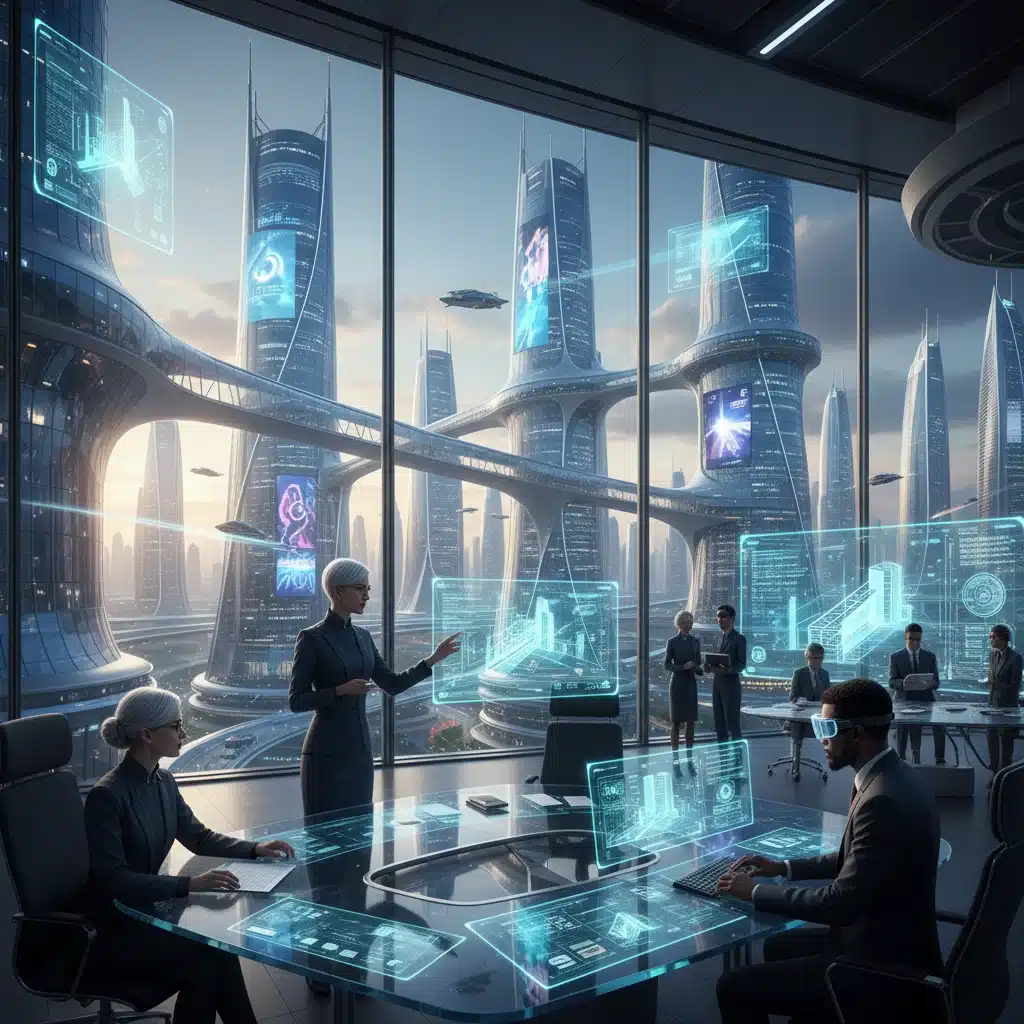
The landscape of employment is in a constant state of flux, but the pace of change is accelerating at an unprecedented rate. We stand on the cusp of a technological revolution that promises to fundamentally alter how we work, what we do, and even what constitutes a “job.” By 2030, the United States job market will be profoundly different, shaped by the relentless march of innovation. Understanding these shifts is not merely an academic exercise; it’s a crucial step for individuals and organizations alike to prepare for the future work technology era.
This article will delve into five pivotal emerging technologies that are poised to reshape US careers by 2030: Artificial Intelligence (AI), Automation and Robotics, Virtual and Augmented Reality (VR/AR), Blockchain, and Quantum Computing. For each, we’ll explore their potential impact, the new opportunities they create, and the skills necessary to thrive in this evolving environment. The goal is to provide a comprehensive roadmap for navigating the exciting, yet challenging, terrain of the future of work.
Artificial Intelligence (AI): The Brains Behind the Future Workforce
Artificial Intelligence is arguably the most transformative technology of our time. From sophisticated algorithms that power search engines to complex neural networks that drive autonomous vehicles, AI is already deeply integrated into our daily lives. Its impact on the future work technology landscape will be pervasive, touching nearly every sector and role.
Impact on US Careers:
- Automation of Routine Tasks: AI excels at repetitive, data-intensive tasks. This means many administrative, data entry, and even some analytical roles will see significant automation. Customer service is already being transformed by AI-powered chatbots and virtual assistants.
- Augmentation of Human Capabilities: Rather than solely replacing jobs, AI will often augment human workers, making them more efficient and effective. Doctors will use AI for faster and more accurate diagnoses, lawyers for legal research, and marketers for hyper-personalized campaigns.
- Creation of New Roles: The rise of AI necessitates new roles. We’ll see a surge in demand for AI ethicists, AI trainers, machine learning engineers, data scientists, AI product managers, and specialists in human-AI interaction design.
- Enhanced Decision-Making: AI’s ability to process and analyze vast amounts of data will empower leaders and employees with deeper insights, leading to more informed and strategic decisions across all industries.
Skills for the AI-Driven Future:
To thrive in an AI-driven future work technology environment, individuals will need to cultivate a blend of technical and uniquely human skills:
- Data Literacy: Understanding how data is collected, analyzed, and interpreted will be crucial, even for non-technical roles.
- Critical Thinking and Problem-Solving: AI can provide answers, but humans must formulate the right questions and critically evaluate the AI’s output.
- Creativity and Innovation: Tasks requiring imagination, artistic expression, and out-of-the-box thinking are less susceptible to AI automation.
- Emotional Intelligence: Empathy, collaboration, communication, and leadership will become even more valuable as AI handles the more mechanical aspects of work.
- Adaptability and Lifelong Learning: The rapid evolution of AI means continuous learning will be essential to stay relevant.
- AI Ethics and Governance: As AI becomes more powerful, understanding its ethical implications and contributing to its responsible development will be paramount.
Automation and Robotics: The Physical Transformation of Industries
While AI provides the “brains,” automation and robotics provide the “brawn.” These technologies involve the use of machines to perform tasks previously done by humans, often in physical environments. From manufacturing floors to logistics warehouses, and even increasingly in service industries, automation is redefining operational efficiency and safety. The impact on the future work technology sector is already palpable.
Impact on US Careers:
- Manufacturing and Logistics Revolution: Robots are taking over repetitive and dangerous tasks in factories and warehouses, leading to increased productivity but also a shift in the types of jobs available.
- Rise of “Cobots”: Collaborative robots (cobots) work alongside humans, assisting with tasks rather than replacing them entirely. This creates roles focused on human-robot interaction and supervision.
- Service Sector Automation: Automated kiosks, robotic cleaners, and drone delivery systems are becoming more common, affecting roles in retail, hospitality, and delivery services.
- Job Displacement and Creation: While some low-skill, repetitive jobs may be displaced, new high-skill jobs in robot maintenance, programming, integration, and design will emerge.
Skills for the Automated Future:
To succeed in an increasingly automated world, individuals need skills that complement robotic capabilities:
- Robotics Engineering and Programming: Expertise in designing, building, and programming robots will be highly sought after.
- Mechatronics: A multidisciplinary field combining mechanical engineering, electronics, computer engineering, and control engineering, essential for working with automated systems.
- System Integration: The ability to integrate robotic systems into existing workflows and IT infrastructure.
- Troubleshooting and Maintenance: As more robots are deployed, the need for skilled technicians to maintain and repair them will grow.
- Process Optimization: Understanding how to redesign processes to leverage automation effectively.
- Safety and Regulatory Compliance: Ensuring that automated systems operate safely and comply with all relevant regulations.
Virtual and Augmented Reality (VR/AR): Immersive Work Environments
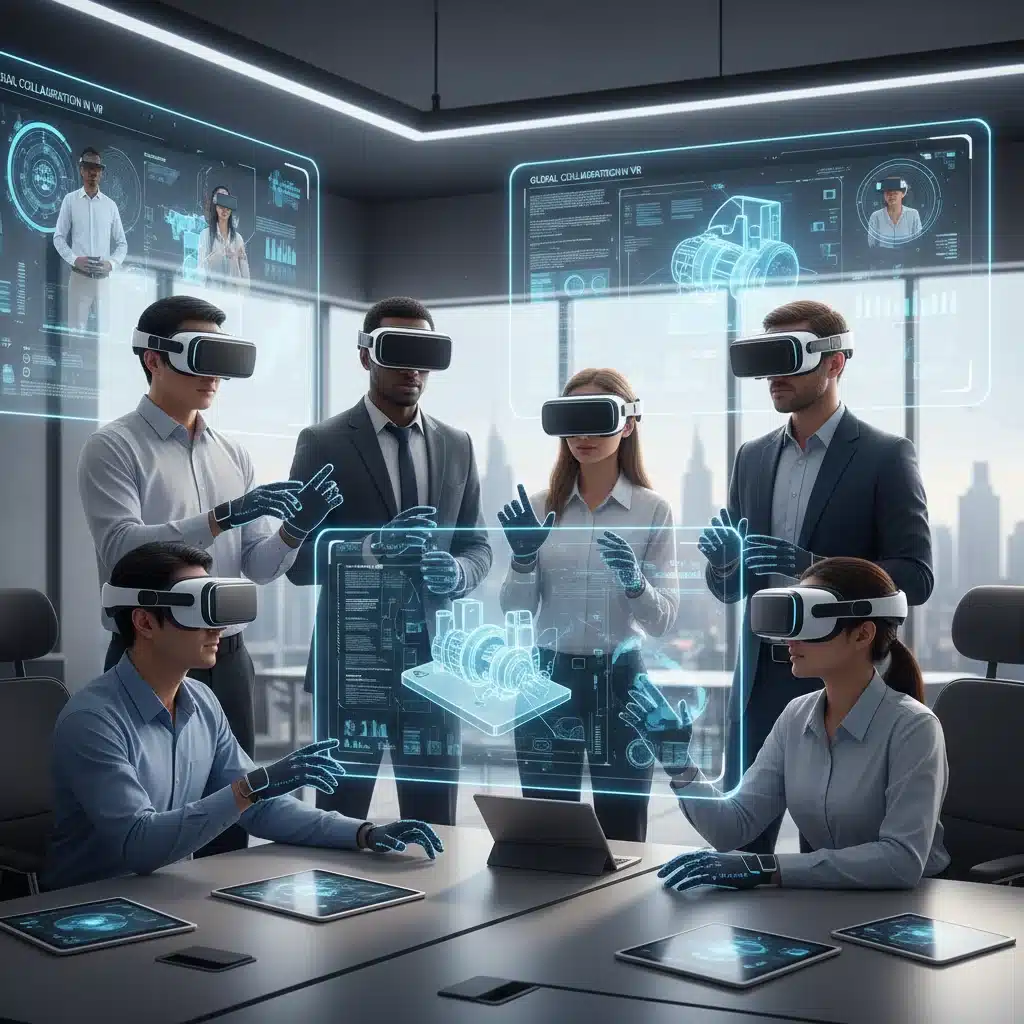
Virtual Reality (VR) immerses users in a simulated environment, while Augmented Reality (AR) overlays digital information onto the real world. While often associated with gaming and entertainment, VR/AR technologies are rapidly finding practical applications in the future work technology sphere, promising to revolutionize training, collaboration, design, and even remote work.
Impact on US Careers:
- Transforming Training and Education: VR/AR offers highly immersive and effective training simulations for complex procedures, from surgical training to equipment maintenance, reducing costs and risks.
- Enhanced Collaboration and Remote Work: “Virtual offices” and AR-enhanced meeting spaces can make remote collaboration more engaging and productive, transcending geographical barriers.
- Revolutionizing Design and Prototyping: Architects, engineers, and product designers can visualize and interact with 3D models in immersive environments, speeding up development cycles.
- New Customer Experiences: Retail, tourism, and real estate can leverage AR for interactive product previews, virtual tours, and personalized experiences.
- Creation of Content and Development Roles: The demand for VR/AR content creators, developers, experience designers, and hardware specialists will skyrocket.
Skills for the VR/AR Era:
To capitalize on the opportunities presented by VR/AR, individuals will need skills such as:
- 3D Modeling and Animation: Essential for creating virtual environments and objects.
- Game Development Engines (e.g., Unity, Unreal Engine): Proficiency in these platforms is critical for building VR/AR applications.
- UI/UX Design for Immersive Experiences: Designing intuitive and comfortable interfaces for 3D environments is a specialized skill.
- Spatial Computing Knowledge: Understanding how to develop applications that interact with the physical world and virtual objects.
- Storytelling and Narrative Design: Crafting compelling experiences within VR/AR requires strong narrative skills.
- Hardware Development and Integration: For those working on the physical devices that enable VR/AR.
Blockchain: The Foundation of Trust and Transparency
Blockchain, the decentralized and immutable ledger technology best known for underpinning cryptocurrencies like Bitcoin, has far broader applications than just digital currency. Its ability to create secure, transparent, and tamper-proof records is set to revolutionize various industries, fundamentally altering how transactions, contracts, and data management are handled. This will significantly impact the future work technology landscape, especially in areas requiring high trust and security.
Impact on US Careers:
- Financial Services Transformation: Blockchain can streamline cross-border payments, enhance security in trading, and create new financial products, leading to new roles in decentralized finance (DeFi).
- Supply Chain Management: Tracking goods from origin to consumer becomes transparent and verifiable, reducing fraud and improving efficiency, creating demand for blockchain-savvy supply chain professionals.
- Digital Identity and Cybersecurity: Blockchain can provide more secure and sovereign digital identities, reducing the risk of data breaches and creating jobs in decentralized identity management and blockchain security.
- Smart Contracts and Legal Professions: Self-executing contracts stored on a blockchain can automate legal agreements, requiring legal professionals to understand and draft these new forms of contracts.
- Data Management and Governance: Companies will need experts to manage and govern blockchain-based data systems, ensuring compliance and integrity.
- New Business Models: Blockchain enables entirely new business models based on decentralization, tokenization, and peer-to-peer interactions, fostering new entrepreneurial opportunities.
Skills for the Blockchain Economy:
Navigating the blockchain revolution requires a mix of technical and analytical skills:
- Blockchain Development: Proficiency in languages like Solidity (for Ethereum smart contracts) and understanding of various blockchain platforms.
- Cryptography: A deep understanding of the cryptographic principles that secure blockchain networks.
- Distributed Ledger Technology (DLT) Architecture: Designing and implementing decentralized systems.
- Cybersecurity: Protecting blockchain networks from attacks and vulnerabilities.
- Legal and Regulatory Knowledge: Understanding the evolving legal framework around blockchain, cryptocurrencies, and smart contracts.
- Economic and Financial Modeling: For those working in DeFi or tokenomics, understanding economic principles is key.
- Problem-Solving for Decentralized Systems: Thinking differently about how to solve problems in a trustless, decentralized environment.

Quantum Computing: The Next Frontier of Processing Power
Quantum computing utilizes the principles of quantum mechanics to perform computations at speeds and complexities far beyond the capabilities of even the most powerful classical supercomputers. While still in its nascent stages, quantum computing holds the potential to solve problems currently intractable for classical computers, opening up entirely new possibilities across science, medicine, and engineering. Its eventual impact on the future work technology landscape, though perhaps further out than other technologies, will be monumental.
Impact on US Careers (Longer Term):
- Drug Discovery and Materials Science: Quantum computers can simulate molecular interactions with unprecedented accuracy, accelerating the development of new drugs and materials. This will create highly specialized roles for quantum chemists and materials scientists.
- Advanced Cryptography: While quantum computers pose a threat to current encryption methods, they also offer solutions for developing “quantum-safe” cryptography, leading to demand for quantum cryptographers.
- Financial Modeling and Optimization: Quantum algorithms can optimize complex financial models, portfolio management, and risk assessment with greater efficiency.
- Artificial Intelligence Enhancement: Quantum computing could supercharge AI, enabling even more sophisticated machine learning algorithms and complex data analysis.
- New Scientific Research Fields: The ability to tackle previously unsolvable problems will spur new areas of scientific inquiry and demand for quantum physicists and researchers.
- Quantum Hardware and Software Engineering: As the technology matures, there will be a growing need for engineers to design, build, and maintain quantum computers and develop their operating systems and applications.
Skills for the Quantum Age:
Entry into the quantum computing field requires a strong foundational knowledge:
- Quantum Mechanics and Physics: A fundamental understanding of the principles governing quantum phenomena.
- Advanced Mathematics: Linear algebra, calculus, and discrete mathematics are essential.
- Computer Science and Algorithms: Knowledge of classical computing principles and the ability to design quantum algorithms.
- Quantum Programming Languages (e.g., Qiskit, Cirq): Learning to write code for quantum computers.
- Interdisciplinary Thinking: The ability to apply quantum principles to diverse fields like chemistry, finance, or materials science.
- Research and Development Acumen: Given the cutting-edge nature of the field, a strong aptitude for research and innovation is crucial.
Preparing for the Future Work Technology Landscape
The convergence of these five emerging technologies — AI, Automation, VR/AR, Blockchain, and Quantum Computing — will create a dynamic and complex future work technology environment. While the specifics of job creation and displacement are still being understood, a few overarching themes emerge for individuals and organizations seeking to thrive by 2030:
For Individuals:
- Embrace Lifelong Learning: The most critical skill will be the ability to continuously learn, unlearn, and relearn. Formal education, online courses, certifications, and self-study will all play vital roles.
- Develop “Human” Skills: Skills that are inherently human — creativity, critical thinking, emotional intelligence, complex problem-solving, and interpersonal communication — will become even more valuable as technology handles routine tasks.
- Cultivate Digital Literacy: A foundational understanding of how these technologies work, even without being an expert, will be essential for almost all roles.
- Be Adaptable and Resilient: The future will be characterized by change. Those who can adapt to new tools, processes, and job descriptions will be best positioned for success.
- Focus on Interdisciplinary Knowledge: The most exciting innovations often happen at the intersection of different fields. Combining technical knowledge with domain expertise will be highly sought after.
For Organizations:
- Invest in Reskilling and Upskilling: Companies must proactively invest in training their existing workforce to equip them with the skills needed for the future.
- Foster a Culture of Innovation: Encourage experimentation, embrace new technologies, and create environments where employees feel safe to learn and grow.
- Redesign Workflows: Don’t just automate existing processes; reimagine how work can be done more effectively with new technologies.
- Prioritize Ethical Considerations: As technology becomes more powerful, ethical guidelines, responsible AI development, and data privacy must be central to all strategies.
- Promote Human-Machine Collaboration: Design systems and processes that optimize the unique strengths of both humans and machines, rather than viewing them as competitors.
- Strategize for Talent Acquisition: Identify future skill gaps and develop robust strategies for attracting and retaining talent with the necessary expertise in emerging technologies.
Conclusion: Navigating the Evolving Future Work Technology Landscape
The year 2030 is not far off, and the seeds of the future work technology revolution have already been sown. Artificial Intelligence, Automation and Robotics, Virtual and Augmented Reality, Blockchain, and Quantum Computing are not just buzzwords; they are powerful forces that will fundamentally redefine industries, create new career paths, and necessitate a new set of human capabilities. While some fear job displacement, the more optimistic and realistic view is one of transformation and augmentation, where technology empowers humans to achieve more and focus on higher-value, more creative work.
Preparing for this future requires a proactive approach from everyone. Educational institutions must adapt curricula, governments must consider new policies for workforce development, companies must invest in their employees, and individuals must commit to continuous learning and skill development. By embracing these emerging technologies with foresight and strategic planning, the US workforce can not only navigate the challenges but also seize the immense opportunities that the future of work promises. The journey ahead will be dynamic, but with the right preparation, it will also be incredibly rewarding.