Inflation’s Impact on Savings: Protecting Your Capital from Erosion
The Silent Threat: How Inflation Erodes Your Savings and What You Can Do
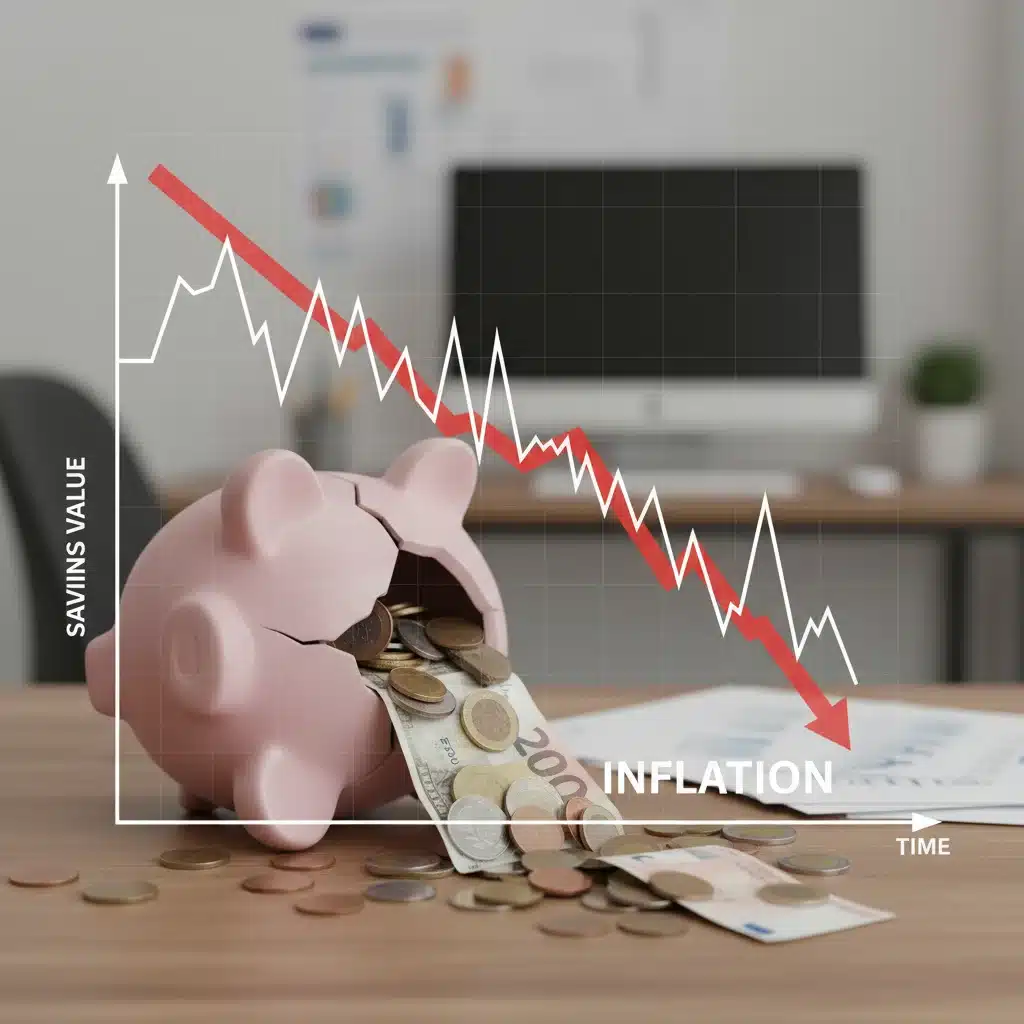
In the world of personal finance, few concepts are as critically misunderstood yet profoundly impactful as inflation. It’s the silent thief that, over time, can significantly diminish the purchasing power of your hard-earned money. For many, the traditional advice of “saving for a rainy day” involves stashing cash in a savings account. While this offers security and liquidity, it also exposes your capital to the relentless march of inflation. In an economic environment where inflation rates, even a seemingly modest 3.5%, can drastically reduce your wealth over time, understanding and combating this phenomenon is paramount. This article delves deep into the impact of inflation on savings accounts, particularly focusing on how a 3.5% erosion rate can affect your financial future by 2026, and, crucially, outlines actionable strategies to protect your capital.
The concept of inflation savings erosion is not abstract; it’s a tangible financial reality that affects everyone, from the casual saver to the savvy investor. Imagine having £10,000 in a savings account today. If inflation runs at 3.5% annually, by next year, that £10,000 will only buy what £9,650 could buy today. Fast forward a few years to 2026, and the cumulative effect can be staggering. This erosion isn’t just a theoretical concern for economists; it directly impacts your ability to afford future expenses, whether it’s a down payment on a home, your children’s education, or a comfortable retirement. Therefore, understanding this mechanism is the first step towards building a resilient financial plan.
Understanding the Mechanics of Inflation Savings Erosion
Before we explore solutions, let’s solidify our understanding of how inflation actually erodes your savings. Inflation is generally defined as the rate at which the general level of prices for goods and services is rising, and consequently, the purchasing power of currency is falling. When the inflation rate is higher than the interest rate you earn on your savings account, you are effectively losing money in real terms. Most standard savings accounts offer relatively low-interest rates, often barely keeping pace with, or more frequently, falling below the prevailing inflation rate. This creates a negative real return on your savings.
Consider a scenario where you have £50,000 in a savings account earning a generous 1% annual interest. If the inflation rate is 3.5%, your money’s purchasing power decreases by 2.5% each year (3.5% inflation – 1% interest). Over five years, leading up to 2026, this seemingly small percentage can accumulate into a substantial loss of purchasing power. The £50,000 you have today will be worth significantly less in real terms in 2026, meaning it will buy fewer goods and services than it does now. This is the core challenge of inflation savings erosion.
The 3.5% Erosion by 2026: A Concrete Example
Let’s quantify the impact. If you have £100,000 in a savings account today (let’s assume early 2024) and the average inflation rate remains at 3.5% annually, and your savings account yields a negligible 0.5% interest:
- Year 1 (End of 2024): Your £100,000 grows to £100,500 with interest. However, with 3.5% inflation, the purchasing power of your initial £100,000 is now equivalent to £96,500. So, your £100,500 only has the purchasing power of approximately £97,087.50 in today’s money.
- Year 2 (End of 2025): The £100,500 grows to £101,002.50. Factoring in another 3.5% inflation, the original £100,000 from 2024 would now only buy what £93,122.50 could buy then. Your £101,002.50 would have the purchasing power of roughly £94,000 in early 2024 money.
- Year 3 (End of 2026): The £101,002.50 grows to £101,507.51. The cumulative effect of 3.5% inflation means the initial £100,000 from 2024 would now only buy what approximately £89,929.88 could buy. Your £101,507.51 would have the purchasing power of around £91,370 in early 2024 money.
This simple calculation demonstrates a significant loss of purchasing power. Your nominal balance might increase slightly due to interest, but your real wealth – what your money can actually buy – is steadily declining. This makes proactive financial planning essential to counteract inflation savings erosion.
Strategies to Combat Inflation Savings Erosion
Recognizing the problem is the first step; implementing effective strategies is the next. Protecting your capital from inflation requires moving beyond traditional low-yield savings accounts and embracing a more dynamic approach to your finances. Here are several key strategies:
1. Invest in Inflation-Protected Securities
One of the most direct ways to combat inflation is to invest in assets specifically designed to protect against it. Treasury Inflation-Protected Securities (TIPS) are a prime example. Issued by governments, the principal value of TIPS adjusts with inflation, as measured by the Consumer Price Index (CPI). When inflation rises, the principal value of your TIPS increases, and vice versa. This adjustment ensures that your investment maintains its real value over time. They also pay interest semi-annually on the adjusted principal, providing a real return.
2. Diversify into Real Assets
Real assets tend to perform well during periods of inflation because their value is tied to tangible goods. This category includes:
- Real Estate: Properties often appreciate with inflation, and rental income can also increase to keep pace with rising costs. Investing in real estate, either directly or through Real Estate Investment Trusts (REITs), can be a powerful hedge against inflation.
- Commodities: Raw materials like gold, silver, oil, and agricultural products often see their prices rise with inflation. Investing in commodity funds or futures can provide a protective layer for your portfolio. Gold, in particular, has historically been seen as a safe haven during inflationary times.
3. Consider Equities (Stocks)
While stocks can be volatile, certain types of companies tend to perform well during inflationary periods. Companies with strong pricing power – those that can pass on increased costs to consumers without significantly impacting demand – are good candidates. These often include companies in essential sectors or those with strong brand loyalty. Investing in dividend-paying stocks can also provide a stream of income that can help offset the effects of inflation, especially if those dividends grow over time.

4. Explore High-Yield Savings Accounts and Certificates of Deposit (CDs)
While traditional savings accounts often fall short, some high-yield savings accounts and Certificates of Deposit (CDs) can offer better interest rates. While they might not always outpace inflation, they can significantly reduce the gap, thus minimizing the impact of inflation savings erosion. CDs, in particular, offer fixed interest rates for a set period, providing predictability. However, liquidity is often sacrificed for higher returns with CDs, so it’s essential to balance your need for access to funds with the desire for better yields.
5. Review and Adjust Your Budget
Inflation doesn’t just affect your savings; it impacts your daily expenses. Regularly reviewing and adjusting your budget is crucial. Identify areas where you can cut back or optimize spending to ensure you’re not overspending on inflated goods and services. This practice can free up more capital for investments that offer better protection against inflation.
6. Consider Alternative Investments
For those with a higher risk tolerance and a longer investment horizon, alternative investments can offer diversification and inflation protection. These might include:
- Private Equity: Investing in private companies can offer returns uncorrelated with public markets.
- Infrastructure Funds: Investments in essential infrastructure projects can provide stable, inflation-linked returns.
- Cryptocurrencies: While highly volatile, some view cryptocurrencies like Bitcoin as a hedge against fiat currency inflation, though this strategy comes with significant risks.
It’s important to approach alternative investments with caution and thorough research, or with the guidance of a financial advisor, as they often carry higher risks and may be less liquid.
The Role of Financial Planning in Mitigating Inflation
Effective financial planning is the cornerstone of protecting your wealth from inflation savings erosion. It’s not a one-time event but an ongoing process that requires regular review and adjustment. A comprehensive financial plan should include:
- Setting Clear Financial Goals: Define what you’re saving for (e.g., retirement, down payment, education). This helps in determining the appropriate investment horizon and risk tolerance.
- Assessing Your Risk Tolerance: Understanding how much risk you’re comfortable taking is crucial for selecting suitable investments. Inflation protection often involves taking on some level of investment risk.
- Diversification: Spreading your investments across various asset classes is vital to reduce risk and enhance returns. A diversified portfolio is more resilient to market fluctuations and inflationary pressures.
- Regular Portfolio Review: Economic conditions, including inflation rates, can change rapidly. Regularly reviewing your investment portfolio and adjusting it as needed ensures it remains aligned with your goals and current market realities.
- Seeking Professional Advice: A qualified financial advisor can provide personalized guidance, help you understand complex investment options, and develop a tailored strategy to combat inflation.
Long-Term Perspective on Inflation
It’s important to remember that inflation is a long-term phenomenon. While short-term spikes can be alarming, the cumulative effect over decades is what truly impacts your financial well-being. Therefore, your strategies for combating inflation savings erosion should also be long-term oriented. Impulse decisions based on short-term market movements can often lead to suboptimal outcomes. Instead, focus on building a robust, diversified portfolio that is designed to grow in real terms over many years.
For instance, if you are planning for retirement 20 or 30 years down the line, a 3.5% annual inflation rate means that the cost of living will have more than doubled by the time you retire. £100,000 today might only have the purchasing power of £50,000 or less in three decades. This highlights the urgency of investing your money wisely rather than letting it sit idle in a low-interest savings account. Your retirement nest egg needs to grow faster than inflation to maintain its value and provide the comfortable lifestyle you envision.

The Psychological Impact of Inflation
Beyond the numerical erosion, inflation can have a significant psychological impact. It can breed anxiety and uncertainty about the future, especially for those relying heavily on fixed incomes or traditional savings. The feeling that your money is losing value, even when the numbers in your bank account appear stable or slightly increasing, can be unsettling. This psychological burden can sometimes lead to poor financial decisions driven by panic rather than sound strategy. Acknowledging this emotional aspect is crucial. By having a clear plan and understanding the tools available to you, you can alleviate some of this stress and approach your financial future with greater confidence.
Staying Informed and Adapting
The economic landscape is constantly evolving. Staying informed about inflation trends, interest rate changes, and global economic developments is vital. Subscribe to reputable financial news sources, read economic reports, and consult with financial experts. The more informed you are, the better equipped you will be to adapt your strategies and protect your savings from ongoing erosion. What works today might need adjustment tomorrow, making continuous learning a key component of financial resilience.
Conclusion: Taking Control of Your Financial Future
The threat of inflation savings erosion, especially at a rate like 3.5% by 2026, is a serious challenge for anyone with savings. However, it is not an insurmountable one. By understanding the mechanics of inflation, exploring various investment strategies, and committing to diligent financial planning, you can actively protect and even grow your capital in real terms. Moving beyond the comfort of traditional savings accounts and embracing a diversified, inflation-aware investment approach is no longer an option but a necessity.
Whether it’s through inflation-protected securities, real estate, carefully selected equities, or other alternative investments, the goal remains the same: to ensure that your money retains its purchasing power and continues to work for you. Don’t let inflation silently diminish your financial dreams. Take proactive steps today to safeguard your savings and secure a prosperous financial future. Your capital deserves to be protected from the silent erosion of inflation.
Author