Real Estate Investment in 2026: Identifying Markets with Potential for 8% Appreciation

The landscape of real estate investment is in a constant state of flux, influenced by a myriad of economic, social, and technological factors. As we cast our gaze towards 2026, astute investors are already seeking out markets that promise significant returns, particularly those with the potential for 8% real estate appreciation or more. Achieving such a benchmark requires a deep understanding of market dynamics, foresight, and a strategic approach. This comprehensive guide will delve into the critical factors driving real estate appreciation, identify promising markets, and equip you with the knowledge to make informed investment decisions in the coming years.
Understanding the forces behind real estate appreciation is paramount. It’s not merely about guessing; it’s about analyzing trends, demographics, economic indicators, and governmental policies. The goal is to pinpoint areas where demand is likely to outstrip supply, where economic growth is robust, and where quality of life improvements are attracting new residents and businesses. This article will serve as your roadmap to navigating the complex world of real estate investment with a focus on maximizing your potential for substantial gains by 2026.
The Anatomy of Real Estate Appreciation: Key Drivers for 2026
Before we can identify markets with high appreciation potential, it’s crucial to understand what drives real estate appreciation. Several interconnected factors contribute to a property’s value increasing over time. For 2026, we anticipate these drivers will continue to play a pivotal role:
1. Economic Growth and Job Creation
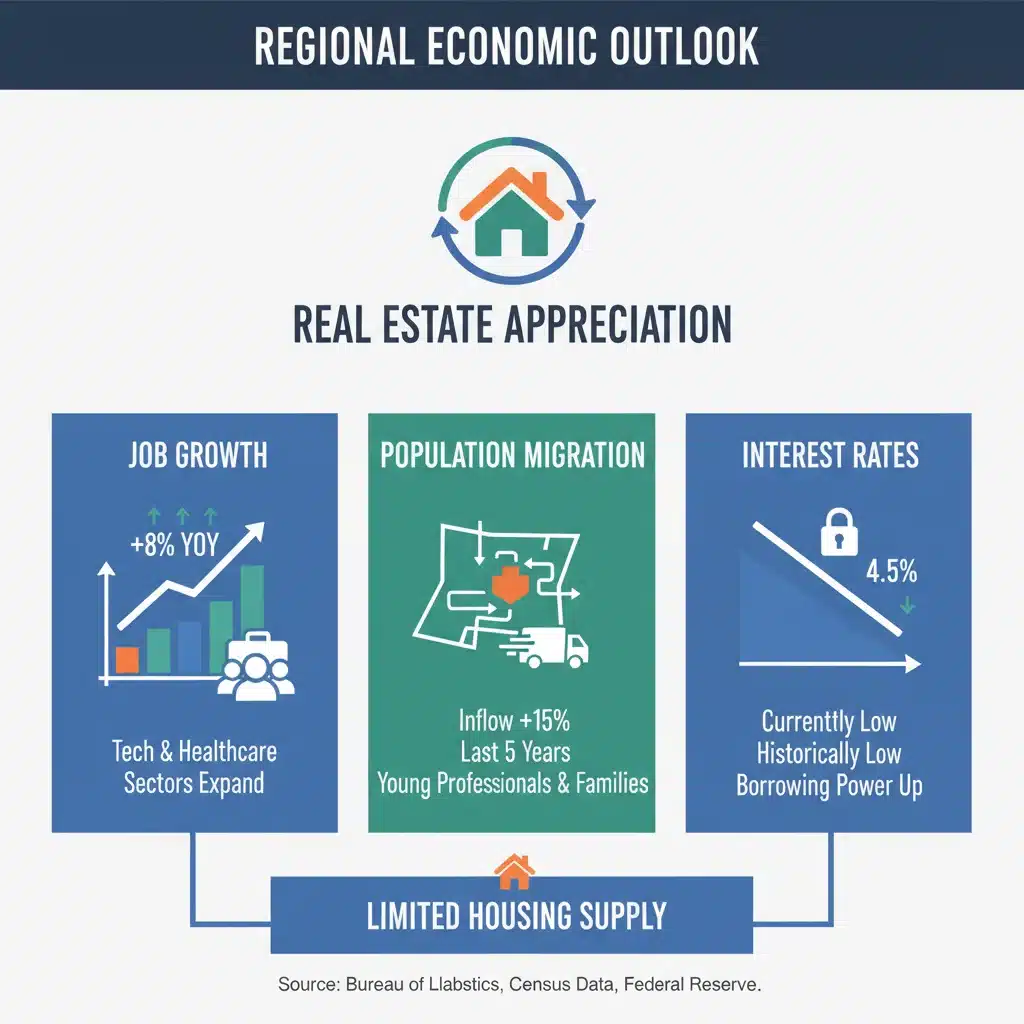
A strong economy is the bedrock of a thriving real estate market. When businesses are expanding, and new jobs are being created, it leads to an influx of people seeking housing. This increased demand, coupled with higher disposable incomes, naturally pushes property values upwards. We’ll be looking for markets with diversified economies, strong job growth forecasts, and a low unemployment rate.
2. Population Growth and Migration Patterns
Where people move, real estate values follow. Analyzing population growth, both from natural increase and inter-state migration, is critical. Regions experiencing a net inflow of residents, especially those with younger demographics, tend to see sustained demand for housing. Factors like affordability, quality of life, and job opportunities are major attractors for migration.
3. Interest Rates and Lending Environment
Interest rates significantly impact affordability and, consequently, demand. Lower interest rates make mortgages cheaper, allowing more buyers to enter the market and potentially pushing prices higher. While predicting future interest rate movements with absolute certainty is challenging, understanding the Federal Reserve’s stance and broader economic outlook is essential for forecasting the lending environment in 2026.
4. Supply and Demand Dynamics
This fundamental economic principle is perhaps the most direct driver of real estate appreciation. Markets with limited housing supply and high demand will inevitably see prices rise. Factors contributing to limited supply include restrictive zoning laws, lack of available land for development, and slow construction rates. High demand can stem from population growth, economic prosperity, and favorable lifestyle trends.
5. Infrastructure Development and Urban Planning
Investments in infrastructure, such as new transportation networks, improved public services, and urban revitalization projects, can dramatically enhance an area’s appeal and property values. Smart urban planning that focuses on sustainability, walkability, and community amenities also contributes to long-term real estate appreciation.
6. Inflation and Cost of Construction
Inflation can play a dual role. While it erodes purchasing power, it can also drive up the cost of construction materials and labor, making new homes more expensive to build. This, in turn, can increase the value of existing properties. Understanding inflationary pressures will be key to forecasting real estate appreciation in 2026.
Identifying Promising Markets for 8% Real Estate Appreciation in 2026
Now that we’ve established the drivers, let’s explore how to identify specific markets that could achieve an 8% real estate appreciation by 2026. This requires a data-driven approach, combining macroeconomic analysis with local market specifics.
Metropolitan Areas with Diversified Economies
Markets that are not overly reliant on a single industry tend to be more resilient and offer more stable growth. Look for cities with a strong presence in sectors like technology, healthcare, education, and advanced manufacturing. These industries often bring high-paying jobs, attracting a skilled workforce and boosting housing demand.
- Tech Hubs with Growing Start-up Ecosystems: Cities fostering innovation and entrepreneurship are magnets for talent and capital, leading to sustained demand for housing.
- Healthcare and Biotech Centers: The aging population and continuous advancements in medical science ensure a steady demand for healthcare services and related jobs, bolstering local economies.
- University Towns: These areas often have stable populations, a consistent influx of students and faculty, and a vibrant cultural scene, all contributing to a robust rental and sales market.
Emerging Cities with Strong In-Migration Trends
Many secondary and tertiary cities are experiencing significant growth as people seek more affordable living, better quality of life, and remote work opportunities. These cities often offer a lower cost of living compared to major metropolitan areas, making them attractive for both individuals and businesses.
- Sun Belt Cities: Regions in the southern and southwestern United States continue to attract residents due to warmer climates, lower taxes, and growing job markets.
- Mountain West and Pacific Northwest: These areas offer a blend of outdoor recreation and burgeoning tech sectors, drawing in a diverse population.
- Midwestern Renaissance Cities: Some Midwestern cities are experiencing revitalization, attracting new businesses and residents with affordable housing and a renewed sense of community.
Areas with Significant Infrastructure Investments
Keep an eye on regions where substantial public and private investments are being made in infrastructure. New transportation lines, improved roads, expanded utilities, and the development of new public spaces can drastically enhance an area’s appeal and property values.
Markets with Supply Constraints and High Demand
These are the classic environments for strong real estate appreciation. Look for cities where new construction is limited due to geographical barriers (e.g., surrounded by water or mountains), strict zoning regulations, or a slow permitting process. When combined with strong demand drivers, this creates an upward pressure on prices.
Data-Driven Strategies for Identifying High-Potential Markets
Successful real estate investment in 2026 will hinge on a methodical, data-driven approach. Here are key strategies and metrics to consider:
1. Analyze Demographic Data
Examine population growth rates, age demographics, household formation rates, and income levels. A growing population, particularly of working age, signals future demand for housing. Increasing household formation indicates a need for more housing units, while rising incomes support higher property values.
2. Monitor Job Market Indicators
Track unemployment rates, job growth percentages by sector, and the presence of major employers. A diverse and growing job market is a strong indicator of economic health and sustained housing demand. Look for areas with a low unemployment rate and consistent job creation.
3. Evaluate Affordability and Cost of Living
While high appreciation is the goal, initial affordability is crucial for attracting residents. Compare median home prices to median incomes. Markets that are still relatively affordable but showing strong growth fundamentals often have greater upside potential. High cost of living can deter new residents, even with strong job markets.
4. Research Rental Market Trends
A robust rental market can indicate strong demand for housing, even if homeownership rates are lower. Look at vacancy rates, rent growth, and rental yield potential. Strong rental markets often precede or coincide with appreciation in sales prices.
5. Understand Local Government Policies and Development Plans
Investigate local zoning laws, urban development plans, and any incentives for new construction or revitalization projects. Pro-growth policies can accelerate appreciation, while restrictive policies might limit supply, potentially driving up prices in the long term, but also making development more challenging.
6. Track Investor Activity and Sentiment
While not the sole indicator, observing where institutional and individual investors are putting their money can offer insights. High investor activity can signal confidence in a market’s future, but also potential for overheating. Balancing this with fundamental analysis is key.
Emerging Trends Impacting Real Estate Appreciation Towards 2026
Beyond traditional metrics, several emerging trends will shape real estate appreciation in the coming years:
1. Remote Work Revolution and Suburban/Rural Migration
The widespread adoption of remote work has decoupled many workers from traditional urban centers. This trend is driving demand in suburban and even rural areas that offer more space, better quality of life, and lower costs. Markets benefiting from this shift could see significant appreciation.
2. Climate Change and Resilience Planning
As climate change impacts become more apparent, areas vulnerable to natural disasters may see reduced demand, while more resilient regions could become more attractive. Investments in climate-resilient infrastructure and sustainable development will play a role in long-term property values.
3. Technological Advancements in Real Estate
PropTech (property technology) is continually evolving, impacting everything from how properties are bought and sold to how they are managed and valued. AI, blockchain, and smart home technologies could influence desirability and efficiency, indirectly affecting appreciation.
4. Shifting Demographics: Millennials and Gen Z
These younger generations are entering their prime home-buying years. Understanding their preferences – for example, walkable communities, sustainable living, and access to amenities – will be crucial for identifying markets that align with future demand.

Case Studies: Hypothetical Markets Poised for 8% Appreciation
To illustrate these concepts, let’s consider hypothetical examples of markets that could exhibit the characteristics necessary for 8% real estate appreciation by 2026. Please note, these are illustrative and not direct investment advice.
Hypothetical Market A: ‘Tech-Coastal’ City
Imagine a mid-sized coastal city that has historically been a tourist destination but is now rapidly becoming a hub for sustainable technology and biotech startups. It boasts a major university, attracting a young, educated workforce. The local government has invested heavily in public transport and green infrastructure. Housing supply is somewhat constrained by geographical features and a desire to maintain the city’s unique charm, leading to upward pressure on prices. Job growth is consistently above the national average, and in-migration from larger, more expensive tech hubs is robust.
Hypothetical Market B: ‘Midwestern Revitalization’ Hub
Consider a Midwestern city that experienced industrial decline but has successfully diversified its economy into advanced manufacturing, logistics, and a burgeoning arts scene. The cost of living is still significantly lower than coastal cities, making it highly attractive to remote workers and young families. Major corporations have recently announced new facilities, creating thousands of jobs. The city council has streamlined permitting for new residential developments in specific zones, but overall supply struggles to keep pace with the sudden surge in demand. Infrastructure improvements, including new parks and revitalized downtown areas, are enhancing quality of life.
Hypothetical Market C: ‘Sun Belt University’ Town
Picture a Sun Belt city anchored by a rapidly expanding state university and a growing healthcare sector. The warm climate and lower tax burden continue to draw retirees and families. The university’s research initiatives are spinning off new companies, creating high-paying jobs. While development is ongoing, a significant portion of new housing is geared towards high-end luxury, leaving a gap in mid-range affordability. This creates a competitive market for existing, moderately priced homes, driving their value upwards. Population growth is consistently in the top percentile nationally.
Risks and Considerations for 2026
While the potential for 8% real estate appreciation is exciting, it’s crucial to acknowledge the inherent risks and uncertainties that could impact market performance:
- Economic Downturns: Unforeseen recessions or significant economic shocks could dampen demand and slow appreciation.
- Interest Rate Hikes: A rapid increase in interest rates could reduce affordability and cool the housing market.
- Oversupply: Aggressive new construction in a market could eventually lead to an oversupply, stabilizing or even decreasing prices.
- Regulatory Changes: New housing policies, tax laws, or environmental regulations could impact property values.
- Geopolitical Events: Global events can have far-reaching effects on economies and financial markets, including real estate.
Therefore, continuous monitoring of market conditions and a flexible investment strategy are essential.
Conclusion: Strategic Investment for Future Appreciation
The pursuit of 8% real estate appreciation by 2026 is an ambitious yet achievable goal for informed investors. It demands a keen eye for detail, a commitment to data analysis, and an understanding of both macro and microeconomic forces. By focusing on markets characterized by strong economic growth, positive population migration, strategic infrastructure development, and favorable supply-demand dynamics, investors can position themselves for substantial gains.
Remember, real estate investment is a long-term game. While short-term fluctuations can occur, the fundamental drivers discussed in this article provide a robust framework for identifying markets with sustained growth potential. Diversify your portfolio, conduct thorough due diligence, and consider consulting with local real estate experts to refine your strategy. With careful planning and strategic execution, achieving significant real estate appreciation in 2026 is well within reach, paving the way for a prosperous investment future.