Estate Planning 2026: Minimizing Inheritance Taxes & Regulations

The landscape of wealth transfer is ever-evolving, and as we approach 2026, understanding the nuances of inheritance tax 2026 becomes paramount for anyone looking to secure their legacy and minimize tax burdens for their beneficiaries. Estate planning is not merely a task for the wealthy; it is a critical component of financial prudence for individuals and families across all income brackets. The decisions made today can significantly impact the financial well-being of future generations. With potential legislative changes and economic shifts on the horizon, proactive planning is more essential than ever. This comprehensive guide will delve into the projected regulations, effective strategies, and common pitfalls to avoid, ensuring your estate plan is robust and optimized for the coming years.
The concept of inheritance tax, often viewed with apprehension, is essentially a tax on the transfer of an individual’s property at death. While its primary purpose is to generate revenue for the government, its implications for families can be substantial, potentially eroding a significant portion of an inheritance. Therefore, strategic planning around inheritance tax 2026 is not just about compliance, but about maximizing the value passed down to loved ones. This article aims to demystify the complexities, offering actionable insights and expert advice to help you navigate this intricate financial terrain.
We will explore the fundamental principles of estate planning, focusing specifically on how these principles interact with the anticipated tax environment of 2026. From understanding exemptions and deductions to leveraging advanced planning techniques like trusts and gifting strategies, every aspect will be covered in detail. Our goal is to empower you with the knowledge to make informed decisions, ensuring your legacy is preserved and your beneficiaries receive the maximum benefit from your lifetime of hard work and accumulation. Let’s embark on this journey to master inheritance tax 2026 and secure your financial future.
Understanding the Current Landscape of Inheritance Tax
Before we project into 2026, it’s crucial to grasp the current framework of inheritance tax. In many jurisdictions, this tax is levied on the total value of a deceased person’s estate before it is distributed to heirs. The specifics, however, vary significantly by country and even within different states or regions. Key elements typically include an exemption threshold, above which the tax applies, and varying tax rates depending on the relationship between the deceased and the beneficiary, or the size of the estate. Understanding these current rules forms the bedrock for anticipating and planning for changes in inheritance tax 2026.
For instance, in the United States, the federal estate tax exemption has been historically high, but this is set to change. The Tax Cuts and Jobs Act of 2017 significantly increased the federal estate tax exemption, but these provisions are scheduled to sunset at the end of 2025. This means that, barring new legislation, the exemption amount will revert to its pre-2018 levels, adjusted for inflation, effectively lowering the threshold for many estates. This anticipated shift is a primary driver behind the urgency of planning for inheritance tax 2026. Similarly, other countries have their own unique tax structures. For example, the UK has an inheritance tax that applies above a certain threshold, with specific rules for gifts and property. Canada, on the other hand, does not have a federal inheritance tax but taxes capital gains on death.
Beyond federal or national taxes, some states or provinces also impose their own estate or inheritance taxes. These can be in addition to the federal tax, further complicating the planning process. Knowing whether your assets are located in a jurisdiction with such additional taxes is vital. The types of assets subject to inheritance tax can also vary, including real estate, bank accounts, investments, life insurance proceeds, and even certain types of retirement accounts. Understanding which assets are included in the taxable estate is a critical first step in evaluating your potential tax liability and formulating strategies to mitigate it for inheritance tax 2026.
Furthermore, certain transfers made during an individual’s lifetime can also be subject to gift tax, which often works in conjunction with estate tax to prevent individuals from avoiding estate tax by gifting away all their assets before death. The annual gift tax exclusion allows individuals to gift a certain amount each year without incurring gift tax or using up their lifetime exemption. Larger gifts, however, may begin to tap into the lifetime exemption. These interplays between gift tax and estate tax are fundamental to effective estate planning, particularly when considering long-term strategies for minimizing inheritance tax 2026.
The complexity of these rules necessitates a thorough review of your current financial situation and existing estate documents. A simple will might suffice for some, but for those with significant assets, a more sophisticated approach involving trusts, charitable giving, and other advanced strategies will likely be necessary. The key is to be informed and to work with professionals who can guide you through the intricacies of the current tax laws and help you prepare for the changes that inheritance tax 2026 may bring.
Projected Changes and Their Impact on Inheritance Tax 2026
The most significant factor influencing inheritance tax 2026 planning, particularly in the United States, is the scheduled sunset of the increased estate tax exemption. As mentioned, under current law, the federal estate tax exemption is slated to revert to its pre-2018 levels, adjusted for inflation, on January 1, 2026. This means that the amount of wealth an individual can pass on free of federal estate tax will be significantly reduced. For many estates that are currently below the exemption threshold, this change could bring them into taxable territory, making proactive planning indispensable.
While the exact inflation-adjusted figure for 2026 is yet to be determined, it is widely anticipated to be roughly half of the current exemption. This reduction will have a profound impact on high-net-worth individuals and families who have not yet optimized their estate plans. It underscores the urgency of reviewing existing plans and implementing strategies that can take advantage of the higher exemption amounts available in 2024 and 2025. This limited window of opportunity is critical for those looking to make substantial tax-free transfers.
Beyond the federal estate tax exemption, there is always the possibility of new legislative action. While predicting the exact nature of future tax laws is challenging, it’s prudent to consider potential scenarios. For example, there could be discussions around changes to the step-up in basis for inherited assets, adjustments to gift tax exclusions, or modifications to the rules governing various types of trusts. Any of these changes could significantly alter the strategies employed for minimizing inheritance tax 2026. Staying abreast of legislative developments and consulting with estate planning attorneys and financial advisors who specialize in tax law is crucial.
Furthermore, state-level inheritance and estate taxes could also see adjustments. Some states may choose to align their exemption thresholds with the federal changes, while others might maintain their own independent structures. The interplay between federal and state taxes can be complex, and a comprehensive estate plan must consider both levels of taxation. For individuals with assets in multiple states, this complexity is amplified, requiring careful consideration of situs rules and multi-jurisdictional planning for inheritance tax 2026.
Economic factors also play a role. Inflation, interest rates, and market performance can all affect the value of an estate and, consequently, the potential inheritance tax liability. For example, if asset values continue to appreciate, more estates could find themselves subject to tax, even with relatively stable exemption amounts. Therefore, a dynamic estate plan that can adapt to changing economic conditions is far more effective than a static one. The goal is to build flexibility into your plan to navigate the uncertainties of inheritance tax 2026 and beyond.
Key Strategies for Minimizing Inheritance Tax 2026
Minimizing inheritance tax 2026 requires a multi-faceted approach, combining various legal and financial strategies. The cornerstone of effective planning is to leverage available exemptions and deductions, and to proactively transfer wealth in a tax-efficient manner. Here are some key strategies to consider:
1. Maximize Lifetime Gifting
One of the most effective ways to reduce your taxable estate is through lifetime gifting. The annual gift tax exclusion allows you to give away a certain amount each year to as many individuals as you wish, tax-free, without using any of your lifetime exemption. For 2024, this amount is $18,000 per donee. This means a married couple could jointly gift $36,000 to each child, grandchild, or any other individual, significantly reducing the size of their estate over time. By utilizing these annual exclusions, you can systematically transfer wealth out of your estate, thereby lowering your potential inheritance tax 2026 liability.
Beyond the annual exclusion, you can also make larger gifts that utilize your lifetime gift tax exemption. With the anticipated sunsetting of the higher exemption amounts at the end of 2025, there is a powerful incentive to make substantial gifts before 2026 to lock in the current, more generous exemption. This ‘use it or lose it’ scenario is a critical consideration for high-net-worth individuals. However, it’s important to consult with an estate planning attorney to ensure these gifts are structured correctly and do not trigger unintended tax consequences or violate clawback provisions.
2. Utilize Trusts for Wealth Transfer
Trusts are powerful tools in estate planning, offering flexibility, control, and significant tax advantages. Various types of trusts can be employed to minimize inheritance tax 2026:
- Irrevocable Life Insurance Trusts (ILITs): An ILIT is designed to hold a life insurance policy, removing the policy proceeds from your taxable estate. When you die, the death benefit is paid to the trust, which then distributes it to your beneficiaries according to your wishes, free of estate tax. This strategy is particularly effective for providing liquidity to cover potential estate taxes without increasing the taxable estate.
- Grantor Retained Annuity Trusts (GRATs): GRATs allow you to transfer appreciating assets out of your estate while retaining an annuity payment for a set term. If the assets appreciate more than the IRS-mandated interest rate, the excess appreciation passes to your beneficiaries free of gift and estate tax. This can be a highly effective strategy in a low-interest-rate environment.
- Charitable Trusts: If philanthropy is a part of your legacy, charitable trusts can offer significant tax benefits. Charitable Remainder Trusts (CRTs) and Charitable Lead Trusts (CLTs) allow you to support charities while also providing income for yourself or your heirs and reducing your taxable estate. These trusts can be excellent tools for managing inheritance tax 2026 while fulfilling philanthropic goals.
- Spousal Lifetime Access Trusts (SLATs): A SLAT is an irrevocable trust created by one spouse for the benefit of the other spouse and/or descendants. The primary benefit is that assets transferred to a SLAT are removed from the grantor’s taxable estate, but the grantor’s spouse can still access the trust assets, providing a degree of flexibility and financial security. This is a popular strategy to utilize the higher gift tax exemption before it potentially sunsets.

3. Strategic Use of Retirement Accounts
Retirement accounts, such as IRAs and 401(k)s, are subject to specific rules regarding distributions upon the account holder’s death, which can impact inheritance tax 2026. While the assets within these accounts generally continue to grow tax-deferred, beneficiaries typically face income tax on distributions. Planning for these accounts involves careful consideration of beneficiary designations and potential Roth conversions. Converting a traditional IRA to a Roth IRA, for example, involves paying income tax now but allows for tax-free distributions to beneficiaries in the future, potentially saving them a significant tax burden.
The SECURE Act and SECURE Act 2.0 have introduced significant changes to inherited IRAs, largely eliminating the ‘stretch IRA’ for most non-spouse beneficiaries and requiring them to liquidate inherited accounts within a 10-year period. This accelerated distribution schedule can push beneficiaries into higher income tax brackets. Therefore, integrating retirement account planning into your overall estate strategy is crucial for managing the tax implications for your heirs under inheritance tax 2026.
4. Valuation Discounts
For owners of family businesses or illiquid assets, valuation discounts can be a valuable strategy for reducing the taxable value of an estate. Discounts for lack of marketability or lack of control can be applied to certain assets, such as interests in family limited partnerships (FLPs) or limited liability companies (LLCs). These discounts can significantly lower the reported value of the assets for gift and estate tax purposes, thereby reducing the overall tax liability for inheritance tax 2026. However, the IRS scrutinizes these discounts closely, so proper structuring and professional appraisals are essential.
5. Charitable Giving
Incorporating charitable giving into your estate plan can not only support causes you care about but also provide substantial tax benefits. Direct bequests to qualified charities are fully deductible from your taxable estate, effectively reducing the amount subject to inheritance tax 2026. As mentioned earlier, charitable trusts like CRTs and CLTs offer more sophisticated ways to integrate philanthropy with tax planning, allowing for ongoing income or immediate tax deductions while ultimately benefiting a charity.
Common Pitfalls to Avoid in Estate Planning for Inheritance Tax 2026
Even with the best intentions, several common mistakes can undermine an otherwise well-crafted estate plan, especially when navigating the complexities of inheritance tax 2026. Awareness of these pitfalls is the first step toward avoiding them:
1. Procrastination
Perhaps the most significant pitfall is simply delaying the estate planning process. With the federal estate tax exemption set to revert in 2026, waiting until the last minute can mean missing out on significant tax-saving opportunities, such as utilizing the higher lifetime gift tax exemption. Estate planning is an ongoing process, not a one-time event, and it should be reviewed regularly to adapt to life changes and evolving tax laws. Procrastination can lead to beneficiaries facing higher tax burdens than necessary.
2. Failure to Update Documents
Life events such as marriage, divorce, birth of children or grandchildren, deaths, or significant changes in financial circumstances all warrant a review of your estate plan. Tax laws also change, as is the case with inheritance tax 2026. An outdated will or trust might not reflect your current wishes or the most tax-efficient strategies. Regular reviews, ideally every three to five years or after any major life event, are crucial to ensure your plan remains effective and aligned with your goals.
3. Incorrect Beneficiary Designations
Beneficiary designations on assets like life insurance policies, retirement accounts, and annuities often supersede the instructions in your will. Failing to keep these designations updated can lead to unintended consequences, such as assets going to a former spouse or a deceased beneficiary, or being subject to probate and unnecessary taxes. Ensuring all beneficiary designations are current and coordinated with your overall estate plan is a simple yet critical step in managing inheritance tax 2026.
4. Inadequate Liquidity
Even with careful planning, some estates may still owe inheritance tax. A common problem is an estate that is rich in assets but poor in liquidity, meaning there aren’t enough readily available cash funds to pay the tax. This can force heirs to sell assets, potentially at a loss, to cover the tax bill. Life insurance can be an effective solution to provide the necessary liquidity, ensuring that heirs do not have to liquidate other valuable assets. Planning for liquidity is a key component of mitigating the impact of inheritance tax 2026.
5. Ignoring State-Specific Laws
As discussed, some states impose their own estate or inheritance taxes, which can significantly add to the overall tax burden. Ignoring these state-specific laws, especially if you own property in multiple states, can lead to unexpected tax liabilities. A comprehensive estate plan must consider both federal and state tax implications to effectively minimize inheritance tax 2026.
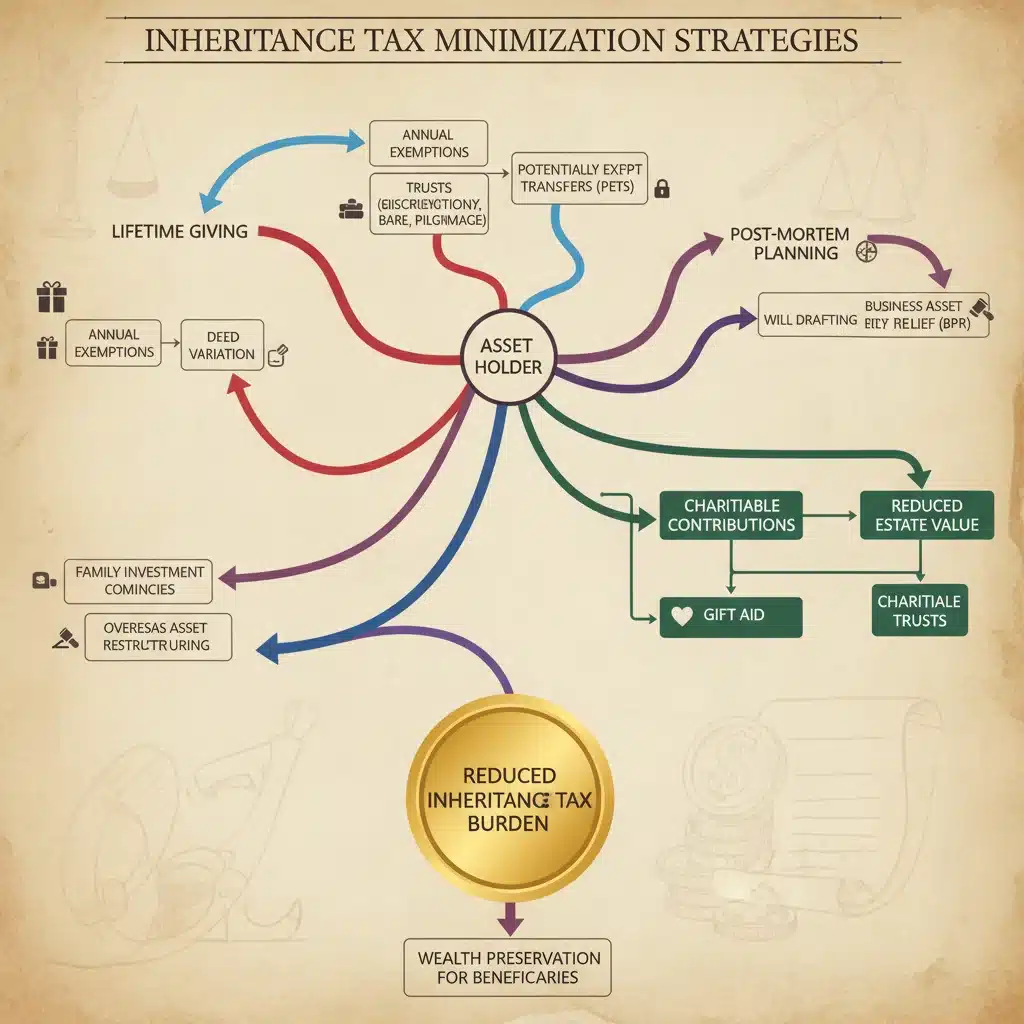
The Role of Professional Guidance
Navigating the intricacies of estate planning, particularly with the impending changes to inheritance tax 2026, is a complex endeavor that should not be undertaken without professional guidance. A team of experts, including an estate planning attorney, a financial advisor, and a tax professional, can provide invaluable support and expertise.
- Estate Planning Attorney: An attorney specializing in estate law can draft and review all necessary legal documents, such as wills, trusts, and powers of attorney. They ensure that your plan complies with all applicable federal and state laws and is structured to achieve your specific goals while minimizing potential tax liabilities.
- Financial Advisor: A financial advisor can help you assess your current assets, project future growth, and develop strategies for managing your investments in a way that supports your estate planning objectives. They can also assist with liquidity planning and integrating various financial products into your overall strategy.
- Tax Professional: A tax professional, such as a CPA, can provide detailed analysis of the tax implications of your estate plan, both during your lifetime and after your death. They can help you understand the impact of gift taxes, estate taxes, and income taxes on inherited assets, ensuring your plan is optimized for tax efficiency concerning inheritance tax 2026.
These professionals work collaboratively to create a holistic and robust estate plan tailored to your unique circumstances. Their expertise is crucial in interpreting complex tax laws, anticipating future changes, and implementing sophisticated strategies that might not be apparent to the average individual. Investing in professional guidance is an investment in the security and preservation of your legacy.
Case Studies: Real-World Applications of Inheritance Tax Strategies
To further illustrate the practical application of these strategies, let’s consider a couple of hypothetical case studies demonstrating how proactive planning can significantly impact inheritance tax 2026 outcomes.
Case Study 1: The Proactive Couple
John and Mary, a married couple in their late 60s, have an estate valued at $20 million, primarily consisting of real estate, investments, and a family business. They have two adult children. Recognizing the impending changes to the federal estate tax exemption in 2026, they consulted with their estate planning team in early 2024.
Their strategy involved:
- Utilizing Current Gift Tax Exemption: They established two SLATs (Spousal Lifetime Access Trusts), one for John’s benefit and one for Mary’s, funding each with $6 million. This allowed them to use a significant portion of their combined lifetime gift tax exemption before the potential reduction in 2026. The assets transferred out of their individual estates immediately. While the spouse beneficiaries could access the funds if needed, the assets were out of the grantor’s taxable estate.
- Annual Gifting: For 2024 and 2025, they plan to make annual exclusion gifts of $36,000 to each of their two children and their respective spouses, totaling $144,000 per year, further reducing their estate without using their lifetime exemption.
- Life Insurance for Liquidity: They purchased a substantial life insurance policy held within an ILIT, structured to provide sufficient liquidity to cover any remaining estate taxes and administrative costs, ensuring their children would not have to sell family assets to pay taxes.
Outcome: By taking advantage of the higher exemption amounts in 2024-2025 and implementing a robust gifting and trust strategy, John and Mary were able to significantly reduce their taxable estate, ensuring that their children would inherit a much larger portion of their wealth with minimal inheritance tax 2026 implications.
Case Study 2: The Delayed Planner
Sarah, a single individual with an estate worth $15 million, had been putting off estate planning, believing her assets were below the current federal exemption. She passed away unexpectedly in early 2026, with only a simple will in place.
Impact of Delayed Planning: When Sarah passed, the federal estate tax exemption had reverted to its lower, inflation-adjusted level (e.g., approximately $6.5 million). This meant that a substantial portion of her $15 million estate ($15 million – $6.5 million = $8.5 million) was subject to federal estate tax at a rate of 40%. Additionally, her state also imposed an estate tax.
Outcome: Sarah’s beneficiaries faced a significant estate tax bill, amounting to several million dollars. Without proper liquidity planning, her executor had to sell off some of her valuable investment properties to cover the taxes, reducing the overall inheritance for her family. This case highlights the critical importance of proactive planning for inheritance tax 2026, especially with anticipated changes in exemption levels.
Conclusion: Securing Your Legacy in the Face of Inheritance Tax 2026
The prospect of inheritance tax 2026, particularly with the anticipated reduction in the federal estate tax exemption, presents both challenges and opportunities for individuals and families. While the complexities of tax law can seem daunting, a proactive and well-informed approach to estate planning can make a profound difference in preserving your legacy and ensuring your beneficiaries receive the maximum possible inheritance.
The key takeaways from this guide emphasize the importance of understanding the current tax landscape, anticipating future changes, and implementing sophisticated strategies. Maximizing lifetime gifting, strategically utilizing various trusts, optimizing retirement accounts, exploring valuation discounts, and incorporating charitable giving are all powerful tools in your estate planning arsenal. Equally important is avoiding common pitfalls such as procrastination, failing to update documents, and overlooking state-specific tax laws.
Ultimately, effective estate planning is not just about minimizing taxes; it’s about providing peace of mind, ensuring your wishes are honored, and protecting your loved ones’ financial future. The window of opportunity to take advantage of current, more favorable tax exemptions is closing. Therefore, now is the opportune moment to engage with qualified professionals – estate planning attorneys, financial advisors, and tax experts – to review your current situation, update your plan, and proactively prepare for the environment of inheritance tax 2026. By taking these essential steps, you can confidently navigate the future and secure a lasting legacy for generations to come.