2026 Social Security COLA: 3.2% Increase & Retirement Impact

The 2026 Social Security Cost-of-Living Adjustment: How a 3.2% Increase Impacts Your Retirement Income
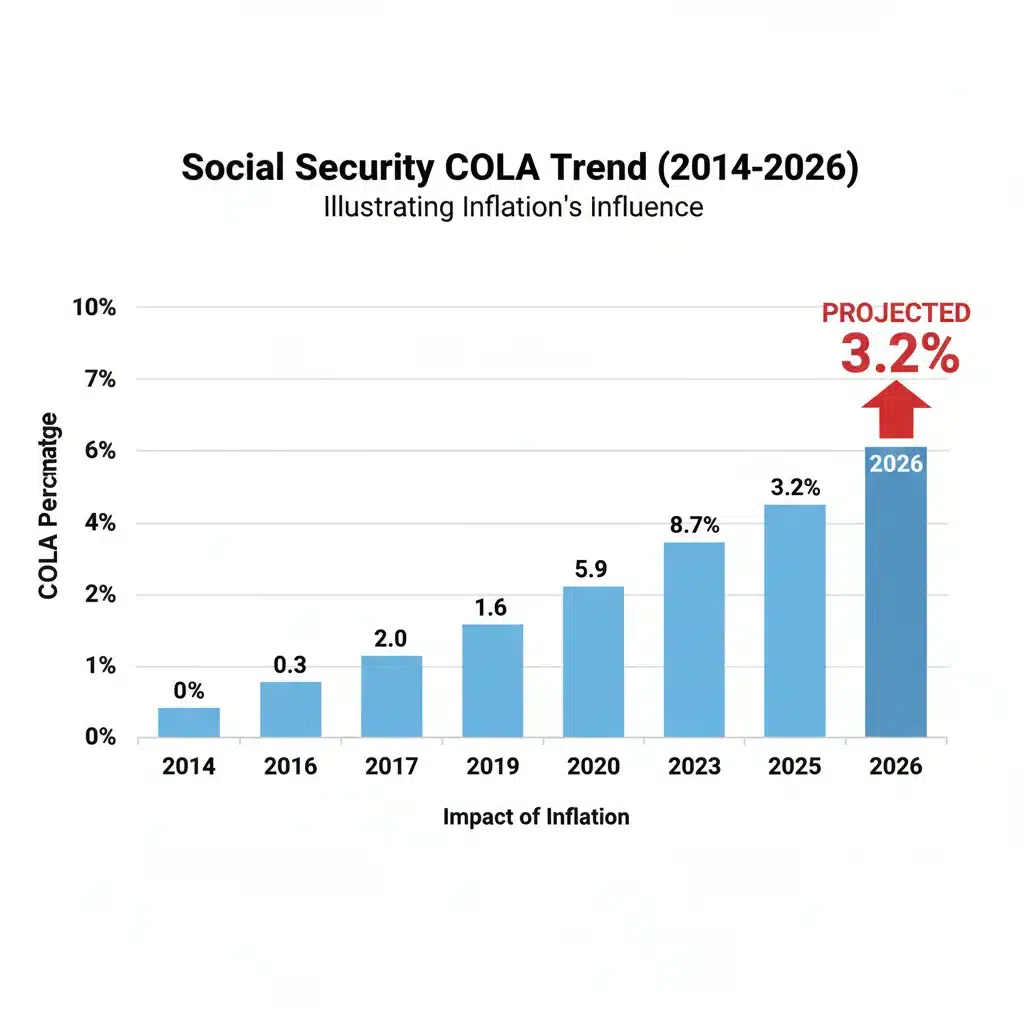
As millions of Americans rely on Social Security benefits for their retirement income, the annual Cost-of-Living Adjustment (COLA) is a critical factor in their financial well-being. For 2026, projections indicate a Social Security COLA 2026 of approximately 3.2%. This anticipated increase, while not as dramatic as some recent adjustments, still represents a significant boost to the purchasing power of retirees and other beneficiaries. Understanding the mechanics behind this adjustment, its potential impact on your benefits, and how it interplays with other financial considerations like Medicare is paramount for effective retirement planning.
The Social Security Administration (SSA) implements the COLA to ensure that the purchasing power of Social Security benefits is not eroded by inflation. Without these annual adjustments, the fixed income of retirees would steadily lose value over time, making it harder to afford essential goods and services. The 3.2% projection for the Social Security COLA 2026 is based on current economic forecasts, particularly the Consumer Price Index for Urban Wage Earners and Clerical Workers (CPI-W), which is the primary metric used by the SSA to calculate the COLA.
This comprehensive guide will delve into the intricacies of the 2026 COLA, exploring what a 3.2% increase truly means for your monthly checks, how it might affect your Medicare premiums, and what strategies you can employ to maximize your financial security in retirement. We’ll also examine the broader economic landscape influencing these adjustments and provide insights into potential future trends.
Understanding the Social Security COLA Mechanism
The Social Security COLA is not an arbitrary decision; it’s a statutory adjustment designed to keep pace with inflation. The legal basis for the COLA stems from the 1975 amendments to the Social Security Act, which mandated automatic annual adjustments. Before 1975, COLA increases required congressional approval, often leading to delays and political wrangling. The current system provides a more predictable and timely response to rising living costs.
The calculation of the Social Security COLA 2026 (and all previous COLAs) is tied to the Consumer Price Index for Urban Wage Earners and Clerical Workers (CPI-W). Specifically, the SSA compares the average CPI-W for the third quarter of the current year (July, August, September) with the average CPI-W for the third quarter of the last year in which a COLA became effective. The percentage increase between these two periods determines the COLA. If there’s no increase, or a decrease, then there’s no COLA for that year.
It’s important to note that the CPI-W is a specific measure of inflation that focuses on the spending habits of urban wage earners and clerical workers. While it’s a reasonable proxy for the cost of living for many, some argue that it doesn’t fully capture the unique spending patterns and healthcare costs faced by seniors. Organizations like the Senior Citizens League often advocate for using a different index, such as the CPI-E (Consumer Price Index for the Elderly), which places a greater weight on healthcare and housing costs, typically higher for older Americans.
For the Social Security COLA 2026, the 3.2% projection suggests that inflation, as measured by the CPI-W, is expected to remain a factor, though potentially moderating from the higher rates seen in recent years. This adjustment will be applied to all Social Security benefits, including retirement, disability, and survivor benefits, starting in January 2026.
The Impact of a 3.2% COLA on Your Social Security Benefits
A 3.2% increase in your Social Security benefits, while seemingly modest, can have a tangible impact on your monthly income. Let’s break down what this could mean for different beneficiaries.
Increased Monthly Payments
The most direct impact of the Social Security COLA 2026 is an increase in your monthly benefit check. For example, if your current monthly Social Security benefit is $1,800, a 3.2% COLA would add $57.60 to your payment, bringing it to $1,857.60. While this might not seem like a massive sum, over the course of a year, it amounts to an additional $691.20, which can certainly help cover rising expenses.
For those receiving the average Social Security retirement benefit, which is currently around $1,907 per month (as of early 2024), a 3.2% increase would translate to an extra $60.00 per month, totaling an additional $720.00 annually. These increases are crucial for maintaining financial stability, especially for retirees on fixed incomes.
Maintaining Purchasing Power
The primary purpose of the COLA is to protect the purchasing power of your benefits. With inflation, the cost of groceries, utilities, transportation, and other essentials tends to rise. A 3.2% COLA aims to offset these increases, allowing you to afford the same level of goods and services as before. Without this adjustment, your fixed income would buy less and less each year, effectively eroding your standard of living.
Consider the cumulative effect of COLAs over many years. A retiree who began receiving benefits decades ago has seen their initial payment grow significantly due to these annual adjustments, ensuring that their benefits have largely kept pace with the cost of living. The Social Security COLA 2026 continues this vital tradition.
Potential Effects on Taxation
It’s important to remember that Social Security benefits can be subject to federal income tax if your combined income exceeds certain thresholds. Combined income includes your adjusted gross income, non-taxable interest, and half of your Social Security benefits. An increase in your Social Security benefits due to the Social Security COLA 2026 could potentially push you into a higher income bracket or cause a larger portion of your benefits to become taxable.
For individuals, if your combined income is between $25,000 and $34,000, up to 50% of your benefits may be taxable. If your combined income is over $34,000, up to 85% of your benefits may be taxable. For married couples filing jointly, these thresholds are $32,000 to $44,000 and over $44,000, respectively. While the COLA is designed to combat inflation, it’s wise to consider its potential impact on your tax liability and plan accordingly.
The Interplay Between COLA and Medicare Premiums
One of the most significant considerations for retirees is the relationship between the Social Security COLA and Medicare Part B premiums. By law, there’s a “hold harmless” provision that prevents an increase in Medicare Part B premiums from reducing a beneficiary’s Social Security benefit. However, this provision primarily applies to those who have their Part B premiums deducted directly from their Social Security checks and whose benefits are not high enough to absorb the premium increase without dipping below their previous year’s net payment.
For many, the increase in Medicare Part B premiums can consume a substantial portion, or even all, of their COLA increase. This is because Medicare Part B premiums are often adjusted annually, and sometimes these adjustments can be significant. The standard Medicare Part B premium for 2025 will be announced later, but any increase will directly affect your net Social Security payment after the Social Security COLA 2026 is applied.
Understanding “Hold Harmless”
The “hold harmless” provision ensures that if you’re already enrolled in Medicare Part B and your premium is deducted from your Social Security benefit, your net benefit cannot decrease from one year to the next due to a Part B premium increase. If the COLA is large enough to cover the entire Medicare premium increase, then you’ll see a net increase in your Social Security check. However, if the COLA is smaller than the Medicare premium increase, your net Social Security check will remain the same as the previous year, with the difference in premium absorbed by the COLA, leaving no net increase in your take-home pay.
This provision is crucial for protecting the lowest-income beneficiaries. However, it doesn’t apply to everyone. It typically doesn’t apply to new Medicare enrollees, those who don’t have their premiums deducted from their Social Security, or those whose income is high enough to trigger Income-Related Monthly Adjustment Amounts (IRMAA) for their Medicare premiums. If you fall into these categories, a larger Medicare Part B premium increase could indeed reduce your net income, even with the Social Security COLA 2026.
Medicare Part B Premiums and IRMAA
High-income beneficiaries pay higher Medicare Part B and Part D premiums, known as Income-Related Monthly Adjustment Amounts (IRMAA). These surcharges are based on your modified adjusted gross income (MAGI) from two years prior. As your Social Security benefits increase due to the Social Security COLA 2026, and if your other income sources also rise, you could potentially cross an IRMAA threshold, leading to significantly higher Medicare premiums. This is another reason why comprehensive financial planning is essential, as a seemingly positive COLA could have unintended consequences for your overall healthcare costs.
Broader Economic Factors Influencing the 2026 COLA
The projected 3.2% Social Security COLA 2026 is not an isolated event; it’s a reflection of the broader economic environment. Several key factors contribute to the inflation rate measured by the CPI-W, which in turn dictates the COLA.
Inflation Trends
The most direct driver of the COLA is inflation. The past few years have seen elevated inflation rates, impacting everything from energy costs and food prices to housing and healthcare. While inflation has shown signs of moderating, it remains above the Federal Reserve’s long-term target of 2%. The 3.2% projection for 2026 suggests that economists anticipate inflation to continue its gradual decline but still exert upward pressure on the cost of living.
Factors contributing to ongoing inflation include supply chain disruptions, geopolitical events, strong consumer demand, and wage growth. These elements collectively influence the prices of goods and services that the CPI-W measures. If these factors shift significantly, the final COLA for 2026 could be higher or lower than the current projection.
Wage Growth and Labor Market
A strong labor market and rising wages can also contribute to inflationary pressures. When workers earn more, they have greater purchasing power, which can drive up demand for goods and services, leading to higher prices. The CPI-W, specifically designed for urban wage earners, is particularly sensitive to these dynamics. A robust job market and steady wage increases, while beneficial for current workers, can indirectly lead to higher COLAs for retirees.
Federal Reserve Policy
The Federal Reserve’s monetary policy, particularly interest rate adjustments, plays a significant role in controlling inflation. Higher interest rates are designed to cool down the economy and reduce inflationary pressures. The Fed’s actions in the coming months will be critical in shaping the inflation landscape that ultimately determines the Social Security COLA 2026. If the Fed’s policies are effective in bringing inflation closer to its target, future COLAs might be smaller, reflecting a more stable price environment.
Strategies for Maximizing Your Retirement Income with the COLA
While the Social Security COLA 2026 provides a welcome boost, it’s just one piece of your overall retirement income puzzle. Proactive financial planning can help you make the most of this adjustment and secure your financial future.
Budgeting and Expense Management
With an anticipated increase in your benefits, it’s an opportune time to review and adjust your budget. Understand where your money is going and identify areas where you might be able to save. Even a small increase in income, when managed effectively, can significantly improve your financial flexibility. Factor in potential increases in Medicare premiums and other rising costs when re-evaluating your budget.
Reviewing Your Investment Portfolio
For those with investment portfolios, consider how inflation and interest rates might impact your returns. Diversifying your investments across different asset classes can help mitigate risks associated with inflation. Discuss with a financial advisor whether your current investment strategy aligns with your retirement goals, especially in an environment with ongoing inflation and a 3.2% Social Security COLA 2026.
Understanding Medicare and Healthcare Costs
Healthcare costs are a significant concern for retirees. Stay informed about potential changes to Medicare Part B and Part D premiums, deductibles, and co-pays. Explore Medicare Advantage plans or Medigap policies to determine if they offer better coverage or cost savings for your specific health needs. Proactively managing healthcare expenses can help ensure that your COLA increase isn’t entirely absorbed by rising medical bills.
Part-Time Work or Side Gigs
If you’re able and willing, consider a part-time job or a side gig to supplement your retirement income. Even a few hours a week can provide extra funds, reduce reliance on your Social Security benefits, and offer social engagement. Remember that if you’re under your full retirement age and working, your earnings might be subject to the Social Security earnings test, which could temporarily reduce your benefits. However, those benefits are typically reinstated at a higher amount once you reach full retirement age.
Seeking Professional Financial Advice
A qualified financial advisor can provide personalized guidance tailored to your specific situation. They can help you understand the nuances of the Social Security COLA 2026, its impact on your overall financial plan, and strategies for optimizing your income and managing expenses in retirement. They can also assist with tax planning to minimize the tax burden on your increased benefits.

The Long-Term Outlook for Social Security and Future COLAs
While the Social Security COLA 2026 provides a short-term boost, it’s important to consider the long-term solvency of the Social Security program and the outlook for future COLAs.
Social Security’s Financial Health
The Social Security program faces long-term financial challenges, primarily due to demographic shifts, including lower birth rates, increased life expectancy, and the retirement of the large Baby Boomer generation. Without congressional action, the Social Security trust funds are projected to be able to pay only about 80% of promised benefits after a certain point, typically around the mid-2030s.
This doesn’t mean Social Security will run out of money entirely, but it does suggest that future beneficiaries might face reduced benefits if no legislative changes are made. These potential challenges could influence future discussions around how COLAs are calculated or the overall benefit structure.
Future COLA Projections
Future COLAs will continue to be driven by inflation as measured by the CPI-W. If inflation moderates significantly and consistently, future COLAs may be smaller than the 3.2% projected for 2026. Conversely, if inflationary pressures persist or intensify, we could see larger adjustments. Economic forecasts are constantly evolving, and so too are the projections for future COLAs.
It’s also worth noting the ongoing debate about using an alternative inflation index, such as the CPI-E, which proponents argue would better reflect the true cost of living for seniors. If such a change were enacted, it could lead to different COLA outcomes in the future. However, there are no immediate plans for such a legislative change.
Staying Informed
Staying informed about economic trends, legislative discussions regarding Social Security, and official announcements from the Social Security Administration is crucial. The SSA typically announces the official COLA for the upcoming year in October, based on the third-quarter CPI-W data. While projections like the 3.2% for the Social Security COLA 2026 provide an early indication, the final figure can vary.
Conclusion
The projected 3.2% Social Security COLA 2026 is a significant development for millions of retirees and beneficiaries. It represents a vital mechanism designed to protect the purchasing power of your Social Security benefits against the erosive effects of inflation. While this increase will provide a welcome boost to monthly income, it’s essential to understand its broader implications, particularly concerning Medicare premiums and potential tax liabilities.
By proactively budgeting, reviewing your financial plan, understanding healthcare costs, and considering professional advice, you can effectively navigate these changes and maximize your financial security in retirement. The Social Security system, while facing long-term challenges, remains a cornerstone of retirement planning for many. Staying informed about annual COLAs and the economic factors that influence them is key to making sound financial decisions for your future.
Remember, the 3.2% figure for the Social Security COLA 2026 is a projection, and the official announcement will come later in the year. However, it provides a valuable benchmark for planning and preparing for the financial landscape of 2026. Embrace this information as an opportunity to refine your retirement strategy and ensure your benefits continue to support the lifestyle you envision.