Medicaid Expansion 2026: New Health Coverage Opportunities

The landscape of healthcare in the United States is in constant evolution, and one of the most significant ongoing transformations is the expansion of Medicaid. As we look towards 2026, several states are poised to either implement or further solidify their Medicaid expansion efforts, opening up crucial new health coverage opportunities for millions of Americans. This comprehensive guide will delve into the intricacies of Medicaid Expansion 2026, examining its history, current status, the states leading the charge, and the profound implications for individuals and the broader healthcare system. Understanding these changes is not just about policy; it’s about access, equity, and the fundamental right to health.
Medicaid, a joint federal and state program, provides health coverage to millions of low-income Americans, including children, pregnant women, parents, seniors, and individuals with disabilities. Its expansion under the Affordable Care Act (ACA) in 2010 was a game-changer, allowing states to extend eligibility to nearly all non-elderly adults with incomes up to 138% of the federal poverty level. While many states embraced this opportunity, a significant number initially opted out, citing various concerns. However, over the years, the tide has steadily turned, with more states recognizing the economic and health benefits of expansion. The focus on Medicaid Expansion 2026 highlights a continued national effort to bridge healthcare gaps.
The Genesis of Medicaid Expansion: A Brief Overview
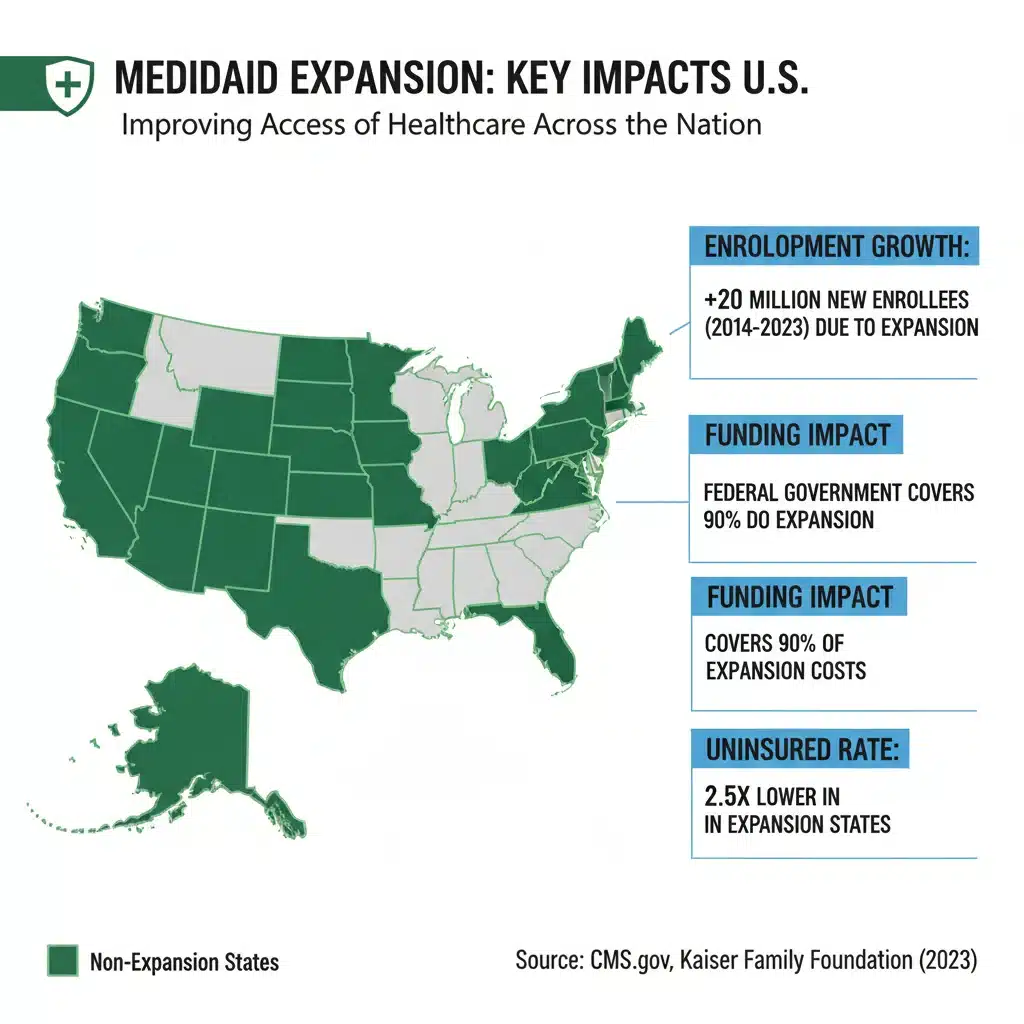
To fully appreciate the significance of Medicaid Expansion 2026, it’s essential to understand its origins. The ACA aimed to reduce the number of uninsured Americans significantly. A cornerstone of this strategy was the expansion of Medicaid. The federal government offered to cover 100% of the costs for newly eligible beneficiaries for the first three years, gradually decreasing to 90% in subsequent years. This substantial federal funding was designed to incentivize states to expand their programs.
However, a 2012 Supreme Court ruling made Medicaid expansion optional for states. This decision created a stark divide: states that expanded Medicaid saw significant reductions in their uninsured rates, improved access to care, and better health outcomes for their low-income populations. Conversely, non-expansion states often had a ‘coverage gap,’ where low-income adults earned too much to qualify for traditional Medicaid but too little to be eligible for subsidies to purchase private insurance on the ACA marketplaces. This gap left millions without affordable health coverage.
The years following the Supreme Court decision have seen a gradual, state-by-state adoption of Medicaid expansion. Political shifts, growing evidence of the positive impacts, and increasing public pressure have all contributed to more states opting in. This ongoing momentum sets the stage for further developments in Medicaid Expansion 2026, as more states evaluate the benefits and challenges of joining the expansion cohort.
Why States Are Embracing Medicaid Expansion Now
The decision to expand Medicaid is complex, involving economic, political, and public health considerations. For states considering Medicaid Expansion 2026, several compelling factors often drive the change:
- Improved Health Outcomes: Studies consistently show that Medicaid expansion leads to better access to primary care, reduced emergency room visits for preventable conditions, and improved management of chronic diseases. It also reduces mortality rates for certain conditions.
- Economic Benefits: Expanding Medicaid brings substantial federal dollars into the state economy, supporting healthcare providers, creating jobs, and boosting local economies. These federal funds often outweigh the state’s share of the costs.
- Reduced Uncompensated Care: Hospitals in expansion states report significant reductions in uncompensated care costs, as more patients have insurance. This financial relief can be critical for rural hospitals and those serving vulnerable populations.
- Addressing the Coverage Gap: For states that have not yet expanded, the coverage gap remains a significant issue. Expansion offers a direct solution to provide health insurance to their most vulnerable residents.
- Political Will and Public Pressure: As the benefits become more apparent and as public awareness grows, there is often increasing political pressure and public support for expansion, leading to legislative action.
The move towards Medicaid Expansion 2026 in new states is a testament to the growing recognition of these benefits, both for the health of their citizens and the fiscal health of their states.
Key States to Watch for Medicaid Expansion in 2026
While the exact legislative timelines can be fluid, several states are frequently cited as potential candidates for new Medicaid expansion efforts or significant adjustments to their existing programs by 2026. It’s important to note that the political climate and state-specific circumstances can influence the speed and success of these initiatives. Here, we highlight five states that are often discussed in the context of future Medicaid expansion or significant enhancements:
1. Wyoming: A Persistent Push for Coverage
Wyoming remains one of the few states that has not yet expanded Medicaid. Despite repeated efforts by advocates and some lawmakers, legislative attempts have consistently fallen short. However, the economic arguments for expansion, particularly the influx of federal funds and the potential relief for rural hospitals, continue to resonate. The state’s high rate of uninsured individuals, especially in its working-poor population, provides a strong impetus for continued debate. Discussions around Medicaid Expansion 2026 in Wyoming will likely center on finding a politically palatable solution that addresses fiscal concerns while expanding access to care.
2. Kansas: Renewed Momentum for Access
Kansas has been another battleground state for Medicaid expansion. While the state legislature has passed expansion bills in the past, they have often faced gubernatorial vetoes or have stalled in subsequent legislative sessions. However, with shifting political dynamics and persistent advocacy, there’s renewed hope for progress. Proponents highlight the economic boost and the thousands of Kansans who would gain coverage. The debate leading up to Medicaid Expansion 2026 in Kansas will be closely watched, as it could significantly impact the state’s healthcare landscape.
3. Mississippi: Addressing Deep-Seated Health Disparities
Mississippi consistently ranks among the states with the poorest health outcomes and highest poverty rates. The lack of Medicaid expansion exacerbates these challenges, leaving a large segment of its low-income population without health insurance. While political opposition has been strong, the dire need for improved health infrastructure and access to care could compel a re-evaluation. Advocates for Medicaid Expansion 2026 in Mississippi emphasize the potential to alleviate pressure on struggling hospitals and improve the health of its most vulnerable citizens.
4. North Carolina: Recent Expansion and Future Adjustments
North Carolina recently expanded Medicaid, a significant victory for healthcare advocates in the state. While this was a major step, the implementation and any potential adjustments or enhancements to the program will be crucial to monitor by 2026. Ensuring smooth enrollment, adequate provider networks, and addressing any unforeseen challenges will be key. The state’s experience will serve as a valuable case study for other states considering expansion, and how North Carolina manages its expanded program will inform future discussions around Medicaid Expansion 2026 nationally.
5. Florida: Ongoing Debates and Public Pressure
Florida remains one of the largest states that has not expanded Medicaid, leaving millions uninsured. Despite strong public support and numerous calls from healthcare organizations, legislative action has been slow. The state’s large and diverse population, coupled with significant health disparities, makes the need for expansion particularly acute. The ongoing public discourse and advocacy efforts could intensify leading up to Medicaid Expansion 2026, potentially pushing the state towards a different policy direction.

Eligibility and Benefits Under Expanded Medicaid
For individuals in states that have expanded Medicaid, eligibility is primarily based on income relative to the Federal Poverty Level (FPL). Under the ACA expansion, adults aged 19-64 with incomes up to 138% of the FPL are typically eligible. For example, in 2023, 138% of the FPL for a single individual was approximately $20,120 annually, and for a family of three, it was about $34,310. These thresholds are adjusted annually.
The benefits package offered under expanded Medicaid is comprehensive and generally includes:
- Doctor visits: Access to primary care physicians and specialists.
- Hospital care: Inpatient and outpatient hospital services.
- Prescription drugs: Coverage for necessary medications.
- Mental health services: Counseling, therapy, and psychiatric care.
- Substance use disorder treatment: Programs for addiction recovery.
- Preventive services: Screenings, immunizations, and wellness visits.
- Maternity and newborn care: Services for pregnant individuals and new mothers.
- Laboratory and X-ray services: Diagnostic testing.
The expansion of these benefits is critical for individuals who previously had no access to affordable healthcare, leading to earlier diagnosis, better management of chronic conditions, and overall improved public health. As Medicaid Expansion 2026 unfolds, these benefits will become accessible to even more people, fundamentally changing lives.
The Broader Impact of Medicaid Expansion on Healthcare Systems
Beyond individual health outcomes, Medicaid expansion has a ripple effect on the entire healthcare system. The financial stability of hospitals, particularly those in rural and underserved areas, often improves dramatically. With fewer uninsured patients, hospitals incur less uncompensated care, allowing them to invest in facilities, staff, and services. This is a crucial factor for states considering Medicaid Expansion 2026, as it can be a lifeline for struggling healthcare providers.
Furthermore, expansion can lead to a more integrated and efficient healthcare system. With more people insured, there’s a greater emphasis on preventive care and primary care, which can reduce reliance on expensive emergency room visits for routine or manageable conditions. This shift towards proactive health management can lead to healthier communities and a more sustainable healthcare model.
The increased demand for healthcare services through expansion also stimulates job growth in the healthcare sector, from doctors and nurses to administrative staff and support personnel. This economic benefit further strengthens the argument for states to embrace Medicaid Expansion 2026.
Challenges and Considerations for Future Expansion
While the benefits of Medicaid expansion are substantial, states still face challenges and considerations when implementing or expanding their programs. These include:
- Funding Mechanisms: Although the federal government covers a significant portion of the costs, states are still responsible for a share. Finding stable and sustainable state funding mechanisms is crucial.
- Provider Capacity: Expanding coverage means more people seeking care. States need to ensure they have an adequate supply of healthcare providers, especially in rural areas, to meet the increased demand.
- Administrative Burden: Managing a larger Medicaid program requires robust administrative systems for enrollment, claims processing, and oversight.
- Political Opposition: In some states, political ideologies and fiscal conservatism can create significant hurdles to expansion, despite the clear benefits.
- Public Awareness and Enrollment: Even with expanded eligibility, ensuring that eligible individuals are aware of the program and successfully enroll requires effective outreach and support.
States considering Medicaid Expansion 2026 must proactively address these challenges to ensure successful implementation and maximize the positive impact on their populations.
The Role of Advocacy and Public Engagement
The progress of Medicaid expansion, particularly in states that initially resisted, is often a direct result of sustained advocacy and public engagement. Healthcare advocates, community organizations, medical professionals, and affected individuals play a critical role in educating the public and policymakers about the benefits of expansion. Sharing personal stories of how lack of coverage impacts lives, presenting compelling economic data, and organizing grassroots movements can sway public opinion and influence legislative decisions.
As we approach Medicaid Expansion 2026, continued advocacy will be vital in states where expansion remains elusive or where further enhancements are needed. Public awareness campaigns can help eligible individuals understand their options and encourage enrollment, ensuring that the benefits of expansion reach those who need them most.
Looking Ahead: The Future of Medicaid in America
The trajectory of Medicaid expansion suggests a continued movement towards broader coverage across the United States. While the pace may vary, the growing evidence of positive health and economic outcomes makes a strong case for states to join the expansion. The focus on Medicaid Expansion 2026 is not just about the states that might newly expand; it’s also about how existing expansion states continue to refine and improve their programs to serve their populations more effectively.
Future discussions will likely include innovative approaches to healthcare delivery, addressing social determinants of health, and ensuring equitable access for all. Medicaid’s role as a safety net will only grow in importance, adapting to demographic shifts, economic challenges, and evolving health needs.
For individuals, staying informed about the status of Medicaid expansion in their state is paramount. Resources from state health departments, federal agencies like CMS, and reputable healthcare advocacy groups can provide up-to-date information on eligibility, enrollment periods, and covered services. Understanding these details is crucial for accessing the healthcare you and your family deserve.
Conclusion: A Path Towards Health Equity
The ongoing journey of Medicaid Expansion 2026 represents more than just a policy debate; it embodies a fundamental commitment to health equity and access for all Americans. As more states recognize the profound benefits – from improved individual health outcomes and stronger local economies to reduced uncompensated care and a more resilient healthcare system – the momentum for expansion continues to build. The five states highlighted, among others, underscore the persistent efforts to bridge the coverage gap and ensure that low-income adults have the same opportunities for health and well-being as their more affluent counterparts.
While challenges remain, the clear advantages of expanding Medicaid offer a compelling roadmap for states striving to create healthier, more prosperous communities. The discussions and decisions made in the coming years regarding Medicaid Expansion 2026 will undoubtedly shape the future of healthcare access for millions, moving us closer to a nation where quality, affordable health coverage is a reality for everyone.