Top 4 Emerging Educational Technologies Shaping U.S. Classrooms in 2026

The Vanguard of Learning: Top 4 Emerging Educational Technologies Shaping U.S. Classrooms in 2026
The landscape of education is in constant flux, a dynamic environment perpetually reshaped by innovation, pedagogical shifts, and, perhaps most profoundly, by technological advancements. As we peer into the near future, specifically towards 2026, U.S. classrooms are on the cusp of an unprecedented transformation, driven by a wave of emerging educational technologies. These aren’t just incremental upgrades; they represent fundamental shifts in how knowledge is disseminated, absorbed, and applied. From intelligent algorithms personalizing learning journeys to immersive virtual worlds bringing abstract concepts to life, the future of education promises to be more engaging, equitable, and effective than ever before.
Understanding these emerging educational technologies is not merely an academic exercise; it’s a critical imperative for educators, policymakers, parents, and students alike. The decisions made today regarding the adoption and integration of these tools will profoundly impact the educational outcomes of an entire generation. This comprehensive exploration delves into the four most impactful emerging educational technologies poised to redefine U.S. classrooms by 2026, examining their potential, challenges, and the exciting possibilities they unlock for a more enriched learning experience.
1. Artificial Intelligence (AI) and Machine Learning: The Intelligent Tutor and Administrator
Artificial Intelligence (AI) and Machine Learning (ML) are undeniably at the forefront of emerging educational technologies. Their potential to revolutionize nearly every facet of the educational experience, from personalized instruction to administrative efficiency, is immense. By 2026, AI won’t just be a buzzword in education; it will be an integrated, indispensable component of many U.S. classrooms.
Personalized Learning Pathways with AI
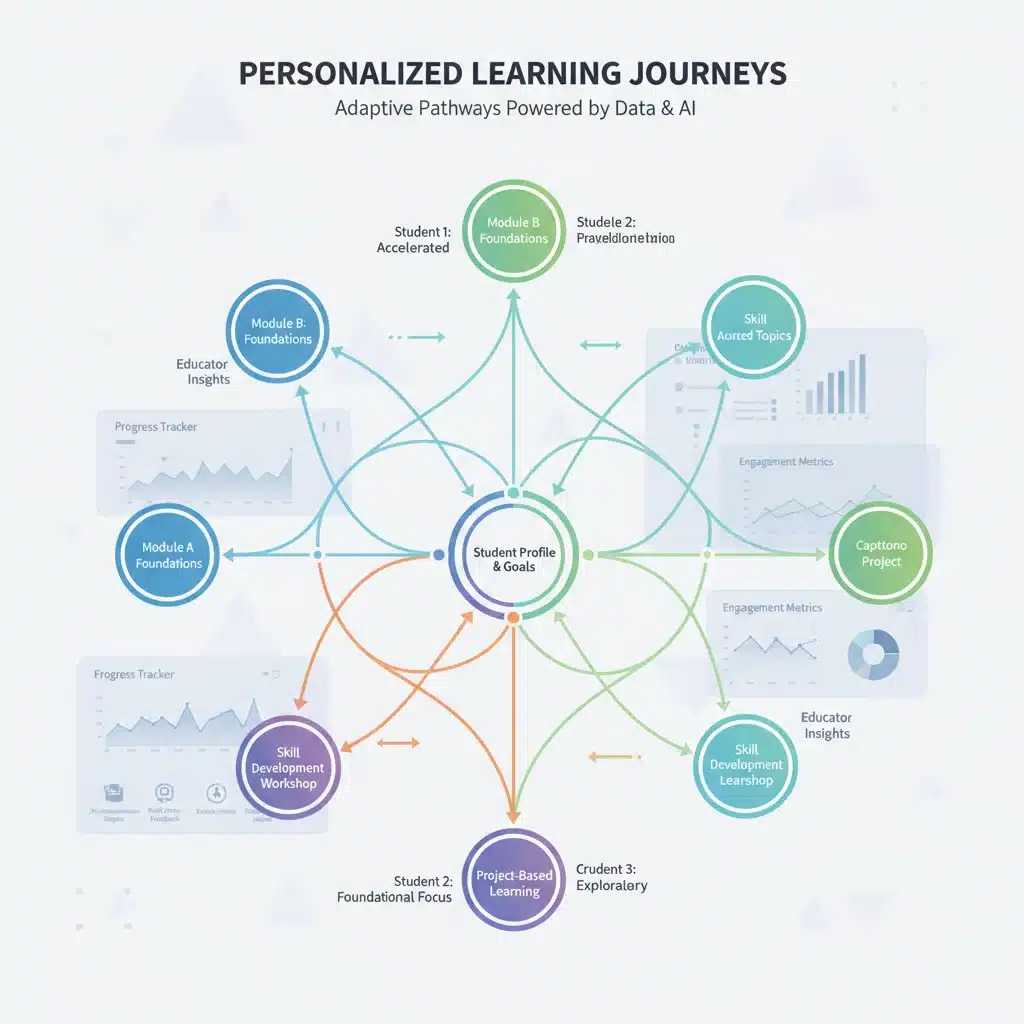
One of the most significant applications of AI in education is its capacity for personalization. Traditional classrooms often struggle to cater to the diverse learning styles, paces, and needs of individual students. AI-powered platforms can analyze a student’s performance, identify strengths and weaknesses, and then dynamically adapt the curriculum and instructional methods to create a truly personalized learning pathway. Imagine an AI tutor that understands precisely why a student is struggling with a particular math concept and then provides targeted exercises, alternative explanations, or even connects them with relevant external resources, all in real-time. This level of individualized attention, once a luxury, is becoming increasingly accessible through AI.
Automated Assessment and Feedback
For educators, grading assignments and providing constructive feedback can be incredibly time-consuming. AI and ML algorithms are becoming increasingly sophisticated in automating these processes. From grading multiple-choice questions and short answers to even evaluating essays for grammar, style, and content, AI can significantly reduce the administrative burden on teachers. More importantly, AI can provide immediate, detailed feedback to students, allowing them to learn from their mistakes much faster than waiting for a teacher’s review. This instant feedback loop is crucial for reinforcing learning and preventing misconceptions from solidifying.
Content Creation and Curation
AI can also assist in generating and curating educational content. Imagine AI tools that can create customized quizzes, practice problems, or even generate explanations of complex topics tailored to a student’s reading level and prior knowledge. Furthermore, AI can sift through vast databases of educational resources, identifying the most relevant and high-quality materials for a specific lesson or student need, saving teachers countless hours of searching.
Predictive Analytics for Early Intervention
Beyond direct instruction, AI’s analytical capabilities are invaluable for identifying students at risk of falling behind. By analyzing various data points, such as attendance, assignment completion rates, performance trends, and engagement levels, AI can flag students who might need early intervention. This proactive approach allows educators to provide support before problems escalate, significantly improving student retention and success rates. The ability to predict and prevent academic struggles is a game-changer for educational equity.
Challenges and Ethical Considerations
While the benefits are clear, the integration of AI also presents challenges. Data privacy and security are paramount concerns, as these systems collect vast amounts of student data. Ethical considerations around algorithmic bias, ensuring fairness in assessment, and the potential for over-reliance on AI must also be carefully addressed. Training educators to effectively leverage AI tools and interpret their outputs will be crucial for successful implementation. Moreover, striking the right balance between AI-driven personalization and the invaluable human element of teaching will be a continuous discussion. The goal is to augment, not replace, the role of the teacher.
2. Virtual Reality (VR) and Augmented Reality (AR): Immersive Learning Experiences
Virtual Reality (VR) and Augmented Reality (AR) are poised to transform passive learning into active, immersive experiences, making them crucial among emerging educational technologies. By 2026, these technologies will move beyond novelty status to become integral tools for engaging students and making abstract concepts tangible.
Bringing Lessons to Life with VR
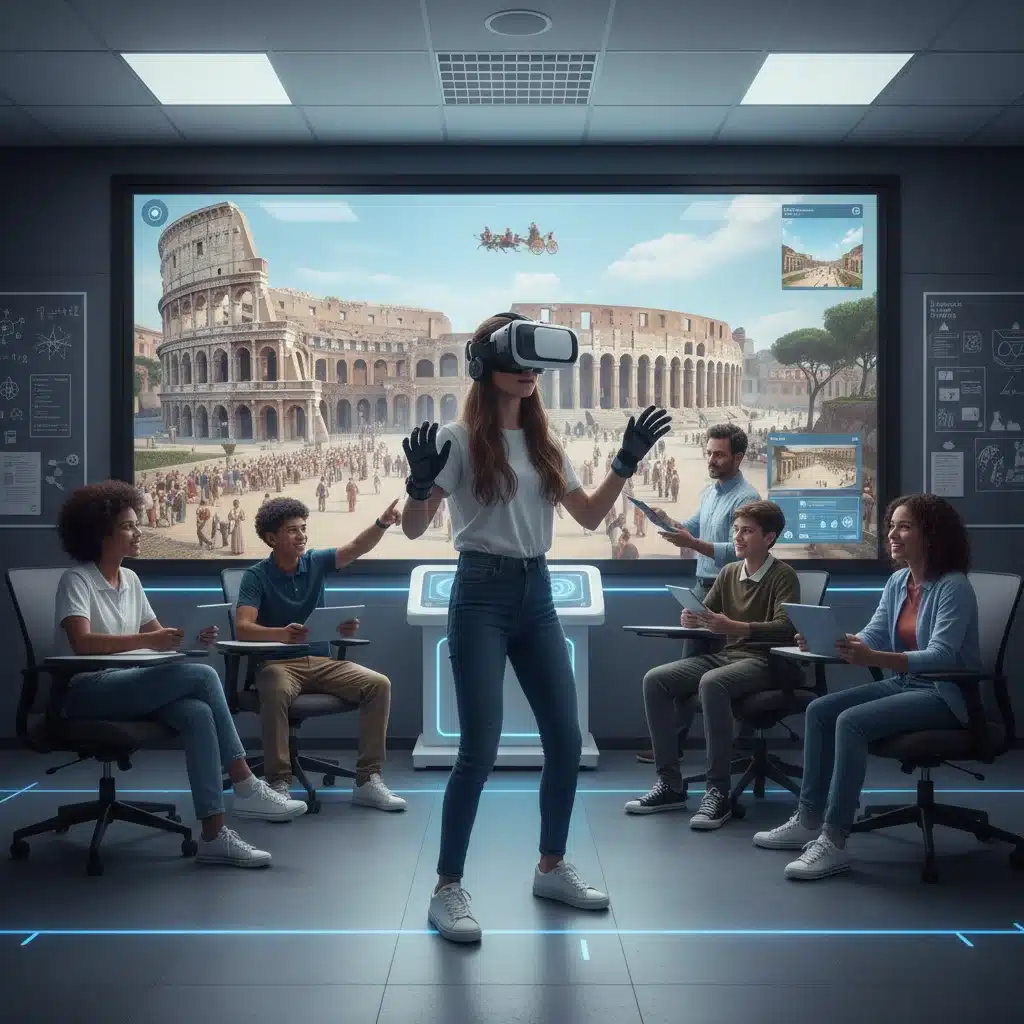
VR offers an unparalleled ability to transport students to different times and places, making learning incredibly vivid and memorable. Imagine studying ancient Rome by walking through a meticulously reconstructed Colosseum, or exploring the human circulatory system from within. VR simulations can provide hands-on experiences that are otherwise impossible, too dangerous, or too expensive in a traditional classroom setting. For science students, VR labs can offer safe environments to conduct experiments, while history students can witness pivotal moments firsthand. This experiential learning significantly enhances comprehension and retention, fostering a deeper connection to the subject matter.
Augmenting Reality for Enhanced Understanding
AR, unlike VR, overlays digital information onto the real world. This technology has immense potential for contextual learning. Students could use AR-enabled tablets or smartphones to scan objects in their environment – a plant in the schoolyard, a painting in an art class, or even a page in a textbook – and instantly access additional information, 3D models, or interactive explanations. Imagine an AR app that shows the internal workings of an engine when pointed at a physical model, or one that projects constellations onto the night sky with detailed information. AR bridges the gap between the physical and digital worlds, making learning more interactive and relevant to students’ immediate surroundings.
Training and Skill Development
Beyond academic subjects, VR and AR are proving invaluable for vocational training and skill development. Students can practice complex procedures in a risk-free virtual environment, whether it’s performing a surgical operation, repairing intricate machinery, or conducting a chemistry experiment. This allows for repeated practice and mastery of skills before transitioning to real-world applications, significantly reducing errors and improving confidence. The ability to simulate real-world scenarios within a controlled digital space is a powerful advantage for preparing students for future careers.
Accessibility and Inclusivity
VR and AR also hold promise for making education more accessible. For students with physical limitations, VR can provide experiences they might otherwise be unable to access. For those with different learning styles, the highly visual and interactive nature of these technologies can be particularly effective. Creating inclusive virtual environments that cater to diverse needs is an ongoing area of development, with the potential to break down traditional barriers to learning.
Implementation Hurdles
Despite their potential, widespread adoption of VR and AR faces challenges. The cost of hardware can be a barrier for many schools, although prices are steadily decreasing. The development of high-quality, educationally sound content is also crucial. Furthermore, educators need training on how to effectively integrate these tools into their pedagogy, ensuring they are used to enhance learning rather than just as engaging distractions. Addressing motion sickness in VR experiences and ensuring equitable access to devices will also be key to successful integration.
3. Personalized Learning Platforms and Adaptive Learning Systems
While AI underpins many personalized learning approaches, the dedicated development of comprehensive personalized learning platforms and adaptive learning systems forms its own distinct category within emerging educational technologies. These systems are designed from the ground up to cater to individual student needs, offering a flexible and responsive educational experience.
Tailored Educational Journeys
Personalized learning platforms move beyond a one-size-fits-all curriculum, allowing each student to progress at their own pace and through a path best suited to their learning style and goals. These platforms constantly assess student understanding and adjust the content, difficulty, and instructional methods accordingly. If a student grasps a concept quickly, the system can provide more advanced material; if they struggle, it can offer remedial exercises or different explanations. This adaptive nature ensures that every student is challenged appropriately, preventing both boredom and frustration.
Data-Driven Insights for Educators
A significant benefit of these platforms is the wealth of data they provide to educators. Teachers can gain real-time insights into each student’s progress, identifying common areas of difficulty for the class, or pinpointing individual students who need extra support. This data allows teachers to make more informed instructional decisions, tailor their classroom activities, and provide targeted interventions. Instead of spending hours grading, teachers can dedicate more time to direct instruction and mentorship, guided by precise data points.
Flexible Learning Environments
Personalized learning platforms also support more flexible learning environments, including blended learning models where students learn partly online and partly in a traditional classroom, or fully remote learning. Students can access materials and lessons anytime, anywhere, fostering greater autonomy and self-directed learning. This flexibility is particularly valuable for diverse student populations, including those with varying schedules, geographical distances, or specific learning accommodations.
Student Agency and Engagement
By giving students more control over their learning journey, these platforms can significantly boost student agency and engagement. When students understand why they are learning something and how it relates to their personal goals, they are more motivated. The ability to choose learning activities, explore topics of interest in depth, and receive immediate feedback fosters a sense of ownership over their education, leading to deeper learning and greater academic satisfaction.
Challenges of Implementation and Equity
Implementing personalized learning platforms effectively requires significant planning and resources. Ensuring that all students have equitable access to devices and reliable internet connectivity is a foundational challenge. Training teachers to transition from a traditional instruction model to a facilitator role, guiding students through personalized paths, is also critical. Furthermore, the quality and breadth of content available on these platforms must be robust to truly cater to diverse learning needs. There’s also a need to ensure that personalization doesn’t lead to isolation, and that collaborative learning opportunities remain a core part of the educational experience.
4. Blockchain Technology in Education: Secure Records and Credentialing
While perhaps less directly involved in daily classroom instruction than AI or VR, blockchain technology represents a foundational shift in how educational data is managed and credentials are verified, making it a powerful, albeit often unseen, force among emerging educational technologies. By 2026, its applications are expected to streamline administrative processes and enhance trust in academic achievements.
Secure and Verifiable Academic Records
One of the most compelling uses of blockchain in education is the creation of secure, tamper-proof academic records and digital credentials. Imagine a world where diplomas, transcripts, and certifications are stored on a blockchain, making them instantly verifiable and immune to fraud. This eliminates the need for institutions to constantly verify physical documents and provides individuals with a permanent, accessible record of their achievements. Students could easily share their verified credentials with potential employers or other educational institutions, streamlining application processes and building trust in their qualifications.
Micro-credentialing and Skill Badges
The rise of lifelong learning and skill-based employment demands a more granular approach to credentialing than traditional degrees alone. Blockchain is perfectly suited for micro-credentialing and digital skill badges. As individuals acquire new skills through short courses, workshops, or online modules, these achievements can be recorded on a blockchain, providing a verifiable record of specific competencies. This allows employers to more accurately assess candidates’ skills and helps individuals build a dynamic, verifiable portfolio of their learning journey, moving beyond static resumes.
Intellectual Property Protection for Educational Content
For educators and content creators, blockchain can offer enhanced protection for their intellectual property. Educational materials, research papers, and course designs can be timestamped and recorded on a blockchain, providing irrefutable proof of ownership and creation. This can help prevent plagiarism and ensure that creators are properly attributed and compensated for their work.
Decentralized Learning Networks
In the long term, blockchain could facilitate decentralized learning networks where students can access educational content, earn credentials, and even contribute to learning resources without reliance on a single central authority. This could foster greater collaboration, transparency, and innovation in educational content development and delivery, potentially democratizing access to high-quality education globally.
Challenges of Blockchain Adoption
The main challenges for blockchain in education include the complexity of implementation, the need for standardized protocols across institutions, and the initial investment in infrastructure. Furthermore, a clear understanding of the technology’s benefits and limitations among educational stakeholders is essential for widespread adoption. While the technology offers robust security, educating users on how to manage their digital wallets and private keys will also be important. Despite these hurdles, the long-term benefits in terms of security, efficiency, and trust are significant, positioning blockchain as a transformative force in the administrative and credentialing aspects of education.
The Interconnected Future of Learning: Synergy of Emerging Educational Technologies
It’s crucial to understand that these emerging educational technologies will not operate in isolation. Their true power lies in their synergy. Imagine an AI-powered personalized learning platform that integrates VR simulations for experiential learning, while all student progress and achievements are securely recorded on a blockchain. This interconnected ecosystem could create a learning environment that is:
- Hyper-Personalized: Learning paths dynamically adapt to each student’s needs, strengths, and interests, guided by AI.
- Deeply Engaging: VR and AR transform abstract concepts into tangible, immersive experiences, fostering curiosity and retention.
- Highly Efficient: AI automates administrative tasks and provides immediate feedback, freeing up educators to focus on mentorship and deeper instruction.
- Transparent and Trustworthy: Blockchain ensures the integrity of academic records and credentials, empowering students with verifiable proof of their achievements.
- Globally Accessible: These technologies can break down geographical barriers, offering high-quality education to a wider audience.
The role of the educator will also evolve, shifting from a primary knowledge dispenser to a facilitator, mentor, and guide. Teachers will leverage these tools to understand their students better, design more impactful learning experiences, and foster critical thinking, creativity, and collaborative skills that are essential for the 21st century. Professional development for educators will be paramount to ensure they are equipped to navigate and harness the full potential of these advanced tools.
Preparing for 2026: A Call to Action for Education Stakeholders
The rapid pace of technological innovation means that U.S. education stakeholders – including school districts, universities, technology providers, parents, and government bodies – must proactively plan for the integration of these emerging educational technologies. This involves:
- Strategic Investment: Allocating resources not just for technology acquisition but also for infrastructure, professional development, and ongoing support.
- Pilot Programs and Research: Implementing pilot programs to test and refine the effectiveness of new technologies in diverse educational settings.
- Curriculum Adaptation: Evolving curricula to integrate these technologies seamlessly and to teach the digital literacy skills necessary to thrive in an AI-driven world.
- Ethical Frameworks: Developing robust ethical guidelines and policies concerning data privacy, algorithmic bias, and equitable access.
- Collaboration: Fostering partnerships between educational institutions, technology developers, and industry experts to co-create solutions that truly meet the needs of learners.
The journey towards a technologically advanced educational future is not without its complexities. Issues of digital divide, teacher training, and the sheer pace of change will require continuous attention and adaptation. However, the potential rewards – a more engaging, personalized, and effective learning experience for all students – are too significant to ignore. By embracing these emerging educational technologies with foresight and strategic planning, U.S. classrooms in 2026 can truly become vibrant hubs of innovation, preparing students not just for the jobs of tomorrow, but for a lifetime of continuous learning and adaptation in an ever-evolving world.
The future of education is not just about adopting new tools; it’s about reimagining what learning can be. It’s about empowering every student to reach their full potential, fostering curiosity, and equipping them with the skills to navigate a complex and rapidly changing global landscape. The emerging educational technologies discussed here are not merely gadgets; they are catalysts for a profound and positive transformation in how we educate and inspire the next generation.