Veteran Benefits 2025: Housing, Education, Healthcare Updates
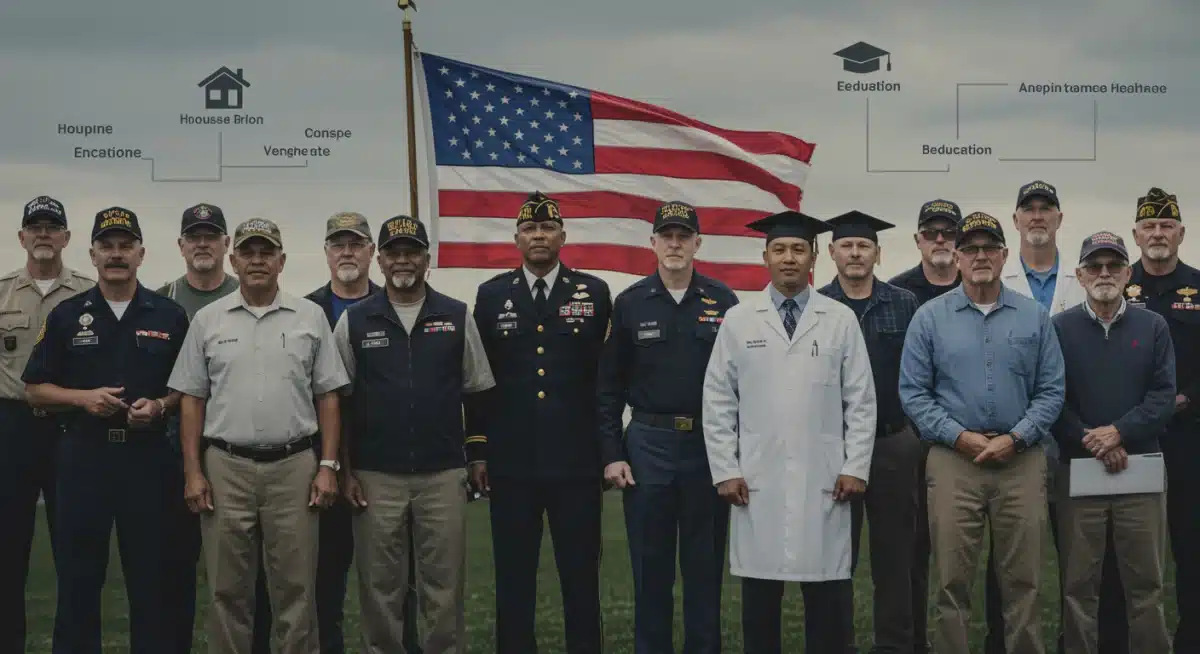
Veterans and their families in the United States can expect significant updates to housing, education, and healthcare programs in 2025, aimed at enhancing support and accessibility across various critical areas.
As we approach 2025, understanding the evolving landscape of veteran benefits 2025 is crucial for those who have served our nation and their families. These benefits, designed to support veterans in various aspects of civilian life, are continually refined to meet contemporary needs. From securing a home to pursuing higher education or accessing quality healthcare, staying informed about these updates can make a substantial difference in planning for the future.
Understanding the Landscape of Veteran Benefits in 2025
The Department of Veterans Affairs (VA) continuously works to improve and expand its offerings, ensuring that veterans receive the support they have earned. The year 2025 brings with it several anticipated changes and enhancements across key benefit categories, reflecting a commitment to address the diverse challenges veterans face.
These updates are often influenced by legislative actions, technological advancements, and a deeper understanding of veteran needs. It is not merely about maintaining existing programs but actively seeking ways to make them more effective, accessible, and responsive.
Legislative Impacts on Benefits
Recent legislative efforts have laid the groundwork for many of the changes we will see in 2025. These acts aim to streamline processes, expand eligibility, and introduce new initiatives.
- PACT Act Implementation: Continued expansion of benefits for veterans exposed to toxic substances.
- Homelessness Prevention: New funding and programs to combat veteran homelessness.
- Mental Health Services: Enhanced access and resources for mental health and suicide prevention.
Understanding these foundational legislative changes provides a clearer picture of the direction veteran support is heading. This proactive approach ensures that benefits remain relevant and impactful for a new generation of veterans.
Ultimately, the goal is to create a more integrated and supportive system that empowers veterans to thrive post-service. These changes are not just administrative; they represent a tangible commitment to the well-being of our veteran community.
Housing Assistance: Navigating VA Loans and Support Programs
Housing remains a cornerstone of stability for many veterans, and 2025 is set to bring important clarifications and potential improvements to VA housing benefits. These programs are vital for helping veterans achieve homeownership or secure stable housing.
The VA loan program, renowned for its no down payment requirement and competitive interest rates, continues to be a powerful tool. However, understanding the nuances of eligibility and recent changes is key to maximizing its potential.
Key Updates to VA Home Loans
While the core structure of VA loans remains strong, 2025 may see adjustments to loan limits, funding fees, and eligibility criteria for certain types of properties. These changes typically reflect market conditions and legislative directives.
- Adjusted Loan Limits: Potential increases in county-specific loan limits, allowing for more purchasing power.
- Funding Fee Revisions: Possible slight adjustments to the VA funding fee, though exemptions for disabled veterans are expected to remain.
- Energy-Efficient Upgrades: New incentives or considerations for energy-efficient home improvements.
Beyond the traditional VA loan, other housing support programs are also evolving. These include grants for adaptive housing for disabled veterans and initiatives aimed at preventing homelessness among the veteran population.

The VA’s commitment to ensuring veterans have safe and affordable housing is unwavering. These updates aim to make the process more seamless and accessible, addressing common hurdles veterans face in the housing market.
Education Programs: Enhancements to the GI Bill and Career Training
Education is a powerful pathway to civilian success, and VA education benefits, primarily through the GI Bill, are undergoing continuous review and enhancement for 2025. These programs empower veterans to pursue higher education, vocational training, and career development.
The goal is to ensure that veterans have the resources to acquire new skills, complete degrees, and transition effectively into the workforce. Keeping abreast of changes to eligibility, covered programs, and benefit amounts is essential.
Post-9/11 GI Bill Modifications
While the Post-9/11 GI Bill remains the flagship education benefit, 2025 could introduce modifications designed to expand its utility or streamline its administration. These might include changes related to online learning or specific high-demand fields.
- Expanded Program Eligibility: Potential inclusion of more non-traditional educational programs or certifications.
- Online Learning Support: Continued adaptation of benefits for fully online and hybrid learning environments.
- Benefit Transferability: Clarifications or minor adjustments to the transferability of benefits to dependents.
Beyond the GI Bill, the Veteran Readiness and Employment (VR&E) program, also known as Chapter 31, is an invaluable resource for veterans with service-connected disabilities. It provides personalized support for career planning, training, and job placement.
These educational benefits are not just about tuition; they often include stipends for housing, books, and supplies, making education a more attainable goal for veterans and their families. The emphasis for 2025 is on flexibility and relevance to the modern job market.
Healthcare Services: Expanding Access and Specialized Care
Access to comprehensive and high-quality healthcare is a top priority for veterans, and 2025 will see ongoing efforts to expand and refine VA healthcare services. This includes addressing physical health, mental health, and specialized care needs.
The VA healthcare system is one of the largest integrated healthcare systems in the country, constantly adapting to provide cutting-edge treatment and compassionate care. Understanding the latest developments in eligibility and service offerings is vital.
PACT Act and Toxic Exposure Healthcare
The Honoring Our Promise to Address Comprehensive Toxics (PACT) Act has already significantly expanded healthcare and benefits for veterans exposed to toxic substances during military service. 2025 will involve the continued implementation and broadening of these provisions.
- Expanded Eligibility: More veterans exposed to burn pits, Agent Orange, and other toxins will gain access to VA care.
- Presumptive Conditions: An increase in conditions presumed to be service-connected, simplifying the claims process.
- Toxic Exposure Screening: Continued mandatory screenings for all enrolled veterans to identify potential exposures early.
In addition to toxic exposure, mental health services remain a critical area of focus. The VA is investing in more mental health professionals, telehealth options, and community-based programs to ensure timely and effective support for veterans struggling with mental health challenges.
Specialized care for women veterans, homeless veterans, and those with specific combat-related injuries is also being enhanced. The VA’s goal is to provide a holistic approach to veteran health, encompassing physical, mental, and social well-being.
Benefits for Spouses and Dependents: Supporting Military Families
The support structure for veterans extends to their families, with various benefits available to spouses and dependents. These programs recognize the sacrifices made by military families and aim to provide stability and opportunities.
Understanding the eligibility criteria and scope of these benefits for 2025 is crucial for military spouses seeking educational opportunities, healthcare, or financial assistance, and for dependents planning their future.
Dependency and Indemnity Compensation (DIC)
DIC provides monthly benefits to eligible survivors of service members who died on active duty or veterans whose death resulted from a service-related injury or disease. While the core benefit remains, annual cost-of-living adjustments (COLAs) are common.
- Annual COLA Adjustments: Expected increases to DIC rates to keep pace with inflation.
- Eligibility Clarifications: Potential minor refinements to eligibility for specific survivor categories.
- Application Streamlining: Ongoing efforts to simplify the application process for survivors.
Education benefits, such as the Survivors’ and Dependents’ Educational Assistance (DEA) program, also play a vital role. This program offers financial assistance for education and training to eligible dependents of veterans who are permanently and totally disabled due to a service-connected disability or who died while on active duty or as a result of a service-connected disability.
Healthcare for dependents is often provided through TRICARE, a separate Department of Defense program, but it’s essential for families to understand how VA benefits for the veteran might interact with other family support systems. The aim is to provide a robust safety net for the entire military family unit.
Navigating the Application Process and Resources for 2025
Understanding the available benefits is only the first step; successfully navigating the application process is equally important. For 2025, the VA continues to refine its digital platforms and outreach efforts to make applying for benefits more straightforward and accessible.
Veterans are encouraged to utilize official VA resources and seek assistance from accredited representatives to ensure their applications are complete and accurate. Proactive engagement can significantly reduce delays.
Digital Tools and Online Portals
The VA’s online portals, such as VA.gov, are becoming increasingly sophisticated, offering veterans a centralized hub to manage their benefits, track claims, and access information. These digital tools are continuously updated to enhance user experience.
- Improved User Interface: Easier navigation and more intuitive design for VA.gov and related apps.
- Enhanced Claim Tracking: Real-time updates and notifications for submitted claims and appeals.
- Telehealth Integration: Seamless access to virtual appointments and medical records through online platforms.
Beyond digital resources, local VA facilities, veteran service organizations (VSOs), and accredited claims agents provide invaluable assistance. These experts can help veterans understand their eligibility, gather necessary documentation, and submit their claims correctly.
It is always advisable to start the application process early and to keep thorough records of all submitted documents and communications with the VA. Staying informed and utilizing available support systems will be key to successfully accessing veteran benefits in 2025.
| Key Benefit Area | 2025 Update Focus |
|---|---|
| Housing Assistance | Adjusted VA loan limits, enhanced adaptive housing grants, homelessness prevention. |
| Education Programs | Expanded GI Bill eligibility for non-traditional programs, continued online learning support. |
| Healthcare Services | Full PACT Act implementation, expanded toxic exposure care, enhanced mental health access. |
| Family Support | Annual COLA for DIC, educational assistance for dependents, streamlined application processes. |
Frequently Asked Questions About Veteran Benefits in 2025
For 2025, VA housing benefits are anticipated to include adjusted loan limits based on market conditions, potential revisions to funding fees, and new incentives for energy-efficient home improvements. The focus remains on making homeownership more accessible and sustainable for veterans.
The Post-9/11 GI Bill in 2025 is expected to expand eligibility to include more non-traditional educational programs and certifications. There will also be continued adaptation of benefits to support online and hybrid learning models, ensuring flexibility for veteran students.
Veterans in 2025 can expect full implementation of the PACT Act, significantly expanding healthcare for toxic exposures and increasing presumptive service-connected conditions. Enhanced mental health services, including telehealth and community programs, will also be a major focus for the VA.
For 2025, military spouses and dependents can anticipate annual cost-of-living adjustments for Dependency and Indemnity Compensation (DIC). Educational assistance programs like DEA will continue to provide vital support, with ongoing efforts to streamline application processes for survivors.
Veterans should regularly check official VA resources like VA.gov, subscribe to VA newsletters, and consult with accredited Veteran Service Organizations (VSOs). Utilizing online portals for claim tracking and seeking assistance from qualified representatives ensures access to the latest information.
Conclusion
The year 2025 represents a continued commitment to enhancing the lives of our nation’s veterans and their families through comprehensive and evolving benefit programs. From critical housing assistance and robust educational opportunities to expanded healthcare access, the updates reflect an ongoing effort to address current needs and anticipate future challenges. Staying informed about these changes, leveraging digital resources, and seeking guidance from accredited organizations are paramount for veterans to fully utilize the support they have rightfully earned. These essential updates underscore a proactive approach to veteran welfare, ensuring that those who have served receive the care, stability, and opportunities necessary for a thriving post-military life.