SEC Crypto Rules 2026: Navigating New Digital Asset Regulations

Understanding the SEC’s New Cryptocurrency Investment Rules: A Deep Dive into the May 2026 Changes
The financial landscape is constantly evolving, and perhaps no sector has seen more rapid transformation in recent years than cryptocurrency. As digital assets gain mainstream acceptance, regulatory bodies worldwide are striving to establish frameworks that ensure market integrity, protect investors, and mitigate systemic risks. In a significant move set to redefine the future of digital asset investments, the U.S. Securities and Exchange Commission (SEC) has announced a new set of comprehensive rules for cryptocurrency investments, slated to take effect in May 2026. These forthcoming SEC Crypto Rules aim to bring greater clarity and oversight to a market often characterized by its volatility and novel operational structures. This article will delve into the intricacies of these new regulations, exploring their potential impact on investors, institutions, and the broader cryptocurrency ecosystem.
The Genesis of New SEC Crypto Rules: Why Now?
The journey towards robust cryptocurrency regulation has been a long and often contentious one. For years, the SEC, under various leaderships, has signaled its intention to exert greater control over the digital asset space. The rationale behind these new SEC Crypto Rules is multifaceted. Firstly, the exponential growth of the cryptocurrency market, coupled with its increasing integration into traditional finance, necessitates a more structured regulatory approach. The sheer volume of capital flowing into digital assets, from retail investors to institutional giants, has amplified concerns about consumer protection, market manipulation, and financial stability.
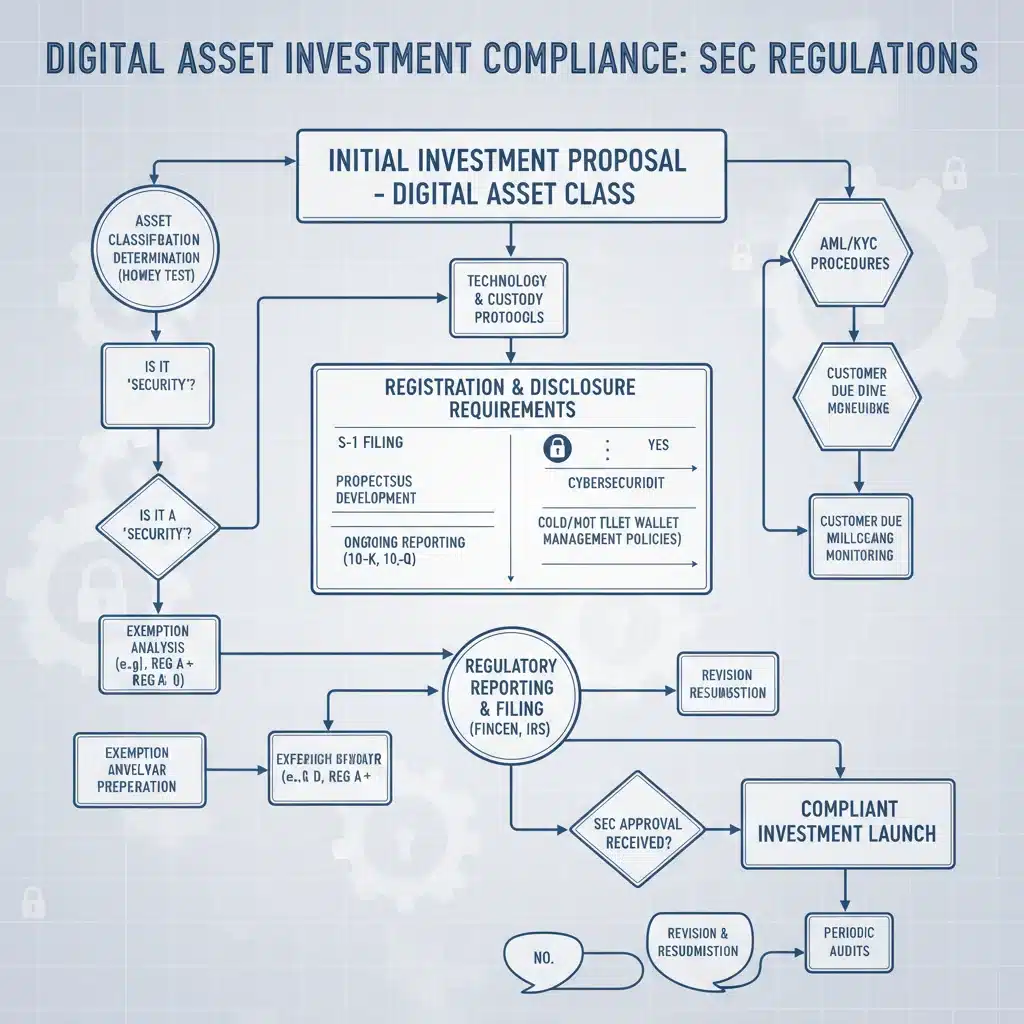
Secondly, the inherent characteristics of some digital assets, particularly those that exhibit traits similar to traditional securities, have pushed the SEC to clarify its jurisdiction. The ‘Howey Test,’ a long-standing legal precedent used to determine what constitutes an ‘investment contract,’ has frequently been applied to cryptocurrencies, leading to ongoing debates and legal challenges. The new rules seek to provide more definitive guidance on when a digital asset falls under the purview of securities law, impacting how these assets are offered, sold, and traded.
Furthermore, recent high-profile bankruptcies and instances of fraud within the crypto industry have underscored the urgent need for enhanced oversight. These events have exposed vulnerabilities in existing market structures and highlighted the lack of uniform standards for custody, disclosure, and operational resilience. The May 2026 implementation of the SEC Crypto Rules is a direct response to these challenges, aiming to instill greater confidence and stability in the digital asset market.
Key Provisions of the New SEC Crypto Rules Effective May 2026
While the full text of the regulations is extensive, several core provisions stand out as particularly impactful. These rules are designed to cover a broad spectrum of activities, from the issuance of digital assets to their trading and custody. Understanding these key components is crucial for anyone operating within or looking to enter the crypto market.
1. Enhanced Disclosure Requirements for Digital Asset Offerings
One of the foundational pillars of the new SEC Crypto Rules is a significant increase in disclosure requirements for entities offering digital assets. Issuers will be mandated to provide comprehensive information to potential investors, akin to what is required for traditional securities. This includes detailed whitepapers outlining the project’s technology, use case, team, tokenomics, and risk factors. The goal is to ensure that investors have access to all material information necessary to make informed decisions, thereby reducing information asymmetry and protecting against deceptive practices.
This provision will likely necessitate a more rigorous due diligence process for new digital asset projects and could impact the speed and ease with which new tokens are launched. Companies will need to invest more in legal and compliance teams to meet these stringent disclosure standards.
2. Stricter Custody Rules for Qualified Custodians
The new rules introduce more stringent requirements for qualified custodians holding digital assets on behalf of clients. This is a direct response to concerns about the security and segregation of client funds in the event of an exchange or platform insolvency. Custodians will be required to demonstrate robust internal controls, cybersecurity measures, and capital adequacy. The rules may also mandate specific types of insurance coverage and regular independent audits to verify compliance.
This provision is particularly relevant for institutional investors and investment advisers who manage significant digital asset portfolios. It aims to reduce counterparty risk and enhance the overall safety of client assets, potentially leading to a consolidation of custodial services among well-capitalized and compliant entities.
3. Redefining ‘Security’ for Digital Assets: The 5% Threshold
Perhaps one of the most talked-about aspects of the new SEC Crypto Rules is the introduction of a specific threshold for determining when a digital asset might be considered a security. While the exact wording and criteria are complex, the regulation specifies that if a single entity or related group of entities holds or controls more than 5% of the total supply of a digital asset, and that asset exhibits certain characteristics typically associated with an investment contract (e.g., expectation of profit from the efforts of others), it could be presumed to be a security. This 5% threshold is a significant development, moving beyond the often-ambiguous Howey Test by introducing a quantitative measure.
This particular provision could have profound implications for founders, large holders, and even decentralized autonomous organizations (DAOs). It may force projects to re-evaluate their token distribution models and governance structures to avoid falling under securities regulation, which entails significant compliance burdens. The aim is to prevent undue concentration of power and influence that could resemble traditional corporate control, thereby subjecting these assets to the same investor protections as conventional securities.
4. Registration Requirements for Digital Asset Trading Platforms
The SEC Crypto Rules will also likely mandate that platforms facilitating the trading of digital assets that qualify as securities register as national securities exchanges or alternative trading systems (ATSs). This would subject these platforms to rigorous regulatory oversight, including rules around market surveillance, order handling, and capital requirements. The intent is to bring transparency and fairness to digital asset trading, mirroring the regulatory environment of traditional stock exchanges.
This could significantly impact decentralized exchanges (DEXs) and other peer-to-peer trading protocols, forcing them to adapt their models or face potential enforcement actions. The distinction between a ‘utility token’ and a ‘security token’ will become even more critical in this context.
5. Anti-Fraud and Market Manipulation Provisions
Building upon existing securities laws, the new SEC Crypto Rules will explicitly extend anti-fraud and market manipulation provisions to the digital asset space. This means that activities such as ‘wash trading,’ ‘pump-and-dump’ schemes, and insider trading with cryptocurrencies will be subject to the full force of SEC enforcement. The commission aims to leverage advanced analytical tools and data surveillance to identify and prosecute illicit activities, fostering a fairer and more trustworthy market environment.

Impact on Investors: What You Need to Know Before May 2026
For individual and institutional investors, the new SEC Crypto Rules will introduce both challenges and opportunities. Understanding these implications is key to navigating the evolving digital asset landscape successfully.
Increased Investor Protection and Transparency
One of the primary benefits for investors is enhanced protection. With stricter disclosure requirements, clearer definitions of securities, and more robust custody rules, investors will theoretically have access to more reliable information and greater security for their assets. This could lead to increased confidence in the crypto market, potentially attracting a new wave of cautious investors who were previously deterred by the lack of regulation.
Potential for Market Maturation and Institutional Adoption
The regulatory clarity provided by the SEC Crypto Rules could pave the way for greater institutional adoption of digital assets. Banks, hedge funds, and asset managers often require clear regulatory guidelines before committing significant capital to new asset classes. With the SEC’s stamp of approval, albeit in the form of strict oversight, more traditional financial institutions may feel comfortable entering the crypto space, leading to increased liquidity and market stability.
Compliance Costs and Market Consolidation
However, the new rules will also impose significant compliance costs on cryptocurrency projects, exchanges, and custodians. Smaller entities may struggle to meet these rigorous requirements, potentially leading to market consolidation where larger, well-funded players dominate. This could reduce competition in certain segments of the market, though it might also lead to higher quality and more secure services.
Implications for Decentralization
The 5% threshold for security classification poses a particular challenge for projects that aim for maximal decentralization. If a project’s founders or early investors collectively hold more than 5% of the total token supply, even temporarily, it could trigger securities classification. This might force projects to accelerate decentralization efforts, implement vesting schedules, or explore novel distribution mechanisms to avoid falling under the SEC’s stricter regime. The tension between regulatory oversight and the ethos of decentralization will undoubtedly be a central theme in the coming years.
Preparing for the May 2026 Deadline: Strategies for Market Participants
The May 2026 effective date for the SEC Crypto Rules may seem distant, but the complexities of compliance mean that market participants should begin preparations immediately. Proactive engagement with these new regulations will be crucial for seamless adaptation.
For Digital Asset Issuers and Projects
- Review Tokenomics and Governance: Projects should meticulously review their token distribution, vesting schedules, and governance structures to assess potential exposure to the 5% security threshold. Consider strategies for further decentralization.
- Enhance Disclosure Practices: Begin preparing comprehensive disclosure documents that meet the anticipated SEC standards. This includes detailed whitepapers, risk assessments, and financial transparency.
- Legal and Compliance Audit: Engage legal counsel specializing in securities and blockchain law to conduct a thorough audit of current and proposed operations against the new regulatory framework.
For Exchanges and Trading Platforms
- Assess Registration Requirements: Determine whether the digital assets traded on your platform are likely to be classified as securities under the new rules and plan for potential registration as an ATS or exchange.
- Strengthen Market Surveillance: Invest in advanced market surveillance tools and personnel to detect and prevent market manipulation and fraudulent activities, aligning with SEC expectations.
- Custody Solutions: If offering custody, ensure your systems and processes meet the heightened standards for qualified custodians, including segregation of assets, cybersecurity, and insurance.
For Investors and Investment Advisers
- Due Diligence on Assets: Conduct enhanced due diligence on digital assets, scrutinizing their compliance readiness, disclosure practices, and tokenomics in light of the new regulations.
- Verify Custody Arrangements: For institutional investors, ensure that any third-party custodians used are fully compliant with the new SEC custody rules.
- Stay Informed: Continuously monitor SEC guidance and interpretations of the new rules as they evolve. Engage with financial advisors who are knowledgeable about digital asset regulation.
The Broader Implications: A Path Towards Regulatory Convergence?
The implementation of the SEC Crypto Rules in May 2026 marks a pivotal moment, not just for the U.S. market, but for the global regulatory landscape. It signals a growing trend towards regulatory convergence, where digital assets are increasingly brought under frameworks traditionally applied to conventional financial instruments. This approach, while challenging for the ‘wild west’ ethos of early crypto, is arguably necessary for the industry to achieve its full potential and gain widespread trust.
Other jurisdictions are also grappling with similar challenges. The European Union’s Markets in Crypto-Assets (MiCA) regulation, for example, shares some common goals with the SEC’s approach, focusing on consumer protection, market integrity, and financial stability. As major economies establish their regulatory blueprints, there’s a possibility of greater international cooperation and harmonization of standards, which would benefit global businesses and investors.
However, the specific nuances of the SEC Crypto Rules, particularly the 5% threshold, could also create unique challenges and potentially lead to ‘regulatory arbitrage,’ where projects or investors seek jurisdictions with more favorable regulatory environments. The balance between robust oversight and fostering innovation will remain a delicate one for regulators worldwide.
Potential Challenges and Criticisms of the New SEC Crypto Rules
While the intent behind the new SEC Crypto Rules is to create a safer and more transparent market, they are not without potential challenges and criticisms. One common concern is the potential for stifling innovation. Critics argue that overly stringent regulations, especially those that classify many digital assets as securities, could deter new projects and entrepreneurs from building in the U.S., pushing innovation offshore.
Another point of contention is the practical implementation of certain rules, particularly the 5% threshold. Determining collective control and ownership in a decentralized ecosystem can be complex. Furthermore, the retroactive application of some rules to existing digital assets could create significant legal and operational headaches for projects already in circulation. The industry will be closely watching how the SEC interprets and enforces these provisions.
There’s also the ongoing debate about whether existing securities laws are truly fit for purpose when applied to novel technologies like blockchain and decentralized finance (DeFi). Some argue that a bespoke regulatory framework, specifically designed for crypto, would be more appropriate than shoehorning digital assets into outdated legal definitions. The SEC, however, maintains that its existing authority is sufficient to regulate many aspects of the crypto market.
Conclusion: Navigating the Future of Digital Asset Investments
The SEC’s new cryptocurrency investment rules, effective May 2026, represent a monumental shift in the regulatory landscape for digital assets. By introducing enhanced disclosure requirements, stricter custody standards, a quantitative threshold for security classification, and broader oversight of trading platforms, the SEC aims to bring greater order and investor protection to a rapidly expanding market. While these SEC Crypto Rules will undoubtedly present challenges for market participants, they also lay the groundwork for a more mature, transparent, and ultimately more resilient digital asset ecosystem.
For investors, projects, and service providers alike, the message is clear: proactive engagement and meticulous preparation are no longer optional but essential. The coming years will be defined by adaptation and innovation as the industry navigates this new regulatory frontier. Those who embrace these changes and build robust compliance frameworks will be best positioned to thrive in the regulated future of digital asset investments.
As May 2026 approaches, continuous monitoring of SEC guidance, legal interpretations, and industry best practices will be paramount. The evolving dialogue between regulators and innovators will ultimately shape how digital assets integrate into the global financial system, offering both unprecedented opportunities and heightened responsibilities for all involved.