2026 Federal Student Aid Changes: Your Guide to Maximizing Benefits

The landscape of higher education financing is constantly evolving, and for students and families planning for college in the coming years, understanding these shifts is paramount. The year 2026 marks a significant milestone in federal student aid, bringing forth a series of transformative changes designed to simplify the application process, expand eligibility, and potentially alter the way students borrow and repay their educational debts. These updates, stemming from legislative efforts to make college more accessible and affordable, will impact nearly every aspect of applying for and receiving financial assistance.
Navigating the complexities of federal student aid can be daunting, but with proper preparation and knowledge, you can effectively leverage these changes to your advantage. This comprehensive guide will delve into the core modifications coming in 2026, offering detailed insights into what you need to know to maximize your benefits. We’ll cover everything from the much-anticipated FAFSA simplification to expanded Pell Grant eligibility and revised student loan terms.
Our goal is to equip you with the information necessary to plan strategically, ensuring you’re well-prepared to secure the financial support needed for your academic journey. Let’s explore the critical updates to Federal Student Aid 2026.
Understanding the Big Picture: Why These Changes Matter
The upcoming changes to Federal Student Aid in 2026 are not merely minor adjustments; they represent a significant overhaul of how federal financial aid is calculated, awarded, and managed. These reforms are primarily driven by the FAFSA Simplification Act, a bipartisan effort to streamline the financial aid application process and make it more equitable. For decades, the Free Application for Federal Student Aid (FAFSA) has been a critical gateway to federal grants, scholarships, work-study programs, and student loans. However, its complexity often deterred eligible students from applying, leaving billions in aid unclaimed.
The core philosophy behind these 2026 updates is to enhance accessibility and provide clearer pathways to financial assistance for a broader range of students, particularly those from low-income backgrounds. By simplifying the application and adjusting eligibility criteria, the government aims to reduce barriers to higher education and foster a more educated workforce.
For students currently in college or those planning to enroll in the next few years, understanding these changes is not optional; it’s essential for effective financial planning. The modifications could significantly impact your Expected Family Contribution (EFC), now rebranded as the Student Aid Index (SAI), your eligibility for Pell Grants, and the terms of any federal loans you might take out. Being informed allows you to adjust your strategies, whether it’s saving more, applying for different scholarships, or choosing institutions that align better with your anticipated aid package. Let’s dive deeper into the specifics of these crucial updates to Federal Student Aid 2026.
FAFSA Simplification: A More User-Friendly Application Process
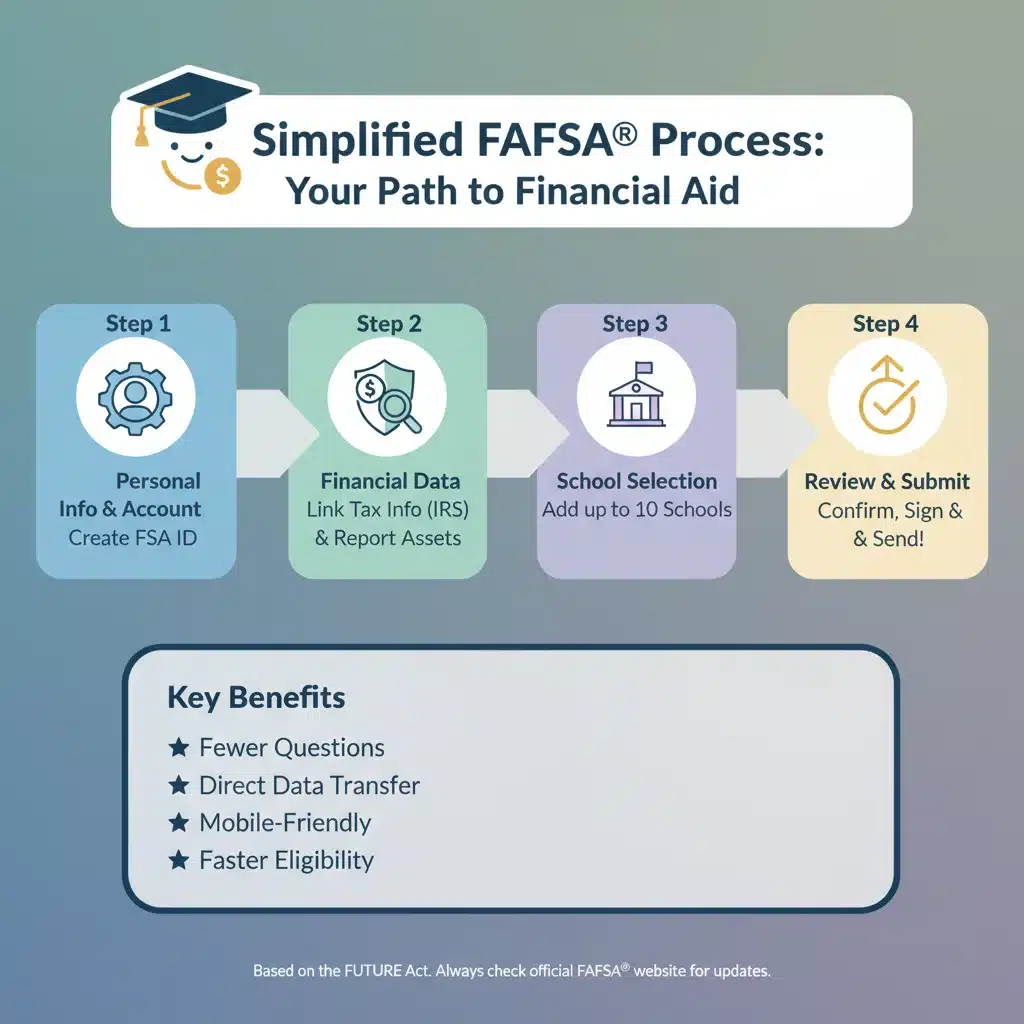
One of the most anticipated and impactful changes coming in 2026 is the radical simplification of the FAFSA. For years, students and parents have wrestled with a lengthy, often confusing application that required extensive financial documentation. The FAFSA Simplification Act aims to transform this experience, making it more intuitive and less time-consuming.
Key Changes to the FAFSA Form:
- Fewer Questions: The number of questions on the FAFSA form will be drastically reduced. While the exact final number is subject to refinement, the goal is to cut down the current hundreds of questions to a more manageable total, focusing only on essential data points. This reduction is expected to alleviate applicant burden and reduce errors.
- Direct Data Exchange with IRS: A significant improvement is the mandatory use of direct data exchange with the IRS. This means that applicants will be required to consent to the IRS directly sharing their tax information with the Department of Education. This not only streamlines the process by pre-filling many financial fields but also reduces the need for applicants to manually input sensitive tax data, minimizing errors and potential fraud.
- New Terminology: The long-standing term “Expected Family Contribution” (EFC) will be replaced with the “Student Aid Index” (SAI). While the concept remains similar—an indicator of a student’s ability to pay for college—the calculation methodology will be updated, potentially leading to different aid eligibility outcomes for many families.
- Expanded Eligibility for Federal Pell Grants: The simplified FAFSA is designed to work in conjunction with expanded Pell Grant eligibility criteria, making it easier for more students to qualify for this foundational federal grant.
- Streamlined Dependency Status Questions: The questions determining a student’s dependency status will also be simplified, aiming for clearer criteria and fewer ambiguous situations.
The implications of a simpler FAFSA are far-reaching. It is expected to increase the number of students who complete the application, thereby increasing access to federal financial aid for a broader demographic. This is particularly beneficial for first-generation college students and those from underserved communities who may have previously been intimidated by the application’s complexity. Preparing for these changes means familiarizing yourself with the new terminology and understanding the requirement for IRS data consent. The easier application process for Federal Student Aid 2026 is a major win for prospective students.
Expanded Pell Grant Eligibility: More Students Qualify
The Federal Pell Grant program is the largest federal grant program for undergraduate students with financial need, providing a foundation of financial aid that does not need to be repaid. The 2026 changes bring significant enhancements to Pell Grant eligibility, aiming to extend this crucial support to more students.
Key Changes to Pell Grant Eligibility:
- Maximum Pell Grant Eligibility Tied to Poverty Levels: For the first time, the maximum Pell Grant award will be directly linked to the federal poverty level. Students whose family income is at or below 175% of the federal poverty level (or 225% for single-parent households) will automatically qualify for the maximum Pell Grant award. This provides a clearer, more predictable pathway to receiving the highest level of grant funding.
- Minimum Pell Grant Eligibility: Conversely, a minimum Pell Grant award will be guaranteed for students whose Student Aid Index (SAI) is less than the maximum Pell Grant, but not necessarily zero. This ensures that even students with some financial capacity but still significant need receive some level of Pell Grant support.
- Increased Access for Formerly Incarcerated Individuals: The changes also restore Pell Grant eligibility for incarcerated students enrolled in approved postsecondary education programs. This is a significant policy shift aimed at reducing recidivism and promoting rehabilitation through education.
- Adjustments for Family Size and Income: The new SAI calculation will also factor in family size more favorably, particularly for larger families, which could increase Pell Grant eligibility for many households.
These expansions are designed to make higher education more affordable for a broader segment of the population, particularly those from low-income backgrounds. For students, this means a greater likelihood of receiving grant money that doesn’t need to be repaid, significantly reducing the overall cost of their education and their reliance on student loans. It’s crucial for prospective students to understand that even if they didn’t qualify for a Pell Grant in the past, the new criteria in 2026 might make them eligible. This expansion is a cornerstone of the Federal Student Aid 2026 reforms.
Impact on Federal Student Loans: What to Expect
While much of the focus of the 2026 changes is on simplifying FAFSA and expanding grant eligibility, federal student loan programs will also see notable adjustments. These changes aim to improve the borrowing experience, simplify repayment, and offer more flexibility to borrowers.
Key Changes to Federal Student Loans:
- Simplified Loan Limits: While the core loan limits for Direct Subsidized and Unsubsidized Loans are not fundamentally changing in structure (e.g., annual and aggregate limits), the process of understanding and accessing these loans is expected to be more transparent due to overall FAFSA simplification.
- Income-Driven Repayment (IDR) Plan Enhancements: While not exclusively tied to the 2026 FAFSA changes, there’s an ongoing push to simplify and improve Income-Driven Repayment (IDR) plans. The SAVE Plan (Saving on a Valuable Education) is a recent example of this evolution, offering more generous terms, lower monthly payments for many, and faster paths to loan forgiveness. Future legislative efforts may further streamline IDR options, potentially consolidating existing plans or making them more universally accessible and understandable.
- Interest Capitalization Changes: The FAFSA Simplification Act also includes provisions that eliminate interest capitalization in certain circumstances where it previously occurred. Interest capitalization is when unpaid interest is added to your loan principal, increasing the total amount you owe. Eliminating it in certain scenarios (e.g., at the end of a forbearance, or when leaving certain repayment plans) can save borrowers money over the life of their loan.
- Default Rehabilitation Simplification: Efforts are underway to simplify the process for borrowers to get out of default on their federal student loans, providing clearer pathways to financial recovery and preventing wage garnishment or tax refund offsets.
For current and future borrowers, these changes mean a potentially more manageable repayment experience. Understanding the nuances of these loan adjustments is crucial for making informed decisions about borrowing and repayment strategies. It’s always advisable to borrow only what you need and to explore all grant and scholarship options first. The evolving landscape of Federal Student Aid 2026 mandates proactive engagement from students and families.

How to Prepare for the 2026 Federal Student Aid Changes
With significant changes on the horizon, proactive preparation is key to maximizing your financial aid opportunities. Here’s a step-by-step guide on how to get ready for the 2026 Federal Student Aid updates:
1. Stay Informed and Monitor Official Sources:
- Department of Education: Regularly check the official Federal Student Aid website (StudentAid.gov) for the latest announcements, detailed guides, and FAQs. This is your primary, most reliable source of information.
- Financial Aid Offices: Connect with financial aid offices at prospective colleges. They often provide webinars, workshops, and personalized advice on navigating federal aid changes.
- Educational News Outlets: Follow reputable educational news sources and financial aid blogs for updates and expert analysis.
2. Understand the New Terminology:
- Familiarize yourself with “Student Aid Index” (SAI) instead of EFC. Understand that while the purpose is similar, the calculation methods will differ.
- Learn about the implications of direct data exchange with the IRS and the consent requirements.
3. Gather Necessary Documents Early:
- Even with simplification, you will still need access to your tax information (or your parents’ if you are a dependent student). Ensure your tax returns are filed accurately and on time.
- Have records of untaxed income, assets (if applicable), and other financial documents readily available.
4. Estimate Your Student Aid Index (SAI):
- While official SAI calculators for the new methodology may not be widely available until closer to 2026, some financial aid organizations may release estimation tools based on proposed formulas. Use these as preliminary guides to gauge your potential aid eligibility.
- Understand that your SAI can be a negative number, which indicates a higher level of financial need and could lead to greater aid eligibility.
5. Re-evaluate Your College Savings and Spending:
- The changes might shift how certain assets (e.g., 529 plans owned by someone other than the parent or student) are treated. Review your savings strategies with a financial advisor if you have complex financial situations.
- Continue to save diligently, as personal savings always play a crucial role in funding higher education, regardless of federal aid specifics.
6. Apply Early and Accurately:
- Once the simplified FAFSA becomes available for the 2026-2027 academic year, complete it as soon as possible. Some aid is awarded on a first-come, first-served basis.
- Double-check all information before submission, even with automated data transfers, to avoid delays or errors.
7. Explore All Aid Types:
- Don’t solely rely on federal aid. Actively search for scholarships from private organizations, your state, and individual colleges.
- Consider work-study programs as a way to earn money while studying.
By taking these steps, you can proactively navigate the upcoming changes and position yourself to receive the maximum possible financial assistance for your educational goals. Staying informed about Federal Student Aid 2026 is your best strategy.
Key Dates and Timeline for 2026 Changes
While the full implementation of all changes will be in effect for the 2026-2027 academic year, some aspects may have phased in earlier or require attention in the preceding year. Here’s a general timeline to keep in mind:
- Current Academic Year (e.g., 2024-2025): Students applying for aid for this year are still using the traditional FAFSA and EFC methodology.
- Upcoming Academic Year (e.g., 2025-2026): This academic year will likely be the first to fully implement the simplified FAFSA and the new SAI calculation. The FAFSA for this year typically opens in October 2024 (though recent FAFSA launches have been delayed, so always check StudentAid.gov for the exact opening date). This is when students will first encounter the significantly shorter form and the direct IRS data exchange.
- Academic Year 2026-2027 and Beyond: All the reforms, including the fully expanded Pell Grant eligibility criteria and any further refinements to loan terms, will be in full effect. The FAFSA for the 2026-2027 academic year will open in late 2025.
It’s crucial to remember that legislative and regulatory processes can sometimes lead to adjustments in timelines. Always refer to StudentAid.gov for the most accurate and up-to-date information regarding FAFSA availability and specific implementation dates for the Federal Student Aid 2026 changes.
Conclusion: Charting Your Course with Confidence
The 2026 Federal Student Aid changes represent a monumental shift in how financial assistance for higher education is administered in the United States. From a streamlined FAFSA and the introduction of the Student Aid Index to expanded Pell Grant eligibility and potentially more flexible loan terms, these reforms are designed to make college more accessible, affordable, and equitable for a broader range of students.
While change can sometimes feel overwhelming, viewing these updates as opportunities is essential. A simpler application process means less stress and fewer barriers. Expanded grant eligibility translates to more free money for education. And improved loan terms offer greater peace of mind for borrowers.
Your success in navigating these changes hinges on proactive engagement and continuous learning. Stay informed by consulting official sources, understand how the new calculations might impact your family, and prepare your documentation well in advance. By doing so, you can confidently apply for federal student aid, maximize your benefits, and focus on what truly matters: achieving your academic and career aspirations.
Higher education is an investment in your future, and the federal government’s commitment to supporting students through these comprehensive reforms is a testament to its value. Embrace the upcoming changes, prepare diligently, and unlock the financial aid you need to make your educational dreams a reality. The future of Federal Student Aid 2026 is brighter and more accessible than ever before.