Federal Housing Initiatives: Combating Affordability Crisis Q2 2025

Starting Q2 2025, a major federal housing initiatives policy shift aims to combat the affordability crisis by targeting the development and rehabilitation of 500,000 homes across the United States.
The housing market in the United States has faced unprecedented challenges, with affordability becoming a pressing concern for millions of Americans. In response to this growing crisis, a major policy shift: new federal housing initiatives to combat affordability crisis, starting Q2 2025, targeting 500,000 homes, has been announced. This ambitious plan seeks to alleviate the burden on low and middle-income families, fostering stable communities and promoting economic growth.
Understanding the scope of the housing affordability crisis
The current housing landscape in the United States is marked by severe affordability challenges. Rising home prices, escalating rents, and stagnant wage growth have created a chasm between housing costs and household incomes, pushing many families to the brink. This crisis is not confined to a few urban centers; it’s a nationwide phenomenon affecting both metropolitan and rural areas, exacerbating economic inequalities and limiting opportunities for upward mobility.
Several factors contribute to this complex issue. A significant shortage of housing units, particularly those affordable to average-income households, is a primary driver. Supply chain disruptions, labor shortages in construction, and restrictive zoning regulations have all contributed to a slowdown in new housing development. Furthermore, speculative investment in real estate and the financialization of housing have inflated prices, making homeownership an increasingly distant dream for many.
The impact on American families
- Increased financial strain: Many households spend more than 30% of their income on housing, leading to reduced disposable income for other necessities like food, healthcare, and education.
- Homelessness and housing instability: The lack of affordable options contributes directly to rising rates of homelessness and housing insecurity, impacting physical and mental health.
- Economic stagnation: High housing costs can hinder local economies by reducing consumer spending and making it difficult for businesses to attract and retain workers.
- Social inequality: The crisis disproportionately affects marginalized communities and people of color, deepening existing social and economic divides.
Addressing the housing affordability crisis requires a multifaceted approach that tackles both supply and demand issues, alongside targeted interventions to support vulnerable populations. The new federal initiatives aim to provide a comprehensive framework to tackle these deeply entrenched problems, offering a glimmer of hope for a more equitable housing future.
Key pillars of the new federal housing initiatives
The recently unveiled federal housing initiatives are structured around several core pillars designed to holistically address the affordability crisis. These pillars represent a significant commitment from the government to not only increase housing supply but also to ensure that new and existing homes are accessible and affordable for a broad spectrum of the population. The overarching goal is to stabilize the housing market and create more equitable opportunities for all Americans.
Central to these initiatives is a substantial investment in both new construction and the rehabilitation of existing housing stock. The plan recognizes that simply building more homes isn’t enough; older, dilapidated properties can often be revitalized to serve as affordable housing options, contributing to urban renewal and community development. This dual approach maximizes the potential impact of federal funding, utilizing various avenues to expand the housing inventory.
Funding mechanisms and incentives
- Direct subsidies and grants: Substantial financial aid will be provided to developers and non-profit organizations committed to building or renovating affordable housing units.
- Tax credits: Expanded and new tax credit programs will incentivize private sector investment in affordable housing projects, making such ventures more financially attractive.
- Low-interest loans: Federal agencies will offer favorable loan terms to support the construction and preservation of affordable housing, reducing development costs.
- Public-private partnerships: The initiatives encourage collaboration between federal, state, and local governments with private entities to leverage resources and expertise.
Beyond increasing physical housing units, the initiatives also focus on demand-side interventions. This includes enhanced rental assistance programs and support for first-time homebuyers, ensuring that even with increased supply, individuals and families can afford to secure housing. The combination of supply-side and demand-side strategies is critical for creating a truly balanced and accessible housing market.
Targeting 500,000 homes: A strategic breakdown
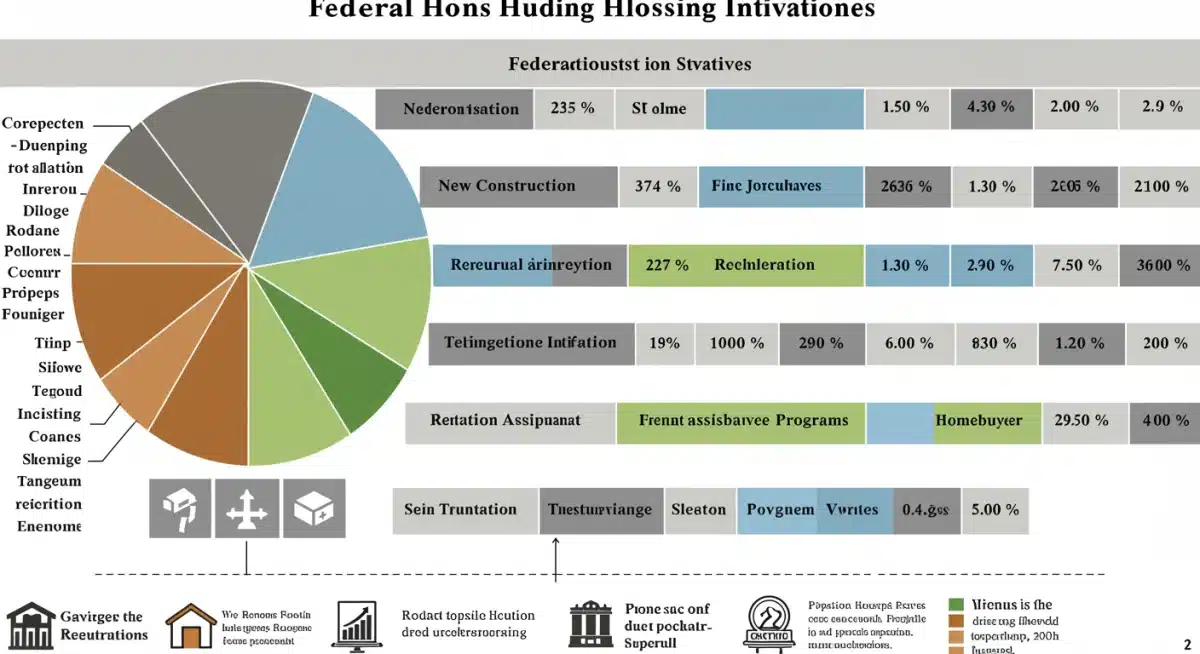
The ambitious target of 500,000 homes represents a carefully calculated effort to make a tangible impact on the national housing shortage. This goal is not merely a number; it reflects a strategic breakdown of how various housing types and interventions will contribute to the overall objective. The plan aims for a diversified portfolio of housing solutions, ensuring that the needs of different communities and demographics are adequately met.
A significant portion of this target will come from new construction, focusing on areas with the most acute housing shortages. This involves streamlining permitting processes at the local level, encouraging innovative building techniques, and investing in infrastructure that supports new developments. The emphasis is on building sustainable, energy-efficient homes that are both affordable to acquire and to maintain, reducing long-term costs for residents.
Allocation across housing types
- New affordable housing units: A substantial percentage will be dedicated to constructing brand-new units, designed to be affordable for low and moderate-income households.
- Rehabilitation of existing properties: Significant investment will go into renovating vacant or distressed properties, transforming them into livable, affordable homes, often in established communities.
- Preservation of existing affordable housing: Funds will also be allocated to prevent the conversion of currently affordable units into market-rate housing, safeguarding existing resources.
- Support for diverse housing models: The initiatives will promote various housing models, including multi-family dwellings, co-operative housing, and modular homes, to maximize efficiency and cost-effectiveness.
The remaining homes will be addressed through a combination of rental assistance programs and down payment assistance for first-time homebuyers, indirectly increasing the availability of affordable options by empowering more individuals to access housing. This strategic allocation ensures a broad and impactful reach, moving beyond just building houses to creating homes and communities.
Implementation timeline and starting Q2 2025
The implementation of these monumental federal housing initiatives is slated to commence in Q2 2025, marking a critical juncture in the nation’s response to the affordability crisis. This phased rollout allows for meticulous planning, resource allocation, and the establishment of robust oversight mechanisms to ensure the program’s efficacy and accountability. The period leading up to Q2 2025 will be crucial for laying the groundwork, including finalizing regulatory frameworks and securing partnerships.
During the initial phases, federal agencies will collaborate closely with state and local governments, as well as private sector stakeholders and non-profit organizations. This collaborative approach is vital for tailoring the national strategy to meet diverse regional needs and for leveraging local expertise. Workshops, informational sessions, and grant application periods will be announced to prepare potential partners for participation, ensuring a smooth transition into full implementation.
Key milestones leading to Q2 2025
- Q3-Q4 2024: Finalization of detailed program guidelines, eligibility criteria, and application processes for funding.
- Q1 2025: Launch of initial grant and loan application cycles, along with comprehensive outreach campaigns to potential developers and community partners.
- Q2 2025: Official commencement of project funding, groundbreaking ceremonies for new construction, and initiation of rehabilitation projects across target areas.
The timeline is designed to be ambitious yet realistic, acknowledging the complexities of large-scale federal programs while maintaining a sense of urgency. Regular progress reports and impact assessments will be integral to the implementation process, allowing for adjustments and refinements to optimize outcomes. The commitment to beginning in Q2 2025 underscores the government’s resolve to address the housing crisis without delay.
Potential impact and expected outcomes
The potential impact of the new federal housing initiatives is far-reaching, promising significant positive changes for individuals, communities, and the national economy. By targeting 500,000 homes, the program aims to alleviate the immense pressure on the housing market, making safe, decent, and affordable housing more accessible to a broader segment of the population. This isn’t just about providing shelter; it’s about fostering stability, health, and economic opportunity.
One of the most immediate expected outcomes is a measurable increase in the availability of affordable housing units. This will directly translate into reduced housing costs for many families, freeing up disposable income that can be spent on other essential goods and services, thereby boosting local economies. Beyond financial relief, access to stable housing has profound effects on quality of life, including improved educational outcomes for children and better health indicators for all residents.
Broader societal benefits
- Reduced homelessness: By expanding the supply of affordable housing and enhancing support programs, the initiatives are expected to significantly decrease rates of homelessness and housing instability.
- Community revitalization: Investment in rehabilitation projects can breathe new life into struggling neighborhoods, improving infrastructure and creating safer, more vibrant communities.
- Job creation: The construction and renovation of half a million homes will generate a substantial number of jobs in the building trades, manufacturing, and related sectors.
- Economic equity: Addressing housing affordability can help close wealth gaps and promote greater economic equity, particularly for historically underserved populations.
Ultimately, these initiatives are designed to contribute to a more resilient and equitable society. By tackling one of the most fundamental needs – housing – the federal government aims to lay the foundation for a stronger, more inclusive American future. The success of these programs will be measured not just in the number of homes built or renovated, but in the improved lives of the millions of Americans who will benefit from greater housing stability.
Challenges and considerations for successful execution
While the new federal housing initiatives offer immense promise, their successful execution will undoubtedly face a myriad of challenges. Large-scale government programs often encounter hurdles ranging from bureaucratic complexities to local opposition, and the housing sector is particularly susceptible to economic fluctuations and supply chain issues. Addressing these challenges proactively will be crucial for realizing the program’s ambitious goals and ensuring its long-term effectiveness.
One primary concern revolves around securing adequate and sustained funding. Although initial allocations are substantial, the scale of the housing crisis suggests that ongoing financial commitment will be necessary. Moreover, navigating the diverse regulatory landscapes of different states and municipalities can be a significant undertaking. Local zoning laws, environmental regulations, and permitting processes vary widely, potentially slowing down development timelines and increasing costs.
Key challenges to overcome
- Local opposition: ‘Not In My Backyard’ (NIMBY) sentiments can hinder new affordable housing developments, requiring robust community engagement and education efforts.
- Supply chain and labor shortages: Persistent issues with construction material availability and a shortage of skilled labor could impact the pace and cost of building projects.
- Economic volatility: Fluctuations in interest rates, inflation, and the broader economy can affect financing for projects and the purchasing power of homebuyers.
- Equitable distribution: Ensuring that the 500,000 homes are distributed equitably across regions and reach the most vulnerable populations will require careful planning and oversight.
Effective coordination among federal, state, and local entities will be paramount. Establishing clear communication channels, standardizing best practices where possible, and providing technical assistance to smaller communities can help overcome some of these operational challenges. Furthermore, continuous monitoring and evaluation will be essential to identify bottlenecks and adapt strategies as needed. The success of these initiatives hinges on a flexible, responsive approach that can navigate unforeseen obstacles.
Long-term vision for housing stability
The new federal housing initiatives, while addressing immediate needs, also lay the groundwork for a long-term vision of housing stability across the United States. This vision extends beyond simply increasing the number of available homes; it encompasses creating resilient, inclusive communities where housing is recognized as a fundamental right and a cornerstone of economic well-being. The policies enacted today are designed to have a lasting impact, reshaping the housing market for future generations.
Central to this long-term perspective is the promotion of sustainable development practices. This includes encouraging the adoption of green building technologies, investing in infrastructure that supports environmentally friendly communities, and ensuring that new housing developments are resilient to the impacts of climate change. The goal is to build homes that are not only affordable but also contribute positively to the health and sustainability of the planet.
Pillars of long-term stability
- Sustainable community development: Integrating housing with transportation, employment centers, and essential services to create thriving, well-connected neighborhoods.
- Robust regulatory frameworks: Developing federal and local policies that prevent market speculation, protect tenants’ rights, and promote fair housing practices.
- Continuous innovation: Investing in research and development for new construction techniques and materials that can reduce costs and accelerate building timelines.
- Education and empowerment: Providing comprehensive financial literacy and homeownership counseling to empower individuals and families to make informed housing decisions.
Achieving long-term housing stability requires a shift in mindset, moving away from viewing housing solely as a commodity and towards recognizing its critical role in social infrastructure. The federal government’s commitment to these initiatives signals a significant step in that direction, aiming to build a future where every American has access to safe, affordable, and stable housing, contributing to a stronger, more equitable nation.
| Key Aspect | Brief Description |
|---|---|
| Target Goal | Combat affordability crisis by targeting 500,000 homes. |
| Start Date | Starting Q2 2025, marking a significant policy shift. |
| Key Strategies | New construction, rehabilitation, and financial assistance programs. |
| Expected Impact | Increased housing supply, reduced costs, and enhanced community stability. |
Frequently asked questions about federal housing initiatives
The main goal is to combat the pervasive housing affordability crisis in the US by significantly increasing the supply of affordable homes. It aims to develop or rehabilitate 500,000 homes, making housing more accessible for low and middle-income families and fostering economic stability across communities.
The major policy shift for these federal housing initiatives is scheduled to officially commence in Q2 2025. The preceding months will involve crucial preparatory steps, including finalizing guidelines, securing partnerships, and initiating application processes for various funding and support programs.
The target will be met through a combination of strategies. This includes substantial investment in new affordable housing construction, extensive rehabilitation of existing vacant or distressed properties, and preservation efforts to prevent affordable units from converting to market rates. Various housing models will also be supported.
Eligibility will primarily target low to moderate-income individuals and families struggling with housing costs. This includes first-time homebuyers, renters in need of assistance, and communities requiring revitalization. Specific program criteria will be detailed closer to the Q2 2025 launch date.
Beyond immediate housing relief, the initiatives aim for long-term benefits such as reduced homelessness, stronger community development, significant job creation in the construction sector, and enhanced economic equity. They seek to establish a foundation for sustained housing stability and a more equitable society.
Conclusion
The announcement of a major policy shift: new federal housing initiatives to combat affordability crisis, starting Q2 2025, targeting 500,000 homes, represents a pivotal moment in addressing one of the most pressing socio-economic challenges facing the United States. This comprehensive plan, with its strategic focus on increasing supply, enhancing affordability, and fostering community development, offers a beacon of hope for millions of Americans struggling to secure stable housing. While challenges in implementation are inevitable, the government’s commitment and the collaborative approach outlined suggest a determined effort towards building a more equitable and stable housing future, ensuring that the dream of a home remains within reach for more citizens.