Unemployment Benefits 2025: State Maximums & Eligibility Guide

Understanding unemployment benefits in 2025 is crucial for financial stability, as state-specific maximums and eligibility requirements vary significantly across the United States.
Navigating the landscape of unemployment benefits 2025 can feel daunting, especially when facing unexpected job loss. The system, designed to provide a temporary financial safety net, is not uniform across the United States. Instead, it’s a complex tapestry of state-specific rules, maximum benefit amounts, and eligibility criteria that prospective applicants must understand. This article aims to demystify these variations, offering a comprehensive guide to help you understand what to expect and how to prepare for applying for unemployment benefits in the coming year.
The Foundations of Unemployment Insurance
Unemployment insurance (UI) is a joint federal-state program that provides temporary financial assistance to eligible workers who are unemployed through no fault of their own. While the federal government establishes broad guidelines, each state administers its own program, leading to significant differences in benefits, eligibility, and duration. These variations are not arbitrary; they reflect diverse economic conditions, legislative priorities, and cost-of-living differences across states.
Understanding the basic framework is the first step toward successfully navigating the system. The primary goal of UI is to offer a bridge during periods of joblessness, allowing individuals to meet essential needs while actively seeking new employment. This temporary support helps stabilize local economies by maintaining consumer spending power and preventing widespread financial hardship during economic downturns.
Federal and State Partnership in UI
- Federal Role: Establishes basic requirements, funds administrative costs, and provides loans to states during high unemployment.
- State Role: Sets specific eligibility rules, weekly benefit amounts, benefit duration, and handles claims processing.
- Funding: Primarily funded by state and federal unemployment taxes paid by employers.
The interplay between federal and state roles creates a dynamic system. For instance, while federal law might mandate a minimum duration for benefits, states have the flexibility to extend or modify these periods based on their economic climate. This partnership ensures a baseline level of support while allowing for adaptability to local needs. As we move into 2025, these foundational elements remain crucial for understanding the overall structure of unemployment benefits.
Understanding State-Specific Maximums for 2025
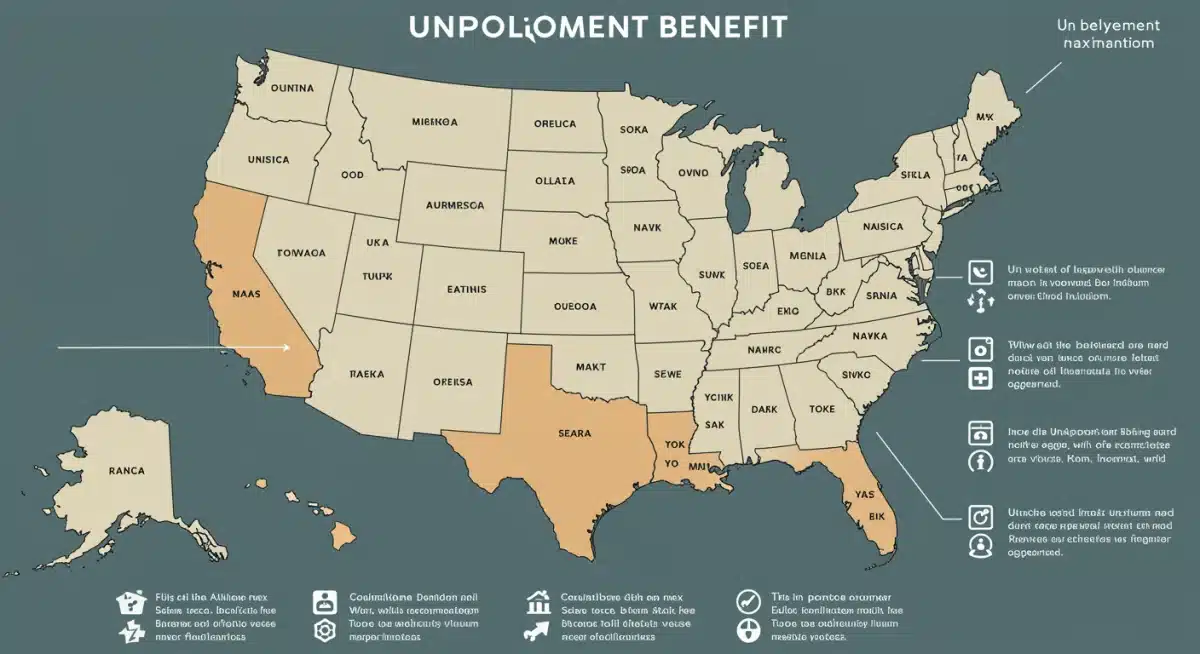
One of the most significant aspects of unemployment benefits 2025 that varies widely is the maximum weekly benefit amount. This figure directly impacts how much financial support an individual can receive and can differ by hundreds of dollars from one state to another. These maximums are typically calculated based on a percentage of an individual’s past earnings during a specified base period, but they are capped to ensure fiscal responsibility and prevent disproportionately high payouts.
The rationale behind these differing maximums often relates to the cost of living in a particular state, the average wage levels, and the state’s unemployment insurance trust fund solvency. States with higher average wages and a higher cost of living tend to have higher maximum benefit amounts to provide a more meaningful safety net for their residents. Conversely, states with lower living costs and wages might have lower maximums.
Factors Influencing Maximum Benefit Amounts
- Average State Wages: States with higher average earnings typically offer higher maximum benefits.
- Cost of Living: Regions with a higher cost of living often adjust maximums upwards to reflect economic realities.
- UI Trust Fund Solvency: The financial health of a state’s unemployment fund can influence benefit levels and duration.
It’s crucial for individuals to research the specific maximum weekly benefit for their state of residence. This information is usually available on the state’s Department of Labor or Employment Security website. Knowing this figure in advance can help with financial planning during periods of unemployment, providing a realistic expectation of the support available. These maximums are reviewed periodically, and while 2025 figures are still being finalized in some areas, the general trends are expected to continue.
Eligibility Criteria: What You Need to Know
Beyond the monetary amounts, eligibility for unemployment benefits 2025 is perhaps the most critical factor. Each state sets specific criteria that individuals must meet to qualify for assistance. While there are common threads across states, such as having earned sufficient wages during a base period and being unemployed through no fault of your own, the specifics can vary significantly. Understanding these nuances is vital for a successful application.
Generally, states require applicants to be able and available for work, actively seeking employment, and to have lost their job due to reasons beyond their control. This means that if you voluntarily quit your job without good cause, or were fired for misconduct, you might be disqualified from receiving benefits. The definition of “good cause” or “misconduct” can also differ by state, adding another layer of complexity.
Common Eligibility Requirements
- Sufficient Earnings: Must have earned a minimum amount of wages during a specific base period (usually the first four of the last five completed calendar quarters).
- Unemployed Through No Fault: Job loss must be due to reasons such as a layoff, reduction in force, or other circumstances outside the worker’s control.
- Able and Available for Work: Must be physically and mentally capable of working and ready to accept suitable employment.
- Actively Seeking Work: Required to demonstrate ongoing efforts to find a new job, often documented through job search logs.
The application process itself involves providing detailed information about your employment history, earnings, and the circumstances of your job separation. States will review this information and may contact former employers to verify details. Any discrepancies or misrepresentations can lead to delays or denial of benefits. Therefore, meticulous record-keeping and honest reporting are essential for anyone applying for unemployment benefits in 2025.
The Application Process and Documentation
Applying for unemployment benefits 2025 involves a series of steps that, if followed correctly, can expedite the process. While specific online portals and forms differ by state, the general flow remains consistent. The first step typically involves initiating a claim online through your state’s employment security department website. This is often the quickest and most efficient way to apply, though phone and in-person options may also be available.
Accurate and complete documentation is paramount. Before starting your application, gather all necessary information, including personal identification, employment history for the past 18-24 months, and details about your separation from your most recent employer. Having these documents ready will significantly streamline the application process and reduce the likelihood of delays or requests for additional information.
Key Documents and Information Needed
- Personal Identification: Social Security number, driver’s license or state ID.
- Employment History: Names, addresses, and dates of employment for all employers in the last 18 months, along with reasons for separation.
- Wage Information: Pay stubs, W-2 forms, or other proof of earnings.
- Bank Account Information: For direct deposit of benefits.
After submitting your application, states typically have a waiting period, often one week, before benefits can begin. During this time, your claim will be reviewed, and your former employer(s) may be contacted. It’s important to respond promptly to any requests for additional information from the state agency. Failure to do so can result in delays or denial of your claim. Regularly checking the status of your application online is also a good practice.
Duration of Benefits and Extensions
The duration of unemployment benefits 2025, much like the weekly maximums, is primarily determined by state law. Most states offer up to 26 weeks of benefits, but some provide fewer, while others, in certain circumstances, may offer more. This standard duration is designed to provide a reasonable period for individuals to find new employment without becoming overly reliant on the system.
In times of high unemployment or economic recession, federal programs may be enacted to provide extended benefits. These extensions are not always active and are typically triggered by specific economic indicators. It’s important to understand that these extensions are temporary and not a permanent feature of the UI system. Staying informed about current economic conditions and any federal legislative changes is crucial for those who may exhaust their standard state benefits.
Factors Affecting Benefit Duration
- State Law: Each state sets its standard maximum duration, typically up to 26 weeks.
- Economic Conditions: High unemployment rates can trigger federal or state-funded extended benefit programs.
- Individual Work History: Some states may adjust duration based on an individual’s earnings and work history during the base period.
For those approaching the end of their standard benefit period, it’s advisable to proactively seek information about potential extensions or other available assistance programs. State employment agencies often provide resources beyond just UI benefits, including job search assistance, training programs, and referrals to other support services. Planning ahead can help mitigate the financial impact if job searching takes longer than expected.
Appealing a Denial of Unemployment Benefits
Receiving a denial for unemployment benefits 2025 can be disheartening, but it’s not always the final word. Applicants have the right to appeal the decision, and understanding this process is crucial. Denials can occur for various reasons, such as insufficient earnings in the base period, voluntary separation from employment, or being fired for misconduct. Each state has a formal appeals process that allows individuals to present their case and provide additional evidence.
The first step in an appeal is usually to file a written request for reconsideration or an appeal within a specified timeframe, often 10 to 30 days from the date of the denial notice. This request initiates a hearing, which might be conducted in person, by phone, or virtually, where both the claimant and the former employer can present evidence and testimony. It’s highly recommended to gather all relevant documents, including pay stubs, employment contracts, and any correspondence related to your job separation, to support your appeal.
Steps in the Appeals Process
- Review Denial Notice: Understand the specific reason for denial.
- File Written Appeal: Submit an appeal request within the state’s deadline.
- Prepare for Hearing: Gather all supporting documents and potential witnesses.
- Present Your Case: Clearly articulate why you believe you are eligible for benefits.
- Understand Further Appeals: If the initial appeal is denied, further levels of appeal may be available.
During the appeal hearing, an impartial administrative law judge or hearing officer will review the evidence and make a decision. This process can take time, so patience is key. If the initial appeal is unsuccessful, many states offer further levels of appeal, such as review by a higher board or even judicial review in the state courts. Seeking legal advice or assistance from a qualified advocate familiar with unemployment law can significantly improve your chances of a successful appeal.
Navigating the Future: Economic Outlook and UI in 2025
As we look towards 2025, the economic outlook inevitably influences the landscape of unemployment benefits 2025. Factors such as inflation, interest rates, and overall job market stability can impact not only the number of people seeking UI but also the resources available within state trust funds. A robust economy generally means fewer UI claims and more stable trust funds, while an economic downturn can strain the system.
Policymakers continuously monitor these economic indicators and may propose legislative changes to the UI system to adapt to evolving conditions. These changes could include adjustments to benefit amounts, extensions of benefit durations, or modifications to eligibility requirements. Staying informed about these potential shifts is crucial for both individuals and employers, as they can have significant financial implications.
Economic Considerations for UI in 2025
- Inflation’s Impact: Rising costs of living may prompt discussions about increasing benefit maximums.
- Job Market Trends: Sector-specific growth or decline can influence unemployment rates and UI demand.
- Legislative Changes: Federal or state governments may introduce new laws to strengthen or modify the UI system.
- Trust Fund Health: The solvency of state unemployment trust funds is critical for sustained benefit payments.
For individuals, proactively monitoring economic news and understanding how it might affect unemployment benefits is a wise strategy. This includes keeping an eye on state-specific announcements from their Department of Labor. For employers, understanding potential changes to unemployment taxes and ensuring compliance with updated regulations will be important. The UI system remains a vital component of economic stability, and its adaptability to future economic challenges will be key in 2025 and beyond.
| Key Aspect | Brief Description |
|---|---|
| State Maximums | Weekly benefit amounts vary significantly by state, influenced by local wages and cost of living. |
| Eligibility Criteria | Requires sufficient earnings and job loss through no fault of one’s own; specific rules differ by state. |
| Benefit Duration | Typically up to 26 weeks, with potential for extensions during high unemployment periods. |
| Application Process | Requires accurate documentation and prompt responses to state agency requests for efficient processing. |
Frequently Asked Questions About Unemployment Benefits in 2025
You should visit your state’s Department of Labor or Employment Security website. These official government sites provide the most up-to-date information on weekly maximums, eligibility, and application procedures specific to your state for 2025.
Generally, voluntarily quitting a job may disqualify you from unemployment benefits unless you had “good cause” for leaving, as defined by your state’s laws. Examples include unsafe working conditions or certain family emergencies. Each case is reviewed individually.
Most states provide unemployment benefits for up to 26 weeks. However, the exact duration can vary by state, and federal extensions may become available during periods of high national unemployment, impacting the total duration.
You’ll typically need your Social Security number, driver’s license, employment history for the past 18 months, wage information (pay stubs, W-2s), and bank account details for direct deposit. Specific requirements might vary by state.
Yes, you have the right to appeal a denied unemployment claim. Each state has a formal appeals process, usually starting with a written request for a hearing within a specific timeframe. Gathering all relevant documents is essential for a successful appeal.
Conclusion
Navigating the intricacies of unemployment benefits 2025 requires a clear understanding of state-specific regulations, maximum benefit amounts, and eligibility requirements. While the federal government provides a foundational framework, the decentralized nature of the UI system means that preparation and knowledge of your state’s particular rules are paramount. By researching your state’s Department of Labor website, gathering necessary documentation, and understanding the application and appeal processes, individuals can better position themselves to receive the temporary financial support they may need during periods of joblessness. Staying informed about economic trends and legislative changes will also be crucial in maximizing the effectiveness of this vital safety net.