2025 PSLF Changes: What Educators Need to Know

The 2025 changes to Public Service Loan Forgiveness (PSLF) eligibility for educators will significantly impact how teachers and other school staff qualify for federal student loan relief, requiring a thorough understanding of new criteria and proactive planning to secure benefits.
Understanding the 2025 Changes to Public Service Loan Forgiveness (PSLF) Eligibility for Educators is crucial for anyone working in public education who carries federal student loan debt. As the landscape of student loan forgiveness evolves, staying informed about upcoming modifications is not just beneficial, but essential for financial planning. These changes could significantly alter eligibility requirements, payment counting, and the overall path to debt relief for countless dedicated educators across the United States.
The Evolution of PSLF and Its Impact on Educators
The Public Service Loan Forgiveness (PSLF) program was established in 2007 to encourage individuals to enter and remain in public service careers. For educators, this program has offered a beacon of hope, promising debt relief after 120 qualifying payments while working full-time for an eligible employer. However, the program has faced criticism and undergone various revisions since its inception, aiming to streamline the process and address past issues that left many borrowers confused or denied.
The upcoming 2025 changes represent another significant chapter in PSLF’s evolution. These modifications are not merely technical adjustments; they reflect an ongoing effort to refine the program’s reach and effectiveness. For educators, understanding these historical shifts provides context for why new rules are being implemented and how they might affect their long-term financial outlook. It’s a continuous journey of adaptation, and staying ahead of the curve is paramount.
Key Historical Milestones for PSLF
- 2007 Program Launch: PSLF officially begins, offering forgiveness for federal direct loans after 120 qualifying payments in public service.
- 2017 Temporary Expanded PSLF (TEPSLF): Introduced to assist borrowers who were denied PSLF due to being on non-qualifying repayment plans, expanding eligibility temporarily.
- 2021 PSLF Waiver: A limited-time waiver dramatically eased PSLF rules, allowing past payments that previously didn’t qualify to count, significantly boosting forgiveness approvals.
These past adjustments underscore a dynamic policy environment. Each change has brought both opportunities and challenges, and the 2025 updates are expected to follow a similar pattern. Educators must recognize that the program is not static and requires continuous engagement to leverage its benefits fully. The goal remains the same: to support those who dedicate their careers to public service, including the vital work of teaching and shaping future generations.
In conclusion, the history of PSLF is one of evolving policy and attempts to improve accessibility. For educators, these changes often translate into direct impacts on their financial well-being. The 2025 revisions are a continuation of this trend, necessitating a proactive approach to understanding and navigating the updated requirements for loan forgiveness.
Decoding the New PSLF Eligibility Criteria for 2025
The core of the 2025 changes revolves around refining the eligibility criteria for both borrowers and their employment. While the fundamental requirement of working full-time for a qualifying non-profit or government organization remains, specific nuances are being introduced that educators need to scrutinize carefully. These adjustments aim to clarify ambiguities and potentially broaden or narrow the scope of who can ultimately receive forgiveness.
One of the most anticipated areas of change involves how ‘full-time’ employment is defined and verified. Historically, this has been a source of confusion, particularly for adjunct professors, part-time staff with multiple roles, or those who combine teaching with other public service duties. The 2025 rules are expected to provide clearer guidelines, which could be a double-edged sword: offering more certainty for some, while potentially excluding others who previously navigated gray areas.
What Constitutes a Qualifying Employer?
The definition of a qualifying employer for PSLF has generally included government organizations at any level (federal, state, local, or tribal) and not-for-profit organizations that are tax-exempt under Section 501(c)(3) of the Internal Revenue Code. Educational institutions, from public elementary schools to state universities, typically fall under these categories. However, the 2025 changes might introduce more stringent verification processes or specific exclusions for certain types of educational entities.
- Public Schools: All public elementary, secondary, and higher education institutions generally qualify.
- Private Non-Profit Schools: Schools with 501(c)(3) tax-exempt status are typically eligible employers.
- Government Agencies: Any agency directly involved in education, like a state department of education, also qualifies.
Understanding your employer’s exact status is paramount. Educators should proactively confirm their organization’s eligibility, especially if there have been any changes in its structure or tax status. This often involves working directly with human resources departments to obtain the necessary documentation for certification.
Furthermore, the 2025 updates may also clarify which types of federal student loans are eligible for PSLF. While Direct Loans are the only eligible loan type, previous waivers allowed other federal loans to become eligible after consolidation. It’s crucial for educators to verify their loan types and consider consolidation if necessary, well in advance of the new rules taking full effect.
In essence, the revised eligibility criteria for 2025 demand meticulous attention to detail from educators. Confirming employer status, understanding the definition of full-time work, and ensuring all federal loans are Direct Loans or consolidated into Direct Loans are critical steps to maintain eligibility.
Navigating Payment Counting and Income-Driven Repayment Plans
One of the most critical aspects of PSLF is the accumulation of 120 qualifying payments. The 2025 changes are expected to bring greater clarity and potentially new methodologies for how these payments are counted, particularly in relation to income-driven repayment (IDR) plans. For educators, who often benefit from IDR plans due to moderate salaries, these updates could significantly impact their path to forgiveness.
Historically, only payments made under specific IDR plans or the 10-year Standard Repayment Plan counted towards PSLF. The recent PSLF Waiver temporarily broadened this, but the 2025 changes are likely to codify a more permanent framework. This new framework aims to reduce confusion and ensure that borrowers are on the correct repayment track from the outset, minimizing the risk of denied forgiveness later on.
Optimizing Your Repayment Strategy
Choosing the right income-driven repayment plan is fundamental for educators pursuing PSLF. The new SAVE Plan (Saving on a Valuable Education) is a prime example of an IDR plan designed to offer lower monthly payments based on income and family size. Understanding how payments under the SAVE Plan, or other IDR options, will be counted post-2025 is vital.
- Review IDR Options: Familiarize yourself with the SAVE Plan, PAYE, IBR, and ICR to determine which best fits your financial situation and PSLF goals.
- Annual Recertification: Ensure you complete your IDR plan’s annual recertification on time to avoid payment increases or administrative forbearance, which can disrupt qualifying payments.
- Payment Tracking: Regularly check your loan servicer’s records and the Federal Student Aid website to track your qualifying payment count.
The 2025 changes might also introduce clearer rules regarding periods of deferment or forbearance. While typically these periods do not count as qualifying payments, certain types of deferment (like military service deferment) or specific forbearance periods (as seen during the COVID-19 payment pause) have been exceptions. Educators should anticipate detailed guidance on how these non-payment periods will be treated moving forward.
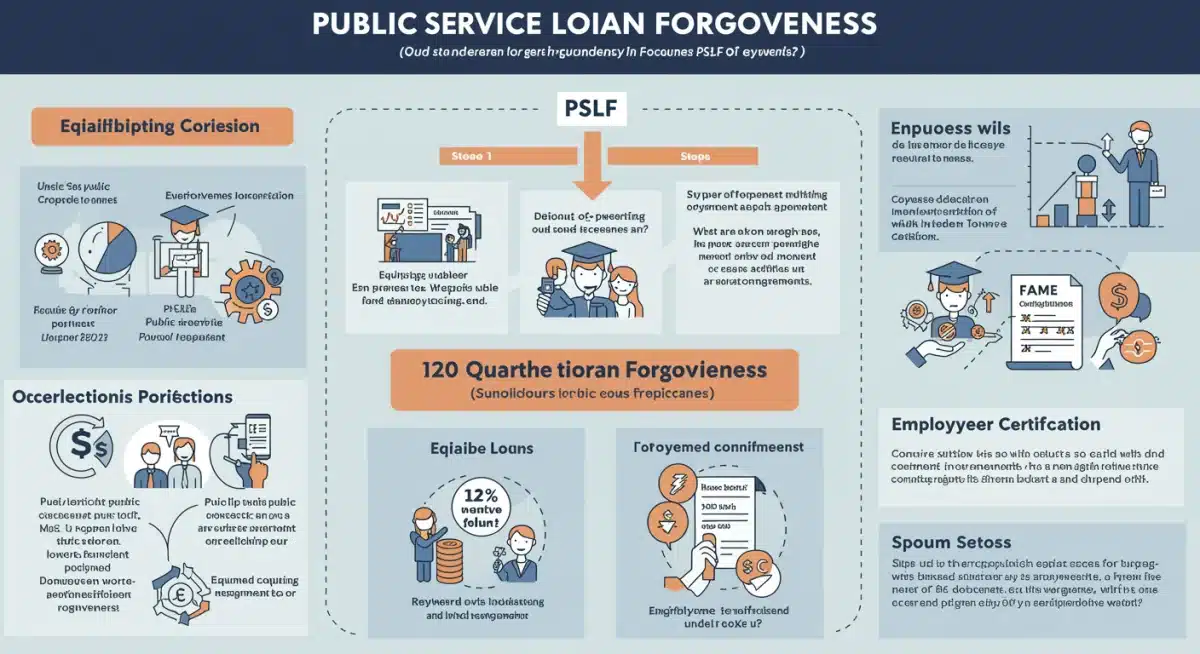
In summary, the 2025 updates to payment counting and IDR plans will require educators to be more strategic and vigilant. Selecting the appropriate IDR plan, consistently making qualifying payments, and diligently tracking progress are non-negotiable steps to ensure a smooth journey toward PSLF.
The Importance of Employer Certification and Documentation
Proper employer certification is the bedrock of a successful PSLF application. For educators, this means consistently verifying their employment with eligible organizations and maintaining meticulous records of their work history. The 2025 changes are expected to reinforce the importance of this process, potentially introducing new requirements for documentation and more frequent certification.
The Employer Certification Form (ECF) is the primary tool for this verification. It confirms that you are employed by a qualifying organization and that you are working full-time. Many past PSLF denials stemmed from incorrect or missing ECFs, highlighting the critical need for accuracy and timeliness. The upcoming changes are likely to emphasize a proactive approach to certification, perhaps even recommending annual submissions.
Best Practices for Documentation
- Annual ECF Submission: Submit the ECF annually or whenever you change employers to ensure your payments are accurately counted and certified.
- Keep Copies: Always retain copies of all submitted ECFs, loan statements, payment confirmations, and any correspondence with your loan servicer.
- Employment Records: Maintain records such as pay stubs, W-2 forms, and employment contracts that verify your full-time status and employer’s eligibility.
The 2025 updates may also streamline the process for employers to certify employment, or conversely, introduce more rigorous checks. Educators should be prepared to communicate effectively with their human resources departments to ensure they understand the updated requirements. The goal is to minimize administrative burdens while maximizing the integrity of the program.
Furthermore, staying organized isn’t just about avoiding problems; it’s about building a strong case for your eventual forgiveness application. A well-documented history leaves little room for doubt and significantly increases the likelihood of a smooth approval process. Think of it as building your financial resume for PSLF.
In conclusion, employer certification and diligent documentation are not optional; they are fundamental to PSLF success. Educators must adopt a proactive and organized approach to these administrative tasks, especially with the anticipated 2025 changes, to safeguard their eligibility and future loan forgiveness.
Potential Challenges and How to Overcome Them
While the 2025 PSLF changes aim to improve the program, they may also introduce new challenges for educators. Navigating complex federal regulations, managing administrative hurdles, and understanding potential shifts in policy can be daunting. However, with foresight and strategic planning, these obstacles can be effectively overcome.
One common challenge is the sheer volume of information and the nuanced interpretations of rules. The Department of Education often releases detailed guidance, but sifting through it can be time-consuming. Educators, already burdened with demanding careers, need accessible and clear summaries of what these changes mean for them specifically. Misinformation or incomplete understanding can lead to critical errors in the application process.
Strategies for Mitigating Risks
- Stay Updated: Regularly check official sources like the Federal Student Aid website and reliable financial aid news outlets for the latest information on PSLF changes.
- Seek Professional Advice: Consider consulting with a financial advisor specializing in student loans or a non-profit organization dedicated to public service loan forgiveness.
- Engage with Your Servicer: Maintain open communication with your loan servicer, asking clarifying questions about your eligibility, payment counts, and required documentation.
Another potential challenge could arise from changes in loan servicing. The student loan landscape has seen significant shifts in servicers, which can lead to transfer of records, communication gaps, and temporary disruptions in payment tracking. Educators should be prepared for such transitions and proactively ensure their records are accurately transferred and updated.
Furthermore, some educators might face challenges related to their employment status, especially those working in non-traditional roles or who transition between different types of educational institutions. The 2025 changes might redefine what constitutes qualifying employment, requiring some individuals to adjust their career paths or seek additional clarification.
In essence, anticipating potential challenges and having a plan to address them is crucial. Educators should empower themselves with knowledge, utilize available resources, and maintain vigilance to ensure that the 2025 changes do not derail their pursuit of PSLF. Proactive engagement is the best defense against unforeseen obstacles.
Resources and Next Steps for Educators
Preparing for the 2025 PSLF changes requires more than just understanding the new rules; it demands action. Fortunately, numerous resources are available to help educators navigate this complex landscape. Leveraging these tools and taking concrete steps now can significantly improve your chances of achieving loan forgiveness.
The Federal Student Aid (FSA) website is the authoritative source for all things PSLF. It provides official guidance, forms, and tools to track your progress. Regularly visiting this site and subscribing to their updates should be a top priority for any educator pursuing forgiveness. Beyond official channels, several non-profit organizations and financial literacy programs offer invaluable support.
Essential Resources and Actions
- Federal Student Aid Website: bookmark StudentAid.gov for official PSLF information, forms, and payment tracking.
- Loan Servicer Contact: Regularly contact your loan servicer to confirm your loan type, repayment plan, and qualifying payment count.
- Employer HR Department: Work with your HR department to ensure timely and accurate completion of your Employer Certification Forms (ECFs).
- PSLF Help Tool: Utilize the PSLF Help Tool on the FSA website to guide you through the process of submitting ECFs and applying for forgiveness.
Educators should also consider joining online forums or professional groups where colleagues share experiences and advice regarding student loan forgiveness. Peer support and shared knowledge can be incredibly empowering, offering practical tips and emotional encouragement during what can sometimes feel like an isolating process.
Additionally, understanding the timeline for the 2025 changes is critical. While the specifics may still be unfolding, anticipating the effective dates will allow educators to plan their actions accordingly, whether that involves consolidating loans, switching repayment plans, or submitting final certification forms.
In conclusion, educators have a wealth of resources at their disposal to prepare for the 2025 PSLF changes. By staying informed through official channels, proactively engaging with loan servicers and employers, and utilizing available tools, they can strategically position themselves for successful loan forgiveness. The journey may require diligence, but the reward of debt relief is well worth the effort.
| Key Aspect | Brief Description of 2025 Changes |
|---|---|
| Eligibility Criteria | Refined definitions for ‘full-time’ employment and qualifying employers, potentially impacting adjuncts and part-time staff. |
| Payment Counting | New methodologies for counting 120 qualifying payments, especially concerning income-driven repayment plans like SAVE. |
| Employer Certification | Emphasis on more rigorous and possibly more frequent employer verification processes. |
| Loan Types | Continued focus on Direct Loans; consolidation remains key for other federal loan types to qualify. |
Frequently Asked Questions About 2025 PSLF for Educators
Generally, qualifying payments made before 2025 will still count. However, new rules for future payments, especially regarding income-driven repayment plans, might apply. It’s crucial to confirm your payment history and current plan with your loan servicer before the new policies fully take effect.
The core definition of qualifying public service employers is expected to remain consistent (government or 501(c)(3) non-profits). However, new verification methods or clarifications for specific entity types might emerge. Always use the PSLF Help Tool and submit an Employer Certification Form (ECF) annually to confirm eligibility.
If you are not on an income-driven repayment (IDR) plan or the 10-year Standard Repayment Plan, your payments will not count. You should switch to a qualifying IDR plan, like the SAVE Plan, as soon as possible. Consolidating older federal loans into a Direct Loan is often a necessary first step.
The 2025 changes may offer clearer guidance on how ‘full-time’ employment is defined for those in multiple part-time roles. While generally requiring 30 hours per week, specific rules for combining hours from multiple eligible employers might be refined. Stay vigilant for official clarifications.
The most crucial step is to ensure all your federal student loans are Direct Loans and that you are on a qualifying income-driven repayment plan. Then, submit an Employer Certification Form (ECF) annually. This proactive approach helps secure your eligibility and track your progress consistently.
Conclusion
The upcoming 2025 changes to Public Service Loan Forgiveness eligibility for educators represent a pivotal moment for those dedicated to public education. While the specifics are still being finalized and communicated, the overarching message is clear: proactive engagement and diligent preparation are paramount. Educators who stay informed, meticulously track their payments, ensure proper employer certification, and utilize available resources will be best positioned to benefit from this vital program. The path to loan forgiveness may require careful navigation, but the ultimate goal of debt relief for those serving our communities remains a powerful incentive. By taking decisive action now, educators can secure their financial future and continue their invaluable work with one less burden.