2026 Consumer Confidence Index: Decoding 105.0 for US Economic Optimism

The economic landscape is a complex tapestry woven from countless threads of data, sentiment, and policy. Among the most crucial threads is the consumer confidence index, a barometer of how optimistic consumers feel about the economy and their personal financial situation. For 2026, a projected Consumer Confidence Index (CCI) reading of 105.0 in the United States signals a robust and optimistic economic outlook. But what exactly does this number mean, and why is it such a significant indicator for economists, businesses, and everyday citizens?
Understanding the 2026 Consumer Confidence Index: A Reading of 105.0 and What It Means
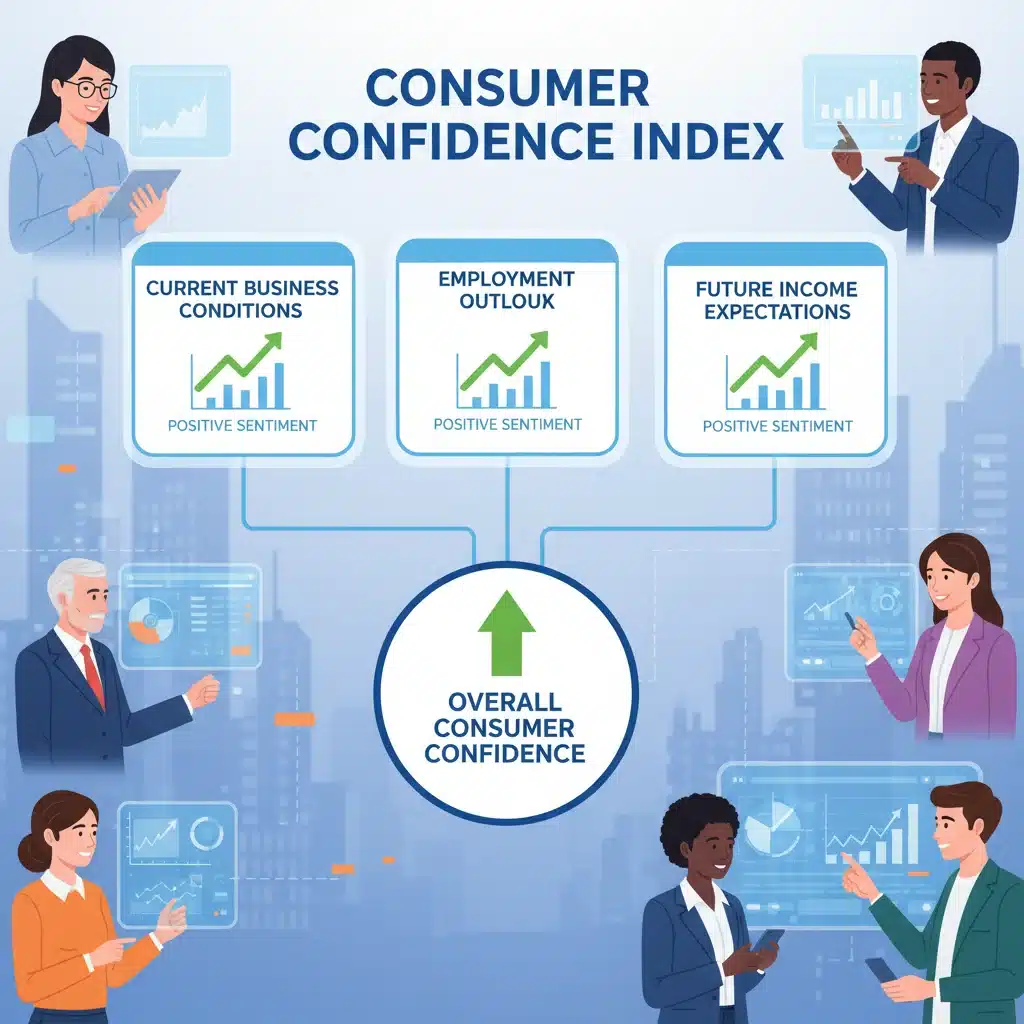
The Consumer Confidence Index, published monthly by The Conference Board, is a closely watched economic indicator that measures consumer attitudes and buying intentions. It’s based on a survey of 5,000 households across the U.S., asking them about current business and employment conditions, as well as their expectations for the next six months regarding business conditions, employment, and income. A reading of 105.0, particularly for a future year like 2026, suggests a strong belief in sustained economic growth and stability.
Historically, the CCI has been a reliable predictor of future consumer spending, which accounts for roughly two-thirds of U.S. economic activity. When consumers feel confident, they are more likely to spend on big-ticket items like homes, cars, and appliances, and to invest in their futures. This spending fuels demand, encourages businesses to expand, and ultimately drives job creation and overall economic prosperity. A consumer confidence index of 105.0 is well above the baseline of 100, which represents the index’s value in 1985, indicating a significantly more optimistic environment than that reference year.
The Components of Consumer Confidence: What Drives a 105.0 Reading?
The CCI is composed of two main sub-indices: the Present Situation Index and the Expectations Index. The Present Situation Index assesses consumers’ appraisal of current business and labor market conditions, while the Expectations Index gauges their short-term outlook (next six months) for income, business, and labor market conditions. A high overall CCI like 105.0 typically means both components are strong, but the balance between them can offer deeper insights.
Present Situation Index: Current Economic Health
A robust Present Situation Index contributing to a 105.0 overall CCI implies that consumers are currently experiencing favorable economic conditions. This would include:
- Strong Job Market: Low unemployment rates, steady job growth, and accessible employment opportunities. People feel secure in their jobs and confident about finding new ones if needed.
- Healthy Business Environment: Businesses are thriving, reporting good sales, and investing in expansion. This translates to a perception of economic stability and growth.
- Stable Personal Finances: Consumers feel good about their current income, savings, and ability to meet financial obligations. Wage growth is likely outpacing inflation, leading to increased purchasing power.
Expectations Index: Future Economic Outlook
The Expectations Index is often considered more forward-looking and thus more predictive. A high Expectations Index within a 105.0 CCI indicates that consumers anticipate continued positive trends. This could be due to:
- Anticipated Income Growth: Belief that their personal income will increase, either through raises, promotions, or improved investment returns.
- Optimistic Job Prospects: Expectation that the job market will remain strong or even improve, offering more opportunities and job security.
- Positive Business Outlook: Confidence that the overall economy will continue to grow, leading to a stable and prosperous future.
- Effective Government Policies: A belief that fiscal and monetary policies are supportive of economic growth and stability, fostering a predictable environment for planning.
For the 2026 consumer confidence index to hit 105.0, both these elements would need to be performing well, suggesting a broad-based optimism that extends from current realities into future projections. This sustained positive sentiment is critical for long-term economic health.
Historical Context: What Does 105.0 Compare To?
To fully appreciate a 105.0 CCI, it’s helpful to look at historical data. Readings significantly above 100 are generally associated with periods of strong economic expansion. For instance, during the dot-com boom of the late 1990s, the CCI often hovered well above 100, sometimes reaching into the 130s. Conversely, during recessions or times of economic uncertainty, the index can plummet. During the 2008 financial crisis, it dipped dramatically, reflecting widespread fear and uncertainty.
A reading of 105.0, while not reaching the peak exuberance of some past booms, represents a healthy and sustainable level of optimism. It suggests that consumers are confident but not irrationally exuberant, which could lead to bubbles. Instead, it points to a steady, confident march forward for the U.S. economy, built on solid fundamentals and positive future expectations. This level indicates a belief in continued growth without significant inflationary pressures or impending downturns.
Implications for Businesses and Investors
A consumer confidence index of 105.0 has profound implications across various sectors of the economy:
For Businesses:
- Increased Sales and Revenue: Confident consumers are spending consumers. Businesses can anticipate higher demand for goods and services, leading to increased sales and revenue. This is particularly true for discretionary spending categories like travel, entertainment, and luxury goods.
- Expansion and Investment: With a positive outlook on future demand, businesses are more likely to invest in expansion, hire more employees, and innovate. This creates a virtuous cycle of economic growth.
- Pricing Power: In an environment of strong demand, businesses might have more flexibility in pricing their products and services, potentially leading to higher profit margins.
- Reduced Inventory Risk: Anticipated strong demand can help businesses manage inventory more effectively, reducing the risk of overstocking or understocking.
For Investors:
- Bullish Stock Market: High consumer confidence often correlates with a bullish stock market, as increased consumer spending translates to higher corporate profits. Sectors heavily reliant on consumer spending, such as retail, automotive, and hospitality, tend to perform well.
- Stronger Corporate Earnings: Investors can expect robust earnings reports from companies, justifying higher stock valuations.
- Interest Rate Outlook: While strong economic data could potentially lead to interest rate hikes to curb inflation, a stable 105.0 CCI suggests a balanced growth trajectory that might not necessitate aggressive monetary tightening, providing a favorable environment for investment.
- Real Estate Market Boost: Confident consumers are more likely to purchase homes, driving demand in the real estate sector. This can lead to appreciation in property values and increased activity in related industries like construction and home improvement.
Factors Contributing to 2026 Optimism
Achieving a consumer confidence index of 105.0 by 2026 isn’t accidental. Several underlying factors likely contribute to such a positive outlook:
Technological Advancements and Innovation:
Continued innovation in areas like artificial intelligence, biotechnology, and renewable energy could be driving new industries, creating high-paying jobs, and improving productivity. This fosters a sense of progress and future prosperity.
Stable Inflation and Interest Rates:
A scenario where inflation is under control and interest rates are stable (or gradually declining) provides a predictable economic environment. This allows consumers to plan their spending and saving without fear of rapidly eroding purchasing power or prohibitive borrowing costs.
Robust Labor Market:
Sustained low unemployment, rising wages that outpace inflation, and a healthy job creation rate are fundamental to consumer confidence. When people feel secure in their employment and see opportunities for advancement, their confidence soars.
Effective Fiscal and Monetary Policies:
Government policies that support economic growth, such as targeted investments in infrastructure, education, and research, combined with prudent monetary policy from the Federal Reserve, can instill confidence in the long-term stability of the economy. A balanced approach that avoids excessive stimulus or austerity is key.
Strong Corporate Performance:
Companies reporting strong profits, investing in growth, and returning value to shareholders contribute to a positive economic narrative. This signals a healthy private sector capable of driving innovation and employment.
Global Economic Stability:
While the CCI is U.S.-focused, global economic stability plays a role. A peaceful and interconnected global economy with fewer trade tensions and geopolitical risks contributes to a more predictable and optimistic domestic environment.
Potential Challenges and Risks
While a 105.0 consumer confidence index is highly positive, it’s crucial to acknowledge potential risks that could temper this optimism. No economic forecast is without its caveats. These might include:
- Unexpected Inflationary Pressures: While stability is assumed, unforeseen supply chain disruptions, geopolitical events, or rapid wage growth could reignite inflation, eroding purchasing power and consumer sentiment.
- Geopolitical Instability: Major international conflicts or political unrest could disrupt global trade, energy markets, and investment flows, leading to uncertainty and a decline in confidence.
- Domestic Policy Shifts: Significant changes in government policy, particularly those impacting taxation, regulation, or trade, could create uncertainty for businesses and consumers.
- Market Volatility: A sharp downturn in the stock market or other asset classes could trigger a wealth effect, making consumers feel less financially secure and thus less confident.
- Natural Disasters and Climate Change Impacts: Increasing frequency and intensity of natural disasters could lead to significant economic disruptions and costs, potentially dampening consumer spirits.
- Technological Disruption and Job Displacement: While technology drives growth, rapid automation or AI advancements could lead to job displacement in certain sectors, causing anxiety among workers if not managed effectively with reskilling and social safety nets.
Monitoring these factors will be crucial even amidst high consumer confidence, as they represent potential headwinds that could shift the economic trajectory. The resilience of the U.S. economy and its ability to adapt to these challenges will ultimately determine if the 105.0 CCI forecast holds true.
Consumer Spending Trends in a Confident Economy
With a consumer confidence index at 105.0, we can expect specific trends in consumer spending. Discretionary spending, often the first to be cut during downturns, would likely see significant increases. This includes:
- Travel and Hospitality: People are more likely to take vacations, eat out, and engage in leisure activities.
- Automotive Sales: New car purchases, especially higher-end models, tend to rise.
- Housing Market: A strong CCI often correlates with a healthy housing market, as prospective buyers feel secure in making large, long-term investments. This also impacts related sectors like home furnishings and renovation.
- Technology and Gadgets: Consumers are more inclined to upgrade their electronics and invest in new smart home devices or personal technology.
- Personal Services: Demand for services like personal care, fitness, and education often increases as consumers feel they have more disposable income and a secure future.
This broad-based increase in spending signals a robust economy where consumers are not just meeting basic needs but are actively improving their quality of life and investing in their future well-being. The multiplier effect of this spending reverberates through the entire economy, benefiting a wide array of businesses and industries.

The Role of the Consumer Confidence Index in Economic Forecasting
The consumer confidence index is more than just a snapshot; it’s a vital tool for economic forecasting. Because consumer spending is such a dominant force in the U.S. economy, changes in confidence often precede changes in economic activity. A rising CCI, particularly one as strong as 105.0 for 2026, acts as an early indicator of future economic expansion.
Economists and policymakers use the CCI to:
- Predict GDP Growth: A sustained high CCI generally points to continued growth in Gross Domestic Product (GDP).
- Gauge Recession Risk: Sharp, sustained declines in the CCI are often precursors to economic downturns.
- Inform Monetary Policy: The Federal Reserve monitors consumer confidence as part of its assessment of economic health, influencing decisions on interest rates and monetary stimulus.
- Guide Fiscal Policy: Government bodies consider consumer sentiment when formulating budget plans, tax policies, and stimulus measures.
- Business Planning: Companies rely on CCI data to make strategic decisions regarding production levels, inventory management, hiring, and capital expenditures.
The 2026 projection of 105.0, therefore, provides a strong foundation for positive economic planning and strategic decision-making across both public and private sectors. It suggests a period where the economic winds are generally at the back of the U.S. economy.
Conclusion: A Bright Horizon for the U.S. Economy
A consumer confidence index reading of 105.0 for 2026 is a powerful signal of economic optimism in the United States. It reflects a widespread belief among consumers that the economy is strong, job prospects are good, and personal financial situations are stable or improving. This level of confidence is a critical driver of consumer spending, business investment, and overall economic growth.
While potential challenges always exist, the factors contributing to such a high CCI – technological innovation, stable economic policies, and a robust labor market – suggest that the U.S. economy is on a healthy and sustainable path. For businesses, this means opportunities for expansion and increased revenue. For investors, it points to a favorable market environment. And for the average American, it signifies a period of economic stability and prosperity, offering the confidence to plan for the future, make significant purchases, and invest in their well-being.
As we approach 2026, the consumer confidence index will remain a crucial indicator to watch, providing ongoing insights into the pulse of the American economy. A reading of 105.0 is not just a number; it’s a testament to the resilience and dynamic potential of the U.S. economic landscape.
Author