2026 U.S. Labor Force Participation: Economic Impact & Future Outlook

The 2026 U.S. Labor Force Participation Rate: Why the Current 62.5% Matters for Economic Productivity
The economic landscape of the United States is a complex tapestry woven from countless threads, each representing a vital indicator of its health and trajectory. Among these, the US Labor Participation Rate stands out as a particularly crucial metric. As we look towards 2026, understanding the current rate, its historical context, and future projections becomes paramount. A rate hovering around 62.5% might seem like just another statistic, but its implications for economic productivity, societal well-being, and future policy decisions are profound. This comprehensive article will delve deep into what the US Labor Participation Rate signifies, why its current level matters, the factors influencing it, and what it portends for the American economy in the coming years.
Understanding the US Labor Participation Rate
Before we can analyze its significance, it’s essential to define what the Labor Force Participation Rate (LFPR) truly represents. In essence, it’s the percentage of the civilian noninstitutional population aged 16 or older who are either employed or actively looking for work. It excludes individuals who are retired, full-time students, or not seeking employment for other reasons. This metric provides a broader picture of the labor market’s health than the unemployment rate alone, as it accounts for individuals who may have left the workforce entirely.
A higher LFPR generally indicates a robust economy with ample job opportunities, encouraging more people to enter or re-enter the workforce. Conversely, a declining LFPR can signal underlying structural issues, such as a shrinking working-age population, disincentives to work, or a lack of suitable employment.
Historical Context: A Shifting Landscape
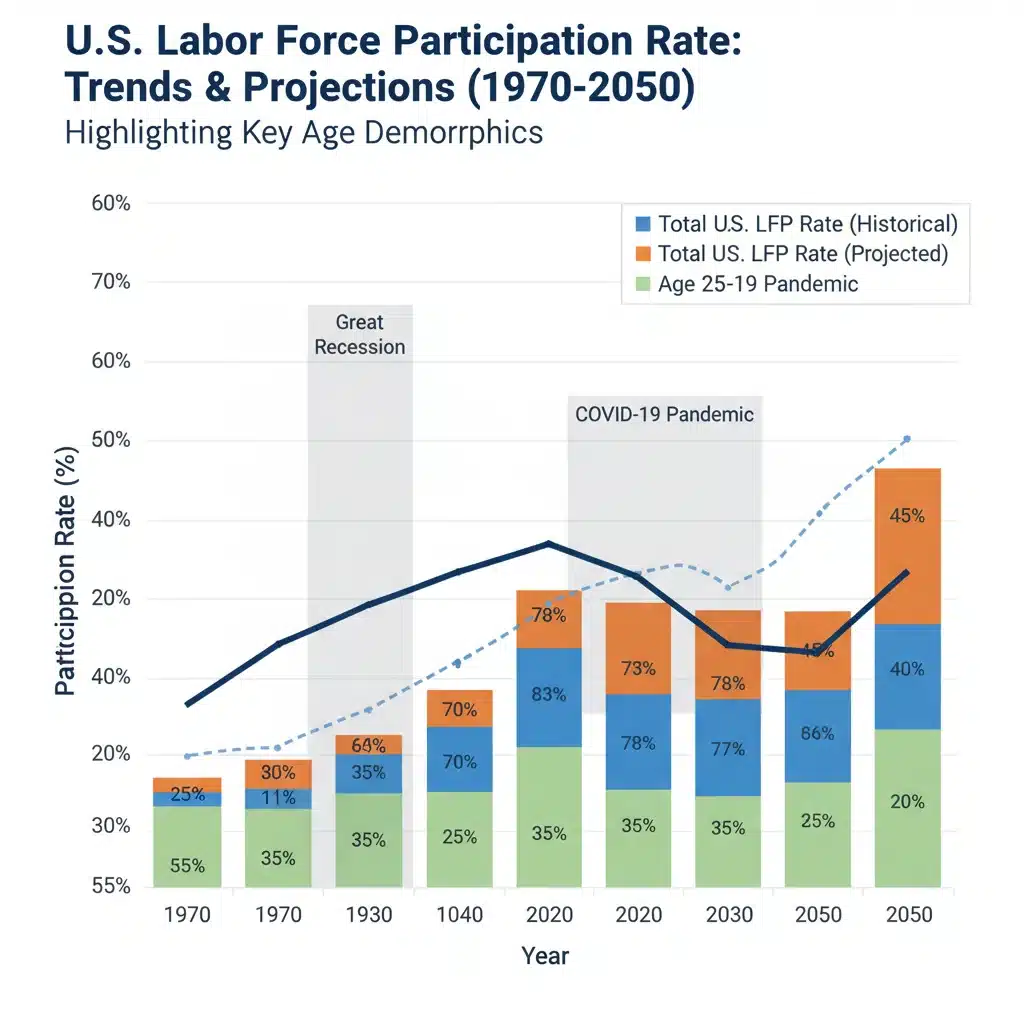
The US Labor Participation Rate has seen significant fluctuations over the decades. It peaked in the late 1990s and early 2000s, largely driven by the increasing entry of women into the workforce. However, since then, a gradual decline has been observed, exacerbated by the Great Recession and more recently, the COVID-19 pandemic. Several long-term trends contribute to this decline, including:
- Aging Population: The large Baby Boomer generation is increasingly reaching retirement age, naturally reducing the pool of active workers.
- Educational Attainment: More young people are pursuing higher education, delaying their entry into the labor force.
- Disability: A rise in individuals claiming disability benefits has also played a role.
- Changing Work Preferences: Some individuals, particularly younger generations, are re-evaluating traditional work models, opting for alternative arrangements or prioritizing work-life balance over full-time employment.
- Technological Advancements: Automation and artificial intelligence are transforming industries, potentially displacing workers in certain sectors and requiring new skill sets.
Understanding these historical forces is crucial for interpreting the current 62.5% rate and projecting its future trajectory.
The Current 62.5% Rate: A Critical Juncture for US Labor Participation
As we approach 2026, a US Labor Participation Rate around 62.5% places the nation at a critical juncture. While this figure represents a recovery from the sharp drop experienced during the initial phase of the pandemic, it remains below the pre-pandemic levels and significantly lower than its peak. This rate carries multifaceted implications for the economy:
- Economic Growth: A lower LFPR can constrain economic growth. Fewer workers mean less production of goods and services, which directly impacts GDP. It also means fewer consumers earning wages to spend, potentially dampening demand.
- Productivity: While the LFPR doesn’t directly measure individual productivity, a shrinking workforce can put pressure on remaining workers to be more productive. However, if the decline is due to a loss of skilled workers, overall productivity might suffer.
- Fiscal Stability: A smaller proportion of the population earning wages translates to a smaller tax base. This can strain government finances, impacting social security, healthcare, and other public services that rely on payroll taxes.
- Innovation and Competitiveness: A vibrant and growing labor force is often a source of new ideas, entrepreneurship, and innovation. A stagnant or shrinking workforce could hinder the nation’s ability to compete globally.
- Wage Growth: In theory, a tighter labor market (fewer workers for available jobs) should lead to higher wages as employers compete for talent. However, if the decline in participation is due to a structural mismatch of skills or a large number of discouraged workers, wage growth might not materialize broadly across all sectors.
The current rate, therefore, is not just a number; it’s a barometer of the nation’s economic potential and a signal for policymakers to address underlying challenges.
Factors Influencing the 2026 US Labor Participation Outlook
Looking ahead to 2026, several key factors will continue to shape the US Labor Participation Rate. These influences are dynamic and interconnected, making precise predictions challenging but offering clear areas for policy intervention and economic observation.
Demographic Shifts
The aging of the population remains a dominant force. As more Baby Boomers exit the workforce, their departure will continue to exert downward pressure on the overall LFPR. The extent to which this is offset by younger generations entering the workforce, or by older adults choosing to work longer, will be crucial. Immigration patterns also play a significant role, as immigrants often have higher participation rates and can replenish the working-age population.
Technological Advancement and Automation
The rapid pace of technological change is a double-edged sword. While automation can boost productivity, it can also displace workers in certain sectors, particularly those involving routine tasks. The challenge for 2026 will be to ensure that the workforce is equipped with the skills needed for emerging jobs, preventing a widening skills gap that could sideline a segment of the population.
Education and Skill Development
The alignment between educational output and industry needs is more critical than ever. Investments in vocational training, reskilling programs, and accessible higher education can help individuals adapt to the evolving job market and improve their employability, thereby boosting participation. Policies that encourage lifelong learning will be vital.
Social and Cultural Shifts
Changing societal norms around work, family, and leisure also impact participation. For instance, increased access to affordable childcare and eldercare can enable more parents, especially mothers, to participate in the workforce. Attitudes towards retirement age, remote work, and flexible schedules will also influence individual decisions to work.
Health and Public Health Initiatives
The lingering effects of the pandemic, including long COVID and increased awareness of public health, could influence participation. A healthier population is generally a more productive and participatory one. Investments in public health and accessible healthcare services can indirectly support higher LFPR.
Policy Interventions
Government policies play a direct role. These include:
- Tax Incentives: Policies that incentivize work over other forms of income or benefits.
- Immigration Policies: Reforms that attract skilled workers and contribute to population growth.
- Labor Laws: Regulations around minimum wage, worker protections, and unionization can affect employment decisions.
- Social Safety Nets: The design of unemployment benefits, disability support, and welfare programs can influence the incentive to seek employment.
Understanding these drivers is key to forecasting and influencing the US Labor Participation rate towards a more economically advantageous position.
The Economic Impact of a 62.5% US Labor Participation Rate
A sustained US Labor Participation Rate around 62.5% carries significant economic consequences that ripple through various sectors of the economy. These impacts are not merely theoretical; they translate into tangible effects on businesses, individuals, and the government.
Impact on Economic Growth and GDP
The most direct consequence of a lower participation rate is its drag on potential economic growth. With fewer people working, the nation produces fewer goods and services. This directly limits the growth of Gross Domestic Product (GDP). Economists often link labor force growth to potential GDP growth; a stagnant or declining labor force means that sustained high economic growth becomes harder to achieve without significant productivity gains from the existing workforce. While technological advancements can partially offset this, there’s a limit to how much productivity can increase without a robust labor supply.
Strain on Social Security and Entitlement Programs
Social Security, Medicare, and other entitlement programs are largely funded by current workers’ contributions. A lower LFPR means fewer contributors relative to the number of beneficiaries, putting immense strain on these systems. As the Baby Boomer generation continues to retire, this imbalance will become even more pronounced. This necessitates difficult policy choices: raising taxes, cutting benefits, or finding ways to significantly boost the working population.
Wage Dynamics and Income Inequality
The relationship between LFPR and wages is complex. In a tight labor market (where labor supply is low relative to demand), wages might increase as employers compete for workers. However, if the low LFPR is due to a large number of discouraged workers or a skills mismatch, certain sectors might experience wage stagnation while others see increases. This can exacerbate income inequality, as highly skilled workers in demand command higher wages, while those without the necessary skills struggle to find well-paying jobs or any jobs at all.
Innovation and Entrepreneurship
A dynamic and growing labor force is often a hotbed for innovation and entrepreneurship. More people working means more diverse ideas, more new businesses, and a greater capacity for research and development. A stagnant or shrinking labor pool could lead to a less innovative economy, potentially hindering the nation’s long-term competitiveness on the global stage. New startups might find it harder to find talent, and established companies might struggle to fill critical roles.
Regional Disparities
The impact of a 62.5% LFPR is unlikely to be uniform across the United States. Some regions may experience more severe labor shortages due to demographic trends or industry-specific challenges, leading to localized economic slowdowns. Other regions, particularly those attracting younger populations or with thriving new industries, might fare better. This can widen economic disparities between different parts of the country.
Policy Responses to Boost US Labor Participation
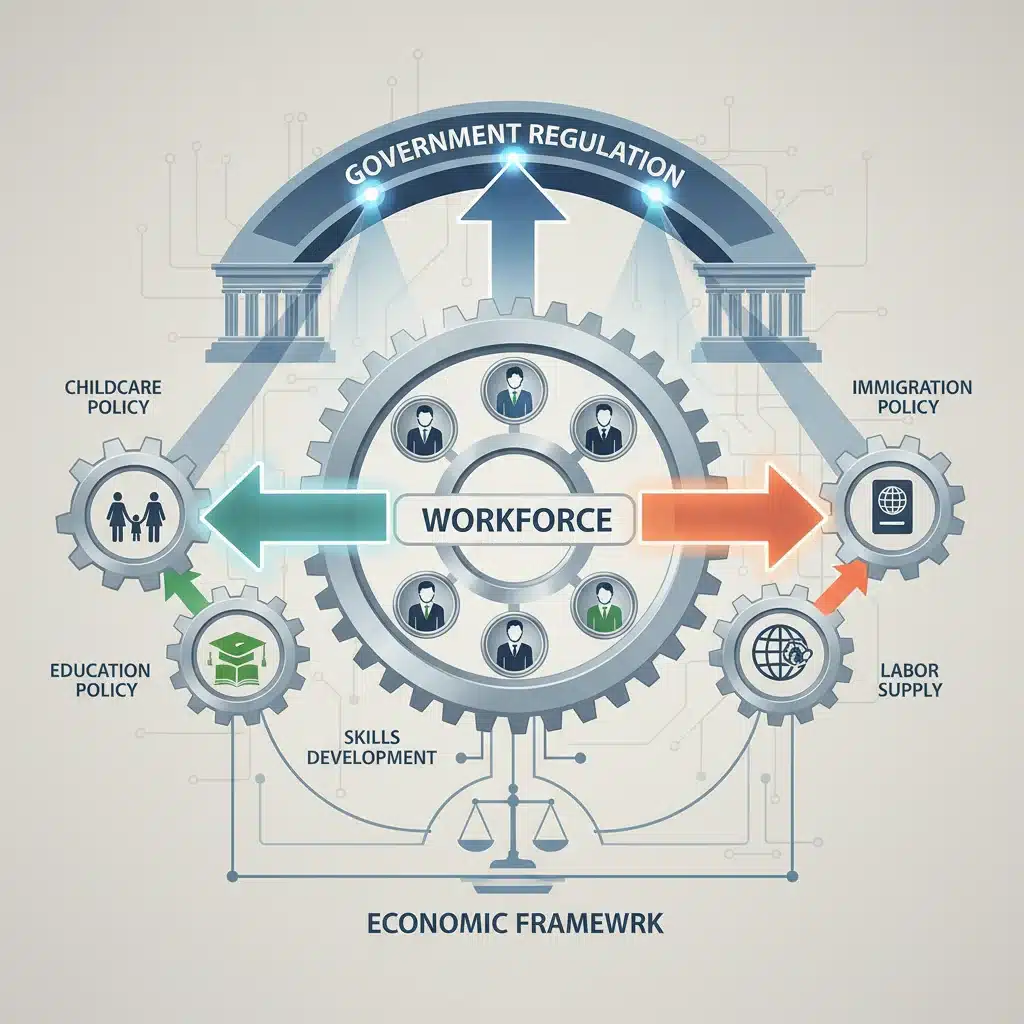
Addressing the challenges posed by a potentially stagnant or declining US Labor Participation Rate requires a multi-pronged approach involving various policy interventions. These policies aim to remove barriers to work, enhance skills, and encourage greater workforce engagement across different demographic groups.
Investing in Education and Workforce Development
One of the most critical areas for intervention is education and skill development. This includes:
- Reskilling and Upskilling Programs: Government-funded or incentivized programs that help workers acquire new skills relevant to in-demand industries. This is crucial for those whose jobs are at risk from automation or technological shifts.
- Vocational Training and Apprenticeships: Strengthening pathways for skilled trades and technical professions, making them attractive alternatives to traditional four-year degrees.
- STEM Education: Continued emphasis on Science, Technology, Engineering, and Mathematics education from an early age to foster a pipeline of talent for future innovation-driven jobs.
- Digital Literacy: Ensuring all segments of the population have fundamental digital skills to participate in an increasingly digital economy.
Enhancing Family-Friendly Policies
For many, particularly parents and caregivers, barriers to work are often related to family responsibilities. Policies that support families can significantly boost participation:
- Affordable Childcare: Subsidies or universal pre-kindergarten programs can reduce the financial burden of childcare, enabling more parents to work.
- Paid Family Leave: Allowing workers to take paid time off for family or medical reasons without fear of losing their job can improve retention and encourage re-entry into the workforce after life events.
- Flexible Work Arrangements: Encouraging remote work, flexible hours, and compressed workweeks can make it easier for individuals with caregiving responsibilities to balance work and home life.
Supporting Older Workers
With an aging population, encouraging and enabling older adults to work longer can offset some of the demographic pressures:
- Phased Retirement Options: Allowing individuals to gradually reduce their work hours rather than abruptly retiring.
- Anti-Age Discrimination Laws: Strengthening protections against age discrimination in hiring and promotion.
- Healthcare Accessibility: Ensuring access to affordable healthcare, which can be a significant concern for older workers.
Reforming Immigration Policies
Immigration has historically been a source of labor force growth in the U.S. Strategic immigration policies can help address labor shortages, particularly in skilled professions and those requiring physical labor:
- Skilled Immigration: Policies that prioritize highly skilled immigrants who can fill critical labor gaps.
- Pathway to Citizenship: Providing clear and efficient pathways for immigrants to legally work and contribute to the economy.
Addressing Health and Disability Barriers
Individuals facing health challenges or disabilities often want to work but face significant barriers:
- Improved Healthcare Access: Making healthcare more affordable and accessible to reduce health-related work absences and enable faster recovery.
- Vocational Rehabilitation: Programs that help individuals with disabilities acquire skills and find suitable employment.
- Workplace Accommodations: Encouraging employers to provide reasonable accommodations for workers with disabilities.
These policy levers, when strategically applied, can collectively contribute to a healthier and more participatory US Labor Participation Rate, fostering greater economic stability and growth for 2026 and beyond.
The Future Outlook: Projections for US Labor Participation in 2026 and Beyond
Forecasting the US Labor Participation Rate for 2026 and the subsequent years involves navigating a complex interplay of demographic realities, technological advancements, and policy choices. While precise figures are elusive, several trends and expert analyses offer insights into the likely trajectory.
Continued Demographic Headwinds
The aging of the Baby Boomer generation is an undeniable demographic force that will continue to exert downward pressure on the overall LFPR. Even with increased longevity, many will choose to retire, and their sheer numbers mean their exit will be felt. Unless there’s a significant surge in younger workers entering the labor force or a dramatic increase in the participation of older adults, the overall rate is unlikely to return to its late 1990s peaks in the near future.
Potential for a ‘New Normal’ in Work
The COVID-19 pandemic accelerated trends in remote work, flexible schedules, and a re-evaluation of work-life balance. For 2026, these shifts could mean a ‘new normal’ where the traditional 9-to-5 office job is less ubiquitous. This could have mixed effects on participation. On one hand, flexibility might enable more individuals, particularly those with caregiving responsibilities or disabilities, to participate. On the other hand, some might opt for fewer hours or choose to leave the traditional workforce for alternative arrangements that are not captured in standard LFPR metrics.
Impact of Automation and AI
The increasing integration of artificial intelligence and automation into various industries will continue to reshape the job market. While some jobs may be displaced, new ones requiring different skill sets will emerge. The pace at which the workforce can adapt and acquire these new skills will be critical. If education and training systems are agile, automation could boost productivity and create new opportunities, drawing more people into the workforce. If not, it could lead to increased structural unemployment and lower participation among those whose skills become obsolete.
The Role of Policy Decisions
The policy interventions discussed earlier will play a crucial role in shaping the 2026 outlook. Aggressive policies aimed at improving childcare access, supporting older workers, investing in reskilling, and strategic immigration could help stabilize or even modestly increase the LFPR. Conversely, a lack of proactive policy could see the rate continue its slow decline, with all the associated economic challenges.
The ‘Great Resignation’ and Worker Preferences
The phenomenon often dubbed the ‘Great Resignation’ has highlighted a shift in worker preferences, with many seeking better pay, benefits, and work-life balance. This could mean that employers will need to offer more attractive packages and flexible conditions to draw individuals into and retain them in the labor force. If employers adapt effectively, this could positively influence participation. If not, it could contribute to ongoing labor shortages.
Projections from Agencies
Organizations like the Congressional Budget Office (CBO) and the Bureau of Labor Statistics (BLS) regularly publish long-term projections for the labor force. While these projections are subject to revision, they generally anticipate a continued gradual decline or stabilization of the LFPR, primarily due to demographic factors. However, the exact rate of decline or stabilization will depend heavily on the other factors mentioned above.
In summary, the 2026 US Labor Participation Rate will be a reflection of how effectively the nation addresses its demographic challenges, embraces technological change, and implements supportive policies. A proactive and adaptive approach will be essential to ensure a robust and inclusive labor force that can drive economic prosperity in the years to come.
Conclusion: The Enduring Significance of US Labor Participation
The US Labor Participation Rate, particularly as it hovers around 62.5% heading into 2026, is far more than a mere statistical data point. It is a vital indicator of the nation’s economic vitality, its capacity for growth, and the overall well-being of its populace. A healthy and robust participation rate signifies a thriving economy where individuals are engaged, productive, and contributing to the collective prosperity.
The current rate, while showing recovery from pandemic lows, underscores a longer-term trend influenced by an aging population, evolving work preferences, and rapid technological advancements. These forces present both challenges and opportunities. On one hand, a lower participation rate can strain social safety nets, dampen economic growth, and potentially exacerbate income inequality. On the other, it can spur innovation in how we work, necessitate crucial investments in education and reskilling, and drive policies that make the labor market more inclusive and flexible.
As we look to 2026 and beyond, the decisions made today regarding workforce development, family-friendly policies, immigration, and support for older workers will profoundly shape the future of the American labor force. It requires a concerted effort from policymakers, businesses, educational institutions, and individuals to adapt to changing realities and ensure that the United States remains economically competitive and socially equitable.
Monitoring the US Labor Participation Rate is not just an academic exercise; it’s a fundamental aspect of understanding where the nation is headed and what steps are necessary to secure a prosperous future for all. The 62.5% figure serves as a call to action, urging a proactive and strategic approach to nurturing a resilient, adaptable, and fully engaged workforce.
Author