2026 Federal Budget Deficit: Economic Stability Challenges

The 2026 Federal Budget Deficit: What a $1.5 Trillion Gap Means for Future U.S. Economic Stability
The United States economy stands at a critical juncture, facing a projected federal budget deficit of an astounding $1.5 trillion in 2026. This colossal fiscal gap is not merely a number; it represents a significant challenge to the nation’s long-term economic health and stability. Understanding the origins, implications, and potential remedies for this deficit is paramount for policymakers, economists, and everyday citizens alike. This article will delve deep into the intricacies of the 2026 federal budget deficit, exploring its causes, potential consequences for inflation, interest rates, and economic growth, and outlining the difficult policy choices that lie ahead.
For decades, the U.S. has grappled with persistent budget deficits, but the scale and projected trajectory of the 2026 deficit raise particular concerns. A deficit of this magnitude can have far-reaching effects, influencing everything from the cost of borrowing for individuals and businesses to the government’s ability to invest in critical infrastructure and social programs. As we navigate an increasingly complex global economic landscape, the fiscal health of the nation becomes an even more pressing issue. The implications of a sustained large federal budget deficit extend beyond mere financial accounting; they touch upon intergenerational equity, national security, and the very fabric of American prosperity.
Understanding the Federal Budget Deficit: A Primer
Before we dissect the 2026 projections, it’s essential to understand what a federal budget deficit entails. Simply put, a budget deficit occurs when government spending exceeds government revenue over a specific period, typically a fiscal year. The U.S. government funds its operations primarily through taxes (income, corporate, payroll, etc.). When these revenues are insufficient to cover expenditures, the government must borrow money to make up the difference. This borrowing adds to the national debt, which is the accumulated sum of all past deficits minus any surpluses.
Several factors contribute to the size of the federal budget deficit. On the spending side, major categories include mandatory spending (Social Security, Medicare, Medicaid), discretionary spending (defense, education, infrastructure), and interest payments on the national debt. On the revenue side, economic growth, tax policies, and demographic trends play crucial roles. A robust economy generally leads to higher tax revenues and lower spending on certain social safety net programs, while recessions can exacerbate deficits due to decreased tax collection and increased demand for government assistance.
The projected $1.5 trillion deficit for 2026 is not an isolated event but rather a continuation of a trend, albeit at a concerning scale. It reflects a combination of structural imbalances, such as an aging population increasing healthcare and retirement costs, and potentially new policy decisions or unforeseen economic challenges. Grasping these foundational concepts is the first step toward appreciating the gravity of the situation and the importance of addressing the federal budget deficit proactively.
Key Drivers Behind the 2026 Federal Budget Deficit Projection
The forecast of a $1.5 trillion federal budget deficit in 2026 is the culmination of several powerful economic and policy trends. Identifying these drivers is crucial for formulating effective solutions. One primary contributor is the ongoing increase in mandatory spending. Programs like Social Security and Medicare, vital safety nets for millions of Americans, are facing demographic pressures. As the baby boomer generation continues to retire, the number of beneficiaries is growing significantly, while the ratio of workers contributing to these programs is declining. This demographic shift places immense strain on these entitlement programs, pushing their costs higher each year.
Another significant factor is the rising cost of interest payments on the national debt. With the national debt already at unprecedented levels, even a modest increase in interest rates can dramatically inflate the government’s borrowing costs. The Federal Reserve’s actions to combat inflation, by raising benchmark interest rates, directly impact the government’s ability to service its debt cheaply. These interest payments are a non-discretionary expense, meaning the government must pay them, reducing funds available for other priorities or further contributing to the deficit if not covered by revenues. The higher the national debt, the more susceptible the budget becomes to fluctuations in interest rates, creating a potential feedback loop where deficits lead to more borrowing, which leads to higher interest payments, and so on.
Furthermore, tax policy decisions play a critical role. While tax cuts can stimulate economic activity in the short term, they can also reduce government revenue, contributing to deficits if not offset by spending reductions or subsequent economic growth that broadens the tax base. Conversely, tax increases, while potentially deficit-reducing, can face political opposition and may impact economic incentives. The balance between revenue generation and economic stimulation is a constant challenge for policymakers when addressing the federal budget deficit.
Discretionary spending, though often the target of budget debates, is generally a smaller piece of the deficit puzzle compared to mandatory spending and interest payments. However, significant increases in defense spending, infrastructure projects, or responses to unforeseen crises (like pandemics or natural disasters) can also add to the deficit. The combination of these factors creates a complex fiscal environment where the projected $1.5 trillion federal budget deficit becomes a stark reality, demanding careful consideration and strategic action.
Economic Consequences: Inflation and Interest Rates
A large and persistent federal budget deficit can have profound implications for the broader economy, particularly concerning inflation and interest rates. One of the most immediate concerns is the potential for increased inflation. When the government borrows heavily, it often competes with private sector borrowers for available capital. If the Federal Reserve accommodates this borrowing by effectively printing more money (quantitative easing), it can lead to an increase in the money supply, which, if not matched by an increase in goods and services, can drive up prices across the economy. This inflationary pressure erodes the purchasing power of consumers and can destabilize financial markets.
The relationship between deficits and interest rates is also critical. A large federal budget deficit typically means the government needs to issue more bonds to finance its spending. An increased supply of government bonds, without a corresponding increase in demand, can push up interest rates. Higher interest rates make it more expensive for businesses to borrow money for investments, potentially slowing economic growth and job creation. For consumers, higher rates translate to more expensive mortgages, car loans, and credit card debt, further straining household budgets. This phenomenon, often referred to as ‘crowding out,’ occurs when government borrowing absorbs a significant portion of available credit, leaving less for private investment.
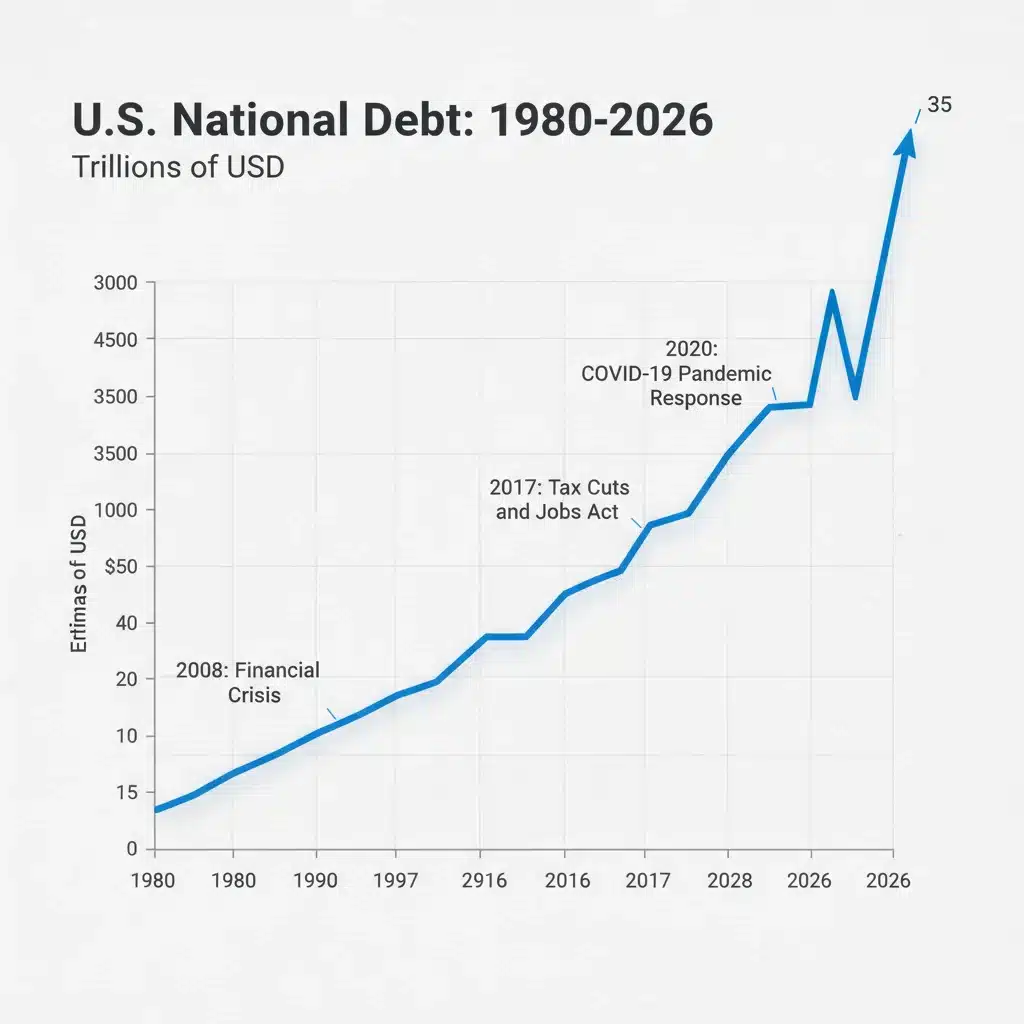
Furthermore, the expectation of future deficits can also influence current interest rates. If investors believe that the government will continue to run large deficits, they may demand a higher return (interest rate) on their loans to compensate for the perceived increased risk of inflation or future fiscal instability. This forward-looking behavior can exacerbate the problem, making it even more challenging for the government to manage its debt and for the economy to maintain stability. The interplay between the federal budget deficit, inflation, and interest rates forms a delicate balance that, if disrupted, can have significant and lasting negative consequences for economic prosperity.
Long-Term Impact on Economic Growth and National Debt
Beyond the immediate concerns of inflation and interest rates, a sustained $1.5 trillion federal budget deficit in 2026 carries significant long-term implications for U.S. economic growth and the national debt. The most direct consequence is the relentless accumulation of national debt. Each year’s deficit adds to the total debt burden, which currently stands at an historically high level. A growing national debt can act as a drag on future economic growth in several ways. As mentioned, higher interest payments divert government resources that could otherwise be used for productive investments in education, research and development, or infrastructure. These investments are crucial for enhancing productivity and long-term economic potential.
Moreover, a continuously expanding national debt can erode investor confidence. Both domestic and international investors may become wary of the government’s ability to manage its finances, potentially leading to a decrease in demand for U.S. Treasury bonds. This could force the government to offer even higher interest rates to attract buyers, further increasing debt servicing costs and creating a vicious cycle. A loss of confidence could also weaken the U.S. dollar, making imports more expensive and potentially fueling additional inflation.
The burden of national debt also raises intergenerational equity concerns. Future generations will inherit this debt, potentially facing higher taxes or reduced government services to pay it off. This transfer of fiscal responsibility can limit their economic opportunities and reduce their standard of living. Economists often debate the precise tipping point at which national debt becomes unsustainable, but a federal budget deficit of this magnitude certainly pushes the boundaries of fiscal prudence.
Finally, a large national debt can limit the government’s flexibility to respond to future economic crises. If a recession or another major shock occurs, the government’s ability to implement counter-cyclical fiscal policies (like stimulus spending or tax cuts) may be constrained by already high debt levels and borrowing costs. This reduced fiscal space can prolong economic downturns and make recovery more difficult, highlighting the critical importance of addressing the federal budget deficit before it becomes an insurmountable obstacle to national prosperity.
Policy Responses and Potential Solutions
Addressing a projected $1.5 trillion federal budget deficit requires a multi-faceted approach involving difficult policy choices. There are broadly two categories of solutions: increasing government revenue and decreasing government spending. On the revenue side, options include raising taxes, broadening the tax base, or closing tax loopholes. For instance, increasing income tax rates for higher earners, raising corporate tax rates, or implementing a value-added tax (VAT) are all potential avenues. However, each of these comes with its own set of economic and political considerations, including potential impacts on economic growth and fairness.
On the spending side, the challenge is even greater, given the large share of mandatory spending. Reforming entitlement programs like Social Security and Medicare is often cited as essential for long-term fiscal sustainability. This could involve raising the retirement age, adjusting benefit formulas, or increasing payroll taxes. These reforms are politically contentious but are often seen as necessary to rein in the structural components of the federal budget deficit. Reductions in discretionary spending, such as defense, education, or infrastructure, are also possible, but these cuts can have significant societal impacts and face strong opposition from various interest groups.

Beyond direct tax and spending adjustments, other strategies can indirectly help. Promoting robust economic growth through investments in innovation, education, and infrastructure can naturally increase tax revenues. Furthermore, adopting more efficient government operations and reducing waste can free up resources. Bipartisan cooperation is critical for any meaningful progress, as significant fiscal adjustments typically require broad political consensus to be sustainable. The absence of such consensus often leads to procrastination, allowing the federal budget deficit to grow unchecked and making future solutions even more painful.
The choice of which policies to implement, and in what combination, will define the fiscal trajectory of the United States for decades to come. It requires a careful balancing act between immediate economic needs and long-term fiscal responsibility, all while navigating a complex political landscape. Ignoring the projected $1.5 trillion federal budget deficit is not an option; proactive and decisive action is imperative to safeguard future U.S. economic stability.
Historical Context: Lessons from Past Deficits
To fully appreciate the significance of the projected $1.5 trillion federal budget deficit in 2026, it’s beneficial to examine past periods of high deficits in U.S. history. The nation has faced significant fiscal challenges before, and understanding how these were addressed (or not addressed) can offer valuable lessons. For instance, during World War II, the U.S. ran enormous deficits to finance the war effort. While these were necessary for national survival, the post-war period saw a concerted effort to reduce debt relative to GDP through economic growth and fiscal discipline. This demonstrated that large deficits, while sometimes unavoidable, require a clear path to normalization.
More recently, the 1980s saw a rise in deficits due to tax cuts and increased defense spending, leading to concerns about national debt. This period eventually saw a shift towards fiscal consolidation in the 1990s, culminating in budget surpluses towards the end of the decade, largely driven by strong economic growth and spending restraint. The early 2000s, however, saw a return to deficits due to tax cuts, increased spending on wars in Afghanistan and Iraq, and the onset of the Great Recession. The 2008 financial crisis and the subsequent recovery efforts further ballooned the deficit, necessitating massive government intervention.
Each of these historical episodes highlights a few recurring themes. First, major crises (wars, recessions) almost invariably lead to increased deficits. Second, political will and economic conditions are crucial for turning the tide on rising debt. Periods of strong economic growth can help reduce deficits by boosting tax revenues, but they are rarely sufficient on their own without some level of fiscal prudence. Third, the long-term consequences of persistent deficits, such as higher interest rates and reduced fiscal flexibility, have been a consistent concern among economists across different eras. The lessons from history underscore that while deficits can be managed, ignoring a substantial federal budget deficit like the one projected for 2026 can lead to severe economic repercussions, making timely and strategic action paramount.
The Role of Global Economic Factors
The U.S. economy does not exist in a vacuum, and global economic factors can significantly influence the federal budget deficit. International trade dynamics, global supply chain stability, and geopolitical events all play a role in shaping economic growth, inflation, and interest rates, which in turn affect government revenues and expenditures. For instance, a slowdown in global economic growth can reduce demand for U.S. exports, impacting corporate profits and, consequently, corporate tax revenues. Conversely, robust global growth can stimulate the U.S. economy, potentially alleviating some deficit pressures.
Geopolitical tensions and conflicts can also necessitate increased defense spending, directly contributing to the deficit. Furthermore, shifts in global capital flows can influence the demand for U.S. Treasury bonds. If major international investors decide to reduce their holdings of U.S. debt, it could put upward pressure on U.S. interest rates, increasing the cost of servicing the national debt and exacerbating the federal budget deficit. The strength of the U.S. dollar relative to other currencies also plays a role; a stronger dollar can make U.S. exports more expensive, potentially dampening economic activity, while a weaker dollar can fuel inflation by making imports more costly.
Climate change and related environmental challenges represent another emerging global factor. The costs associated with mitigating climate change, adapting to its effects, and responding to natural disasters can place substantial demands on the federal budget, potentially adding to future deficits. The interconnectedness of the modern global economy means that the U.S. cannot address its federal budget deficit in isolation. Understanding these international linkages is vital for a comprehensive approach to fiscal policy, as domestic solutions may need to be complemented by international cooperation and an awareness of global economic trends to be truly effective.
Conclusion: Navigating the Fiscal Tightrope
The projected $1.5 trillion federal budget deficit in 2026 presents a formidable challenge to the future U.S. economic stability. This significant fiscal gap, driven by rising mandatory spending, increasing interest payments on a burgeoning national debt, and various tax policy decisions, threatens to unleash a cascade of negative economic consequences. Potential outcomes include heightened inflationary pressures, elevated interest rates that crowd out private investment, and a long-term drag on economic growth that could burden future generations.
Addressing this deficit requires courageous and strategic policymaking. A combination of revenue enhancements, such as tax reforms, and targeted spending reductions, particularly in entitlement programs, will be necessary. While politically difficult, these measures are essential to restore fiscal health and ensure the nation’s capacity to respond to future crises. Historical precedents show that while large deficits can be managed, procrastination only exacerbates the problem, making eventual solutions more painful and impactful.
The path forward is a fiscal tightrope walk, demanding bipartisan cooperation, a clear-eyed assessment of economic realities, and a commitment to long-term sustainability over short-term political expediency. The stability of the U.S. economy, the prosperity of its citizens, and its standing on the global stage depend on how effectively the nation confronts the challenge of the 2026 federal budget deficit. The time for proactive and decisive action is now, to safeguard a robust and resilient economic future for all Americans.
Author