Navigating 2026 U.S. GDP Growth: Key Sectors and Economic Outlook
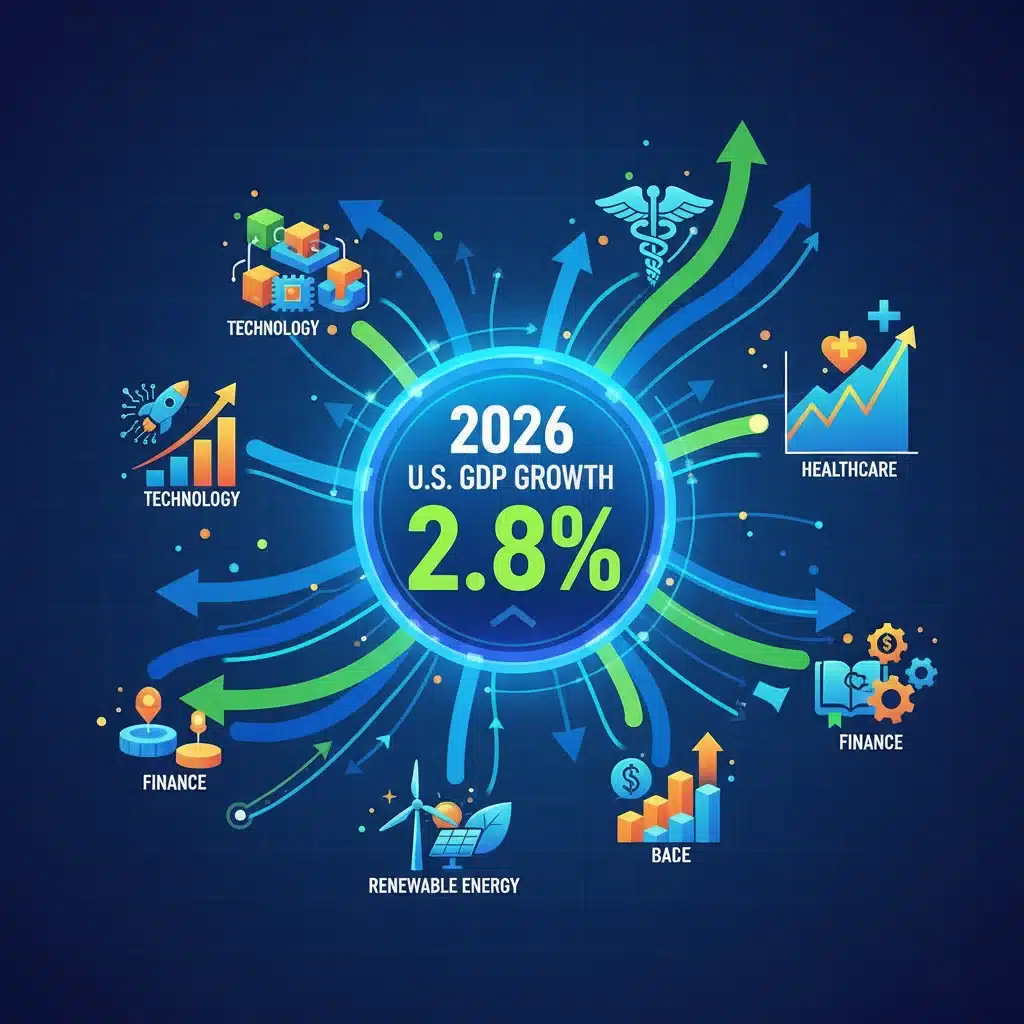
Understanding the 2026 U.S. GDP Growth Projections: An Insider Look at Sectors Poised for a 2.8% Expansion
The economic landscape is a dynamic and ever-evolving entity, constantly shaped by a confluence of global events, domestic policies, and technological advancements. As we look towards 2026, the United States economy stands at a pivotal juncture, with projections indicating a robust 2.8% growth in its Gross Domestic Product (GDP). This figure, while seemingly just a number, encapsulates the collective health and potential of the nation’s economic machinery. Understanding the nuances behind this 2026 US GDP Growth projection is crucial for policymakers, investors, businesses, and the general public alike, as it offers a roadmap for future prosperity and potential challenges.
GDP, the total monetary or market value of all the finished goods and services produced within a country’s borders in a specific time period, serves as a comprehensive scorecard of economic health. A 2.8% growth rate for the U.S. in 2026 suggests a healthy, albeit moderated, expansion following the various cycles of recovery and adjustment experienced in recent years. This article will delve deep into the factors underpinning this forecast, identify the key sectors expected to be the primary drivers of this growth, and explore the potential headwinds that could influence the trajectory of the 2026 US GDP Growth.
The journey to projecting 2026 US GDP Growth involves an intricate analysis of various economic indicators, including consumer spending, business investment, government expenditure, and net exports. These components, when viewed holistically, paint a picture of an economy that is resilient and adaptable. The projected 2.8% growth is not merely an optimistic guess but a carefully calculated estimate based on current trends, anticipated policy adjustments, and emerging opportunities.
The Pillars of 2026 US GDP Growth: Key Sector Contributions
The U.S. economy is a diverse tapestry of industries, each contributing in its unique way to the national output. For the 2026 US GDP Growth to reach 2.8%, certain sectors are expected to outperform, acting as the primary engines of this expansion. Identifying these sectors is paramount for understanding where investment and innovation will likely concentrate.
Technology and Digital Transformation: The Unyielding Force
The technology sector has been an undeniable powerhouse of economic growth for decades, and its influence is only projected to intensify by 2026. Digital transformation continues to sweep across all industries, driving demand for new software, hardware, cloud services, and cybersecurity solutions. Areas such as Artificial Intelligence (AI), machine learning, quantum computing, and advanced analytics are not just buzzwords; they are foundational technologies that will redefine productivity and efficiency across the board. The proliferation of 5G technology and the continued expansion of the Internet of Things (IoT) will further fuel innovation, creating new markets and revenue streams. Companies investing heavily in research and development in these areas are likely to see significant returns, contributing substantially to the overall 2026 US GDP Growth.
Renewable Energy and Green Technologies: A Sustainable Surge
With increasing global awareness of climate change and a concerted push towards sustainability, the renewable energy sector is poised for exponential growth. Government incentives, coupled with falling costs of renewable technologies like solar panels, wind turbines, and battery storage, are making green energy solutions more attractive and economically viable. Investment in infrastructure for electric vehicles (EVs), smart grids, and sustainable manufacturing processes will not only create jobs but also drive significant capital expenditure. The transition to a green economy is a long-term trend, and by 2026, its impact on the 2026 US GDP Growth will be undeniable, as new industries emerge and traditional ones adapt to more sustainable practices.
Healthcare and Biotechnology: Innovation for Well-being
The healthcare sector, perennially a significant portion of the U.S. economy, is expected to continue its robust growth trajectory. An aging population, coupled with continuous advancements in medical technology, pharmaceuticals, and biotechnology, will drive demand for innovative healthcare solutions. Personalized medicine, gene therapies, telemedicine, and digital health platforms are areas of intense research and development that promise to revolutionize patient care and create substantial economic value. Furthermore, lessons learned from recent global health challenges have underscored the importance of resilient healthcare systems and rapid biomedical innovation, ensuring sustained investment and growth in this vital sector, directly impacting the 2026 US GDP Growth.
Advanced Manufacturing and Supply Chain Resilience
The disruptions experienced in recent years have highlighted the critical importance of robust and resilient supply chains. This has led to a renewed focus on advanced manufacturing within the U.S., including automation, robotics, and 3D printing. Policies aimed at reshoring critical production capabilities and diversifying supply chains are expected to stimulate investment in domestic manufacturing. This not only creates jobs but also enhances national security and reduces reliance on foreign supply. The integration of advanced technologies in manufacturing processes will improve efficiency and competitiveness, making this sector a significant contributor to the 2026 US GDP Growth.
Underlying Economic Drivers for 2026 US GDP Growth
Beyond specific sectors, several broader economic drivers will play a crucial role in achieving the projected 2.8% 2026 US GDP Growth.
Consumer Spending and Confidence
Consumer spending accounts for a significant portion of the U.S. GDP. A healthy labor market, coupled with stable inflation and rising real wages, will bolster consumer confidence and encourage spending on goods and services. Government policies aimed at supporting household incomes and managing inflation will be critical in maintaining this vital economic engine. The ability of consumers to spend and invest is a direct reflection of the overall economic sentiment and directly influences the 2026 US GDP Growth.

Furthermore, the shift in consumer preferences towards experiences, digital goods, and sustainable products will continue to shape market dynamics, driving innovation and investment in these areas. Businesses that can adapt to these evolving demands will be well-positioned to capture market share and contribute to economic expansion.
Business Investment and Innovation
Private sector investment in new technologies, infrastructure, and expansion projects is a key determinant of long-term economic growth. Favorable interest rates, access to capital, and a supportive regulatory environment encourage businesses to innovate and expand. The pursuit of higher productivity through automation and digital tools will lead to increased capital expenditure, which directly feeds into GDP growth. The U.S. continues to be a hub for innovation, attracting venture capital and fostering an entrepreneurial ecosystem that drives new business formation and technological breakthroughs, all contributing to a stronger 2026 US GDP Growth.
Government Fiscal and Monetary Policies
The role of government in shaping the economic trajectory cannot be overstated. Fiscal policies, including government spending on infrastructure, education, and research, as well as taxation policies, can stimulate or dampen economic activity. Similarly, monetary policies set by the Federal Reserve, such as interest rate adjustments and quantitative easing/tightening, influence borrowing costs and money supply, thereby affecting investment and consumption. A balanced approach that supports growth while managing inflation will be crucial for achieving the 2.8% 2026 US GDP Growth target. Coordination between fiscal and monetary authorities will be essential to navigate potential economic headwinds and ensure a stable growth environment.
Potential Headwinds and Challenges to 2026 US GDP Growth
While the outlook for 2026 US GDP Growth is largely positive, it would be remiss not to acknowledge the potential challenges that could temper this expansion. Economic forecasts are inherently subject to change, and various factors could introduce volatility.
Inflationary Pressures and Interest Rate Volatility
Persistent inflationary pressures could erode purchasing power and force central banks to maintain higher interest rates for longer. While necessary to curb inflation, sustained high interest rates can dampen business investment and consumer borrowing, potentially slowing down economic growth. Managing the delicate balance between controlling inflation and fostering growth will be a primary challenge for monetary policymakers leading up to and during 2026. Unexpected supply shocks or geopolitical events could also reignite inflationary pressures, making the path to 2.8% 2026 US GDP Growth more complex.
Geopolitical Instability and Global Economic Slowdown
The interconnectedness of the global economy means that geopolitical events and economic slowdowns in other major economies can have ripple effects on the U.S. Trade disputes, conflicts, and disruptions to global supply chains can increase uncertainty, reduce international trade, and impact investor confidence. A significant slowdown in key trading partners could reduce demand for U.S. exports, thereby affecting domestic production and employment. Monitoring the international landscape and adapting to global shifts will be crucial for maintaining the projected 2026 US GDP Growth.
Labor Market Dynamics and Skill Gaps
While a strong labor market is generally positive, persistent skill gaps in critical sectors could become a bottleneck for growth. Industries like technology, healthcare, and advanced manufacturing require highly specialized skills, and a shortage of qualified workers could limit expansion. Investment in education, vocational training, and reskilling programs will be essential to address these gaps and ensure that the workforce can meet the demands of a growing economy. Furthermore, demographic shifts, including an aging workforce, could also present challenges to labor supply, impacting the potential for 2026 US GDP Growth.
Technological Disruption and Regulatory Adaptation
While technology is a major driver of growth, rapid technological disruption also presents challenges. The pace of innovation can outstrip the ability of regulatory frameworks to adapt, potentially creating legal and ethical dilemmas. Issues surrounding data privacy, AI governance, and the future of work in an increasingly automated world will require careful consideration. Striking a balance between fostering innovation and ensuring responsible development will be key to harnessing technology’s full potential for 2026 US GDP Growth without creating undue risks.
Moreover, the rise of automation and AI could displace certain jobs, necessitating proactive policies to support workers in transitioning to new roles and industries. This societal adjustment, if not managed effectively, could lead to social unrest and political instability, which could indirectly affect economic performance.
Implications for Businesses and Investors
For businesses, understanding the projected 2026 US GDP Growth and the contributing sectors is vital for strategic planning. Companies in the identified growth sectors should continue to invest in innovation, talent acquisition, and market expansion. Those in other sectors should explore how they can leverage technological advancements, sustainable practices, and healthcare innovations to enhance their own operations and offerings. Diversification, agility, and a focus on long-term trends will be critical for sustained success.
Investors, too, can use these projections to inform their portfolio decisions. Allocating capital to sectors poised for significant growth, such as technology, renewable energy, and biotechnology, could yield substantial returns. However, a balanced approach that considers risk mitigation and diversification across various asset classes remains prudent. Monitoring economic indicators, policy changes, and global events will be essential for making informed investment choices that align with the trajectory of the 2026 US GDP Growth.
Conclusion: A Balanced Outlook for 2026 US GDP Growth
The projected 2.8% 2026 US GDP Growth paints a picture of a resilient and expanding economy, driven by innovation, strategic investments, and evolving consumer demands. The technology, renewable energy, healthcare, and advanced manufacturing sectors are expected to be at the forefront of this expansion, fueled by digital transformation, sustainability imperatives, and a focus on national well-being and security. Underlying economic drivers such as robust consumer spending, sustained business investment, and supportive fiscal and monetary policies will provide the foundational strength for this growth.
However, the path to 2.8% 2026 US GDP Growth is not without its obstacles. Inflationary pressures, geopolitical uncertainties, labor market challenges, and the complexities of technological disruption all pose potential headwinds that require careful management. Policymakers, businesses, and individuals must remain vigilant, adaptable, and forward-thinking to navigate these challenges successfully.
Ultimately, the 2026 US GDP Growth forecast is more than just a number; it is a testament to the ongoing dynamism and adaptability of the American economy. By understanding the forces at play, both positive and negative, stakeholders can make informed decisions that contribute to sustained prosperity and a robust economic future. The journey ahead will undoubtedly be complex, but with strategic foresight and collaborative effort, the United States is well-positioned to achieve its growth aspirations.
Author