2026 U.S. Stock Market Forecast: Potential 8% Gains or Losses

Understanding the future trajectory of the stock market is a perennial quest for investors, economists, and policymakers alike. As we peer into the crystal ball for the 2026 stock market forecast for the U.S., we find a complex interplay of forces that could lead to significant gains or losses, potentially in the range of 8% in either direction. This comprehensive analysis aims to dissect these intricate factors, providing a nuanced perspective on what lies ahead. We will explore the economic bedrock, technological disruptions, geopolitical shifts, and policy decisions that are poised to shape the investment landscape.
The U.S. stock market, a cornerstone of global finance, is influenced by a myriad of domestic and international variables. Predicting its movements with absolute certainty is impossible, but by examining prevailing trends and potential catalysts, we can develop informed scenarios. Our focus on the 2026 stock market forecast will center on identifying the drivers of potential 8% shifts, whether upward, signaling robust growth, or downward, indicating a period of contraction or correction. This level of volatility, while significant, is not uncommon in historical market cycles, emphasizing the need for strategic foresight and adaptive investment approaches.
The Economic Bedrock: Macroeconomic Indicators and Their Influence
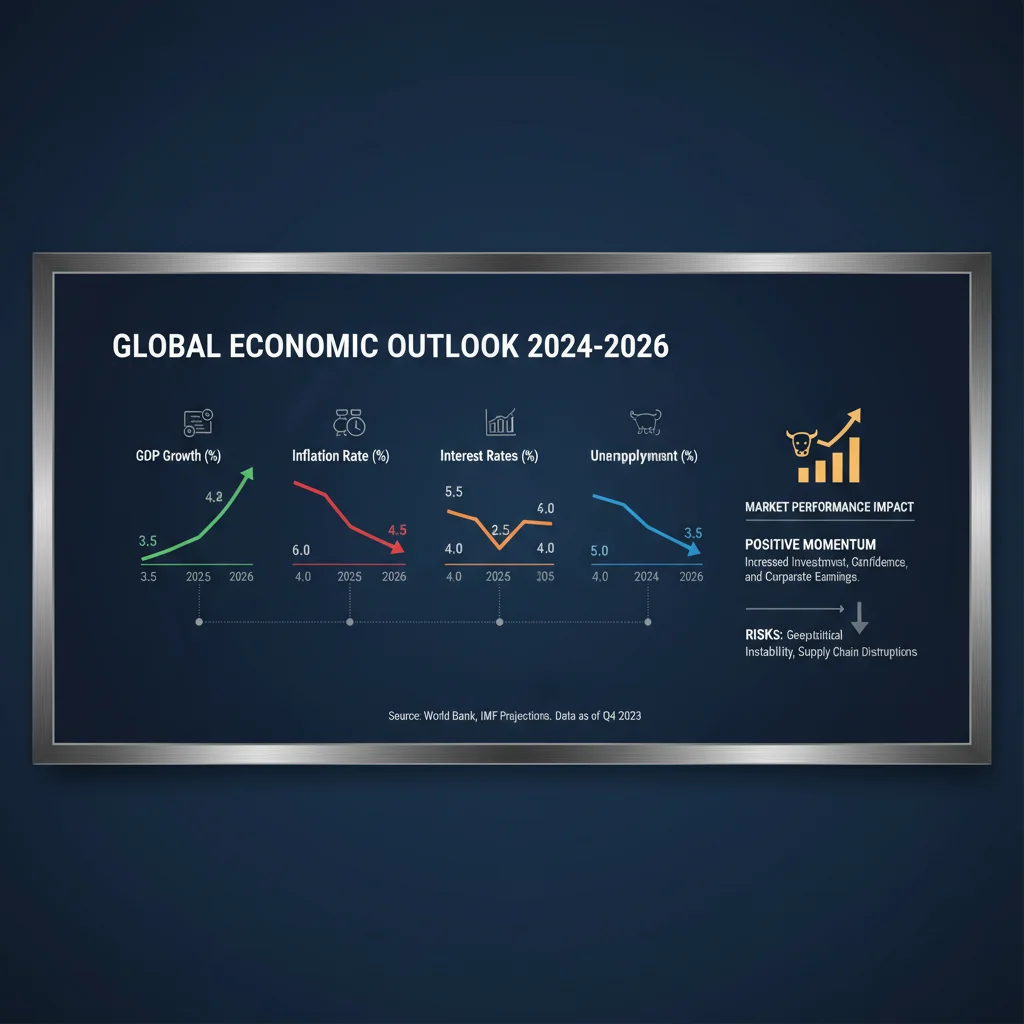
The health of the broader economy is the most fundamental determinant of stock market performance. For the 2026 stock market forecast, several macroeconomic indicators will be under intense scrutiny. Gross Domestic Product (GDP) growth, inflation rates, interest rate policies by the Federal Reserve, and employment figures are paramount. A sustained period of moderate GDP growth, coupled with controlled inflation and stable employment, typically provides a fertile ground for corporate earnings expansion, which in turn fuels stock market appreciation.
However, the post-pandemic economic environment has introduced new complexities. Supply chain disruptions, elevated inflation, and aggressive interest rate hikes have created a volatile landscape. By 2026, we anticipate a potential normalization of these factors. If inflation can be brought back within the Federal Reserve’s target range (around 2%) without triggering a severe recession, and if interest rates stabilize at a level that supports business investment, the market could see a positive impetus. Conversely, persistent inflation, requiring further rate hikes, or a significant economic slowdown leading to widespread job losses, could put downward pressure on the market, potentially pushing it towards an 8% decline.
Consumer spending, which accounts for a substantial portion of U.S. economic activity, will also play a critical role. Factors such as wage growth, household budget levels, and consumer confidence will dictate spending patterns. Strong consumer demand translates to higher corporate revenues and profits, providing a tailwind for the 2026 stock market forecast. Any erosion in consumer confidence due to economic uncertainty or rising living costs could dampen spending, impacting corporate performance and, consequently, stock valuations.
Government fiscal policy, including spending initiatives and taxation, will also contribute to the economic backdrop. Large-scale infrastructure projects or investments in emerging technologies could stimulate growth. However, concerns about national debt and potential tax increases on corporations or high-income earners could introduce headwinds. The balance between stimulating growth and maintaining fiscal responsibility will be crucial for the overall economic health supporting the 2026 stock market forecast.
Technological Disruptions: Innovation as a Market Driver
Technology has always been a powerful engine of economic growth and market transformation. Looking towards the 2026 stock market forecast, several technological trends are expected to profoundly influence corporate profitability and market valuations. Artificial Intelligence (AI), quantum computing, biotechnology, and renewable energy are not just buzzwords; they represent sectors with immense growth potential and the capacity to disrupt established industries.
The continued advancement and adoption of AI, for instance, could revolutionize productivity across various sectors, from healthcare to manufacturing. Companies at the forefront of AI development and application are likely to see significant revenue growth and market capitalization increases. This could contribute positively to the overall market, potentially driving some of the 8% gains we forecast. However, the rapid pace of technological change also presents risks. Companies that fail to adapt or innovate could face obsolescence, leading to declines in their stock values.
Biotechnology and healthcare innovation, spurred by advancements in genomics and personalized medicine, are also poised for substantial growth. Breakthroughs in disease treatment and prevention could create new markets and generate significant profits for pharmaceutical and biotech firms. Similarly, the global push towards sustainability and climate change mitigation will accelerate investment in renewable energy technologies, electric vehicles, and energy storage solutions. These sectors could attract substantial capital flows, further influencing the 2026 stock market forecast.
Cybersecurity, in an increasingly digital world, will remain a critical area of investment. As businesses and governments become more reliant on digital infrastructure, the demand for robust cybersecurity solutions will only grow. Companies specializing in this domain are likely to experience sustained growth, contributing to the broader market’s strength. The interplay between these cutting-edge technologies and traditional industries will define the competitive landscape and ultimately shape the performance of various market segments.
Geopolitical Shifts: Global Stability and Market Volatility
Geopolitical events have an undeniable impact on financial markets. For the 2026 stock market forecast, the global political landscape will be a significant factor to monitor. International relations, trade policies, and regional conflicts can introduce considerable volatility and uncertainty, potentially leading to sharp market reactions.
The relationship between major global powers, particularly the U.S. and China, will continue to be a focal point. Any escalation or de-escalation of trade tensions, technological competition, or diplomatic disputes could have ripple effects across global supply chains and corporate earnings. A stable and predictable international environment is generally conducive to market growth, whereas heightened geopolitical risks can trigger risk-off sentiment among investors, leading to market corrections.
Regional conflicts and political instability in various parts of the world can also impact commodity prices, particularly oil prices, and disrupt trade routes. Such disruptions can lead to inflationary pressures and supply shortages, affecting corporate profitability and consumer purchasing power. The stability of energy markets, for instance, is crucial for many industries. Significant fluctuations in oil prices due to geopolitical events could either boost or dampen economic activity, directly influencing the 2026 stock market forecast.
Furthermore, policy decisions by international bodies and alliances, such as the G7 or the World Trade Organization, can shape the global economic environment. Efforts towards greater international cooperation on issues like climate change, pandemics, or economic development could foster a more stable investment climate. Conversely, protectionist policies or a breakdown in international agreements could fragment global markets, posing challenges for multinational corporations and increasing market uncertainty.
Monetary and Fiscal Policies: The Hand of Government
The actions of central banks and governments are powerful levers that can significantly influence the 2026 stock market forecast. Monetary policy, primarily conducted by the Federal Reserve in the U.S., involves managing interest rates and the money supply. Fiscal policy, on the other hand, refers to government spending and taxation.
By 2026, the Federal Reserve’s approach to interest rates will be critical. If inflation is tamed, the Fed might consider easing monetary policy, potentially through interest rate cuts, to stimulate economic growth. Lower interest rates typically make borrowing cheaper for businesses and consumers, encouraging investment and spending, which can boost corporate earnings and stock valuations. This scenario could contribute to the upper end of the 8% gain forecast.
Conversely, if inflationary pressures persist or re-emerge, the Fed might be forced to maintain higher interest rates or even implement further hikes. Such a scenario could increase borrowing costs, slow down economic activity, and potentially lead to a market downturn, aligning with the 8% loss scenario. The market’s perception of the Fed’s credibility and its ability to navigate these challenges will heavily influence investor confidence.
Fiscal policy will also play a significant role. Government spending on infrastructure, research and development, or social programs can inject demand into the economy. Tax policies, whether increasing or decreasing corporate and individual tax rates, directly impact disposable income and corporate profitability. For the 2026 stock market forecast, the interplay between these policies and their impact on the national debt will be closely watched. Excessive borrowing could lead to concerns about fiscal sustainability, potentially increasing bond yields and making equities less attractive.
Regulatory changes across various sectors, including finance, technology, and energy, can also create opportunities or impose constraints on businesses. For example, new regulations aimed at fostering competition in the tech sector or promoting environmental sustainability could reshape industries and create new investment avenues. Investors will need to monitor these policy shifts carefully to identify potential winners and losers in the market.
Corporate Earnings and Sectoral Performance
Ultimately, the stock market reflects the aggregate performance of publicly traded companies. The 2026 stock market forecast will heavily depend on the trajectory of corporate earnings. Factors such as revenue growth, profit margins, and cost management will dictate how individual companies and, by extension, entire sectors perform.
Certain sectors are likely to outperform others based on the prevailing economic and technological trends. As discussed, technology, healthcare, and renewable energy sectors are poised for significant growth. Companies within these sectors that demonstrate strong innovation, efficient operations, and effective market penetration are likely to see their stock prices appreciate, contributing positively to the overall market. Conversely, sectors facing structural headwinds, intense competition, or regulatory burdens might underperform.
The ability of companies to manage their supply chains effectively will also be crucial. Lessons learned from recent disruptions will likely lead to more resilient and diversified supply networks. Companies that can secure stable access to raw materials and components, and efficiently deliver products to market, will have a competitive advantage, translating into stronger earnings. This operational efficiency will be a key factor in achieving the 8% gains we consider for the 2026 stock market forecast.
Furthermore, the trend towards digital transformation across all industries will continue. Businesses that successfully integrate digital technologies into their operations, customer engagement, and product development are likely to enhance their productivity and profitability. This includes everything from adopting cloud computing to leveraging data analytics for better decision-making. Companies lagging in digital adoption may find themselves at a disadvantage, impacting their market performance.
Market Sentiment and Investor Behavior
Beyond fundamental economic and corporate factors, market sentiment and investor behavior play a significant role in short-to-medium term market movements. For the 2026 stock market forecast, understanding the psychological aspects of investing is as important as analyzing the hard data. Fear and greed can lead to irrational exuberance or unwarranted panic, pushing market valuations beyond or below their intrinsic worth.
Investor confidence, influenced by news cycles, economic reports, and geopolitical events, can drive significant capital flows. A positive outlook can lead to increased buying activity, pushing prices higher. Conversely, widespread pessimism can trigger selling pressure, leading to market declines. Social media and financial news outlets can amplify these sentiments, sometimes creating self-fulfilling prophecies.
The rise of retail investors and the accessibility of trading platforms have also altered market dynamics. While institutional investors still dominate, the collective actions of a large number of retail investors can sometimes exert noticeable influence, particularly in specific stocks or market segments. Their reactions to information and their willingness to take on risk will be a factor in the volatility and direction of the market.
Behavioral economics offers insights into why investors might make decisions that deviate from purely rational models. Understanding biases such as herd mentality, overconfidence, or loss aversion can help in anticipating market reactions to various stimuli. For the 2026 stock market forecast, a period of sustained positive news could foster optimism, while a series of negative events could lead to a more cautious, or even fearful, investment environment.

Potential Scenarios for 2026: 8% Gains or Losses
Given the multitude of factors at play, let’s consider two broad scenarios for the 2026 stock market forecast, each potentially leading to an 8% shift. These are not definitive predictions but rather plausible outcomes based on the current landscape and potential developments.
Scenario 1: 8% Gains – The Optimistic Outlook
This scenario assumes a favorable confluence of events. Inflation is successfully brought under control without a deep recession, allowing the Federal Reserve to adopt a more accommodative monetary policy, perhaps even initiating modest rate cuts. Global supply chains normalize, reducing input costs for businesses. Geopolitical tensions remain contained, preventing major disruptions to trade or energy markets.
Technological innovation continues at a rapid pace, with AI, biotechnology, and renewable energy sectors delivering strong earnings growth. Companies across various industries successfully implement digital transformation strategies, leading to enhanced productivity and profitability. Consumer spending remains robust, supported by stable employment and moderate wage growth. Corporate earnings exceed expectations, and investor confidence remains high, leading to increased capital inflows into equities. In this environment, the S&P 500 and other major indices could reasonably see an 8% increase or more, reflecting strong economic fundamentals and positive market sentiment.
Scenario 2: 8% Losses – The Challenging Outlook
Conversely, this scenario anticipates a more challenging environment. Inflation proves more persistent than expected, forcing the Federal Reserve to maintain higher interest rates for longer, or even implement further hikes, significantly increasing borrowing costs and slowing economic activity. A global economic slowdown or recession impacts U.S. corporate earnings, particularly for multinational companies.
Geopolitical tensions escalate, perhaps involving significant trade disputes or regional conflicts, disrupting supply chains and increasing commodity prices. Technological advancements face regulatory hurdles or fail to translate into widespread productivity gains as quickly as anticipated. Consumer confidence wanes due to economic uncertainty, leading to a contraction in spending. Corporate earnings disappoint, and investor sentiment turns negative, prompting a flight to safety and significant selling pressure on equities. Under these conditions, an 8% decline in the U.S. stock market is a distinct possibility, reflecting a deteriorating economic outlook and heightened risk aversion.
Conclusion: Navigating the Future
The 2026 stock market forecast for the U.S. remains subject to a dynamic interplay of economic, technological, geopolitical, and policy factors. While an 8% gain or loss represents a significant swing, it is well within the historical volatility of the market. Investors should focus on understanding the underlying drivers and preparing for various contingencies rather than fixating on a single outcome.
Diversification across asset classes, a long-term investment horizon, and a clear understanding of personal risk tolerance remain paramount. Staying informed about macroeconomic trends, technological breakthroughs, and geopolitical developments will be crucial for making informed investment decisions. The ability to adapt to changing market conditions and to identify opportunities amidst uncertainty will be key to successfully navigating the investment landscape in 2026 and beyond. While the future is inherently uncertain, a thorough analysis of these influencing factors provides a robust framework for anticipating the potential direction and magnitude of market movements.
Author