US Inflation Rate Drops to 2.8% in February 2026: Expert Analysis
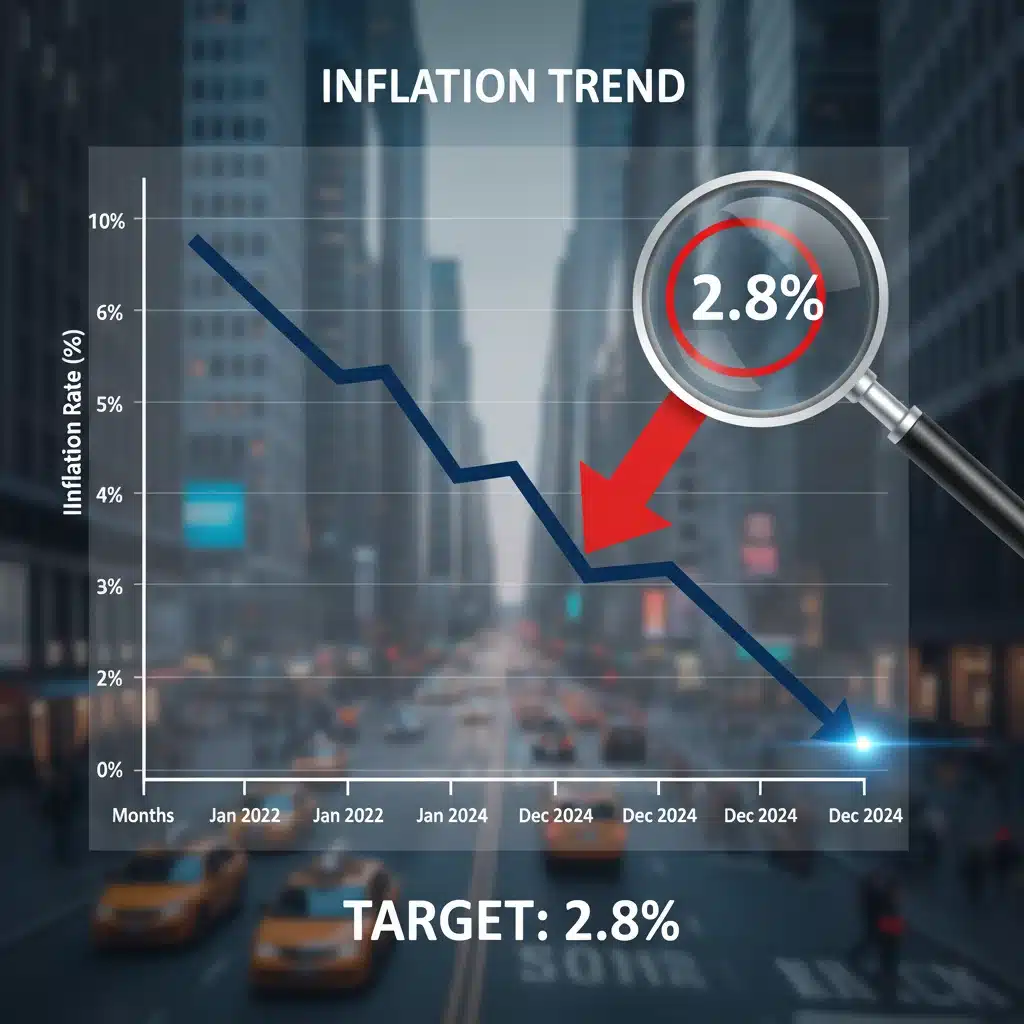
Market Watch: U.S. Inflation Rate Drops to 2.8% in February 2026 – Expert Analysis on Consumer Spending
The economic landscape of the United States has witnessed a significant and much-anticipated shift, with the US inflation drops to a remarkable 2.8% in February 2026. This figure, released by the Bureau of Labor Statistics, represents a substantial cooling from the elevated levels observed in previous years and brings the annual inflation rate closer to the Federal Reserve’s long-term target of 2%. This pivotal development has ignited widespread discussion among economists, policymakers, and the general public, prompting a deep dive into its potential ramifications for consumer spending, investment strategies, and the overall economic trajectory.
For months, the specter of persistent inflation has cast a long shadow over economic forecasts, influencing everything from household budgets to corporate investment decisions. The journey from peak inflation to the current 2.8% has been arduous, marked by a series of aggressive monetary policy interventions by the Federal Reserve, global supply chain adjustments, and evolving consumer behaviors. This article aims to dissect the factors contributing to this notable decline, explore the intricate relationship between US inflation drops and consumer spending, and offer expert insights into what this new economic reality might mean for the future.
Understanding the Latest Inflation Data: A Closer Look at the 2.8% Figure
The Consumer Price Index (CPI), the primary gauge for inflation, showed a monthly increase that, when annualized, translates to the 2.8% figure. This rate reflects the average change over time in the prices paid by urban consumers for a market basket of consumer goods and services. The deceleration in price increases was broad-based, affecting various sectors of the economy. Energy prices, which had been a significant driver of inflation in past periods, saw a notable stabilization, and in some categories, even a decrease. Food prices, while still experiencing some upward pressure in specific sub-categories, also showed a general trend of moderation.
Core inflation, which excludes volatile food and energy prices, also demonstrated a favorable trend, indicating that the underlying inflationary pressures are easing. This is particularly important for policymakers, as core inflation is often considered a more reliable indicator of long-term inflation trends. The decline in core inflation suggests that the efforts to rein in demand and normalize supply chains are bearing fruit, creating a more stable pricing environment across a wider range of goods and services.
Several key factors have contributed to this significant US inflation drops. Firstly, the Federal Reserve’s sustained campaign of interest rate hikes, implemented over the past two years, has had a cumulative effect on dampening aggregate demand. Higher borrowing costs have cooled the housing market, reduced business investment, and made consumers more cautious about taking on new debt. This demand-side contraction has played a crucial role in alleviating price pressures.
Secondly, improvements in global supply chains have been instrumental. The disruptions caused by the pandemic and geopolitical events had previously led to bottlenecks, increased shipping costs, and shortages, all of which contributed to higher prices. As these supply chains have gradually normalized, the cost of production and transportation has decreased, allowing businesses to reduce the pace of their price increases.
Thirdly, a measured recalibration of consumer expectations has also played a part. When consumers expect prices to rise indefinitely, they may accelerate purchases, further fueling inflation. However, as the narrative shifted towards disinflation and the Federal Reserve communicated its commitment to price stability, these expectations began to moderate, contributing to a virtuous cycle of cooling prices.
The Direct Impact of US Inflation Drops on Consumer Spending
The reduction in the US inflation rate to 2.8% is expected to have a profoundly positive impact on consumer spending, which is a critical engine of economic growth. When inflation is high, the purchasing power of money erodes, meaning consumers can buy less with the same amount of income. This often leads to a reduction in discretionary spending and a focus on essential goods and services.
With US inflation drops, households will likely experience an increase in their real disposable income. This means that their wages, adjusted for inflation, will go further, allowing them to afford more goods and services. This increased purchasing power is a direct boon for consumer confidence and can stimulate demand across various sectors of the economy.
One of the most immediate effects will be felt in everyday expenses. The moderation in food and energy prices, for instance, will free up a larger portion of household budgets that were previously allocated to these necessities. This freed-up capital can then be redirected towards other categories, such as retail, entertainment, travel, or savings.
Furthermore, lower inflation can lead to a more stable and predictable economic environment. When consumers are less worried about future price increases, they are more likely to make larger purchases, such as appliances, vehicles, or even plan for home improvements. This stability also encourages long-term financial planning, as the value of savings is less likely to be eroded by inflation.
The psychological impact of lower inflation should not be underestimated. A sustained period of high inflation can foster a sense of economic uncertainty and pessimism. The return to a more stable pricing environment can help restore consumer confidence, encouraging a more optimistic outlook on personal finances and the broader economy. This renewed confidence can translate into increased willingness to spend and invest, further supporting economic activity.

Sector-Specific Analysis: Winners and Losers from Lower Inflation
While the overall impact of US inflation drops is positive for consumer spending, the effects will not be uniform across all sectors of the economy. Some industries are poised to benefit significantly, while others may experience more nuanced changes.
Retail and Consumer Discretionary
The retail sector, particularly those involved in consumer discretionary goods, stands to be a major beneficiary. As consumers have more disposable income and greater confidence, spending on items like apparel, electronics, home furnishings, and entertainment is likely to see an uplift. Companies in these sectors may experience increased sales volumes and potentially improved profit margins as input costs stabilize.
Housing Market
The housing market, which has been significantly impacted by rising interest rates, could also see a gradual recovery. While interest rates are determined by multiple factors, lower inflation reduces the pressure on the Federal Reserve to maintain aggressive tightening. This could lead to a stabilization or even a slight decrease in mortgage rates, making homeownership more affordable and stimulating demand. However, the existing supply shortages in many areas will continue to be a factor.
Travel and Hospitality
The travel and hospitality industry, which relies heavily on discretionary spending, is another sector that could thrive. With more money in their pockets and a sense of economic stability, consumers may be more inclined to plan vacations, dine out, and engage in leisure activities. This could lead to increased bookings for airlines, hotels, restaurants, and entertainment venues.
Technology and Innovation
Lower inflation can also foster an environment conducive to investment in technology and innovation. Businesses, facing lower operational costs and a more predictable economic outlook, may be more willing to invest in research and development, new equipment, and technological upgrades. This could lead to productivity gains and further economic expansion.
Financial Services
For the financial services sector, the implications are mixed. Lower inflation might reduce the urgency for aggressive interest rate hikes, which could affect bank profitability from net interest margins. However, a more stable economy with increased consumer and business confidence could lead to higher demand for loans, investment products, and wealth management services.
Monetary Policy Repercussions: What Does This Mean for the Federal Reserve?
The significant US inflation drops to 2.8% presents the Federal Reserve with a crucial juncture in its monetary policy strategy. For the past two years, the Fed’s primary focus has been on taming inflation through a series of aggressive interest rate hikes. This approach, while effective in cooling the economy, also carried the risk of tipping the nation into a recession.
With inflation now much closer to its 2% target, the pressure on the Fed to continue raising rates has substantially eased. In fact, this development opens the door for a potential pivot in monetary policy, shifting from a tightening stance to one of maintaining stability or even considering future rate cuts if economic conditions warrant.
Economists are now widely speculating on the timing and magnitude of potential rate cuts. A sustained period of inflation at or below 3% would give the Fed the flexibility to begin gradually lowering the federal funds rate. Such a move would further reduce borrowing costs for consumers and businesses, providing an additional stimulus to economic activity. This could translate into lower mortgage rates, cheaper car loans, and more affordable financing for businesses looking to expand.
However, the Fed will likely proceed with caution. While the headline inflation number is encouraging, they will closely monitor other economic indicators, including employment figures, wage growth, and core inflation measures, to ensure that inflationary pressures remain subdued. The risk of a premature pivot, which could reignite inflation, is something the central bank will be keen to avoid.
The Fed’s communication will be critical in the coming months. Clear guidance on its future policy intentions will help manage market expectations and provide businesses and consumers with a clearer picture of the economic outlook. The goal will be to navigate a ‘soft landing’ – bringing inflation down without triggering a severe economic downturn – and the 2.8% figure suggests that this path is becoming increasingly feasible.

Investment Strategies in a Lower Inflation Environment
For investors, the shift to a lower inflation environment necessitates a re-evaluation of portfolios and strategies. The investment landscape that prevailed during periods of high inflation, characterized by a preference for inflation-protected assets and commodities, may now give way to different opportunities.
Fixed Income
With US inflation drops, fixed-income investments, such as bonds, become more attractive. The real return on bonds (nominal return minus inflation) increases, making them a more compelling option for investors seeking stable income. As the Federal Reserve potentially considers rate cuts, bond prices typically rise, offering capital appreciation opportunities.
Equities
The equity market generally benefits from lower inflation and a stable economic environment. Companies face lower input costs, and consumer spending increases, leading to higher revenues and profits. Growth stocks, which were particularly sensitive to rising interest rates, may see a resurgence as borrowing costs stabilize or decline. Sectors tied to consumer discretionary spending, technology, and innovation are likely to perform well.
Real Estate
While the housing market may see a recovery, real estate investment strategies will need to adapt. The rapid appreciation seen during inflationary periods may moderate. Investors might focus on properties with strong rental income potential and long-term appreciation, rather than speculative short-term gains. Commercial real estate, particularly in resilient sectors like logistics and data centers, could also offer attractive opportunities.
Commodities
Commodities, often seen as an inflation hedge, may see reduced demand as inflationary pressures ease. While still important for diversification, their role as a primary driver of portfolio returns may diminish in a lower inflation scenario.
Diversification and Risk Management
Regardless of the economic environment, diversification remains a cornerstone of sound investment strategy. Investors should continue to spread their investments across various asset classes, geographies, and sectors to mitigate risk. Regular review and rebalancing of portfolios in light of evolving economic conditions are essential.
Potential Challenges and Future Outlook
While the 2.8% inflation rate is largely positive news, it’s crucial to acknowledge potential challenges and maintain a balanced perspective on the future outlook. The path to sustained price stability is rarely linear, and new economic headwinds could emerge.
One potential challenge lies in global economic developments. Geopolitical events, shifts in international trade policies, or economic slowdowns in major trading partners could still impact supply chains and commodity prices, potentially exerting renewed inflationary pressure on the US economy. The interconnectedness of the global economy means that domestic inflation is not solely determined by internal factors.
Another area to watch is the labor market. While a robust labor market is generally positive, persistent wage growth that outpaces productivity gains could lead to a ‘wage-price spiral,’ where rising wages push up prices, which in turn leads to demands for higher wages. The Federal Reserve will be closely monitoring wage data to ensure it remains consistent with its inflation target.
Furthermore, the long-term effects of the substantial government spending witnessed in recent years could still manifest. While the immediate inflationary impact may have subsided, the overall level of national debt and potential future fiscal policies could influence the economy’s ability to maintain price stability over the long run.
Looking ahead, the consensus among many economists is cautiously optimistic. The significant US inflation drops provides a solid foundation for sustainable economic growth. The expectation is that the Federal Reserve will adopt a data-dependent approach, carefully calibrating its monetary policy to ensure that inflation remains anchored around its 2% target while supporting maximum employment.
Innovation, particularly in areas like artificial intelligence, renewable energy, and biotechnology, could also play a crucial role in enhancing productivity and mitigating future inflationary pressures by reducing costs and increasing efficiency across various industries. Investment in these areas will be vital for long-term economic prosperity.
Conclusion: A New Chapter for the US Economy
The announcement that the US inflation rate has fallen to 2.8% in February 2026 marks a significant milestone in the nation’s economic recovery and stabilization efforts. This achievement reflects the cumulative impact of stringent monetary policy, improved supply chain dynamics, and evolving consumer and business behaviors. The direct beneficiaries are American consumers, who can anticipate increased purchasing power and a greater sense of financial security, leading to a boost in overall consumer spending.
For businesses, the lower inflation environment brings greater predictability in planning and operations, potentially stimulating investment and growth. The Federal Reserve now faces the delicate task of navigating a potential policy pivot, with a focus on maintaining price stability while supporting sustainable economic expansion. Investors, in turn, will need to adapt their strategies to capitalize on the opportunities presented by this new economic landscape, prioritizing assets that thrive in a lower inflation regime.
While challenges remain on the horizon, the current data offers a compelling narrative of resilience and progress. The journey towards achieving and maintaining economic stability is ongoing, but the 2.8% inflation figure in February 2026 undeniably opens a new and more optimistic chapter for the US economy. This development provides a strong foundation for continued growth, innovation, and prosperity, underscoring the dynamic and adaptive nature of the American economic system.
As we move forward, continuous monitoring of economic indicators, agile policy responses, and informed decision-making by both consumers and businesses will be paramount to harnessing the full benefits of this positive economic shift. The future, while always uncertain, appears brighter with the US inflation drops to a manageable and encouraging level.