Future-Proof Your Career: Top Online Learning Certifications for 2026

The landscape of professional development is continuously evolving, shaped by technological advancements, shifting economic demands, and an increasing emphasis on specialized skills. As we move closer to 2026, the relevance of traditional education pathways is being re-evaluated, making way for agile and targeted online learning certifications. These certifications are not just supplementary credentials; they are becoming indispensable tools for U.S. professionals aiming to future-proof their careers, adapt to new industry paradigms, and seize emerging opportunities. The rapid pace of innovation, particularly in areas like artificial intelligence, sustainable technologies, and the human-centric aspects of work, dictates a proactive approach to skill acquisition. This article delves into the three latest trends in online learning certifications that are set to significantly boost career prospects across various sectors in the United States by 2026, providing a comprehensive guide for anyone looking to invest in their professional future.
The Shifting Paradigm: Why Online Learning Certifications are Crucial for 2026
In an era defined by unprecedented change, the traditional trajectory of a linear career path is largely a relic of the past. Today’s workforce thrives on adaptability, continuous learning, and the ability to pivot rapidly in response to market demands. Online learning certifications have emerged as a powerful catalyst for this transformation. Unlike lengthy degree programs, these certifications offer focused, industry-relevant training that can be acquired efficiently, often without disrupting existing professional commitments. They provide a direct pathway to acquiring in-demand skills, bridging the gap between academic knowledge and practical application. For U.S. professionals, this means a competitive edge in a tight labor market, enhanced earning potential, and greater job security.
The flexibility inherent in online learning is a significant draw. Professionals can learn at their own pace, from anywhere, making education accessible to a broader demographic, including those in remote areas or with demanding schedules. This democratizes access to specialized knowledge, allowing individuals from diverse backgrounds to upskill or reskill. Moreover, the content of these certifications is frequently updated to reflect the latest industry standards and technological breakthroughs, ensuring that learners are always equipped with the most current and relevant information. This agility is something traditional educational institutions often struggle to match, making online learning certifications a vital component of modern career development strategies.
Understanding the value proposition of online learning certifications requires acknowledging the dynamic nature of the job market. Industries are continually being reshaped by new technologies and global challenges. What was considered a cutting-edge skill a few years ago might now be foundational. Therefore, the ability to quickly acquire new competencies through certifications is not merely an advantage; it’s a necessity. This proactive approach to skill development through specialized online programs allows individuals to remain relevant, competitive, and indispensable in a rapidly evolving professional landscape. By focusing on practical, application-oriented knowledge, these certifications empower individuals to immediately apply what they’ve learned, leading to tangible career benefits and fostering a culture of lifelong learning.
Trend 1: The AI and Data Science Revolution – Mastering the Digital Frontier
The impact of Artificial Intelligence (AI) and Data Science on virtually every industry is undeniable and continues to accelerate. From automating routine tasks to powering complex decision-making processes, AI and data analytics are reshaping business operations, consumer experiences, and scientific research. Consequently, the demand for professionals skilled in these areas has skyrocketed, making AI and data science online learning certifications paramount for career advancement in the U.S. by 2026.
In-Demand AI and Data Science Certifications
- Machine Learning Engineer Certification: These certifications focus on developing and deploying machine learning models. They cover algorithms, data preprocessing, model evaluation, and deployment strategies. Key skills include Python programming, TensorFlow, PyTorch, and cloud platforms like AWS, Azure, or Google Cloud. Professionals with these skills are highly sought after in tech, finance, healthcare, and e-commerce.
- Data Scientist Certification: Data scientists are crucial for extracting insights from vast datasets. Certifications in this area typically cover statistics, programming (R, Python), data visualization, database management (SQL), and advanced analytics techniques. They prepare individuals to analyze complex data, build predictive models, and communicate findings effectively to stakeholders. Industries from marketing to biotech are clamoring for data scientists.
- AI Ethics and Governance Certification: As AI becomes more pervasive, understanding its ethical implications and regulatory frameworks is critical. These certifications address issues such as algorithmic bias, data privacy, fairness, transparency, and responsible AI development. They are increasingly valuable for project managers, policymakers, and anyone involved in AI deployment, ensuring that AI systems are developed and used responsibly.
- Business Intelligence Analyst Certification: While distinct from pure data science, Business Intelligence (BI) certifications focus on using data to drive business decisions. They often involve tools like Tableau, Power BI, and SQL, teaching how to create dashboards, reports, and perform ad-hoc analysis to improve operational efficiency and strategic planning. This role is vital across all business sectors.
- Natural Language Processing (NLP) Specialist Certification: NLP is a subfield of AI that deals with the interaction between computers and human language. Certifications in NLP cover text analysis, sentiment analysis, language translation, and chatbot development. With the rise of conversational AI and large language models, NLP specialists are in high demand across customer service, content creation, and software development.
Impact on Career Prospects
Acquiring online learning certifications in AI and Data Science offers a multitude of career benefits. These credentials validate specialized knowledge, making candidates stand out in a competitive job market. They open doors to roles such as AI Engineer, Data Scientist, Machine Learning Specialist, Business Intelligence Analyst, and AI Product Manager, which are among the highest-paying and fastest-growing professions. Furthermore, these skills are transferable across industries, offering immense flexibility and resilience in career paths. Companies are actively seeking individuals who can leverage data and AI to innovate, optimize processes, and gain a competitive edge, making these certifications a direct pathway to significant career acceleration and increased earning potential.
The demand isn’t just for highly specialized roles; a foundational understanding of AI and data literacy is becoming essential for many generalist positions. Managers, marketers, and even HR professionals benefit from being able to interpret data and understand AI’s capabilities and limitations. Therefore, even entry-level certifications in these fields can significantly enhance one’s professional profile, demonstrating a forward-thinking mindset and an ability to adapt to technological shifts. The investment in these online learning certifications is an investment in future relevance and leadership within the digital economy.

Trend 2: Green Skills and Sustainability – Building a Resilient Future
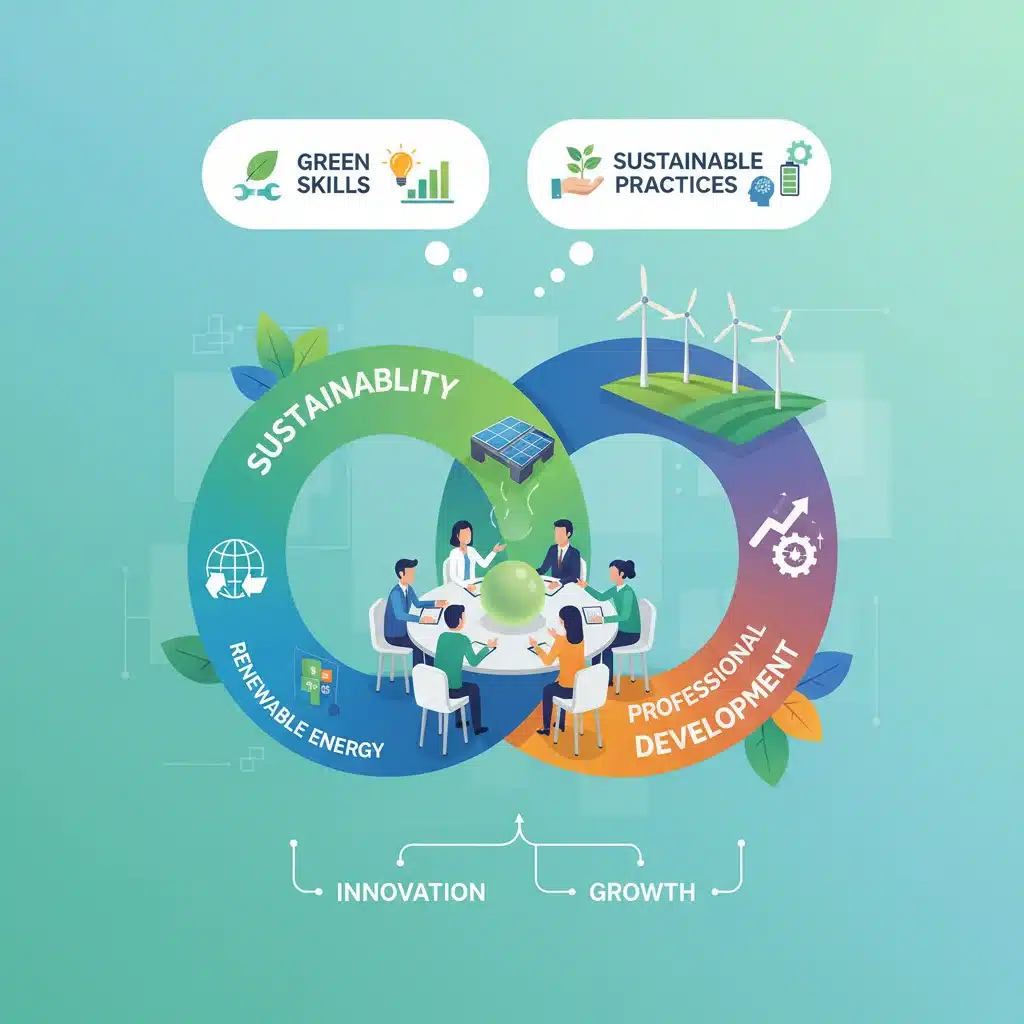
As global awareness of climate change and environmental degradation intensifies, the imperative for sustainable practices has permeated every sector. This shift has created a burgeoning demand for ‘green skills’ – the knowledge, abilities, values, and attitudes needed to live in, develop, and support a sustainable and resource-efficient society. Online learning certifications focused on sustainability are therefore becoming incredibly valuable, positioning professionals as key players in building a more resilient and environmentally conscious future for the U.S. economy by 2026.
Key Green Skills and Sustainability Certifications
- Renewable Energy Specialist Certification: These certifications cover the design, installation, maintenance, and management of renewable energy systems such as solar, wind, and geothermal. They are crucial for engineers, technicians, and project managers looking to enter or advance in the rapidly expanding renewable energy sector. Topics often include energy efficiency, grid integration, and regulatory compliance.
- Sustainable Business Practices Certification: Aimed at business leaders, managers, and entrepreneurs, these certifications focus on integrating sustainability into core business strategies. They cover topics like circular economy principles, corporate social responsibility (CSR), sustainable supply chain management, environmental impact assessment, and green marketing. Professionals with these skills can help organizations reduce their environmental footprint while improving profitability and brand reputation.
- Environmental Management Systems (EMS) Certification (e.g., ISO 14001): These certifications equip professionals with the knowledge to implement and manage environmental management systems within organizations. They focus on identifying environmental risks, setting environmental objectives, and ensuring compliance with regulations. This is vital for professionals in manufacturing, logistics, and any industry with significant environmental impact.
- Green Building and Design Certification (e.g., LEED Green Associate): For architects, construction managers, urban planners, and real estate professionals, certifications like LEED (Leadership in Energy and Environmental Design) are highly sought after. They focus on sustainable building practices, energy-efficient design, water conservation, and healthy indoor environments. These credentials demonstrate a commitment to environmentally responsible construction and development.
- Climate Risk Management Certification: This emerging area addresses the financial and operational risks associated with climate change. Certifications in this field train professionals to assess climate risks, develop adaptation strategies, and integrate climate considerations into investment and business planning. This is particularly relevant for finance, insurance, and corporate strategy roles.
Impact on Career Prospects
The acquisition of green skills through online learning certifications not only addresses a critical global challenge but also opens up significant career opportunities. Professionals with these certifications are increasingly in demand across a wide array of industries, from energy and manufacturing to finance and urban planning. They can pursue roles such as Sustainability Manager, Renewable Energy Analyst, Environmental Consultant, Green Building Specialist, or Climate Risk Analyst. These roles are not only impactful but also tend to be future-proof, as the global push for sustainability is only expected to intensify.
Furthermore, demonstrating expertise in sustainability can enhance a professional’s value even in traditional roles, as companies increasingly seek to embed eco-friendly practices into their operations. This trend is driven by consumer demand, regulatory pressures, and a growing understanding of the long-term economic benefits of sustainability. Therefore, investing in green online learning certifications is a strategic move for professionals looking to align their careers with purpose, contribute to a better world, and secure their place in the evolving green economy.
Trend 3: Human-Centric Skills – The Uniquely Human Advantage
While technological advancements dominate headlines, the indispensable value of uniquely human capabilities cannot be overstated. As automation and AI handle more routine and analytical tasks, the demand for skills that machines cannot replicate – often referred to as ‘soft skills’ or ‘human-centric skills’ – is escalating dramatically. These skills encompass emotional intelligence, critical thinking, creativity, and complex communication, forming the bedrock of effective collaboration, innovation, and leadership. Online learning certifications focusing on these human-centric attributes are becoming critical for U.S. professionals aiming to thrive in an increasingly automated world by 2026.
Essential Human-Centric Skills Certifications
- Emotional Intelligence (EQ) and Leadership Certification: These certifications focus on developing self-awareness, self-regulation, motivation, empathy, and social skills. They are vital for leaders, managers, and team members to foster positive work environments, resolve conflicts, and inspire high performance. As organizations become flatter and more collaborative, strong EQ is a cornerstone of effective leadership.
- Design Thinking and Innovation Certification: Design thinking is a human-centered approach to problem-solving and innovation. Certifications in this area teach methodologies for empathizing with users, defining problems, ideating solutions, prototyping, and testing. These skills are invaluable for product developers, strategists, and anyone involved in creating new services or improving existing processes across all industries.
- Advanced Communication and Collaboration Certification: Beyond basic communication, these certifications delve into nuanced aspects like persuasive communication, active listening, negotiation, cross-cultural communication, and effective teamwork in hybrid or remote settings. They are crucial for roles that require significant interaction, such as project management, sales, marketing, and client relations.
- Critical Thinking and Problem-Solving Certification: In a world inundated with information, the ability to analyze complex situations, identify root causes, evaluate options, and make sound decisions is paramount. These certifications sharpen analytical reasoning, logical deduction, and strategic thinking, making professionals more effective at navigating challenges and driving solutions.
- Adaptability and Resilience Certification: The only constant is change, and the ability to adapt to new technologies, market shifts, and organizational changes is a highly prized skill. Certifications in adaptability and resilience focus on developing a growth mindset, managing stress, embracing ambiguity, and recovering quickly from setbacks. These are foundational for navigating modern career trajectories.
Impact on Career Prospects
While technical skills might get you an interview, human-centric skills are what secure promotions, build strong teams, and drive organizational success. Online learning certifications in these areas enhance a professional’s ability to lead, innovate, and collaborate effectively, making them indispensable in any role. In a future where AI handles routine tasks, the demand for individuals who can think creatively, solve complex, unstructured problems, and foster robust human connections will only grow. These certifications cultivate what is uniquely human, allowing professionals to differentiate themselves and thrive in roles that require empathy, judgment, and strategic insight.
Furthermore, these skills are universally applicable, transcending specific industries or job titles. A project manager with strong emotional intelligence and communication skills will be more effective, regardless of whether they are managing a software development team or a construction project. An engineer with design thinking capabilities can contribute more meaningfully to product innovation. Investing in these online learning certifications is an investment in becoming a well-rounded, influential, and future-ready professional, ensuring long-term career viability and leadership potential in an increasingly automated and interconnected world.
Choosing the Right Online Learning Certifications for You
Navigating the vast landscape of online learning certifications can be daunting, but a strategic approach can ensure your investment yields maximum career benefits. The key is to align your learning path with your career aspirations, current industry demands, and the broader economic outlook for 2026 and beyond. Here’s a detailed guide to help you make informed decisions:
1. Self-Assessment and Career Goals
Before diving into specific certifications, take time for introspection. What are your long-term career goals? Do you aim for a leadership position, a specialized technical role, or a complete career pivot? Identify your current strengths and weaknesses. Where are the gaps in your skillset that are hindering your progress or limiting your opportunities? For example, if you aspire to be a data-driven marketing manager, a Data Scientist Certification might be more relevant than a Renewable Energy Specialist Certification. If you lead a team, an Emotional Intelligence and Leadership Certification could be invaluable. Understanding your personal and professional trajectory is the first crucial step.
2. Research Industry Demand and Future Trends
Stay informed about the latest job market trends. Utilize resources like LinkedIn Learning’s trending skills reports, labor market analyses from government agencies (e.g., Bureau of Labor Statistics), and industry-specific publications. Look for skills that are consistently cited as ‘in-demand’ or ‘future-proof.’ As highlighted in this article, AI and data science, green skills, and human-centric skills are currently leading these trends. Focus on certifications that address these areas and are projected to remain relevant for the next 5-10 years. Consider niche areas within these broad trends that align with your interests and existing experience.
3. Evaluate Certification Providers and Accreditation
Not all online learning certifications are created equal. Research the reputation and accreditation of the certification provider. Look for programs offered by reputable universities, established industry associations, or well-known online learning platforms (e.g., Coursera, edX, Udacity, Google Certifications, AWS Certifications). Check if the certification is recognized by employers in your target industry. Read reviews and testimonials from past participants to gauge the quality of instruction, course material, and career support. A well-recognized certification carries more weight with potential employers and provides a stronger foundation for skill development.
4. Consider Program Structure and Flexibility
Online learning is designed for flexibility, but programs vary significantly in their structure. Some are self-paced, allowing you to learn on your schedule, while others have fixed deadlines, live sessions, or cohort models. Assess your learning style and availability. Do you thrive with structured deadlines, or do you prefer to work at your own pace? Consider the time commitment required and ensure it’s manageable alongside your current responsibilities. Also, look into the format of the learning materials – video lectures, interactive exercises, projects, capstone experiences – and choose what best suits your learning preferences.
5. Assess Cost and Return on Investment (ROI)
Online learning certifications represent an investment of both time and money. Compare the costs of different programs and consider the potential return on investment. Will the certification lead to a promotion, a salary increase, or a new job opportunity that justifies the expense? Are there financial aid options, scholarships, or employer sponsorships available? Sometimes, a slightly more expensive but highly reputable certification can offer a much better ROI in the long run due to its recognition and comprehensive curriculum. Always weigh the potential career uplift against the financial outlay.
6. Practical Application and Portfolio Building
The most effective online learning certifications are those that emphasize practical application. Look for programs that include hands-on projects, case studies, or capstone projects that allow you to apply your new skills. Building a portfolio of work is crucial, especially for technical fields like AI and data science. A strong portfolio demonstrates your capabilities to potential employers more effectively than a mere certificate. Choose certifications that provide opportunities to create tangible outputs that you can showcase.
7. Networking Opportunities
Some online learning platforms and certifications offer networking opportunities with instructors, industry experts, and fellow learners. These connections can be invaluable for career advancement, mentorship, and job referrals. Look for programs that include discussion forums, community events, or alumni networks. Building a professional network is an often-overlooked benefit of online learning that can significantly boost your career prospects.
By meticulously considering these factors, U.S. professionals can strategically select online learning certifications that not only align with their individual career aspirations but also position them at the forefront of the evolving job market, ensuring sustained growth and success in 2026 and beyond.
Conclusion: Your Path to Future-Proofing Your Career
The year 2026 promises a dynamic and challenging professional landscape for U.S. workers, one where continuous learning is not merely an option but a critical imperative. The three trends highlighted – the AI and Data Science Revolution, the imperative of Green Skills and Sustainability, and the enduring value of Human-Centric Skills – represent the most impactful areas for professional development through online learning certifications. These certifications offer a direct, efficient, and flexible pathway to acquiring the specialized knowledge and competencies demanded by tomorrow’s industries.
Investing in online learning certifications in these strategic areas is more than just adding a line to your resume; it’s about making a deliberate commitment to your professional resilience and growth. It’s about equipping yourself with the tools to navigate technological disruptions, contribute to a sustainable future, and lead with empathy and innovation. Whether you are looking to pivot careers, climb the corporate ladder, or simply remain relevant in your current role, these targeted educational opportunities provide the leverage you need.
As you plan your career trajectory towards 2026, remember that the most valuable asset you possess is your capacity to learn and adapt. Embrace the power of online learning certifications to unlock new opportunities, enhance your earning potential, and secure your position as an indispensable professional in the evolving U.S. job market. The future of work is here, and with the right online learning certifications, you are not just ready for it – you are actively shaping it.