
Decoding the New Pell Grant Eligibility Rules for U.S. Undergraduates: A 2026 Guide
For millions of U.S. undergraduates, the Pell Grant has been a cornerstone of their higher education journey, transforming aspirations into realities by providing crucial financial support. As we look towards 2026, significant changes are on the horizon for federal student aid, particularly impacting Pell Grant Eligibility. These updates, stemming from the FAFSA Simplification Act, aim to streamline the application process, expand eligibility, and offer more targeted aid to those who need it most. Understanding these new rules is not just about filling out a form; it’s about strategizing your path to affordable education.
The landscape of financial aid is dynamic, and staying informed is paramount. This comprehensive guide will delve deep into the upcoming changes for Pell Grant Eligibility in 2026, offering clarity on what to expect, how to prepare, and how these modifications could impact your pursuit of a degree. From the revamped FAFSA to the introduction of the Student Aid Index (SAI) and expanded eligibility criteria, we’ll equip you with the knowledge needed to navigate this new era of federal student aid effectively.
The Evolution of Federal Financial Aid: Why Changes to Pell Grant Eligibility Are Happening
The federal student aid system, while foundational, has long been criticized for its complexity and the barriers it inadvertently created for many deserving students. The FAFSA Simplification Act represents a monumental effort to address these issues, aiming to make federal student aid more accessible, understandable, and equitable. The primary goal is to simplify the Free Application for Federal Student Aid (FAFSA) and to update the methodology for determining a student’s financial need, thereby enhancing Pell Grant Eligibility.
Historically, the Expected Family Contribution (EFC) was the metric used to assess a family’s ability to pay for college. This system, while functional, often led to confusion and sometimes excluded students who genuinely needed financial assistance. The new Student Aid Index (SAI) is designed to be a more precise and equitable measure, taking into account a broader range of financial circumstances and simplifying the calculation process. This shift is not merely semantic; it has profound implications for how aid is distributed and who qualifies for the maximum Pell Grant award.
Furthermore, the changes are intended to expand the reach of Pell Grants, ensuring that more low-income students can access this vital funding. The reforms also aim to provide more predictable and consistent aid, allowing students and families to plan for college costs with greater certainty. By simplifying the application and broadening eligibility, the federal government hopes to reduce the financial burden of higher education and encourage more individuals to pursue postsecondary degrees, ultimately strengthening the nation’s workforce and economy.
Key Changes to Pell Grant Eligibility in 2026: What You Need to Know
The year 2026 marks a pivotal moment for federal student aid, with several significant changes directly impacting Pell Grant Eligibility. Understanding these modifications is crucial for any prospective or current undergraduate student. Let’s break down the most important updates:
1. The Simplified FAFSA: A Game Changer
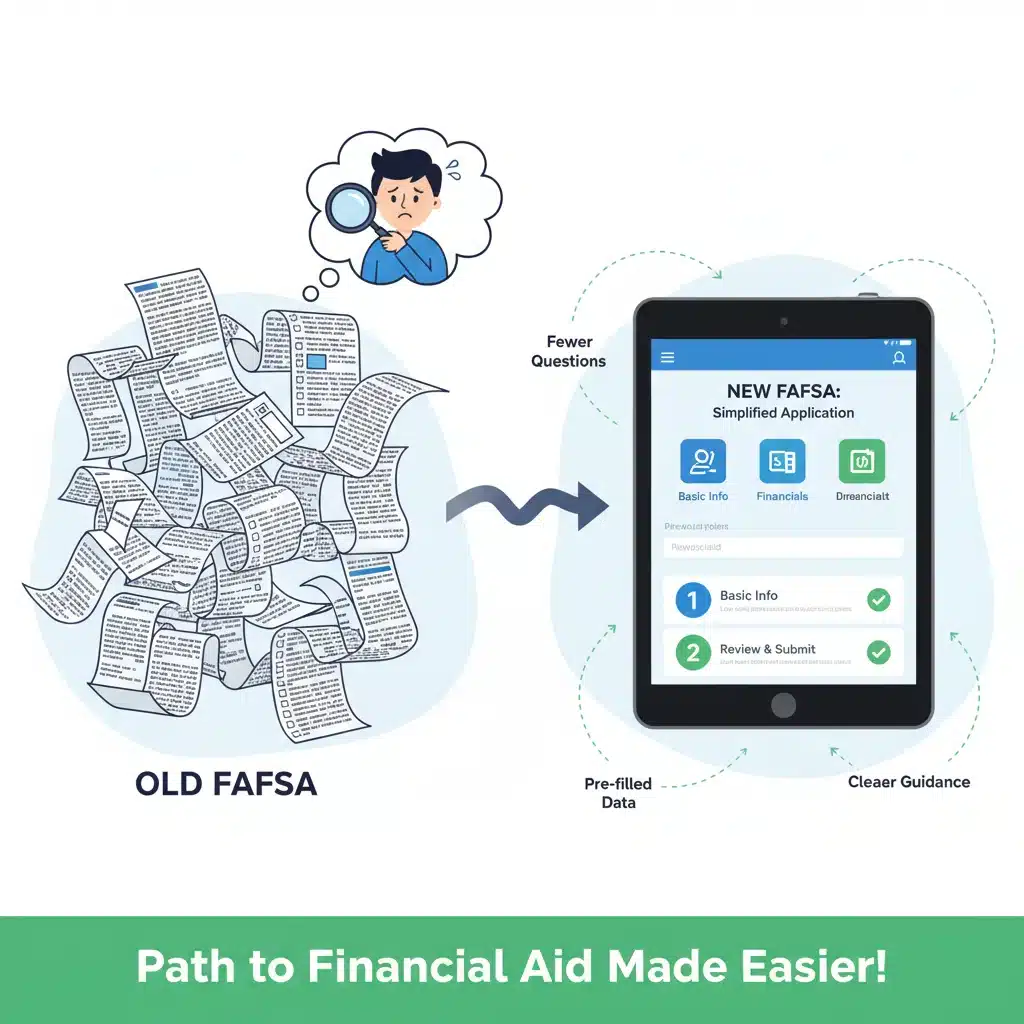
The Free Application for Federal Student Aid (FAFSA) has long been a daunting task for many families. The FAFSA Simplification Act aims to transform this experience. The new FAFSA will be significantly shorter and easier to complete, reducing the number of questions and streamlining the data retrieval process. This simplification is expected to encourage more students to apply for aid, removing a major barrier that often prevented eligible individuals from accessing federal funding.
Key improvements to the FAFSA include:
- Fewer Questions: The number of questions on the FAFSA will be drastically reduced, making it less time-consuming to complete.
- Direct Data Exchange with IRS: A significant enhancement is the mandatory use of direct data exchange with the IRS. This means applicants will consent to directly importing their tax information from the IRS, eliminating the need for manual entry and reducing errors. This also removes the need for the IRS Data Retrieval Tool (DRT) as we know it.
- Streamlined Dependency Status: The criteria for determining a student’s dependency status will be simplified, making it clearer for applicants to understand if they need to include parent information.
- Expanded Access: The simplified FAFSA is expected to reach a broader audience, including those who may have been intimidated by the previous version.
These changes are designed to make the application process less burdensome, allowing students to focus more on their academic pursuits and less on navigating complex bureaucratic hurdles. The easier it is to apply, the more likely eligible students are to receive the financial aid they deserve, including Pell Grants.
2. Introducing the Student Aid Index (SAI)
Perhaps the most profound change is the replacement of the Expected Family Contribution (EFC) with the Student Aid Index (SAI). The SAI is a new methodology for determining a student’s eligibility for federal financial aid, including Pell Grants. While conceptually similar to the EFC in that it represents an index number used to determine aid, the calculation of the SAI is fundamentally different and is designed to be more equitable.
Key differences and implications of the SAI:
- Formulaic Changes: The SAI calculation will no longer consider the number of children in college as a factor to reduce a family’s ability to pay. This is a significant shift that could impact multi-child households.
- Minimum and Maximum SAI: The SAI can now be a negative number, ranging from -1500 to 999,999. A negative SAI indicates a higher level of financial need.
- Income Protection Allowances: New, more generous income protection allowances are being introduced, which will shield more of a family’s income and assets from being counted in the aid calculation, potentially increasing Pell Grant Eligibility for many.
- Dependency Status Simplified: The SAI calculation will align with the simplified FAFSA dependency status questions.
The introduction of the SAI is expected to expand Pell Grant eligibility, particularly for students from lower-income backgrounds. It aims to provide a more accurate reflection of a family’s financial capacity, ensuring that aid is directed to those with the greatest need.
3. Expanded Pell Grant Eligibility Criteria
Beyond the FAFSA and SAI changes, the new rules directly expand Pell Grant Eligibility in several key areas:
- Maximum Pell Grant Eligibility: More students will be eligible for the maximum Pell Grant award. This is tied to the new SAI methodology, where students with an SAI of 0 or less will automatically qualify for the maximum award, provided they meet other eligibility requirements.
- Incarcerated Students: For the first time in decades, incarcerated students enrolled in approved postsecondary education programs will regain eligibility for Pell Grants. This is a significant step towards rehabilitation and reducing recidivism.
- Students with Drug-Related Offenses: Eligibility restrictions related to drug-related offenses are being removed, broadening access to aid for a previously excluded population.
- Lifetime Eligibility Units (LEU): While the LEU remains at 600% (equivalent to six years of full-time Pell Grant funding), the calculation methods for some students might be affected by the new SAI and simplified FAFSA.
These expansions reflect a broader commitment to making higher education more inclusive and accessible to all Americans, regardless of their background or circumstances. The goal is to ensure that federal financial aid serves as a true equalizer, opening doors to opportunity for a wider range of students.
Who Qualifies for Pell Grant Eligibility in 2026?
Determining Pell Grant Eligibility involves several factors, and while the new rules aim to simplify the process, the core requirements remain. Here’s a breakdown of who generally qualifies:
- Undergraduate Students: Pell Grants are primarily for undergraduate students who have not yet earned a bachelor’s, graduate, or professional degree. In some cases, students enrolled in post-baccalaureate teacher certification programs may also be eligible.
- Financial Need: This is the cornerstone of Pell Grant eligibility. Your financial need is determined by the information you provide on your FAFSA, which is then used to calculate your Student Aid Index (SAI). The lower your SAI, the higher your demonstrated financial need and the greater your potential Pell Grant award.
- U.S. Citizen or Eligible Non-Citizen: You must be a U.S. citizen or an eligible non-citizen with a valid Social Security number.
- High School Diploma or GED: You must have a high school diploma or its recognized equivalent (such as a GED) or have completed homeschooling.
- Enrollment in an Eligible Program: You must be enrolled in an eligible degree or certificate program at a participating institution.
- Satisfactory Academic Progress (SAP): You must maintain satisfactory academic progress as defined by your college or university. This typically means maintaining a certain GPA and completing a sufficient number of credit hours.
- Not in Default on Federal Student Loans: You must not be in default on any federal student loans or owe a refund on a federal Pell Grant or other federal student aid.
The new SAI calculation, as mentioned, will play a crucial role in determining the amount of Pell Grant you receive. Students with a negative SAI or an SAI of zero will be prioritized for the maximum Pell Grant award, provided they meet all other eligibility criteria. It’s important to remember that Pell Grant Eligibility is re-evaluated each year you apply for federal aid, so your circumstances can impact your award amount annually.
Maximizing Your Pell Grant and Other Financial Aid in 2026
Even with the simplified FAFSA and expanded Pell Grant Eligibility, proactive steps are essential to maximize your financial aid potential. Here’s how you can prepare and ensure you receive all the aid you’re entitled to:
1. Complete the FAFSA Early and Accurately
The golden rule of financial aid remains: apply early! While the new FAFSA is simpler, submitting it as soon as it becomes available (typically October 1st for the following academic year) is crucial. Many state and institutional aid programs operate on a first-come, first-served basis, and even federal aid has priority deadlines at some schools. Accurate information is equally important; errors can delay your application and impact your eligibility.
- Gather Documents: Even with direct IRS data exchange, have your tax returns, W-2s, and records of other income on hand.
- Understand Consent: Be prepared to provide consent for the IRS to share your tax data with the Department of Education. This will be a mandatory step.
- Review Carefully: Double-check all information before submission.
2. Understand Your Student Aid Index (SAI)
Once you submit your FAFSA, you will receive your Student Aid Index (SAI). Familiarize yourself with this number. A lower SAI indicates a greater financial need and generally leads to more aid. If you believe your SAI doesn’t accurately reflect your current financial situation (e.g., due to job loss, medical expenses, or other special circumstances), contact your college’s financial aid office. They may be able to make professional judgment adjustments.
3. Explore All Types of Financial Aid
Pell Grants are just one piece of the financial aid puzzle. While crucial, they may not cover all your educational expenses. Be sure to explore other avenues:
- Federal Student Loans: These loans often have lower interest rates and more flexible repayment options than private loans.
- Institutional Grants and Scholarships: Many colleges offer their own grants and scholarships based on need, merit, or specific criteria.
- State Aid: Your state may offer financial aid programs for residents attending in-state institutions.
- Private Scholarships: Look for scholarships from foundations, community organizations, and private companies. These can be found through scholarship search engines and local resources.
- Work-Study Programs: Federal Work-Study allows students to earn money through part-time jobs on campus or with non-profit organizations.
4. Communicate with Your Financial Aid Office
Your college’s financial aid office is your best resource. Don’t hesitate to reach out to them with questions about your eligibility, the FAFSA process, or any special circumstances that might affect your aid package. They can provide personalized guidance and help you navigate the complexities of financial aid.

Impact of the New Pell Grant Rules on Specific Student Populations
The FAFSA Simplification Act and the resulting changes to Pell Grant Eligibility are designed to have a broad positive impact, but certain student populations are expected to benefit more significantly. Understanding these specific impacts can help individuals in these groups better plan for their educational futures.
1. Students from Low-Income Backgrounds
This group stands to gain the most. The new SAI calculation, with its more generous income protection allowances and the possibility of a negative SAI, is specifically designed to identify and support students with the greatest financial need. More students from low-income households are expected to qualify for the maximum Pell Grant award, significantly reducing their out-of-pocket college costs and increasing their access to higher education.
2. Single-Parent Households
While the previous EFC formula often penalized single-parent households by not adequately accounting for their unique financial burdens, the new SAI aims to be more accommodating. The revised income protection allowances and the overall simplification are expected to provide a more favorable assessment of financial need for these families, potentially increasing Pell Grant Eligibility for students from single-parent homes.
3. Incarcerated Individuals
The reinstatement of Pell Grant eligibility for incarcerated individuals is a landmark change. This policy reversal recognizes the transformative power of education in rehabilitation and reintegration into society. It opens doors for countless individuals to pursue higher education while incarcerated, equipping them with skills and knowledge that can lead to meaningful employment and reduced recidivism upon release. This change also underscores a broader societal commitment to educational access as a tool for social justice.
4. Students with High Medical Expenses or Other Special Circumstances
The simplified FAFSA and the new SAI, coupled with a clearer process for financial aid administrators to exercise professional judgment, will benefit students and families facing unusual financial circumstances. If a family experiences a significant change in income, high unreimbursed medical expenses, or other financial hardships not fully captured by the FAFSA, the financial aid office can now more easily adjust the SAI, potentially increasing Pell Grant Eligibility and other forms of aid.
5. Students Who Previously Faced Barriers to Application
The sheer complexity of the old FAFSA was a deterrent for many. Students from families with limited English proficiency, those without access to reliable internet, or those simply overwhelmed by the form’s length and jargon often gave up before completing it. The significantly shorter and more user-friendly FAFSA is expected to encourage a much wider pool of eligible students to apply, ensuring that more individuals who qualify for Pell Grants actually receive them.
In essence, the 2026 changes are geared towards creating a more inclusive and equitable financial aid system, ensuring that the promise of higher education is within reach for a broader spectrum of American students. By removing barriers and targeting aid more effectively, the federal government aims to foster greater educational attainment and economic mobility across the nation.
Preparing for the 2026-2027 Academic Year and Beyond
The transition to the new FAFSA and SAI system is a significant undertaking, and while the goal is simplification, there may be initial adjustments and learning curves. Here’s how students and families can best prepare for the 2026-2027 academic year and subsequent years:
- Stay Informed: Regularly check the official Federal Student Aid website (studentaid.gov) for the latest updates, guides, and resources regarding the new FAFSA and Pell Grant Eligibility.
- Understand the New FAFSA Questions: While simplified, it’s beneficial to familiarize yourself with the types of questions that will be asked and how they relate to the SAI calculation.
- Consent to IRS Data Exchange: Be prepared to provide consent for the IRS to share your tax information. This will be a mandatory step for most applicants.
- Keep Accurate Financial Records: Even with direct data exchange, having organized financial documents (tax returns, W-2s, bank statements, investment records) is always good practice.
- Engage with High School Counselors and College Financial Aid Offices: These professionals are invaluable resources. High school counselors can guide prospective students through the initial application process, while college financial aid offices are experts on institutional aid and specific eligibility requirements.
- Attend Workshops and Webinars: Many educational institutions and non-profit organizations will offer informational sessions on the new FAFSA and Pell Grant rules. Take advantage of these opportunities to clarify doubts.
- Plan for Potential Delays: With any major system overhaul, there can be initial glitches or delays. Apply as early as possible to give yourself ample time to address any issues that may arise.
- Re-Evaluate Your College List: With expanded Pell Grant Eligibility, some colleges that previously seemed out of reach financially might now be more affordable. Revisit your college options in light of potential increased aid.
- Consider Your Enrollment Status: Remember that Pell Grant amounts are prorated based on your enrollment status (full-time, three-quarter time, half-time). Plan your course load accordingly if maximizing your grant is a priority.
The changes in 2026 are designed to democratize access to higher education, making the process less intimidating and the aid more accessible. By taking these preparatory steps, you can ensure a smoother application experience and position yourself to receive the maximum financial assistance available, paving the way for a successful academic journey.
Conclusion: A New Era for Pell Grant Eligibility
The upcoming changes to Pell Grant Eligibility in 2026 represent a significant and positive shift in the landscape of federal student aid. The FAFSA Simplification Act, with its streamlined application process, the introduction of the more equitable Student Aid Index (SAI), and the expansion of eligibility criteria, is poised to unlock educational opportunities for millions of U.S. undergraduates. These reforms underscore a national commitment to making higher education more accessible, affordable, and equitable, ensuring that financial barriers do not unduly prevent deserving students from pursuing their academic and career aspirations.
For students and families, understanding these new rules is not just about compliance; it’s about empowerment. By familiarizing yourself with the simplified FAFSA, grasping the nuances of the SAI, and recognizing the expanded eligibility, you can strategically navigate the financial aid process. Proactive engagement, early application, and open communication with financial aid professionals will be your strongest allies in securing the maximum possible aid, including the vital Pell Grant.
As we move towards 2026, the promise of a more inclusive and supportive financial aid system shines brightly. These changes are more than just bureaucratic adjustments; they are an investment in the future of our students and, by extension, the future of our nation. Embrace these changes, prepare diligently, and seize the opportunity to make your higher education dreams a reality with the enhanced support of the Pell Grant program.