Mastering the Digital SAT/ACT: A 3-Month Prep Plan for 2026 Success

Mastering the Digital SAT/ACT: A Comprehensive 3-Month Prep Plan for 2026 Success
The landscape of college admissions is constantly evolving, and with it, the standardized tests that play a significant role in a student’s application. For those aiming for college in 2026 and beyond, the SAT and ACT have undergone substantial transformations, shifting from paper-and-pencil to fully digital formats. This change brings both challenges and opportunities, requiring a strategic and well-structured approach to preparation. This comprehensive guide provides a detailed 3-month plan designed to help students confidently navigate the new Digital SAT ACT Prep landscape, ensuring they are well-equipped to achieve their best possible scores.
The transition to digital testing isn’t just about moving questions onto a screen; it involves fundamental changes in test structure, question types, and even the adaptive nature of some sections. Understanding these new formats is the first critical step towards effective preparation. Our 3-month plan breaks down the entire process into manageable phases, focusing on foundational knowledge, strategic practice, and crucial test-taking techniques tailored for the digital environment. Whether you’re just starting your preparation journey or looking to fine-tune your existing skills, this guide will provide the roadmap you need for success.
Understanding the New Digital SAT and ACT Formats
Before diving into any Digital SAT ACT Prep, it’s imperative to grasp the fundamental changes introduced in the digital versions of these exams. Both tests have been redesigned to be more efficient, accessible, and, in some cases, adaptive. Knowing what to expect will significantly reduce test-day anxiety and allow for more targeted study.
The Digital SAT: Key Changes and Structure
The Digital SAT, fully implemented internationally in 2023 and domestically in 2024, is a significant departure from its paper-based predecessor. Here’s what students need to know:
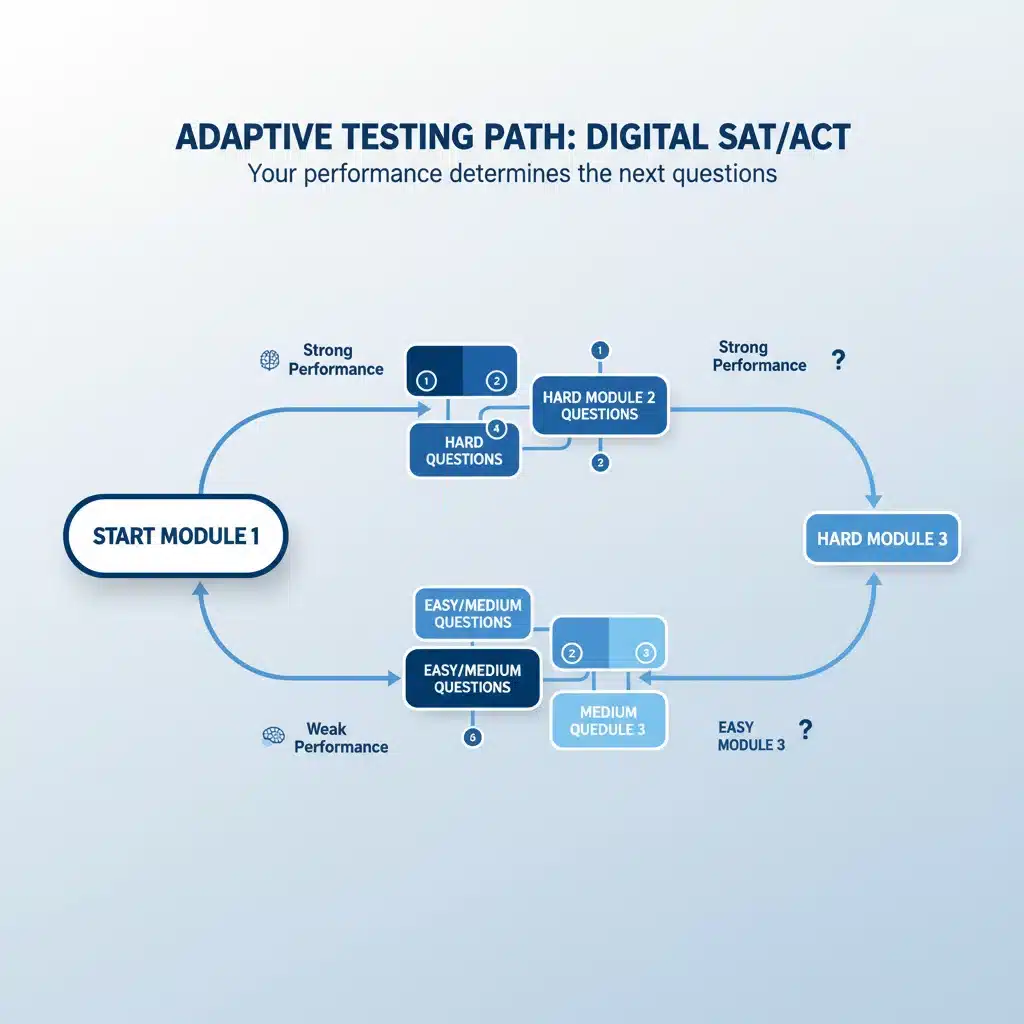
- Adaptive Testing: This is arguably the biggest change. The Digital SAT is an adaptive test, meaning the difficulty of the second module for both Reading & Writing and Math depends on a student’s performance in the first module. This personalized approach means every question counts, and strategic pacing is crucial.
- Shorter Test Duration: The Digital SAT is approximately an hour shorter than the paper version, clocking in at around 2 hours and 14 minutes. This reduced time can alleviate some of the endurance challenges of the old test.
- Integrated Reading & Writing Section: The separate Reading and Writing & Language sections have been combined into a single, cohesive Reading & Writing section. This section features shorter passages (typically 25-150 words) with one question per passage, drawing from a wider range of topics including literature, history/social studies, humanities, and science.
- New Math Section: The Math section still covers Algebra, Advanced Math, Problem-Solving and Data Analysis, and Geometry, but it now allows calculator use throughout the entire section. Questions are more concise, and there’s a greater emphasis on conceptual understanding rather than lengthy calculations.
- Built-in Desmos Calculator: Students have access to a built-in graphing calculator (Desmos) directly within the testing platform, removing the need to bring a physical calculator.
- Digital Tools: The testing platform includes features like a timer, annotation tools, and the ability to mark questions for review, all of which students should familiarize themselves with during Digital SAT ACT Prep.
The Digital ACT: Key Changes and Structure
While the ACT has offered a digital option for several years, its widespread adoption and the continuous refinement of its platform mean students preparing for 2026 should be aware of its specific features:
- Computer-Based Standardized Test: Unlike the adaptive SAT, the Digital ACT is a linear, computer-based test. All students receive the same questions in the same order within each section, similar to the paper test but on a screen.
- Same Content Areas: The Digital ACT retains its four core sections: English, Math, Reading, and Science, with an optional Writing (essay) section. The content and question types within these sections remain largely consistent with the paper version.
- Digital Interface Familiarity: The primary difference lies in the interface. Students need to be comfortable navigating digital text, using digital tools for marking and reviewing questions, and understanding how to input answers for different question formats (e.g., multiple choice, grid-ins).
- Calculator Policy: Similar to the paper ACT, an approved calculator is allowed for the entire Math section. Students can use their own physical calculator (if it meets the requirements) or, in some testing centers, a built-in digital calculator might be available.
- Pacing and Endurance: The Digital ACT’s length is comparable to the paper version (around 2 hours and 55 minutes without the essay), so managing time and maintaining focus for extended periods in front of a screen is a critical skill to develop.
Understanding these distinctions is paramount. For example, a student might find the adaptive nature of the Digital SAT more challenging or, conversely, appreciate its shorter duration. For the Digital ACT, the consistency of question difficulty might be reassuring, but the endurance required for a longer, screen-based test can be a factor. Effective Digital SAT ACT Prep must account for these nuances.
Month 1: Building Foundations and Diagnostic Assessment
The first month of your 3-month Digital SAT ACT Prep plan is all about establishing a strong foundation, understanding your starting point, and familiarizing yourself with the digital testing environment. This phase is crucial for identifying areas of weakness and setting realistic goals.
Week 1-2: Diagnostic Tests and Platform Familiarization
Choose Your Test (or Both)
Decide whether you will focus on the Digital SAT, the Digital ACT, or both. If you’re unsure, taking a full-length diagnostic test for each can help you determine which format suits your strengths better. Many students find one test naturally aligns more with their thinking style.
Take a Full-Length Digital Diagnostic Test
This is the most critical step. Use official College Board (for SAT) or ACT (for ACT) practice tests available in their digital formats. Simulate test conditions as closely as possible: find a quiet space, set a timer, and avoid interruptions. Do not worry about your score at this stage; the goal is to understand the test’s structure, pacing, and your current performance level.
- Digital SAT Practice: Utilize the Bluebook app (College Board’s official testing platform) for practice tests.
- Digital ACT Practice: Access official practice tests through the ACT’s online platform or approved third-party providers.
Analyze Your Diagnostic Results
Go beyond just looking at your score. Deeply analyze which questions you answered incorrectly and, more importantly, why. Was it a content gap, a careless error, a timing issue, or a misunderstanding of the question type? Categorize your errors by subject, topic, and question type. This analysis will form the basis of your personalized study plan.
Familiarize Yourself with the Digital Interface
Spend time exploring the digital testing platform for your chosen test. Understand how to navigate between questions, use the annotation tools, mark questions for review, and utilize the built-in calculator (for SAT). The more comfortable you are with the interface, the less cognitive load you’ll experience on test day.
Week 3-4: Content Review and Skill Development
Based on your diagnostic analysis, dedicate these weeks to shoring up foundational knowledge and developing specific skills. This is where targeted Digital SAT ACT Prep truly begins.
Target Weak Areas in Math
- Digital SAT Math: Focus on Algebra I & II concepts, geometry theorems, and data analysis interpretation. Practice using the Desmos calculator efficiently for complex problems. Work through problems that require conceptual understanding rather than just formula application.
- Digital ACT Math: Review pre-algebra, elementary algebra, intermediate algebra, coordinate geometry, plane geometry, and trigonometry. Practice managing time effectively across the 60 questions, as the ACT Math section is known for its breadth.
Strengthen Reading & Writing Skills
- Digital SAT Reading & Writing: Practice interpreting short passages from various disciplines. Focus on understanding main ideas, identifying evidence, analyzing rhetoric, and correcting grammatical errors in context. The new format requires quick comprehension and precision.
- Digital ACT English & Reading: For English, review grammar rules, punctuation, sentence structure, and rhetorical skills. For Reading, practice identifying main ideas, details, author’s purpose, and vocabulary in context across different passage types.
Science (for ACT only)
If you’re taking the ACT, dedicate time to the Science section. This section primarily tests data interpretation, scientific reasoning, and critical thinking skills, not rote memorization of scientific facts. Practice analyzing graphs, tables, and experimental setups quickly and accurately.
Month 2: Strategic Practice and Advanced Techniques
With foundational knowledge in place, month two shifts focus to strategic practice, timed drills, and mastering advanced test-taking techniques specific to the digital formats. This phase of Digital SAT ACT Prep is about translating knowledge into performance.
Week 5-6: Timed Practice and Question Strategies
Section-Specific Timed Practice
Instead of full tests, focus on individual sections or modules under timed conditions. This allows for concentrated effort on specific areas without the fatigue of a full exam.
- Digital SAT: Practice individual modules for Reading & Writing and Math. Pay close attention to how your performance in Module 1 impacts the difficulty of Module 2. Learn to pace yourself effectively within each module.
- Digital ACT: Practice each of the four sections (English, Math, Reading, Science) individually. Focus on answering all questions within the allotted time, even if it means guessing strategically.
Develop Digital Test-Taking Strategies
- Pacing: Understand the ideal time per question for each section and strive to stick to it. For the Digital SAT, remember that every question in an adaptive module is crucial. For the Digital ACT, maintain consistent speed across sections.
- Annotation Tools: Practice using the digital annotation features (highlighting, striking through answer choices, marking for review) effectively. These tools can be powerful aids if used correctly.
- Elimination: Systematically eliminate incorrect answer choices to increase your odds, especially for multiple-choice questions.
- Strategic Guessing: There is no penalty for guessing on either the Digital SAT or ACT. Always answer every question, even if you have to guess.
Review and Refine Content Knowledge
As you encounter new types of questions or persistent errors during timed practice, revisit the underlying content. Use textbooks, online resources, and tutoring sessions to deepen your understanding. This iterative process of practice, review, and re-learning is key to effective Digital SAT ACT Prep.
Week 7-8: Full-Length Practice Tests and Error Analysis
Take Another Full-Length Digital Practice Test
At the end of month two, take another complete digital practice test under simulated conditions. Compare your score and performance to your initial diagnostic. This will show your progress and highlight remaining areas for improvement.
Detailed Error Analysis (Again!)
Just like with the diagnostic, conduct a thorough error analysis of your second practice test. Have your previous weaknesses improved? Are new patterns of errors emerging? Pay special attention to timing issues and how you utilized the digital tools.
Focus on Advanced Problem-Solving
For questions you consistently struggle with, research alternative approaches or advanced problem-solving techniques. For example, in Math, learn to plug in numbers or use the answer choices. In Reading, practice identifying the author’s tone and purpose more quickly.
Consider a Tutor or Study Group
If you’re finding certain concepts particularly challenging, consider working with a tutor who specializes in the digital formats. A study group can also provide peer support, different perspectives, and accountability, enhancing your Digital SAT ACT Prep.
Month 3: Fine-Tuning, Endurance, and Test Day Readiness
The final month is dedicated to solidifying your skills, building endurance, and ensuring you are mentally and logistically prepared for test day. This is the time for intensive review and strategic preparation.
Week 9-10: Intensive Review and Endurance Building
Review All Content Areas
Go back through all your notes, practice problems, and error logs from the previous two months. Create flashcards for frequently missed concepts or formulas. Focus on understanding the ‘why’ behind correct answers, not just memorizing them.
Practice with a Mix of Question Types
Don’t just practice your weakest areas; ensure you’re maintaining proficiency in your strong suits as well. Mix up your practice sessions with a variety of question types and difficulty levels from all sections.
Build Digital Endurance
Practice spending extended periods in front of a screen, similar to the test duration. This helps reduce eye strain and mental fatigue on test day. Take short, strategic breaks during your practice sessions, mimicking the actual test breaks.
Review Test-Taking Strategies
Rehearse your strategies for pacing, using annotation tools, and strategic guessing. Make these second nature so you don’t have to think about them during the actual exam.
Week 11-12: Final Practice, Mock Tests, and Mental Preparation
Take at Least One More Full-Length Digital Mock Test
Ideally, take one or two more full-length practice tests in the weeks leading up to the actual exam. Try to schedule these mock tests at the same time of day as your official test to acclimate your body and mind. This is a critical component of your Digital SAT ACT Prep.
Simulate Test Day Conditions
For these final mock tests, go all out in simulating test day. Use the exact device you plan to use (if applicable), ensure you have the required software, and follow all timing and break rules. This will help you identify any last-minute logistical issues.
Final Error Analysis and Targeted Review
For these last practice tests, focus your error analysis on patterns that still persist. Dedicate specific time to re-learn those concepts or practice those question types one last time. Don’t try to cram new information; instead, reinforce what you already know.
Mental Preparation and Self-Care
- Visualize Success: Spend time visualizing yourself calmly and confidently navigating the test.
- Manage Stress: Practice relaxation techniques such as deep breathing or mindfulness.
- Prioritize Sleep: Ensure you are getting adequate sleep, especially in the week leading up to the test.
- Healthy Diet: Eat nutritious meals to maintain energy levels and focus.
- Light Exercise: Incorporate light physical activity to reduce stress and improve cognitive function.

Essential Resources for Digital SAT ACT Prep
Effective preparation relies heavily on utilizing the right tools and resources. Here’s a breakdown of what you should be using:
Official Practice Materials
- College Board Bluebook App: For the Digital SAT, this is your primary resource. It offers full-length adaptive practice tests and familiarizes you with the exact testing interface.
- Official ACT Practice Tests: The ACT website provides free practice tests and access to their online platform for digital practice.
- Khan Academy (for SAT): Partnered with the College Board, Khan Academy offers free, personalized practice based on your diagnostic results, covering all SAT sections.
Reputable Third-Party Prep Materials
While official materials are paramount, supplementary resources can offer additional practice and different perspectives:
- Test Prep Books: Companies like Princeton Review, Kaplan, Barron’s, and College Panda offer comprehensive guides for both SAT and ACT. Ensure you are getting editions updated for the digital formats.
- Online Platforms: Websites like UWorld, Magoosh, and PrepScholar provide extensive question banks, explanations, and practice tests. Many offer adaptive practice tailored to your performance.
- Tutoring Services: For personalized guidance, consider hiring a tutor experienced with the digital SAT and ACT. They can provide targeted feedback and strategies.
Technology and Logistics
- Reliable Device: Ensure you have a reliable laptop or tablet that meets the technical requirements for the digital test.
- Stable Internet Connection: Practice in an environment with a stable internet connection to avoid interruptions during mock tests.
- Headphones: While not always required, practicing with noise-canceling headphones can simulate a testing center environment and help you focus.
- Scratch Paper: Get used to using scratch paper for calculations and notes, as you won’t be writing directly on the test itself.
Tips for Success on the Digital SAT/ACT
Beyond the structured plan, certain overarching tips can significantly enhance your Digital SAT ACT Prep and performance on test day:
- Understand the Instructions: On test day, take a moment to read all instructions carefully, even if you think you know them.
- Manage Your Time Wisely: Pacing is critical. Don’t dwell too long on a single difficult question. Make an educated guess and move on.
- Utilize Digital Tools: Master the annotation features, calculator (for SAT), and review options provided by the digital platform.
- Stay Calm and Focused: If you encounter a challenging section, take a deep breath. A moment of calm can help you regain focus.
- Read Every Question Carefully: Careless errors often stem from misreading questions or answer choices.
- Review Your Answers: If time permits, review marked questions or any answers you were unsure about.
- Get Enough Sleep: A well-rested mind performs better. Prioritize sleep in the days leading up to the test.
- Eat a Healthy Breakfast: Fuel your brain with a nutritious meal before the exam.
- Trust Your Preparation: You’ve put in the work; trust your knowledge and strategies.
Conclusion: Your Path to 2026 Digital Test Success
Preparing for the 2026 Digital SAT or ACT might seem daunting, given the new formats and the pressure of college admissions. However, with a structured 3-month Digital SAT ACT Prep plan, consistent effort, and the right resources, you can approach test day with confidence and achieve your desired scores. This comprehensive guide has laid out a clear roadmap, from understanding the new digital formats and building foundational skills to engaging in strategic practice and fine-tuning your test-taking techniques.
Remember, success on these exams is not just about intelligence; it’s about preparation, strategy, and resilience. Embrace the digital format, leverage the available tools, and commit to the process outlined in this plan. By meticulously following these steps, analyzing your progress, and adapting your study as needed, you will build the knowledge, skills, and confidence necessary to excel on the Digital SAT or ACT and open doors to your higher education aspirations. Start your Digital SAT ACT Prep today, and take the first step towards a successful future.